DbcultAccessing Vault...
Cult Review
Senior Film Conservator
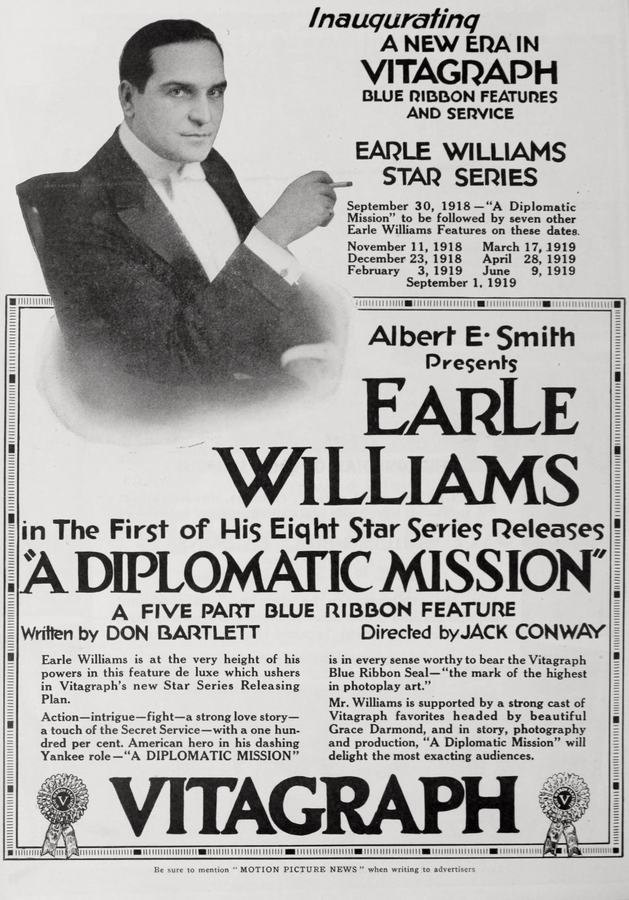
A Diplomatic Mission, now a flickering ghost in the archives of early cinema, arrives with the sepia-toned urgency of a bygone era when screens were portals to exotic locales and moral binaries ruled the reels. This 1920 production, helmed by the deft hands of Don Bartlett and Albert J. Ohlson, is less a film than a theatrical diorama brought to life by the alchemy of light and shadow. Its plot—a collision of imperialist folly and romantic idealism—reads like a 19th-century penny dreadful scribbled in the margins of a colonial ledger.
The film’s opening act is a masterclass in silent-era tension. Kathleen Kirkham’s Lady Diana Loring, all coiled elegance and unspoken fury, becomes the unwitting catalyst for Sylvester Todd’s (Earle Williams) descent into chaos. The German prince’s insult—a jab at British aristocracy’s moral vacuity—is met with a punch that echoes through the film’s DNA. This act, both farcical and fateful, establishes Todd as a character who lives in the realm of action, where words are mere punctuation. His flight from Somona is less a retreat than a prologue to heroism, as he is thrust into the role of protector for a group of English interlopers in a land they barely comprehend.
The mining camp, rendered in chiaroscuro detail, becomes a microcosm of imperial rot. The German foreman’s plot to destroy the platinum mine—aided by the island’s native population—is a narrative device that smacks of Orientalist tropes. Yet there is a strange poignancy in the rebels’ portrayal; they are not mere obstacles but a chorus of resistance against exploitation. The chateau siege, a sequence of breathless tension, juxtaposes Lady Diana’s composure with Todd’s instinctual violence. The rebels, cloaked in shadows, mirror the moral ambiguity of the colonizers they oppose.
What elevates A Diplomatic Mission beyond its era’s constraints is the chemistry between Williams and Kirkham. Their performances, though bound by the limitations of intertitles, convey a visceral push-pull of power and vulnerability. Todd’s rugged individualism—his grizzled demeanor and clenched fists—contrasts with Diana’s poised fragility, creating a dynamic that feels both archaic and oddly modern. The rescue by an American warship, a deus ex machina that feels less like a narrative convenience and more like a political commentary, undercuts the film’s earlier tension. Yet the wedding scene at the close, bathed in golden light, harks back to the myth of love as a civilizing force—a theme that sits uneasily with the film’s earlier violence.
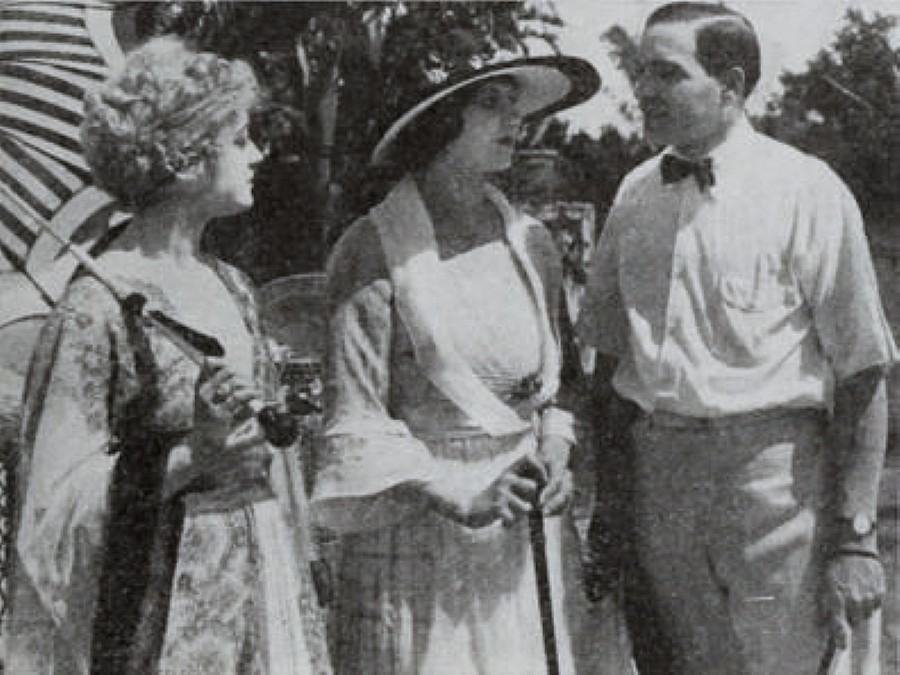
Comparisons to The Silent Lady and The Mummy and the Humming Bird are inevitable, given the shared era and penchant for melodrama. While both films revel in their absurdity, A Diplomatic Mission distinguishes itself with its unflinching focus on colonial dynamics. The German foreman, a cipher for European arrogance, and the native allies, reduced to silent accomplices, reflect the period’s simplistic view of global conflicts. Yet there are moments of visual poetry—wide shots of Somona’s jagged coastline, the chateau’s crumbling grandeur—that hint at a directorial sensitivity beyond the script’s limitations.
Technically, the film is a study in contrasts. The rapid cuts during the chateau siege betray the influence of German Expressionism, while the slow, lingering shots of the mining camp evoke the static realism of early Russian cinema. The use of light—harsh in the prison scenes, diffused in the romantic interludes—adds a layer of visual metaphor that transcends the rudimentary plot. For all its narrative contrivances, A Diplomatic Mission remains a testament to the era’s storytelling ambition, even as it clutches to the fraying threads of its ideological framework.
In the pantheon of early adventure films, this offering occupies a curious niche. It is neither the grand epic of Heroic France nor the whimsical fantasy of A Modern Mother Goose. Instead, it is a relic of its time—a film that wears its colonialist assumptions on its sleeve while simultaneously flirting with the chaos of rebellion. The final act, with its abrupt resolution and saccharine wedding, feels less like a conclusion and more like a surrender to the audience’s craving for order. Yet, there is a strange charm in its earnestness, a reminder of cinema’s origins as a medium for moral fables dressed in action.
For modern viewers, the challenge lies in navigating the film’s historical baggage without dismissing its aesthetic merits. The performances, though hammy by today’s standards, are imbued with a physicality that resonates. The set designs, a blend of Art Deco and faux-exoticism, create a world that is both fantastical and grounded. And in Sylvester Todd, we find a prototype for the rugged anti-heroes of later decades—a man who thrives in the moral gray areas where civilization’s ideals falter.
Ultimately, A Diplomatic Mission is a film of contradictions: a colonial story told with anti-colonial undertones, a tale of action that lingers in the realm of the emotional, a relic that somehow feels both outdated and oddly prescient. Its legacy lies not in its narrative coherence but in its ability to provoke questions about the intersections of power, identity, and representation. As such, it remains a vital artifact for cinephiles and scholars alike, a window into the early 20th century’s fraught relationship with the world beyond its shores.

IMDb —
1915
Community
Log in to comment.