DbcultAccessing Vault...
Cult Review
Senior Film Conservator
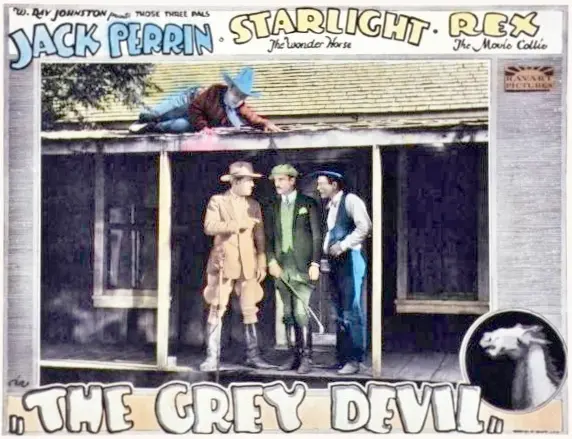
Is The Grey Devil a forgotten classic or a relic best left in the dust of cinematic history? The short answer: for fans of foundational Westerns and those with a genuine curiosity for early filmmaking, absolutely, but with significant caveats that demand a certain patience. This film is a fascinating glimpse into the nascent days of the genre, offering a straightforward tale of good versus evil that, while simplistic by modern standards, possesses an undeniable, if quaint, charm.
It’s a picture tailor-made for cinephiles interested in the evolution of narrative and character archetypes in American cinema, particularly the Western. However, if you’re seeking complex psychological depth, intricate plotting, or the kind of high-octane action characteristic of later Westerns, you might find its pace and execution somewhat challenging. This isn't a film designed for casual viewing; it asks for an appreciation of its historical context.
Let’s cut to the chase regarding The Grey Devil. It works. But it’s flawed. This isn't a cinematic masterpiece, but it holds a certain historical gravitas.
At its core, The Grey Devil unfurls a narrative as straightforward as the horizon it often depicts. Jim Stewart, played by Milburn Morante, is our stoic hero, a foreman whose dedication to the Triple C Ranch is unquestionable. The initial mystery of vanishing mares sets the stage, immediately pitting man against nature, or so it seems. The titular wild stallion, a magnificent creature named The Grey Devil, becomes the obvious, yet ultimately red-herring, suspect. It’s a classic misdirection, albeit one that modern audiences will see coming a mile away.
The turning point, Jim's drugged coffee, feels like a necessary plot device to propel him from respected foreman to disenfranchised avenger. This moment, while perhaps lacking in subtlety, is crucial. It’s the catalyst for Jim’s personal quest for vindication, transforming him from a guardian of the ranch into a solitary seeker of truth. The swiftness with which he is accused and fired highlights the unforgiving nature of the frontier justice depicted, a theme common in films like The Texas Trail.
The pacing is brisk, typical of early silent films, which often relied on visual storytelling and quick scene changes to maintain engagement. There’s little time for lengthy exposition or internal monologues; actions speak louder than words, or indeed, intertitles. The narrative moves with an almost relentless efficiency, from the initial setup to Jim’s dismissal, his taming of the Grey Devil, and the eventual unmasking of the rustlers. This efficiency, however, comes at the cost of character development, particularly for the antagonist. The rival ranch hand, whose villainy stems from a simple romantic jealousy, is painted with broad strokes, leaving little room for nuance.
The sequence where Jim tames the wild stallion is, without doubt, the emotional anchor of the film. It’s a testament to the power of non-verbal storytelling, building a bridge between man and beast that transcends the often-stilted human interactions. This alliance feels earned, a tangible representation of Jim’s unwavering spirit and his connection to the very land he seeks to protect. It’s a moment that resonates, even today, proving that simple, powerful imagery can often outperform elaborate dialogue.
Milburn Morante as Jim Stewart embodies the archetypal silent film cowboy: rugged, earnest, and morally upright. His performance is largely physical, conveying determination and quiet strength through his posture and expressions. He’s not a showy actor, but his stoicism fits the character and the era perfectly. There’s a believable grit to his portrayal, especially in the scenes where he’s working alone on the range or confronting the wild horse. He grounds the film, even if his emotional range is somewhat limited by the conventions of the time.
Lorraine Eason, as the rancher's daughter and Jim's sweetheart, provides the essential romantic interest. Her role is, regrettably, largely reactive. She exists primarily as a prize to be won, a symbol of domesticity and stability for the hero. While her presence is visually appealing, the script gives her little opportunity for agency or significant emotional contribution beyond concern and eventual relief. This is a common trope of the era, seen even in more dramatic fare like The Cost.
Jack Perrin, as Jim’s rival and the leader of the rustlers, delivers a performance that leans heavily into overt villainy. His sneering, his aggressive posturing – it’s all very much in line with the clear-cut antagonists of early Westerns. There’s no ambiguity here; he is bad, and Jim is good. While effective for the film’s straightforward morality, it does mean the dramatic tension of their rivalry feels somewhat predetermined. We never doubt for a moment who will ultimately prevail.
However, the true stars of The Grey Devil, in my unconventional opinion, are the animal actors. Starlight the Horse, as the titular Grey Devil, is magnificent. His wildness, his eventual submission to Jim, and his crucial role in the climax are depicted with a surprising degree of realism and emotive power. The bond between Jim and the Grey Devil feels more authentic and earned than many of the human relationships on screen. And let’s not forget Rex the Dog, whose loyalty and intelligence, though briefly showcased, add another layer of charm and authenticity to the ranch setting. These animal performances aren't just props; they are integral to the film's success, providing a non-verbal emotional core that resonates deeply.
“The silent Western often found its most eloquent expressions not in dialogue, but in the raw power of its landscapes and the untamed spirit of its animal performers. The Grey Devil is a prime example.”
Henry Ziegler’s direction, while perhaps not groundbreaking, is certainly competent for the era. He understands the visual language of the Western, utilizing the vast, open spaces to convey both freedom and isolation. The cinematography, though limited by early film technology, manages to capture the rugged beauty of the range. Shots of horses galloping across the plains are particularly effective, conveying a sense of energy and movement that was essential for early action sequences. There’s a raw, unfiltered quality to these outdoor scenes that feels authentic, a stark contrast to the more controlled studio environments of other films.
Ziegler makes good use of natural light, giving the film an organic feel. The scenes at night, particularly the one where Jim is drugged, rely on stark contrasts and shadows, creating a sense of vulnerability and impending doom. While not as artful as some contemporaries, the practical approach to lighting serves the narrative well. The action sequences, especially the final fight between Jim and the rustler, are staged with clarity, allowing the audience to follow the physical struggle without confusion. It’s a testament to the director’s ability to tell a story visually, even without the aid of sound.
One observation that struck me is how effectively Ziegler uses the landscape itself as a character. The wide-open spaces aren't just backdrops; they are integral to the plot, providing both the arena for the rustlers' activities and the proving ground for Jim's determination. This integration of setting into narrative is a hallmark of the genre, and The Grey Devil demonstrates an early understanding of its power.
The film’s thematic landscape is, much like its plot, refreshingly uncomplicated. At its heart lies the enduring Western theme of justice. Jim Stewart’s journey is one of vindication, of a good man wronged and his relentless pursuit to right that wrong. It’s a classic morality play, where the lines between hero and villain are drawn with undeniable clarity. This simplicity, while a potential weakness for those seeking complex moral ambiguity, is also one of its greatest strengths. It allows the audience to fully invest in Jim’s quest without distraction.
Another prominent theme is the bond between man and nature, specifically between man and horse. The taming of The Grey Devil is not just a plot point; it’s a symbolic act of alliance, representing Jim’s deep connection to the land and its creatures. This relationship feels more profound than the human romantic subplot, suggesting a deeper, more primal understanding of loyalty and partnership. It’s a common thread in Westerns, but here, in its early form, it feels particularly pure.
The tone of The Grey Devil is earnest and adventurous. There are moments of peril, but the overall feeling is one of optimism, a belief in the ultimate triumph of good. There’s a certain innocence to its storytelling, free from the cynicism that would later permeate the genre. It’s a film that genuinely believes in its heroes and villains, and that sincerity is infectious, drawing the viewer into its world even with its dated conventions. It aims to entertain and uplift, and largely succeeds on those terms.
Yes, The Grey Devil is worth watching today, especially for specific audiences. It offers a valuable historical perspective on the early Western genre. The film provides insight into narrative conventions and character types prevalent during the silent era. It is a straightforward tale of good versus evil, delivered with earnest performances. The animal actors, particularly Starlight the Horse, are genuinely captivating. If you are a film historian or a dedicated fan of silent cinema, it's a must-see. For casual viewers, it might be a challenging but rewarding experience, offering a window into cinema's past.
The Grey Devil is not a cinematic revelation, nor does it aim to be. It is, instead, a sturdy, earnest piece of early Western filmmaking that serves as a valuable artifact of its time. It’s a film that asks for a certain generosity from its audience, a willingness to look beyond its technical limitations and embrace its historical context. What you’ll find is a surprisingly engaging story of a man, a horse, and a quest for justice that, despite its simplicity, still manages to resonate. It’s more than just a curiosity; it’s a testament to the enduring power of classic storytelling, even in its most nascent forms. While it won't redefine your understanding of cinema, it will certainly deepen your appreciation for where the genre began.
IMDb —
1916
Community
Log in to comment.