DbcultAccessing Vault...
Cult Review
Senior Film Conservator
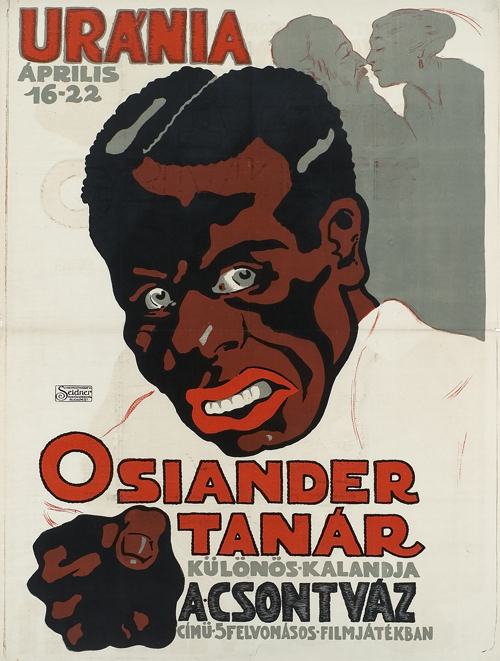
In the annals of early cinema, where flickering shadows often spoke volumes more than any uttered word, certain films emerge not just as historical artifacts but as prescient whispers of the art form's boundless potential. Karl Schneider's Das Skelett, a German silent film from 1916, is precisely one such enigma. With its deceptively simple premise—a physician, an unnatural death, and a revealing dream—it hints at a psychological depth that would later define entire movements, from Expressionism to the Freudian explorations of the silver screen. To truly appreciate this cinematic relic, one must peel back the layers of time and genre, examining not just what is explicitly shown, but the profound implications of its narrative core.
At its heart lies Professor Osiander, portrayed with a quiet intensity by Hans Mühlhofer. Osiander is not merely a medical practitioner; he is a man of science, a purveyor of truth through empirical observation. His reputation as an 'excellent physician' precedes him, suggesting a mind steeped in logic and rational thought. Yet, the film immediately places him in a liminal space, dissecting the skeleton and skull of Cora Gabor. The very act of dissection is a profound metaphor: an attempt to understand life by meticulously dismantling death. But Cora Gabor's death, we are told, was 'unnatural.' This single phrase is a narrative fulcrum, tilting the film away from a straightforward medical drama towards something far more sinister and unresolved. It implies foul play, a mystery, a violation of the natural order that even Osiander's scientific prowess might struggle to comprehend.
The pivotal moment arrives when Osiander, exhausted by his relentless pursuit of answers, succumbs to sleep. This is no mere nap; it is a narrative device, a gateway into the subconscious realm where the boundaries of reality blur. The dream sequence, an early and potent example in cinema, becomes the crucible where the 'unnatural death' of Cora Gabor is re-examined, not through the sterile lens of a microscope, but through the kaleidoscopic distortions of the mind. Here, the film transcends its immediate plot, venturing into the territory of psychological horror and mystery that would later be explored by films like Sumerki zhenskoy dushi (Twilight of a Woman's Soul), which also delved into the complex inner lives and hidden traumas of its characters.
What does Osiander dream? The very ambiguity allows for rich interpretation. Does he relive the circumstances of Cora's demise? Does he encounter her ghost, a spectral manifestation of his guilt or her unresolved fate? Or does the dream provide symbolic clues, unlocking a truth that his waking mind, bound by scientific protocol, could not grasp? This is where Karl Schneider’s writing truly shines, transforming a simple plot point into a profound exploration of human perception and the limitations of empirical knowledge. The dream is not an escape but an intensified form of investigation, where the rules of logic are suspended, and intuition, fear, and memory collide.
While specific details of individual performances from such an early film can be elusive, the ensemble cast, including Magda Madeleine, Marga Köhler, Anna von Palen, Ellen Richter, Anjo Dick, and Karl Falkenberg, would have been instrumental in grounding Osiander's psychological journey. In silent cinema, acting was often a highly stylized art form, relying on exaggerated gestures, expressive facial movements, and a profound understanding of pantomime to convey emotion and narrative. One can imagine Magda Madeleine, perhaps as Cora Gabor in flashbacks or the dream, embodying the tragic figure whose untimely end propels the narrative. Ellen Richter, a prominent star of the era, would likely have brought a compelling presence to whatever role she inhabited, possibly as a key witness or a figure connected to Cora’s past.
The effectiveness of the dream sequence, in particular, would have hinged on the actors’ ability to transition between the stark realism of the laboratory and the surrealism of Osiander’s unconscious. This demanded a nuanced performance that could convey both the intellectual rigor of the physician and the burgeoning terror or revelation he experiences in his slumber. The interplay between the waking world’s objective reality and the dream world’s subjective truth is where the performances would have truly resonated, creating a palpable tension that holds the audience captive.
Germany in the 1910s and 20s was a hotbed of cinematic innovation, laying the groundwork for movements like Expressionism. While Das Skelett predates the full blossoming of German Expressionism, its thematic preoccupations with the subconscious, psychological torment, and the uncanny certainly align with the nascent stirrings of that movement. Films like Robert Wiene’s The Cabinet of Dr. Caligari (1920) would later perfect the visual language for such themes, but Schneider’s film, by placing a dream at its narrative core, was already exploring similar psychological landscapes. The 'unnatural death' itself could have been portrayed with a visual flair that hinted at the distorted realities of Expressionist sets, even if the film primarily adhered to more conventional aesthetics of its time.
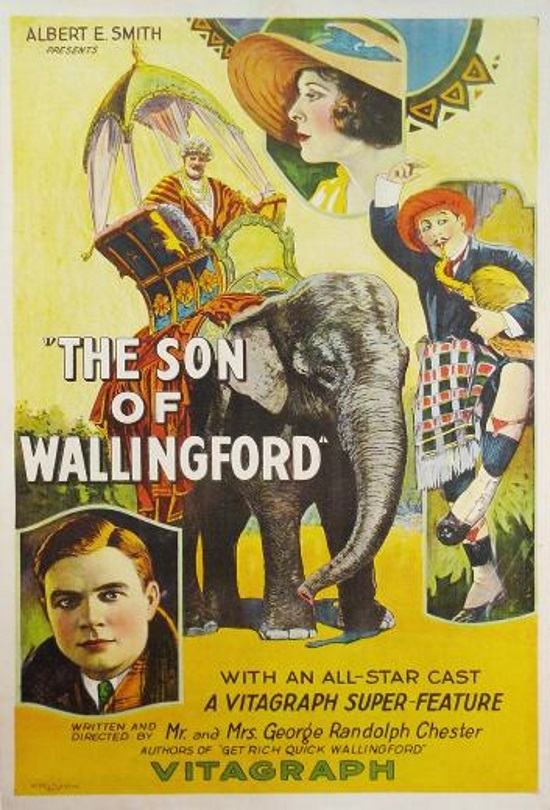
The comparison to other contemporary films is instructive. While Marc'Antonio e Cleopatra offered grand historical spectacle, Das Skelett chose the more intimate, unsettling landscape of the human mind. Similarly, where films like The Adventures of Kitty Cobb might focus on lighthearted escapades, Schneider plunged into the darker, more unsettling aspects of human experience. This divergence highlights the film's ambition to explore complex themes beyond mere entertainment, positioning it as an early example of psychological drama in cinema.
The concept of an 'unnatural death' is fertile ground for mystery and suspense. In an era before sophisticated forensics, the cinematic portrayal of an investigation often relied heavily on deduction, dramatic revelation, and the psychological states of the characters involved. Karl Schneider, as the writer, crafted a narrative that leverages the audience's inherent curiosity about such a demise. Was it murder? An accident? Or something more arcane, perhaps even supernatural, given the dream context?
The film’s power would have been in its ability to slowly unravel these questions, or perhaps, to leave some tantalizingly unanswered. This approach can be seen in other mysteries of the period, such as Mysteriet paa Duncan Slot (Mystery of Duncan Castle), which relied on atmospheric tension and investigative intrigue. Das Skelett, however, adds a unique twist by making the investigator’s own subconscious the primary tool for solving the crime, blurring the lines between objective evidence and subjective revelation. This is a bold narrative choice for 1916, demonstrating a sophisticated understanding of storytelling.
Professor Osiander's dedication to his work, his overtired state, and his subsequent dream all speak to a profound sense of obsession. The skeleton of Cora Gabor becomes more than just a medical specimen; it transforms into a symbol of an unresolved question that consumes him. This theme of obsession, where a character is driven to the brink by a singular pursuit, resonates with the psychological intensity found in films like The Lure of Heart's Desire, which often explored the consuming nature of human passions. In Das Skelett, this obsession is tied to mortality and the search for truth, imbuing it with an almost existential weight.
The uncanny, a concept deeply explored by Freud and later central to horror and mystery narratives, is also palpable here. The skeleton, a familiar object of scientific study, becomes uncanny because it is linked to an 'unnatural death' and then re-enters Osiander's consciousness in a dream. It is both familiar and disturbingly alien, a physical remnant of a person whose story remains untold. This sense of the uncanny, of something ordinary becoming terrifyingly strange, would have been a powerful undercurrent throughout the film, particularly in its more surreal dream sequences.
Given its era, the cinematography of Das Skelett would have been relatively straightforward by modern standards, yet highly effective for its time. The contrast between the stark, clinical environment of Osiander’s laboratory and the potentially fluid, distorted visuals of the dream sequence would have been crucial. Early filmmakers often used techniques like dissolves, superimpositions, and even rudimentary special effects to convey dream states or subjective experiences. Imagine the skeletal form of Cora Gabor perhaps appearing in the dream, or the environment shifting in unsettling ways, reflecting Osiander’s troubled mind. These visual flourishes, even if simple, would have been groundbreaking in conveying a character's internal world.
The use of lighting, too, would have played a significant role. The dim, perhaps gas-lit laboratory, casting long shadows, would heighten the sense of mystery and isolation. In the dream, lighting could become even more expressionistic, using stark contrasts or ethereal glows to create a sense of unreality. This deliberate manipulation of light and shadow, even in black and white, could evoke powerful emotional responses, drawing the audience deeper into Osiander's psychological labyrinth. Such techniques were being refined across various silent films, from the dramatic tension in The Hand of Peril to the character focus in The Daughter of the People.
As the sole credited writer, Karl Schneider's contribution to Das Skelett cannot be overstated. He crafted a narrative that, while concise, is pregnant with possibility and psychological intrigue. His decision to center the resolution not on external investigation but on an internal, dream-induced revelation is remarkably forward-thinking. This approach suggests an understanding of narrative beyond simple cause-and-effect, delving into the subjective experience of truth. Schneider’s script likely provided ample opportunity for the director to implement innovative visual storytelling, even within the confines of early cinematic technology. His work here positions him as a pioneer in integrating psychological elements into mainstream cinema, paving the way for more complex character studies in future films.
Consider the narrative economy of the plot. A professor, a skeleton, an unnatural death, a dream. Each element is meticulously placed to maximize its impact. The 'unnatural death' is the inciting incident, the skeleton the tangible evidence, the professor the conduit for investigation, and the dream the ultimate revelation. This precise construction speaks to a writer who understood the power of suggestion and the dramatic potential of the human psyche. It stands in contrast to the often more sprawling narratives of historical epics like Michael Strogoff or the episodic nature of early adventure serials, demonstrating a focus on concentrated psychological drama.
Even if Das Skelett remains an obscure title for many, its conceptual brilliance and its early exploration of themes like psychological introspection, the uncanny, and the power of the subconscious cement its place as a significant, albeit perhaps unsung, work in cinematic history. It speaks to the early ambition of filmmakers to transcend mere spectacle and delve into the complexities of the human condition. It’s a testament to how even the simplest premise, when handled with vision, can yield profound artistic results.
The film serves as a reminder that the seeds of cinematic innovation were sown early, often in unexpected places. Before the grand pronouncements of Expressionism, before the full embrace of Freudian psychoanalysis in film, there was Das Skelett, quietly dissecting the boundaries between life and death, consciousness and dreams, science and the inexplicable. It’s a film that, through its very premise, invites us to look beyond the surface, to uncover the hidden narratives etched not just in bone, but in the very fabric of our minds.
In a world where digital effects and complex narratives dominate, there's something profoundly resonant about a film that relied on the power of suggestion, the artistry of performance, and the innate human fascination with mystery and the unknown. Das Skelett, through its compelling premise and its daring foray into the psychological, stands as a quiet monument to the enduring power of silent cinema to captivate, to disturb, and to illuminate the darkest corners of our collective imagination.
As we reflect on its legacy, we are reminded that sometimes, the most profound truths are not found in the glaring light of day, but in the unsettling shadows of a dream, where the bones of memory whisper their secrets. It is a film that challenges us to consider what truly constitutes an 'unnatural death' and whether the answers lie in the material world or in the depths of our own subconscious. And that, in itself, is a timeless and utterly compelling cinematic achievement.
IMDb 8.4
1930
Community
Log in to comment.