DbcultAccessing Vault...
Cult Review
Senior Film Conservator
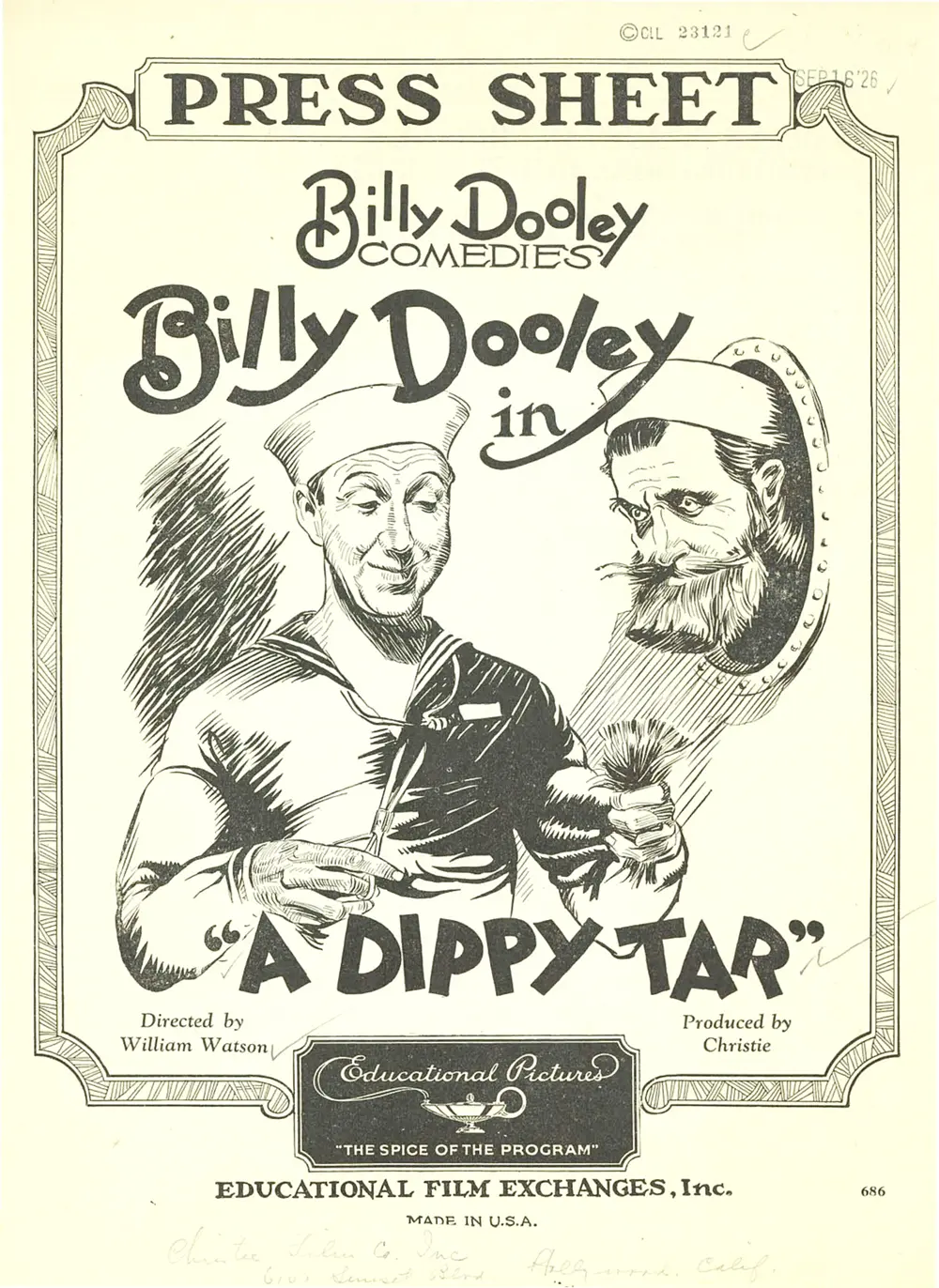
Short answer: yes, but only if you have a high tolerance for the repetitive, aggressive slapstick of the mid-1920s. This film is a definitive artifact for those who enjoy the Christie Comedies era of naval humor, but it will likely frustrate modern viewers looking for a cohesive narrative or subtle character development.
A Dippy Tar is for the silent film completionist and the student of early physical comedy. It is absolutely not for anyone who finds the 'man gets poked with a needle' gag more annoying than amusing after the third repetition. It’s a film that lives and dies on the rubberized facial expressions of Billy Dooley.
This film works because of Billy Dooley’s relentless physical commitment to the role of Napoleon Jinks. His ability to transition from a starving sailor to a prowling alley cat, then to a delusional emperor, provides a masterclass in the 'human-as-prop' style of comedy that dominated the 1920s. He is a marvel of kinetic energy.
This film fails because it lacks a sense of escalation in its second half, choosing instead to lean on a single, increasingly painful-looking joke involving a needle. The logic of the film collapses under the weight of its own premise, moving from a clever social satire about the elite using the working class for entertainment into a chaotic, nonsensical chase.
You should watch it if you are interested in how early cinema portrayed the intersection of amateur psychology and social class. It serves as a fascinating companion piece to other naval-themed comedies of the era, such as Behind the Front, though it lacks that film's larger budget and scope.
Billy Dooley was the king of the 'dumb sailor' archetype. In A Dippy Tar, he leans heavily into the 'dippy' aspect of his persona. The early scenes at the Von Herring household are the strongest. There is a specific moment where Jinks is 'hypnotized' and begins to act like a cat. Dooley doesn't just meow; he contorts his entire frame, rubbing against furniture with a commitment that feels both impressive and deeply strange.
Contrast this with his work in The Chauffeur. While that film relied on vehicular mishaps, A Dippy Tar relies on the internal (or faked internal) state of the protagonist. It’s a performance of a performance. Jinks is a man pretending to be a man who has lost his mind. This layering adds a slight, perhaps unintentional, depth to the slapstick. He is constantly checking in with Molly, played with a sweet but standard charm by Molly Malone, to ensure he is hitting the right beats for his audience.
One cannot ignore the class dynamics at play here. The Von Herrings are the quintessential 'bored rich.' They don't invite Jinks because they want his company; they invite him because they want a toy. The amateur hypnotism angle is a sharp jab at the 1920s obsession with spiritualism and the occult. Von Herring, played with pompous delight by Jack Duffy, represents the pseudo-intellectualism of the era.
The scene where Jinks sneaks into the kitchen to eat a roasting chicken is the film's most grounded moment. It highlights the vast gulf between the guests in the parlor, who are playing with 'mystic powers,' and the sailor, who is simply hungry. It’s a brutal reminder of the character’s reality. When he is caught and led back like a trained animal, the comedy takes on a slightly cynical edge. It works. But it’s flawed by how quickly it abandons this social commentary for pure fire-and-needle chaos.
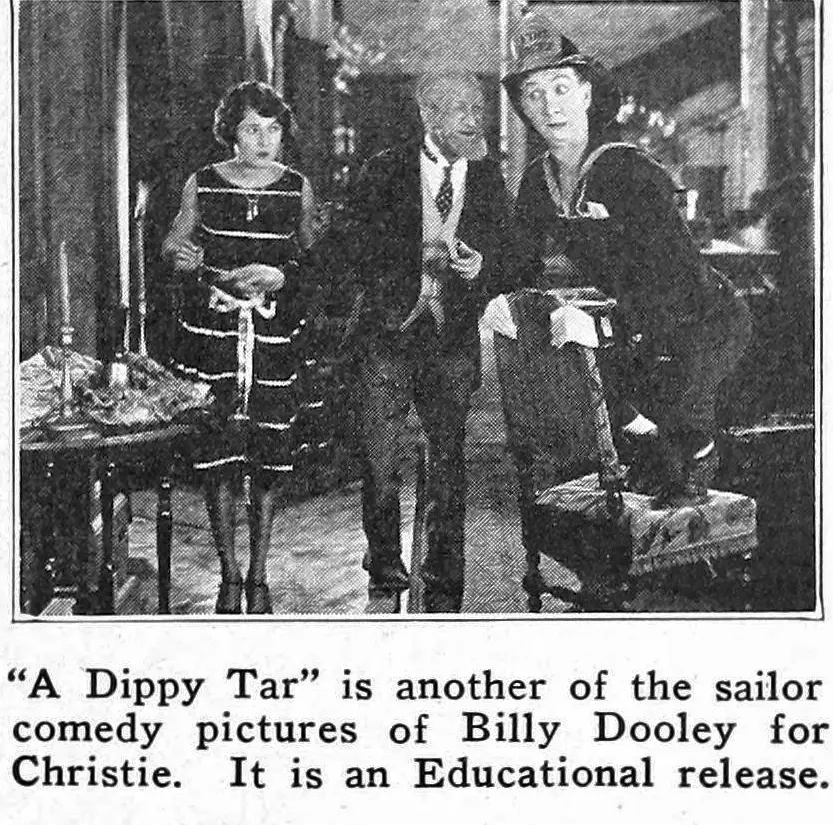
The centerpiece of the film’s middle act is the fire. In his 'trance,' Jinks attempts to be a fireman. In a classic silent movie error, he grabs a pail of gasoline thinking it is water. The resulting blaze and the frantic attempts to extinguish it are choreographed with the precision of a ballet. This is where director Gil Pratt’s influence is most visible. The timing of the splashes and the reactions of the guests are perfectly syncopated.
However, this scene also highlights the film's primary issue: it doesn't know when to stop. The fire gag goes on just a few beats too long, a common trait in Christie Comedies. Compared to the tighter pacing found in Way of the West, A Dippy Tar feels like it’s stretching its thin premise to the breaking point. The transition from the fire to the Napoleon-identity crisis feels disjointed, as if two different shorts were stitched together.
If you are looking for a historical curiosity that captures the manic energy of the mid-20s, then yes. A Dippy Tar is a quintessential example of the 'Short Comedy' format that filled theaters before the main feature. It’s not meant to be high art, and it doesn't pretend to be. It’s meant to make a 1926 audience howl at the sight of a man getting his backside poked with a pin.
For a modern audience, the 'Napoleon' sequence is the most interesting part. The way the film handles the delusion—and the way the police react to it—is a bizarre look at 1920s authority. The police aren't there to help; they are there to 'cure' him through physical pain. It’s a dark, weird conclusion to what started as a simple dinner party comedy.
The film’s greatest strength is its lack of pretension. It knows it is a vehicle for Billy Dooley and it leans into that. The cinematography is functional but effective, capturing the chaos of the fire scene without losing the actors in the smoke. The chemistry between Dooley and Malone provides a necessary emotional anchor, even if it’s a thin one.
The logic of the police response at the end is baffling. The idea that every sailor named 'Napoleon' should be stabbed with a pin is a joke that wears out its welcome within thirty seconds, yet the film carries it through to the final frame. It’s a lazy resolution to an otherwise inventive setup. Furthermore, the supporting characters, aside from Von Herring, are largely interchangeable.
A Dippy Tar is a loud, sweaty, and occasionally brilliant piece of silent comedy. It’s a film that thrives on the 'dippiness' of its lead and the absurdity of its premise. While it doesn't reach the heights of a Buster Keaton or Harold Lloyd feature, it occupies a specific niche of naval-themed slapstick that is worth exploring.
The film is a reminder that in the 1920s, comedy was often about the endurance of the protagonist. Napoleon Jinks survives fire, dogs, and needles, all for the sake of a girl and a decent meal. It’s a simple motivation for a complicatedly stupid situation. Watch it for the history, stay for the cat impressions, but don't expect it to change your life. It’s a solid, if repetitive, piece of cinema history.
"A Dippy Tar is a frenetic, often exhausting display of 1920s slapstick that proves Billy Dooley was the most flexible sailor in Hollywood history, even if the script was as stiff as a board."
IMDb 6.7
1931
Community
Log in to comment.