DbcultAccessing Vault...
6.3/10
Senior Film Conservator
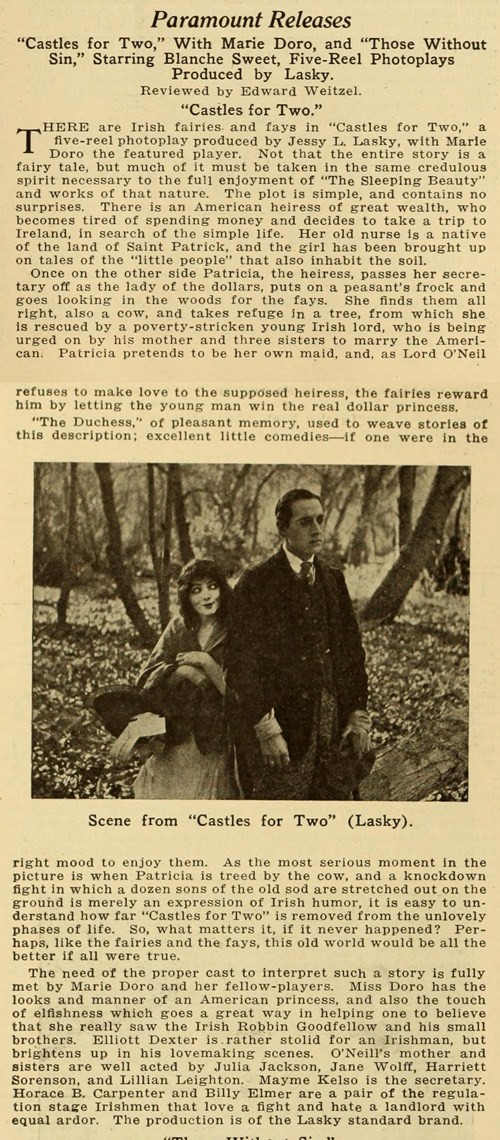
A definitive 6.3/10 rating for a film that redefined the boundaries of cult cinema. Castles for Two remains a cornerstone of transgressive art.
Stepping back into the golden age of silent cinema offers a unique window into storytelling, a craft perfected through visual narrative and emotive performance. Among the myriad treasures of this era, a film like Castles for Two emerges not merely as a historical artifact, but as a vibrant, engaging piece of art that continues to resonate with contemporary audiences. It's a delightful concoction of romantic intrigue, social commentary, and the timeless allure of mistaken identity, all wrapped in the charming, bucolic setting of an Irish estate.
Directed by Leighton Osmun and based on a story by Osmun and Beatrice DeMille, this picture deftly navigates the delicate dance between expectation and reality, between societal pressure and personal desire. It’s a narrative that, despite its early 20th-century origins, feels remarkably fresh in its exploration of themes that remain perennially relevant. The film’s strength lies not just in its clever plot, but in the nuanced portrayals by its ensemble cast, who, without the benefit of spoken dialogue, convey a remarkable depth of emotion and character.
At its heart, Castles for Two spins a tale as old as time, yet imbues it with a distinctive charm. We are introduced to an Irish landlord, a man of good standing but perhaps less good fortune, whose family, ever ambitious and acutely aware of their precarious financial situation, believes a strategic marriage is the key to their salvation. Their chosen target: a wealthy American heiress, whose imminent arrival is anticipated with a mixture of avarice and fervent hope. It’s a familiar setup, one that promises both humor and pathos, as the audience is invited to witness the machinations of those driven by pecuniary gain.
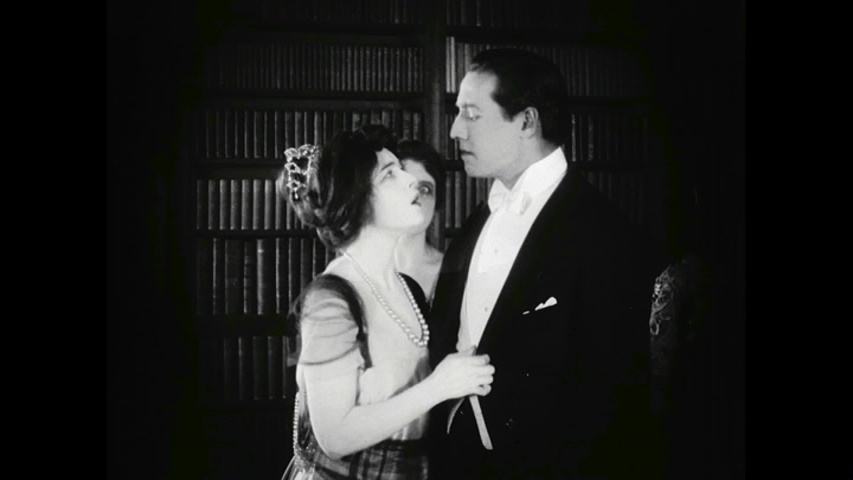
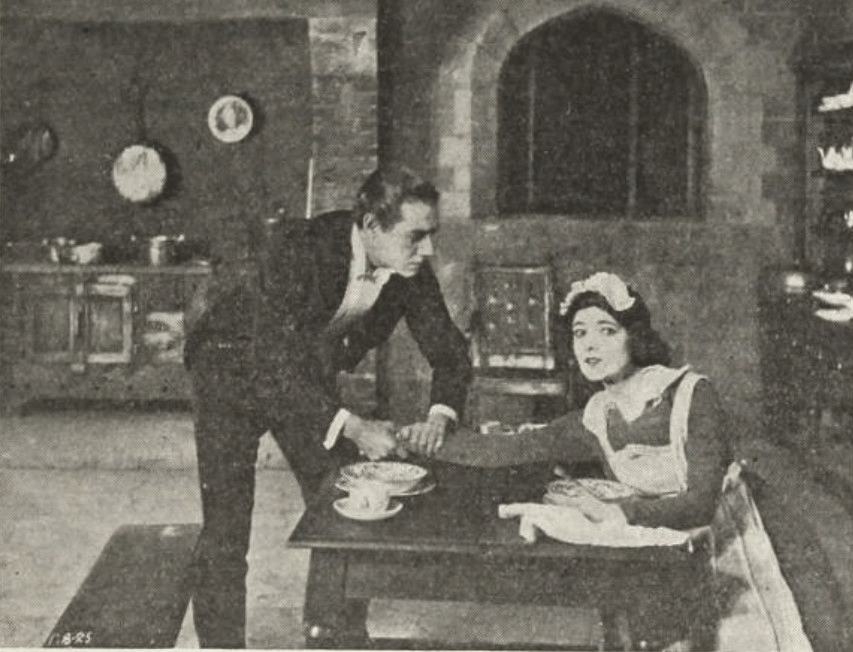
However, the narrative takes a delightful turn when the actual heiress, a woman of considerable intelligence and independence, decides to take matters into her own hands. Rather than arriving with the fanfare expected of her station, she chooses to observe her potential suitor and his family from a position of anonymity. Adopting the guise of a humble servant, she infiltrates the household, becoming an unnoticed observer of the very people who seek to exploit her wealth. This clever device allows the film to explore themes of authenticity and pretense with a keen eye, peeling back the layers of social decorum to reveal the true motivations beneath.
This central conceit, the swapping of identities, is a classic trope, yet Castles for Two executes it with a grace and wit that transcends its simplicity. It's not merely a comedic device; it serves as a powerful lens through which the film examines the nature of love, class, and genuine character. The heiress, freed from the burden of her fortune, can truly assess the landlord’s character, and more importantly, the character of his family, without the distorting influence of her money. The stakes are subtly raised, as her quest is not just for a husband, but for a partner who values her for herself, not her inheritance.
The success of any silent film hinges significantly on the expressiveness and conviction of its performers, and Castles for Two is no exception. The cast, led by Lillian Leighton as the cunning heiress and Elliott Dexter as the unwitting landlord, delivers performances that are both nuanced and compelling. Leighton’s portrayal of the heiress is particularly noteworthy; she imbues the character with a quiet strength and an intelligent glint in her eyes, suggesting a woman far more capable than her assumed humble role might imply. Her transformation from the demure servant to the discerning observer is a masterclass in silent acting, conveying a rich inner life without a single spoken word.
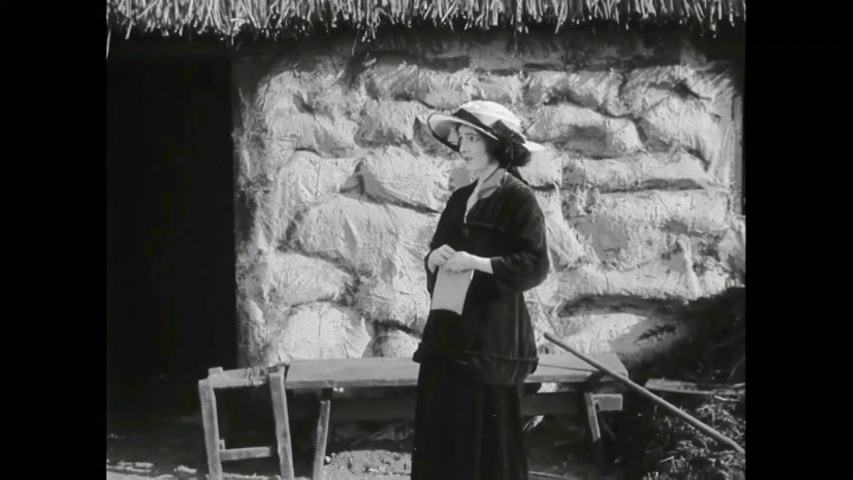
Elliott Dexter, as the landlord, manages to strike a delicate balance between a man under pressure and a genuinely kind-hearted individual. He is not a villain, nor is he entirely blameless in his family's schemes, but his performance allows the audience to sympathize with his predicament. His interactions with the disguised heiress are filled with an understated chemistry that gradually blossoms into something more profound, making their eventual romance feel earned and authentic. William Elmer, Mayme Kelso, and Julia Jackson, as members of the landlord’s scheming family, provide ample comedic relief and a clear antagonist force, their exaggerated expressions and gestures perfectly suited to the silent film medium, highlighting their avarice with delightful clarity. Horace B. Carpenter, Marie Mills, Marie Doro, Jane Wolfe, and Harriet Sorenson further flesh out the world, each contributing to the rich tapestry of the film's social landscape.
The dynamic between these characters is a constant source of fascination. The family's increasingly desperate attempts to secure the heiress’s hand, juxtaposed with the real heiress’s quiet observations, create a dramatic tension that keeps the audience thoroughly invested. It’s a delightful exploration of human nature, showcasing both its calculating side and its capacity for genuine affection.
Castles for Two, while seemingly a lighthearted romantic drama, delves into surprisingly profound themes. The most apparent is the critique of class and wealth. The film starkly illustrates how fortune can distort perception, turning individuals into commodities and relationships into transactions. The heiress’s decision to hide her identity is a direct challenge to this materialistic view, a bold statement that true worth lies not in one's bank account, but in one's character. This resonates strongly with films like Sperduti nel buio, which, though dealing with more overt social realism and poverty, similarly highlights the profound impact of societal structures and economic disparity on individual lives and relationships.
Another central theme is that of identity and authenticity. The heiress’s journey is one of self-discovery, not just for her potential suitor, but for herself. By shedding the trappings of her wealth, she forces herself, and those around her, to confront the true essence of who they are. It asks the audience to ponder: how much of our identity is tied to our social standing or our possessions? And what remains when those external markers are stripped away? This exploration of self and societal masks adds a layer of intellectual depth to what could otherwise be a straightforward romantic comedy.
The film also beautifully explores the eternal struggle between love and expediency. The landlord's family prioritizes financial gain above all else, seeing marriage as a business arrangement. The heiress, however, seeks a love that transcends such calculations, a genuine connection forged on mutual respect and understanding. The film implicitly champions the latter, suggesting that true happiness cannot be bought or arranged, but must be discovered through authentic interaction. This romantic idealism, while common in the era, is presented here with a refreshing sincerity that prevents it from feeling saccharine. The journey towards this authentic connection is fraught with misinterpretations and near-discoveries, building a delightful tension that keeps viewers engaged.
Leighton Osmun's direction, coupled with Beatrice DeMille's narrative input, showcases a keen understanding of silent film aesthetics. The visual language of Castles for Two is rich and expressive, relying heavily on cinematic techniques prevalent in the era. The use of intertitles is judicious, providing necessary exposition and dialogue without overwhelming the visual narrative. Instead, the film communicates primarily through the actors' nuanced facial expressions, body language, and the carefully composed mise-en-scène.
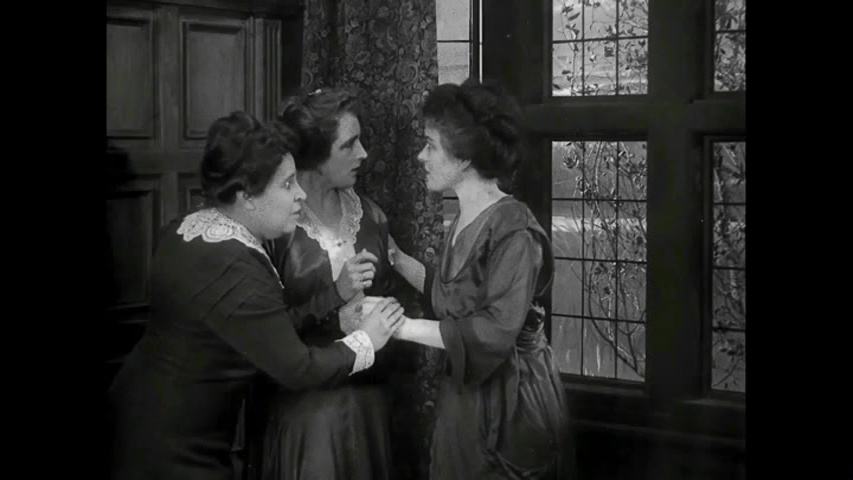
The cinematography effectively captures the charm of the Irish setting, even if it’s a romanticized version. The film utilizes various camera angles and shot compositions to emphasize character emotions and plot developments. Close-ups are employed to highlight key reactions, drawing the audience into the characters' inner worlds, while wider shots establish the grandeur (or lack thereof) of the estate and the social dynamics at play. The pacing of the film is deliberate, allowing the audience to absorb the visual information and fully appreciate the unfolding drama and comedic moments. This careful control of the visual narrative ensures that the story remains clear and engaging, even without spoken dialogue.
One can observe subtle nods to contemporary social mores in the film's visual design. The contrast between the heiress's simple 'servant' attire and the more elaborate costumes of the family members, for instance, visually reinforces the class distinctions and the core premise of the story. Such visual cues were crucial in silent films, acting as shorthand for character and plot, and Castles for Two employs them with considerable skill. The film's overall aesthetic contributes significantly to its immersive quality, transporting viewers to a bygone era while telling a story that remains universally relatable.
Castles for Two stands as a testament to the enduring power of silent cinema. It proves that compelling storytelling does not require elaborate special effects or booming soundtracks, but rather a strong narrative, well-developed characters, and expressive performances. The film’s ability to evoke laughter, sympathy, and a genuine sense of romantic yearning speaks volumes about its timeless appeal.
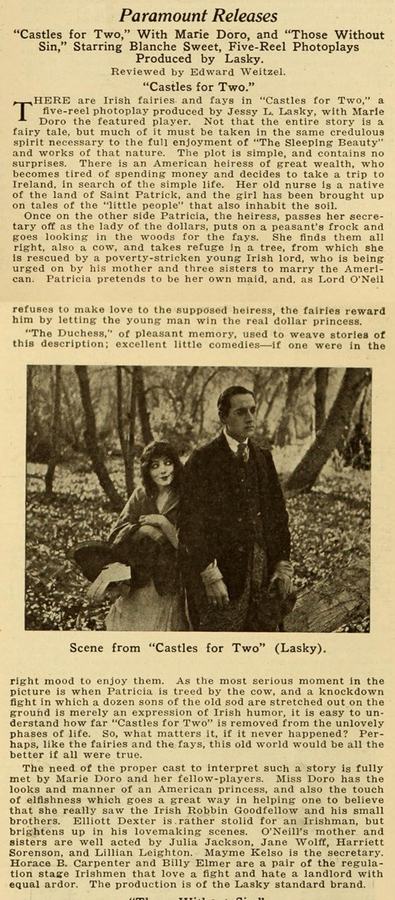
In an era where cinema was still finding its voice, films like this were instrumental in shaping the grammar of visual storytelling. They taught audiences how to 'read' a film, to interpret emotions from gestures and expressions, and to follow complex plots through visual cues. Castles for Two contributes to this legacy by offering a masterclass in silent film artistry, presenting a story that is both entertaining and thought-provoking. While it might not possess the dramatic gravitas of a film like The Devil-Stone or the adventurous spirit of Betty and the Buccaneers, its charm lies in its focused, intimate exploration of human relationships and societal expectations.
Comparing it to other films of its time, one can see its unique position. While Where the Trail Divides might offer rugged frontier drama and Hearts of Oak a poignant family saga, Castles for Two carves out its niche with sophisticated romantic comedy-drama. It shares a thematic kinship with films that explore social mobility or the trials of love, such as Her Triumph or The Glory of Youth, though always with its distinctive comedic twist on the identity swap trope. The film’s quiet elegance and focus on character-driven plot distinguish it, making it a delightful discovery for those exploring the rich history of cinema.
Ultimately, Castles for Two is more than just a historical curiosity; it is a captivating piece of entertainment that continues to enchant. Its narrative, though set in a specific time, touches upon universal truths about human nature, the pursuit of happiness, and the often-deceptive nature of appearances. For anyone with an appreciation for classic cinema, for stories that blend wit with warmth, and for performances that transcend the limitations of their medium, this film offers a truly rewarding experience. It reminds us that sometimes, the most magnificent castles are not built of stone, but forged in the crucible of genuine connection, discovered when all the superficial layers have been stripped away. It's a delightful journey into a world where true love finds a way, even amidst the most elaborate deceptions.
IMDb —
1920
Community
Log in to comment.