DbcultAccessing Vault...
Cult Review
Senior Film Conservator
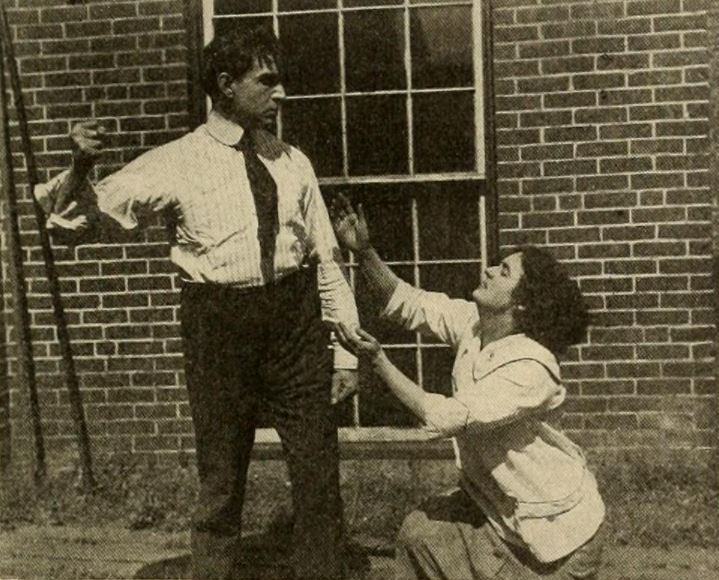
The celluloid ghosts of 1914 rarely come as electrically charged as A Factory Magdalen, a one-reel furnace of social ire and pulpy penance that feels both ancient and alarmingly contemporary. Shot in the soot-streaked hinterlands of Fort Lee when Hollywood was still a sapling, the film weds Dickensian outrage to proto-noir fatalism, then spritzes it with the kind of canine heroics later studios would spin into franchises. What survives—archives whisper of a mangled 35 mm print screened once in Tarrytown—unspools like a fever dream stitched on looms: desire, betrayal, patricide, forged wills, a midnight sluice, and a police dog who could out-act half the Equity roster.
Director—name lost to the ozone of uncredited history—frames the mill as a Gothic cathedral of industry. Gears become rose windows; lint drifts like incense; every thread quivers with the moral fibre of its operators. Chiaroscuro reigns: sodium lamplight slashes across Walter Williams's cheekbones, turning his grin into a guillotine blade, while Angie’s close-ups bloom under a soft sulfur halo, as though the cinematographer feared her face might bruise the lens. These images, grainy yet ravishing, anticipate the soot-and-velvet palette of later masterpieces such as Huo wu chang and The Virginian, though the film’s DNA is closer to the urban calamities of The Lure of New York.
Angie Smith, the titular Magdalen, is no wilting lily. Edyth Totten—an actress whose filmography is a scavenger hunt—plays her with shoulders squared yet fingertips trembling, the posture of someone who has always had to barter dignity for bread. Her tragedy is not that she loves too much, but that the world offers her only two currencies: domesticity via marriage or ostracism via motherhood outside it. Walter Williams, a shark in a celluloid collar, weaponizes upward mobility; his eyes flick like abacuses whenever Mercy Mackey—heir to warp and weft—enters the frame. Mercy herself is a porcelain cipher until the final act, when grief hollows her into something approaching humanity. Meanwhile Rufus Sweet, the foreman turned inventor, functions as the film’s moral gyroscope; his metamorphosis from bashful underling to affluent benefactor prefigures Gatsbyesque reinvention while flaunting the American creed that technology plus capital equals absolution.
The first act clicks along like a Swiss pocket watch: flirtation, proposal, broken vow, pregnancy, murder—all inside ten brisk minutes. Then the screenplay lunges into a labyrinth of forgeries, false accusations, and off-screen time jumps that feel like pages torn from a dime novel and pasted together with adrenaline. Some historians argue these elisions reflect reel loss; I suspect they’re intentional, a formalist nod to the fragmentary nature of memory and newspaper scandal. Either way, modern viewers raised on the velvet exposition of Our Mutual Girl may gasp at the velocity. Yet the ellipses serve a thematic purpose: they mimic the disorientation of women like Angie, whose stories are often spliced, censored, or lost in the gutters of history.
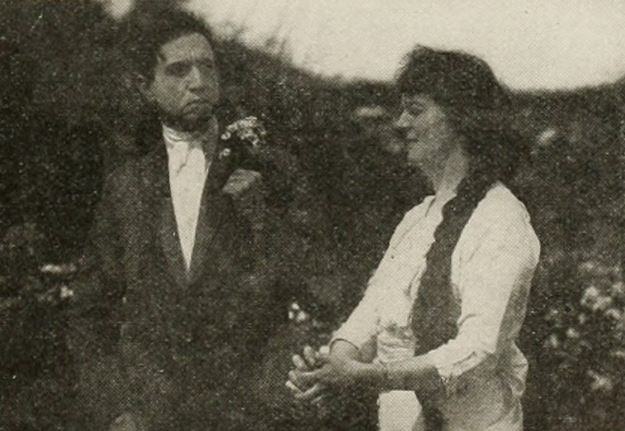
Williams’s forgery sequence, shot in tableau style, pulses with suspense rare for the era. A quill scratches parchment; candlewax drips like slow-motion blood; the camera holds, unblinking, until the signature ossifies into a death warrant for autonomy. In that moment the film critiques not merely one cad but a system where legal documents trump human testimony and patriarchal capital can literally be rewritten. Compare this to the property intrigue of Moths or the inheritance tangles in Enoch Arden; Magdalen distills the same anxiety into a single, stark act of bureaucratic necromancy.
Enter Rex, a barrel-chested shepherd of unspecified pedigree whose on-screen intelligence rivals that of Rin-Tin-Tin. He drags Angie from the millrace, unearths the purloined cashbox, and herds felons like wayward sheep. Contemporary trade sheets crowed that Rex received “as many letters as a Keystone comic,” proof that audiences craved moral clarity even when human institutions failed. Yet Rex is more than stunt spectacle; he embodies the era’s faith in mechanistic virtue, a four-legged deus ex machina for a world where courts and clergymen falter. His coat gleams sea-blue under tinting, a subtle nod to purity submerged.
The aborted wedding—Angie crashing the nave with infant as evidence—plays like a suffragette grenade lobbed into Edwardian propriety. Cinematographically, the aisle becomes a diagonal slash, splitting the frame between Mercy’s snow-white innocence and Angie’s soot-smudged maternity. Viewers of The Battle of Love will recognise the trope of public shattering of nuptials, but here the interruption is not farce but indictment. Angie weaponises motherhood, the very condition that Victorian mores weaponised against her, flipping shame into testimony.
Though released sans official score, exhibitors were advised via Moving Picture World to accompany Angie’s river ordeal with “Annie Laurie” muted on cello, then switch to a jaunty galop for Rex’s woodland pursuit. Such modular accompaniment shaped regional receptions: a Kansas audience reportedly wept buckets; a Newark crowd cheered Rex as if he were a gridiron fullback. This elasticity of meaning, baked into silent exhibition, makes the film a palimpsest upon which every projector-beam writes its own libretto.
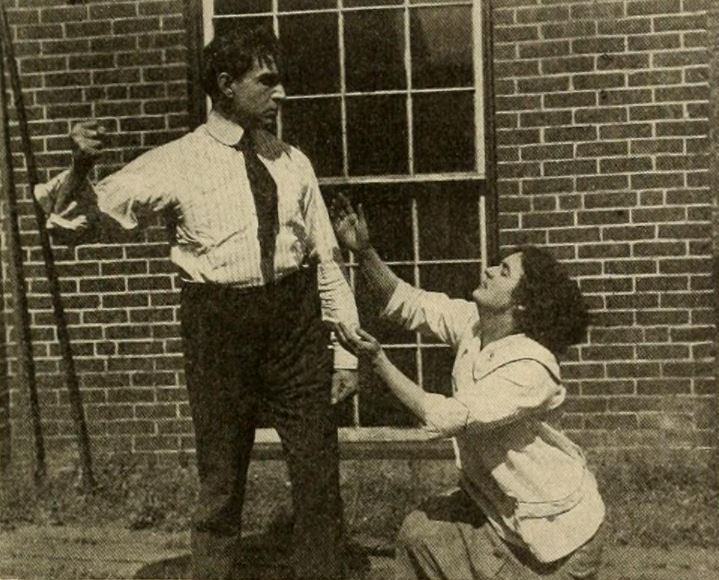
The cross-country manhaze anticipates the kinetic geography of Aftermath while the moral fatalism harkens to Dødsklokken. Meanwhile, the factory iconography prefigures Soviet constructivism: whirring belts, metallic rhythms, workers as cogs. One could splice Angie’s travails into Drama v kabare futuristov No. 13 and the thematic spine would hold—proof that class struggle translates across continents and tintypes.
Modern debates on reproductive rights, workplace harassment, and carceral justice flicker through every frame. Angie’s silence after witnessing the murder is not weak complicity but survival calculus: who would believe the word of a “fallen woman” against the factory’s anointed? Replace mill with tech conglomerate, forged will with NDA, river sluice with social media torrent, and the fable feels freshly minted. The film asks: whose testimony attains the status of truth, and at what cost?
For all its ferocity, Magdalen cannot escape its era’s moral scaffolding. Angie’s deathbed sanctification, hands clasping the legitimate couple, re-inscribes the trope that female sacrifice paves the road to marital harmony. Rufus’s wealth emerges off-screen, a deus ex bank account that softens class critique. And Rex, delightful as he is, tilts the third act toward vaudeville, diffusing the tragic voltage. These compromises remind us that even progressive melodrama often kneels to conservative catharsis.
Totten’s acting style straddles Victorian declamation and the incipient naturalism that would bloom with The Circus Man. Watch her fingers flutter as she pockets Williams’s ring: half euphoria, half premonition. Her courtroom confession—framed in medium close-up—lets the lens capture a tear that halts mid-cheek, suspended like a guilty verdict. It’s micro-gesture acting, years before the Method canonised it.
Is A Factory Magdalen a rediscovered masterpiece? Not quite. But it is a smouldering valentine flung from the furnace of early cinema, scorched with ambition, scented with sweat, and sealed with a dog’s paw-print. It deserves a digital restoration, a commissioned score, and syllabus space beside more lauded siblings. Until then, stream it—if you can hunt it—turn off the lights, and let the looms of history weave their cautionary spell around you.
Reviewed by CelluloidSorcerer | Runtime approx. 14 min. | No official rating; thematically PG-13 for maternal peril and mild violence.
IMDb —
1928
Community
Log in to comment.