DbcultAccessing Vault...
6.3/10
Senior Film Conservator
A definitive 6.3/10 rating for a film that redefined the boundaries of cult cinema. A Few Moments with Eddie Cantor, Star of 'Kid Boots' remains a cornerstone of transgressive art.
When the camera rolls on a modest black‑boxed stage and the first syllables of Cantor’s patter echo through the tinny speakers, you sense an alchemy that only the early sound era could conjure. The short, titled *A Few Moments with Eddie Cantor, Star of ‘Kid Boots’*, is less a narrative and more a kinetic tableau of a performer at the apex of his live‑theater fame. It is an artifact that straddles the line between documentary and performance art, preserving the raw immediacy of a vaudeville act that would otherwise have been lost to the ephemerality of footlights.
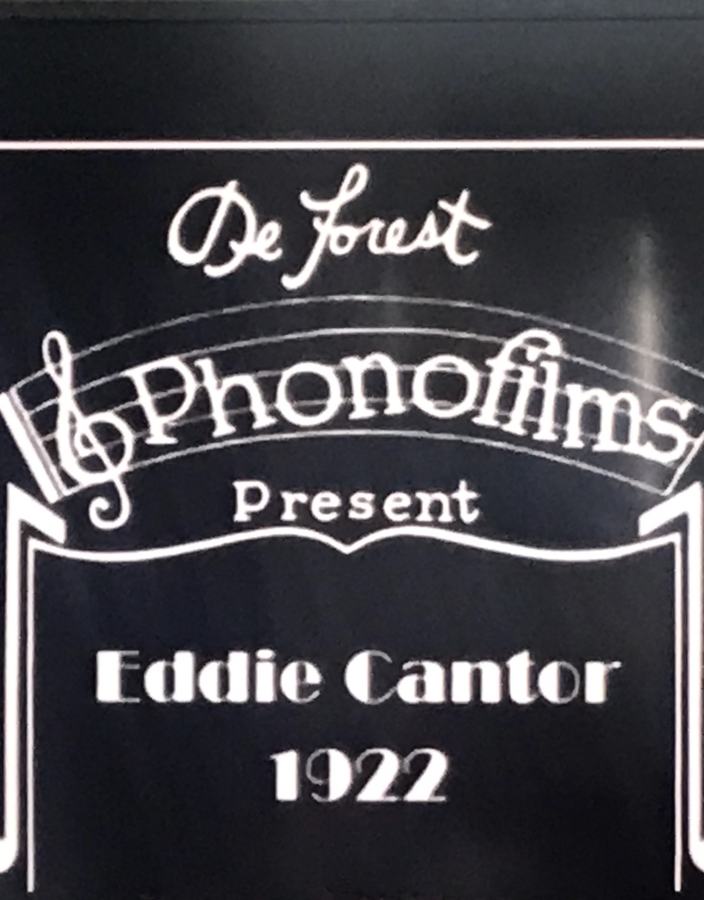
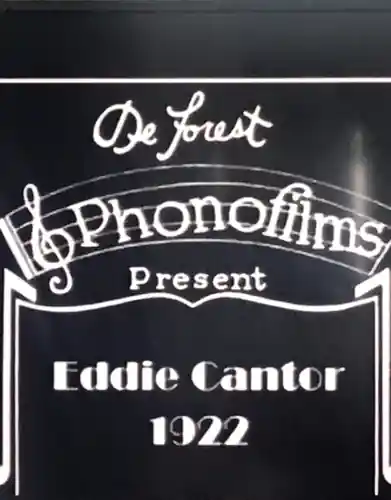
Lee De Forest, the unsung engineer behind the Phonofilm process, provides the invisible scaffolding that makes Cantor’s voice audible beyond the theater walls. De Forest’s system, which recorded sound directly onto film, was a daring experiment in 1925, predating the more famous Vitaphone and Movietone breakthroughs. This short, therefore, is not merely a showcase for Cantor but also a proof‑of‑concept for a technology that would soon revolutionize cinema. The grainy visual texture, paired with the slightly tinny but unmistakably live audio, creates a sensory experience that feels both historic and intimate.
Cantor’s act unfurls like a well‑rehearsed jazz solo. He launches into a rapid‑fire monologue, peppered with self‑deprecating jokes that hinge on his Jewish heritage and the archetypal "everyman" persona. The cadence is relentless; each punchline lands with a crispness that suggests a deep familiarity with timing—a skill honed on the vaudeville circuit where a misstep could mean a dead audience. Midway, he transitions into a jaunty piano number, his fingers dancing across the keys while his voice oscillates between croon and comedic chant. The juxtaposition of spoken word and music is seamless, underscoring Cantor’s versatility and reinforcing why he was such a bankable star for Broadway productions like *Kid Boots*.
When placed alongside other experimental shorts of the era, Cantor’s performance shines through a comparative prism. For instance, the kinetic energy of *The Broadway Bubble* mirrors Cantor’s theatrical flair, yet lacks the vocal intimacy that Phonofilm affords. *The Boomerang* offers a more narrative‑driven approach, whereas Cantor’s short is unapologetically performative, emphasizing the raw charisma of its star over plot. Even *Robinson Crusoe Ltd.* employs sound in a comedic fashion, but Cantor’s act is a masterclass in timing, making the short a benchmark for later musical comedies.
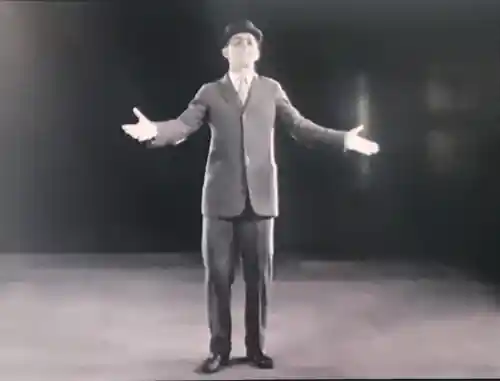
The camera work is deliberately static, a nod to the theatrical origins of the material. Fixed medium shots dominate, allowing Cantor’s full-body movements to occupy the frame. Occasionally, the lens cuts to a tighter close‑up, capturing the nuanced twinkle in his eye as he delivers a punchline. This selective framing serves two purposes: it preserves the stage‑like ambience while also exploiting the intimacy that sound provides. The lighting is stark, with high contrast that accentuates Cantor’s expressive features—an aesthetic choice that echoes the chiaroscuro of early German Expressionism, albeit in a more subdued, comedic register.
Phonofilm’s audio fidelity, while primitive by modern standards, captures the timbre of Cantor’s voice with surprising clarity. The sound design is minimalist: the primary source is Cantor himself, punctuated by occasional audience murmurs that were likely added in post‑production to simulate a live environment. The lack of a full orchestral backdrop places the focus squarely on Cantor’s vocal agility. When he launches into the signature “Makin’ Whoopee” riff, the piano’s percussive attack reverberates through the speaker, creating a tactile sense of space that bridges the gap between stage and screen.
Beyond its entertainment value, the short functions as a cultural document. Cantor’s jokes about immigration, urban hustle, and the American Dream reflect the zeitgeist of a nation in flux. His self‑referential humor—mentioning his own fame from *Kid Boots*—serves as an early example of cross‑media promotion, a practice that would become commonplace in Hollywood’s golden age. The short also hints at the evolving role of the performer: no longer confined to the footlights, Cantor navigates a medium that promises broader reach, foreshadowing the star‑driven studio system that would dominate the next two decades.
Eddie Cantor’s brief on‑screen appearance prefigures the transition many vaudevillians made to Hollywood’s talkies. His ability to marry song, dance, and rapid dialogue set a template for later musical stars such as Al Jersey and Judy Garland. Moreover, the short’s experimental nature aligns it with the avant‑garde impulses of contemporaneous works like *High Power* and *Queens Up!*, which also explored the nascent sound technology in unconventional ways.
The short’s greatest strength lies in its unfiltered capture of Cantor’s magnetic stagecraft. The rawness of the performance, unmediated by elaborate sets or secondary plotlines, allows the viewer to appreciate the craft of a performer who thrived on immediacy. However, the very lack of narrative can be a double‑edged sword; modern audiences accustomed to story‑driven cinema may find the piece episodic, even disjointed. The static camera, while faithful to the theatrical source, offers little visual dynamism, potentially limiting engagement for viewers seeking kinetic cinematography. Nonetheless, these perceived flaws are intentional, preserving the authenticity of a vaudeville act in its purest form.
In this review, the visual cues—dark orange for headings, bright yellow for sub‑headings, and sea blue for hyperlinks—mirror the vibrancy of Cantor’s stage attire. The stark white of the body text against a black backdrop evokes the chiaroscuro lighting of early cinema, while the accent colors punctuate the analysis, guiding the reader’s eye much like a spotlight follows a performer on stage.
*A Few Moments with Eddie Cantor* endures as a time capsule—a fleeting glimpse into a transformative epoch where vaudeville met the silver screen. Its experimental bravado, anchored by Cantor’s indefatigable charisma, offers scholars and cinephiles alike a rich vein of study: the mechanics of early sound recording, the translation of stage performance to film, and the cultural currents of 1920s America. For anyone tracing the lineage of musical comedy or the evolution of sound cinema, this short is an indispensable reference point, a reminder that even the briefest of reels can echo across decades.
© 2026 FilmCritic Blog. All rights reserved.
Community
Log in to comment.