DbcultAccessing Vault...
Cult Review
Senior Film Conservator
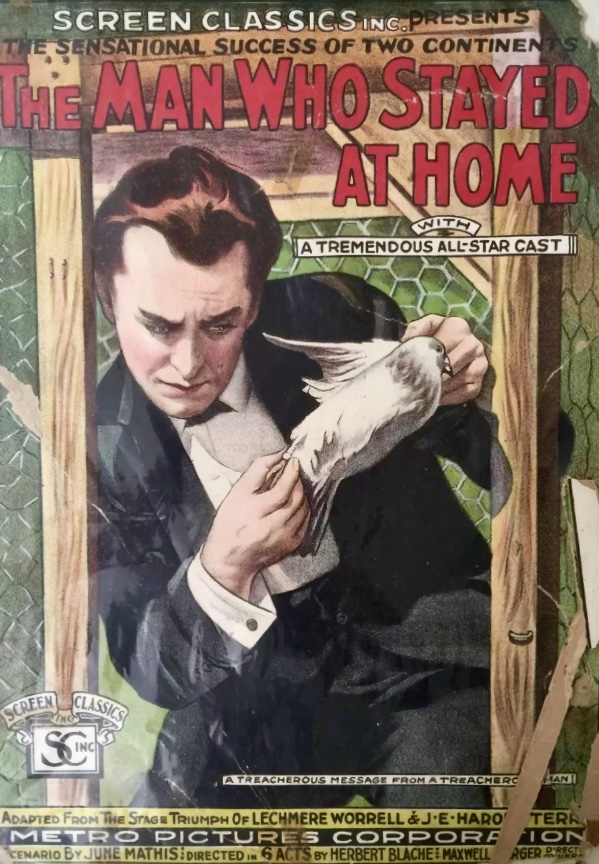
The year 1919 served as a crucible for American cinema, a period where the industry transitioned from the raw propaganda of wartime to a more sophisticated, albeit still patriotic, form of narrative storytelling. At the heart of this evolution stands The Man Who Stayed at Home, a film that deftly manipulates the zeitgeist of post-WWI anxiety. Directed with a keen eye for atmospheric tension and scripted by the legendary June Mathis, this feature is far more than a mere relic of nationalist fervor; it is a complex character study hidden within the trappings of an espionage thriller.
King Baggot, once heralded as the 'King of the Movies,' delivers a performance of remarkable restraint as Christopher Brent. In an era where histrionics were the currency of the silver screen, Baggot’s portrayal of a man enduring social ostracization is hauntingly quiet. The central conceit—a man appearing cowardly to serve a higher, secret purpose—resonates with the thematic explorations found in The Outsider. Brent is a man living a double life, and the film excels in depicting the psychological toll of this deception. The vitriol he faces from his neighbors in the Virginia resort town is palpable, reflecting a historical reality where the 'white feather' of cowardice was a devastating social brand.
The narrative architecture provided by Mathis and her co-writers is remarkably tight. Unlike many contemporary productions that meandered through episodic subplots, this film maintains a claustrophobic focus on the hotel setting. This choice of locale mirrors the investigative tension seen in Mysteries of the Grand Hotel, where every corridor and parlor becomes a potential site for betrayal. The hotel is not just a backdrop; it is a microcosm of a nation under threat, where the enemy is not a distant soldier but the person sitting across from you at dinner.
One of the most compelling aspects of The Man Who Stayed at Home is its treatment of its female characters. Molly Preston, played with a delicate balance of vulnerability and pride by Lila Leslie, represents the domestic heart of the film. Her struggle is one of faith—faith in her partner versus the overwhelming pressure of collective opinion. This internal conflict is a recurring motif in silent drama, often explored in films like Modern Love or the emotionally charged Motherhood. Molly’s jealousy of Miriam Lee (Claire Whitney) adds a layer of soap-operatic intrigue that, surprisingly, does not detract from the spy plot but rather humanizes the high-stakes world of the secret service.
Miriam Lee herself is a fascinating figure—a professional woman operating in a man’s world of shadows and codes. Her presence elevates the film beyond a simple romance, suggesting a world where duty transcends personal happiness. This interplay of secret identities and public perception is a trope later refined in films like The Man Behind the Curtain, yet here it feels fresh and urgent, tied directly to the visceral reality of the 1918 setting.
For a film produced in 1919, the technical execution of the climax is nothing short of ambitious. The integration of naval footage and the depiction of the U-boat threat provide a sense of scale that was rare for domestic dramas of the time. While it may not possess the documentary-like focus of Your Fighting Navy at Work and at Play, the film uses its naval sequences to ground the melodrama in a terrifying reality. The scene where the spies ignite a bomb to signal the submarine is edited with a burgeoning sense of rhythm that prefigures the suspense masterworks of later decades.
The cinematography captures the contrast between the sunny, idyllic Virginia coast and the dark machinations occurring within the shadows of the hotel. This visual dichotomy serves as a metaphor for the film’s central theme: the hidden war. The use of the German code book as a MacGuffin is handled with more sophistication than the typical 'lost document' plot point found in The Dishonored Medal. Here, the code book is a catalyst for a total breakdown of trust, forcing the characters to confront their own prejudices.
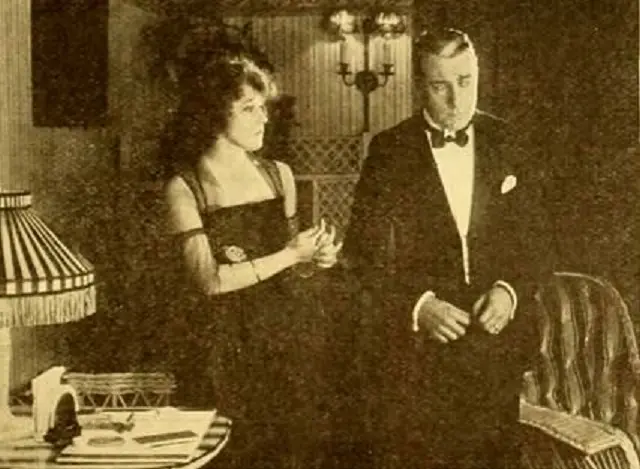
Looking back through the lens of history, The Man Who Stayed at Home is a fascinating document of its time. It captures a specific American paranoia—the fear of the 'enemy within.' Carl Sanderson, the chief spy, is portrayed with a chilling urbanity by Robert Whittier. He is not a mustache-twirling villain but a credible threat, a man who uses his social standing to facilitate destruction. This nuanced approach to villainy is reminiscent of the shadowy antagonists in El protegido de Satán or the complex moral landscapes of A fekete szivárvány.
The film also touches upon the concept of redemption, a perennial favorite of early cinema. Much like the themes of forgiveness in Abraham Lincoln's Clemency or the spiritual trials in The White Sister, the final act of this film focuses on Molly’s realization of her error. Her plea for forgiveness is not just a personal moment; it is a surrogate for the audience’s own potential misjudgments. The film concludes with a celebration of the 'unseen hero,' a powerful message for a nation recovering from a conflict where so much sacrifice happened away from the front lines.
It is impossible to discuss this film without acknowledging the hand of June Mathis. As one of the most powerful women in early Hollywood, Mathis brought a structural integrity to her scripts that was often lacking in the work of her male peers. In The Man Who Stayed at Home, she avoids the pitfalls of melodramatic excess that plague films like Broadway Love or The Innocent Sinner. Instead, she crafts a narrative where every character’s motivation is grounded in the social reality of the era. Even the supporting cast, including the likes of Ricca Allen and Frank Bennett, are given moments to shine, creating a lived-in world rather than a sequence of caricatures.
The pacing of the film is remarkably modern. The transition from the slow-burn suspicion of the first half to the kinetic action of the second is handled with a confidence that suggests a deep understanding of audience psychology. The destruction of the wireless apparatus is a particularly satisfying moment of catharsis, representing the triumph of modern American ingenuity over old-world deception. This theme of technological superiority and moral righteousness is a hallmark of the era’s best work, including the intrigue-heavy Mademoiselle Monte Cristo.
While history has sometimes relegated films like The Man Who Stayed at Home to the category of 'propaganda,' such a label does a disservice to its artistic merits. It is a film about the weight of silence, the price of duty, and the fragility of reputation. King Baggot’s performance remains a standout of the silent era, providing a template for the 'stoic agent' that would become a staple of the espionage genre. The film’s ability to weave together domestic jealousy, social commentary, and high-stakes action into a cohesive whole is a testament to the burgeoning power of the feature film format.
In the broader context of silent cinema, this work sits comfortably alongside other explorations of social class and identity, such as Mongrels. It challenges the viewer to look past the surface, to question the narrative being presented by the majority, and to recognize that the most significant battles are often fought in the quietest of places. For those interested in the evolution of the thriller or the history of American wartime sentiment, this film is an essential and deeply rewarding viewing experience. It is a masterclass in how to build suspense within a confined environment, proving that even in 1919, cinema was already learning how to hold its breath.
A triumphant synthesis of wartime intrigue and domestic drama, anchored by King Baggot's masterful restraint and June Mathis's sharp narrative instincts.
IMDb 5.4
1927
Community
Log in to comment.