DbcultAccessing Vault...
Cult Review
Senior Film Conservator
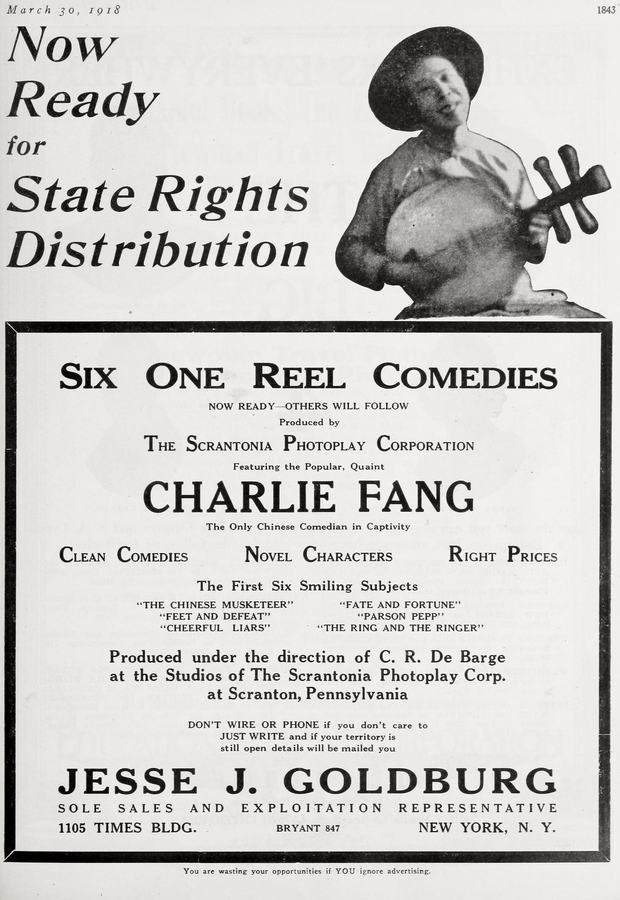
When the opening credits of Fate and Fortune bleed into the screen, the audience is immediately thrust into a chiaroscuro tableau where neon signage flickers against rain‑slick cobblestones. Charles Fang, embodying Jun Li, commands the frame with a gravitas that recalls the brooding intensity of the titular protagonist in The Frame‑Up. Yet Fang's performance transcends mere homage; he navigates a spectrum of emotion that oscillates between calculated detachment and visceral yearning, a duality that mirrors the film’s thematic preoccupation with the tension between predestination and agency.
The screenplay, though bereft of an identified author, exhibits a structural elegance reminiscent of classic noir, yet it is infused with a contemporary kinetic energy. The plot is scaffolded around a singular MacGuffin—the fabled ledger—yet the narrative never devolves into a simplistic treasure‑hunt. Each revelation about the ledger’s contents acts as a narrative fulcrum, shifting the moral axis of the characters involved. This device evokes the moral ambiguity found in The Crimson Dove, where the protagonists grapple with the weight of inherited sins.
Jun’s journey is punctuated by flashbacks that are rendered in a sepia‑toned palette, a visual cue that distinguishes memory from present. These sequences are not mere exposition; they serve as a meditation on the philosophical doctrine that "the past is a prologue." The film’s director employs a deliberate pacing, allowing each scene to breathe, thereby granting the audience space to contemplate the interplay between fate’s inexorable march and the capriciousness of fortune.
Fang’s portrayal of Jun is a masterclass in restrained intensity. He conveys internal tumult through micro‑expressions—a twitch of the left eyebrow, a fleeting glance at the edge of a table—rather than overt melodrama. This nuanced approach aligns him with the understated brilliance of Charles Laughton in David Garrick. Mei, the journalist ally, is rendered with a sharp wit and an unflinching resolve, her dialogue peppered with sardonic quips that cut through the film’s heavier philosophical musings. The chemistry between Fang and Mei crackles, echoing the dynamic duos found in Mountain Dew and To the Death, where partnership becomes a crucible for character revelation.
Madame Xiu, portrayed with icy poise, functions as both antagonist and tragic figure. Her motivations are rooted in a personal vendetta that intertwines with the syndicate’s economic ambitions, rendering her a multidimensional adversary. The supporting cast, though not enumerated in the credits, provides textured layers—each side character a miniature vignette that enriches the film’s tapestry.
The cinematographer employs a palette dominated by deep shadows punctuated by bursts of dark orange (#C2410C) and sea blue (#0E7490), colors that serve as visual metaphors for the film’s central motifs. Dark orange illuminates moments of revelation—like the ledger’s first unveiling—while sea blue bathes the nocturnal cityscape, evoking a sense of melancholy introspection. The occasional infusion of yellow (#EAB308) appears during scenes of fleeting hope, such as the lantern festival climax, where the warm glow contrasts against the oppressive darkness, symbolizing the fragile triumph of human spirit over deterministic forces.
Camera movement is deliberate; slow dolly shots linger on Jun’s contemplative stare, while handheld sequences accompany chase scenes, heightening visceral tension. The use of practical lighting—street lamps, neon signs—augments authenticity, grounding the film’s fantastical elements in a tangible reality. This approach aligns with the visual sensibilities of The Savage Woman, where environment becomes a character in its own right.
An ambient score, interwoven with traditional Asian instrumentation, underscores the narrative’s cultural undercurrents. The recurring motif—a solitary erhu note—mirrors Jun’s solitary quest, while percussive beats accelerate during moments of heightened conflict. The soundscape is meticulously crafted; the clatter of poker chips, the distant wail of sirens, and the rustle of parchment all contribute to an immersive auditory experience. The composer’s restraint mirrors the film’s thematic restraint, never overwhelming the narrative but rather accentuating its emotional beats.
While Fate and Fortune stands as a singular work, its DNA is traceable to a lineage of genre‑defining cinema. The film’s exploration of fate as a mutable ledger recalls the narrative device employed in The Golden Fetter, where a physical object embodies the weight of destiny. Moreover, the climactic lantern sequence evokes the symbolic spectacle of the Festival of Lights in A Long, Long Way to Tipperary, where illumination serves as a metaphor for revelation and catharsis.
The film also dialogues with the moral ambiguity present in The Traitress, where loyalty is constantly renegotiated. Jun’s decision to scatter the ledger’s pages, thereby democratizing power, aligns with the anarchic spirit of Bushranger's Ransom, or A Ride for Life, where protagonists subvert oppressive structures through radical acts of redistribution.
At its core, Fate and Fortune interrogates the notion that wealth is a deterministic force. By rendering fortune as a ledger—a ledger that can be destroyed, fragmented, and disseminated—the film posits that economic power is not an immutable destiny but a mutable construct subject to collective agency. This thematic proposition resonates with contemporary socio‑economic discourses, granting the film a relevance that extends beyond its period setting.
Jun’s ultimate sacrifice—forsaking personal redemption to liberate the city from the Crimson Lotus’s stranglehold—embodies a Christ‑like martyrdom, yet it is grounded in pragmatic realism. The act of scattering the ledger’s pages is both literal and symbolic, suggesting that the fragmentation of power can engender a more equitable societal fabric.
The film’s editing is a study in rhythmic precision. Cross‑cutting between Jun’s present pursuits and his formative flashbacks creates a temporal tapestry that enhances narrative cohesion. The pacing accelerates during the climactic festival, employing rapid montage to convey chaos, then decelerates in the aftermath, allowing the audience to absorb the emotional reverberations of Jun’s sacrifice.
Fate and Fortune emerges as a meticulously crafted meditation on destiny, agency, and the socio‑political dimensions of wealth. Charles Fang delivers a career‑defining performance, supported by a robust ensemble, striking visual composition, and an evocative soundscape. The film’s intertextual nods to genre classics enrich its narrative without succumbing to derivative pitfalls. Its thematic ambition—recasting fortune as a democratizable force—offers a resonant commentary for contemporary audiences. In the pantheon of modern cinema, it stakes a claim as a work that is both intellectually stimulating and viscerally compelling.
IMDb 4.9
1926
Community
Log in to comment.