DbcultAccessing Vault...
Cult Review
Senior Film Conservator
Imagine, if you dare, a metropolis whose arteries once pulsed with silent emulsion: New York circa 1922, soot still bargaining with celluloid for the right to be remembered. Into that breach steps A Fool and His Money, a frolicsome oddity that somehow feels like last night’s hangover and tomorrow’s Twitter brawl stitched together by melting permafrost. The plot, deceptively flimsy—boy loses girl, boy covets skater, fists solve everything—hides a hall of mirrors where masculinity pirouettes on knife-sharp blades and every romantic pledge is a promissory note written on thin ice.
Director-writer duo Harry A. Pollard and H.C. Witwer were never household totems like Chaplin or Pickford; they were raconteurs of the second tier, connoisseurs of cigarette smoke and barroom aphorisms. Their camera in this picture behaves like a tipsy flâneur—sometimes it ogles the garter, sometimes the gutter, but it always finds the wound beneath the wisecrack. The resulting film, only four reels in most surviving prints, nonetheless sprawls across the viewer’s cortex like a fever.
Central Park’s frozen pond becomes a proscenium arch where social classes bump hips: society dandies in raccoon coats, newsboys who skate like arrows, shopgirls dreaming of Gloria Swanson. The art department didn’t build this world; they simply opened a door and let winter do the set dressing. Against this alabaster stage, Hayden Stevenson’s Kane ambles with the buoyant cluelessness of a man who believes luck is a birthright. His gait is half-Bowery swagger, half-church-pew humility—a combination that makes the audience root for him even as we register, with a wince, that Darwin would not.
Enter the skater—never named beyond “the professional,” played with porcelain poise by Doreen Banks. She is introduced via a bravura long shot: the camera stationed on the shoreline as she streaks past, scarf whipping like a battle standard. In 1922, close-ups were currency; Pollard hoards them like a miser for her, so that when we finally get to study her face, the cut feels intimate as a secret handshake. It is a visage that promises the world yet calculates interest; Kane, poor sap, never reads the fine print.
Meanwhile Elsa Peterson embodies the spurned girlfriend—think of a firecracker wrapped in a Valentine. Peterson’s performance is a masterclass in micro-gestures: the fractional tightening of the mouth when she spies Kane’s wandering eye, the way her fur collar bristles like an animal echo of her temper. In narrative terms, she is the hinge; in thematic terms, she is the Greek chorus with a manicure.
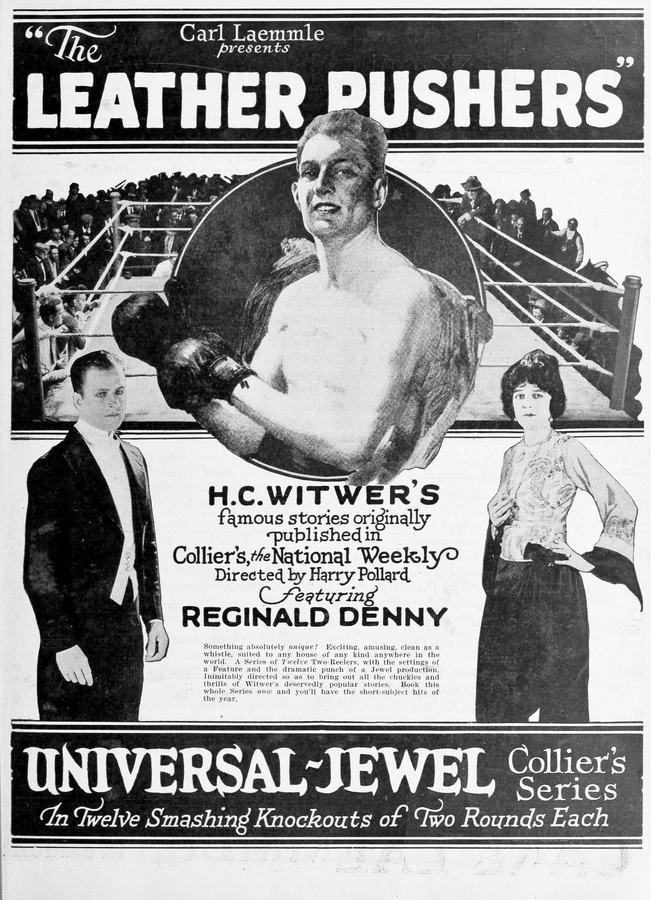
Conflict detonates when the boxer—played by a granite-jawed Reginald Denny—decides the etiquette of scheduled bouts is for effete scribblers. He confronts Kane on the ice, gloves discarded, fists steaming. What follows is not merely a fight but a deconstruction of slapstick itself. The slip-and-slide pratfalls carry real menace; every tumble risks a cracked skull. Intertitles, normally glib, turn stark: “Sometimes a man must crawl to discover he has legs.” The brutality is undercut by comic beats—Kane’s derby rolling like a hubcap, a child handing him a snowball as if it were Excalibur—yet the tension never deflates because Pollard refuses to underscore the moment with a jaunty organ cue. The silence is what scars.
Boxing historians will note the absurdity of a simultaneous knockdown on a frozen lake, but realism is not the currency here—myth is. Kane’s refusal to stay supine plays like a secular resurrection; Denny’s pugilist, arm cocked mid-fall, resembles Icarus clipped by hubris. When the referee tallies “nine” and Kane totters upright, the victory feels less like conquest than like debt collection from a universe that has owed him one since birth.
Yet the film withholds catharsis. In the coup-de-grâce that still tickles campus cine-clubs, the two women vault the ropes (or rather, the imaginary perimeter of the rink) and pummel each other. Hairpins scatter like shrapnel; silk sleeves shred. The image is at once ludicrous and liberating: the patriarchal duel dissolves into matriarchal melee, and the male ego lies spent on the sidelines. Some critics read this as proto-feminist; others call it exploitative catfight. I lean toward a third interpretation: the film recognizes that everyone, regardless of gender, is a glutton for the last word.
Hayden Stevenson never became a marquee immortal; his career zigzagged between one-reelers and character parts until the talkies swallowed him. Here, though, he channels a buoyant pathos reminiscent of Harold Lloyd if Lloyd had swallowed a pint of rum. Watch the way his pupils dilate when the skater glances his way—lust as physics lesson.
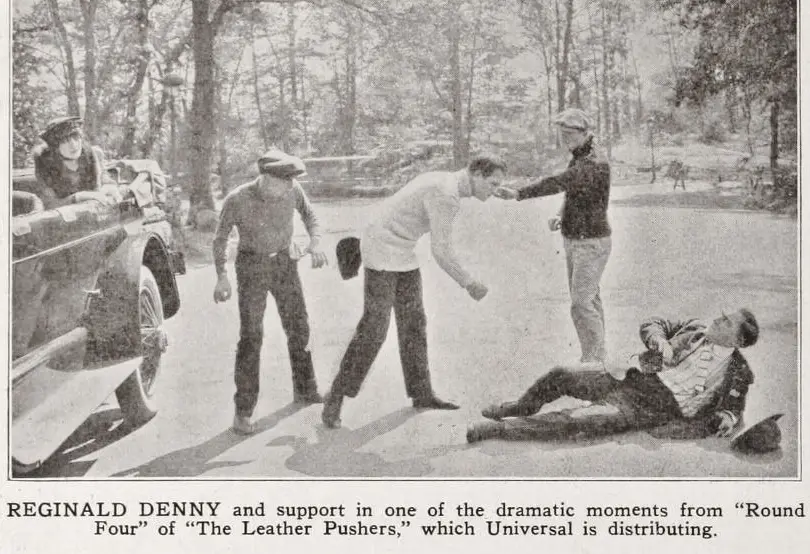
Reginald Denny, suave and lethal, previews the gentleman-boxer archetype later refined by Flynn and Gable. His sneer is velvet-wrapped iron; you understand why Peterson’s jilted lover chooses him as her proxy avenger.
As for Peterson and Banks, they navigate the thin line between archetype and individual with such finesse that one wishes Pollard had ditched the boys altogether and spun the entire yarn around their rivalry. The fact that the final girl-on-girl skirmish got trimmed in certain regional prints (the censors of 1922 were squeamish about female rage) only burnishes its legend.
Cinematographer William F. Alder (uncredited in some archives) lenses the park sequences with a diffusion filter that turns gaslight into honey. The resultant halation softens bruises, rendering violence curiously ethereal—think of von Sternberg’s sin-drenched tableaux stripped of erotic dread yet still narcotic. Interiors, by contrast, are staged in hard chiaroscuro: saloon doorways yawn like inkwells, Kane’s rented room a postage stamp of gloom. This visual whiplash—ethereal exteriors, cavernous interiors—mirrors the protagonist’s oscillation between daydream and comeuppance.
Most surviving prints lack a standardized score, which proves serendipitous. The absence of music transmogrifies ambient noise—projector purr, seat creak, your own pulse—into a percussive accompaniment. Each punch lands with the wet thud of imagination; each skate scrape becomes a violin. If you’re fortunate enough to attend a live-piano screening, insist on a minimalist. Anything florid would trample the film’s fragile equilibrium.
Place A Fool and His Money beside Charge It to Me and you see two divergent philosophies of 1920s screen comedy: the latter trusts verbal sparring (even in silence, via intertitles), the former trusts spatial kinetics—ice, fists, geography as gag. Stack it against Open the Bars, another Pollard opus, and you’ll detect the director’s pet motif: confinement versus release, the cage door always tantalizingly ajar.
Curiously, the film also rhymes with The Son-of-a-Gun: both feature men who mistake masochism for courtship. Yet where that Western mythologizes endurance under scorched skies, Fool urbanizes futility, packaging it in tweed and twirls.
No 35mm negative is known to survive; most extant copies derive from a 16mm abridgment struck for the hinterland circuit. The Library of Congress holds a 38-minute print, albeit with French tinting. Cinephile lore whispers of a longer Czech print—rumored 52 minutes—languishing in a Prague basement since the Iron Curtain. Until some brave archivist cartographs that cellar, we must make peace with the truncated version. Even so, what remains detonates enough ideas to fuel a semester of film seminars.
Because the movie dares to propose that love, like currency, is a counterfeit we agree to honor. Because it stages masculine pride as an ice ballet where every pirouette risks fracture. Because, at a brisk 40-ish minutes, it still leaves bruises longer than some three-hour Oscar behemoths. Most of all, because cinema history is a cafeteria where the same five entrees hog the steam table; A Fool and His Money is the illicit snack you smuggle in your coat—messy, tangy, gone too soon, yet lingering on the tongue like battery and sugar.
Seek it out when the revival house dares to dust off 16mm. Bring a thermos of something spiked; the ice will feel colder, the punches will land harder, and when the two women start swinging, you’ll realize the film isn’t a relic—it’s a weather advisory for the heart.
IMDb —
1925
Community
Log in to comment.