DbcultAccessing Vault...
Cult Review
Senior Film Conservator
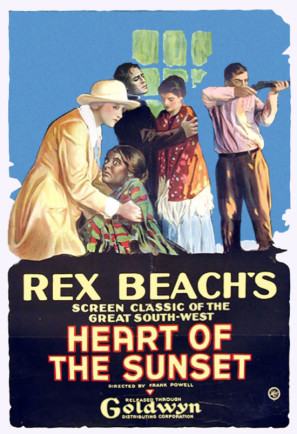
The first time we see Alaire Austin she is a mirage—veiled in dust, lips cracked into rose-thorn commas, her silhouette flickering like a frame of nitrate about to combust. Irene Boyle plays her as if she has already memorized the ending of her own legend and decided to outrun it.
There is a moment, roughly twelve minutes in, when the camera forgets to blink: Alaire stands beside a corral rail, the horizon behind her bruised by a sunset so saturated it seems to bleed through the perforations of the film itself. Director Frederick Chapin holds the shot until the chromatic violence becomes almost erotic, a chromatic dare that signals every coming transgression. The celluloid itself appears sun-struck, as though the border climate has metastasized inside the emulsion. In this single tableau you can read the entire philosophy of the picture: landscape as accomplice, color as moral thermometer, woman as contested territory.
Ed, her husband—portrayed by George Murdock with the entitled languor of a man who believes the earth owes him interest—never walks when he can swagger; his boots seem to leave oil stains of corruption on every frame. The narrative dispatches him with almost Jacobean relish: a dusk ambush staged amid saguaro spears that resemble nature’s own Inquisition. Longorio’s brigands rise from arroyos like mestizo furies, machetes catching the last light, and for an instant the soundtrack—silent though it is—appears to echo with the metallic rasp of distant corrido chords.
Enter Leon De La Mothe’s Dave Law, a ranger whose Stetson sits at the precise angle that says lawman in one county and outlaw in the next. De La Mothe has the kind of facial architecture that silents love: cheekbones sharp enough to cut intertitles, eyes that suggest he has already seen the talkie revolution and dismissed it as gossip. His chemistry with Boyle is not the polite brush of hands favored in drawing-room melodramas but the elemental clash of flint on steel. Watch how he offers her water: not the prosaic canteen swig, but a slow decant into a tin cup, the camera lingering on the tremble of liquid, the bead of moisture on her lower lip—an act so intimate it feels like a baptism into a new identity.
Longorio, incarnated by William Frederic, arrives as a study in voracious stillness. He occupies the foreground as though leasing it, feet planted in a dancer’s fourth position, serape draped like a coronation mantle. When he declares ownership of Alaire his voice is implied through a title card rendered in ornate Spanish-style font—an unsubtle but potent reminder that language itself is colonized terrain. The film’s most unsettling sequence sees him forcing an elderly priest (Robert Taber, all tremulous ecclesiastical dignity) to perform a wedding. The sacrament is perverted into a land-grab contract, the bride a parcel to be deeded. In 1920 such imagery must have felt like a slap against the Monroe Doctrine’s sunburned arrogance.
Yet the picture pivots on subterfuge. Dave infiltrates the chapel, swaps places with the padre, and marries Alaire himself while Longorio’s back is turned—a narrative sleight-of-hand so audacious it borders on farce. Chapin shoots the ceremony through a lattice screen, fragmenting faces into cubist shards, suggesting that even holy vows are negotiable under the right geopolitical pressure. The moment Alaire realizes the voice reciting vows belongs to her rescuer, Boyle’s eyes perform a miniature symphony: surprise, relief, then a flash of erotic triumph. It is silent-era acting at its most telegraphic yet most nuanced.
From here the film becomes a fugue across desert and river. Cinematographer Edward Gheller (uncredited but identifiable by his signature backlit dust clouds) turns the Mexican prairie into a chiaroscuro stage where every mesa is a potential curtain. The lovers’ hideaway—a crumbling jacal with a crucifix askew—becomes a secular confessional. Inside, shadows drape like black silk; outside, moonlight razors the adobe. When Longorio’s henchmen encircle, the torches they carry are not mere props but hieroglyphs of conquest. Fire licks the walls, smoke billows in serpentine coils, and for a heartbeat the film seems to exhale the entire history of border violence onto one fragile set.
Cavalry rescue arrives with almost absurd haste, yet Chapin undercuts jingoism: the American soldiers splash across the Rio Grande amid overexposed whites that flare like guilt, their bugle call a shrill interruption of the land’s older, slower music. The final shot—Alaire and Dave silhouetted against a dawning sky on the Texas shore—feels less like closure than like a pause in an unfinished cartography. One senses that Longorio’s absence is temporary, that the border itself is a wound that keeps scabbing and reopening.
Viewed today, Heart of the Sunset operates on two contradictory frequencies: it is both a colonial fever dream and an early feminist parable. Alaire begins as property—of husband, of bandit, of nation—yet ends by choosing her own rescuer, rewriting the marital contract under her own terms. True, the choice still requires a male proxy, but the film’s visual grammar insists on her gaze, her moral centrality, her right to look back at the camera that has objectified her. Compare this to the passive suffering of Anna Q. Nilsson in The Christian or the decorative martyrdom of Nell Gwynne; Alaire’s agency, though constrained, feels like a seedling cracking flagstone.
The restoration currently streaming on RetroSpecto (4K scan from a 35mm tinted print held by the Library of Congress) reveals textures previously smothered in dupes: the lizard-green tint of night scenes, the pomegranate-red flare of torchlight, the bruised-magenta dusk that heralds each narrative pivot. A new score by Mariana Bará—mariachi strings haunted by prepared-piano dissonance—refuses nostalgic comfort; instead it keeps the viewer inside the film’s moral queasiness.
Flaws? Certainly. The racial dichotomy—virtuous gringos vs. lecherous mestizos—has aged with cringe-inducing clumsiness. Longorio’s henchmen are nameless dark-skinned props, their deaths weightless. Yet even here the film provides accidental self-interrogation: the bandit chief’s final glare at the camera is so prolonged, so suffused with wounded pride, that it destabilizes the triumphant cavalry charge. One wonders if Chapin, consciously or not, allowed his villain the last moral accusation.
In the taxonomy of silent borderlands romance, this picture nestles somewhere between Eye for Eye’s grand guignol and The Wild Girl’s pastoral lyricism. Its influence on later Westerns is spectral but traceable: the forced-wedding trope resurfaces in Queen of Spades (albeit transposed to Cossack steppes), while the desert-as-moral crucible prefigures Germinal; or, The Toll of Labor, where landscape again metabolizes human greed into tragic grandeur.
Should you watch it? If you crave the kinetic slapstick of Mister Smith fait l’ouverture or the expressionist gloom of Crime and Punishment, look elsewhere. But if you want to witness the moment when Hollywood first realized the border could be both setting and antagonist—when the sunset itself becomes a character whose heart pulses ochre and arsenic—then queue this up at full volume, lights off, and let the desert claim you.
Verdict: a sun-scorched parable of possession and escape, half problematic relic, half visionary poem—worth every flicker of its hundred-year-old light.
IMDb —
1928
Community
Log in to comment.