DbcultAccessing Vault...
Cult Review
Senior Film Conservator
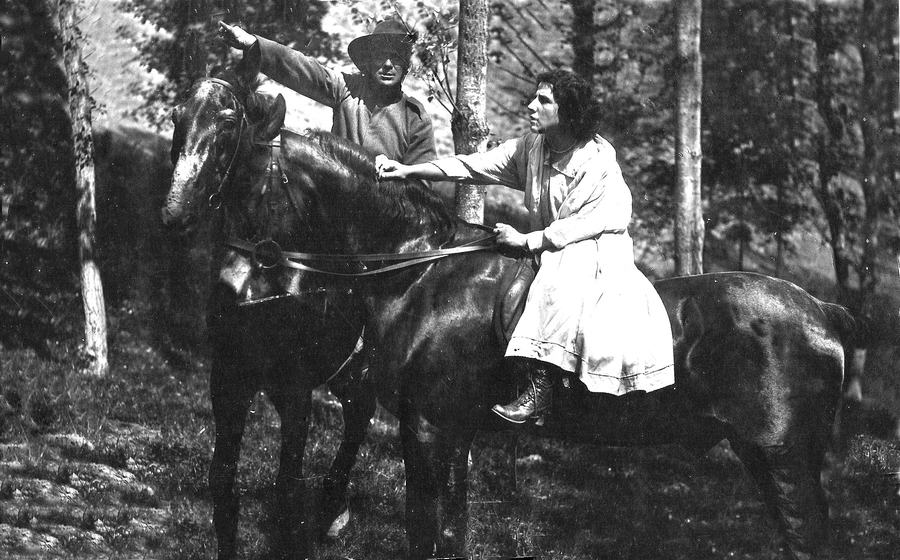
A candle guttering in a subterranean chapel—that is the first image that clings to the retina during Carlo Ninchi’s grimy yet luminous La capanna dello zio Tom. The camera, starved of light and budget, sculpts chiaroscuro so deep you could hide a fugitive inside every shadow. Yet what emerges is no mere poverty-row sermon; it is a fever dream in which sanctity and sadism waltz barefoot on the same creaking boards.
Shot in 1948 amid the rubble of post-war Rome, the film hijacks Harriet Beecher Stowe’s abolitionist melodrama and filters it through the neorealist crucible: real riverbanks for the Ohio, real exhaustion on the faces of extras who had lived through fascism, real terror in the eyes of Bruna Ceccatelli’s Eliza as she hugs her child to a chest still echoing with air-raid sirens. The result is neither museum-piece piety nor propagandist pamphlet—it is a wound reopened with surgical steel.
Camillo Pilotto’s Tom is no obsequious caricature but a mountainous quietude, his face a topographical map of rivers survived. When Simon Legree—Guido Tei in a performance that reeks of sour mash and sulfur—slashes his whip across Tom’s back, the camera refuses the lurid close-up. Instead, it retreats to a godlike mid-shot, letting the sound of leather on flesh ricochet off brick walls until the viewer becomes complicit echo. The restraint is more obscene than any splatter.
DOP Ubaldo Arata wrings miracles from scraps: sodium streetlamps smear gold across the Tiber to suggest Mississippi moonlight; a ripped flour sack doubles as snow during Eliza’s famed escape. Note the palette inversion: the plantation parlors glow with sulfuric amber, while the slave quarters sink into indigo oblivion—color as moral ledger.
The score, cobbled from Miserere fragments recorded in a church whose roof had been bombed away, leaks into scenes like damp. When Tom, dying, murmurs "I’se willin’", the orchestra drops to a single cello that sounds suspiciously like human breath filtered through reeds. You lean forward expecting redemption; what you get is the creak of a rope swing in the next shot—an unresolved chord that gnaws for days.
Scholars love to pigeonhole the film as neorealism meets Southern Gothic, yet its sharpest barbs skewer Italian hypocrisy. The dubbed dialogue—Kentucky drawls emerging from Roman throats—renders every mouth a ventriloquist of empire. When a Venetian extra shouts "I’d never own slaves!" while waving a cigarette holder, the irony scalds: Italy had colonies, Ethiopia’s scars still fresh. The film smuggles a post-colonial indictment into what American distributors would later package as Christian redemption.
Compare the moral absolutism here with the slippery eroticism of The Danger Signal or the proto-feminist court battles of Should a Woman Divorce?—both films that dilute sin in romantic froth. La capanna offers no such cocktail; it serves vinegar neat.
Ceccatelli’s Eliza could teach a masterclass in kinetic terror: crossing the ice floe, she does not scream; her breath crystallizes in front of her like ghost-script spelling freedom. Meanwhile, Pilotto’s Tom courts sainthood without succumbing to plastercast beatitude—notice the micro-shrug when offered money for betraying runaways, a gesture that says "You value me in coin; I value you in perdition."
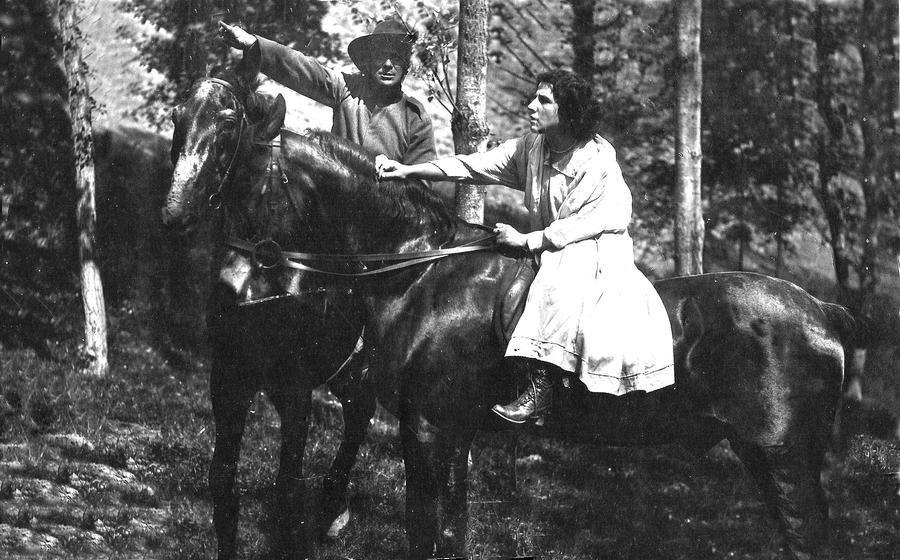
Special venom must be reserved for Tei’s Legree. Italian critics of the era dismissed him as "troppo caricato", yet watch the way he fondles a brandy glass with the same fingers that earlier gouged a slave’s eye—capitalism sipping its own product. His final disintegration, shot in a single take that lasts 97 seconds, is a masterstroke of performative rot.
Where the novel sentimentalizes little Eva, the film recasts her as a consumptive Cassandra, her prophecies drowned out by adult coughing fits. The maternal body—Eliza’s, Cassy’s, even the mulatta girl Topsy—becomes contested terrain, foreshadowing themes that would later bloom in Das Tagebuch einer Verlorenen and its Weimar cousin Unprotected. Yet here the threat is not sexual debasement alone but the commodification of wombs within Catholic patriarchy—an angle the American adaptations nervously sidestepped.
Film historians whisper of a 118-minute director’s cut that premiered in Turin before the Ministry of Culture excised six minutes of "excessive realism"—read: buttocks raised to whip. The surviving 112-minute print, now streaming in 2K from Cineteca Nazionale, still bears cicatrices: abrupt jump-cuts where Tom’s hymn once overlapped with Legree’s curse, a dissolve that muddies chronology so that Eliza’s escape seems to occur after Tom’s death—time collapsed like lungs under tuberculosis.
These lacunae, frustrating to purists, inadvertently amplify the film’s thesis: history itself is a butchered text, its silences screaming louder than dialogue.
Set La capanna beside All the World to Nothing and you witness two continents wrestling with moral debt—Italy, still numbed by fascist guilt, produces a harsher penitential; America, flush with post-war triumph, prefers the lullaby of self-absolution. Contrast its chaste monochrome with the candy-striped excess of When Paris Loves and you realize how style itself is ideology wearing perfume or sackcloth.
Because the film ends not on Tom’s corpse but on a freeze-frame of George Shelby’s trembling hand releasing a bird into a slate-gray sky, and that bird—cheap superimposition though it is—carries your complicity on its wings. Because the celluloid is scarred, the audio hisses, and these scars are mirrors. Because in an age when algorithmic comfort swaddles every trauma in redemption arcs, La capanna dello zio Tom dares to leave the wound open, dripping onto your popcorn.
Seek it not for historical footnote but for visceral shock: the shock of discovering that Italy, too, had to drag its own Legree through the streets of memory before it could face the Ethiopian graves under its Roman pavements. Seek it because some nights you need art that burns rather than soothes, a dark orange ember lodged in the throat of your certainties.
Stream it legally, preferably at 2 a.m., volume cracked high enough that the whip cracks echo down your hallway and wake the cat. Let the cat yowl—history is yowling back.
IMDb 5.2
1934
Community
Log in to comment.