DbcultAccessing Vault...
5.4/10
Senior Film Conservator
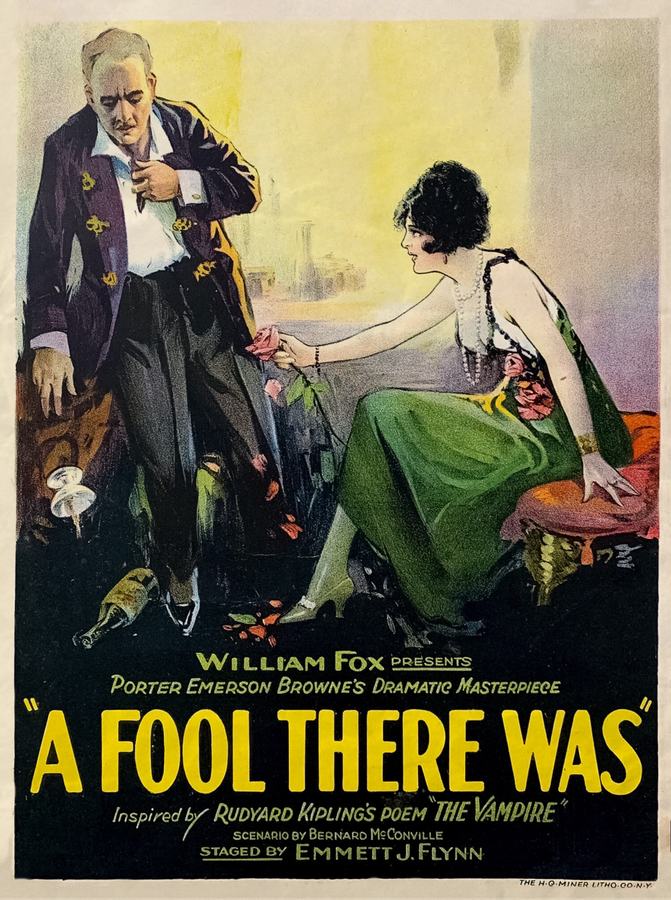
A definitive 5.4/10 rating for a film that redefined the boundaries of cult cinema. A Fool There Was remains a cornerstone of transgressive art.
There are films you watch and films that watch you—A Fool There Was belongs to the latter coven. Shot in 1914, released nationwide in January 1915, this 67-minute fever dream liquefied the moral scaffolding of Edwardian America long before flappers traded garters for jazz. Its DNA still writhes inside neo-noir vixens, Basic Instinct interrogations, even the scarlet-lipped emojis we dispatch like tiny digital mantraps.
Frank Powell’s camera opens on a sun-bleached Italian seaport where deckhands coil ropes and diplomats bray inside striped tents. Enter Theda Bara—not yet the studio-invented “Arabian” vamp, but already a black-haired meteor in a lace tea-gown—her half-lidded gaze promising annihilation with the casual elegance of a cat flicking a broken sparrow. She is never named in the intertitles; she is simply “The Woman,” a mythic force like cholera or a Wall Street panic. In Kipling’s poem that gave the film its title, she is the “fool”-maker; on screen she becomes the template for every cinematic succubus from Marlene Dietrich’s Lola Lola to Catherine Tramell.
John Schuyler, sterling patriarch played by Edward José, boards the yacht Evangeline clutching a diplomatic portfolio and an oblivious wedding band. Within minutes the Woman’s perfume—an unseen cloud of jasmine and sulfur—seeps through the stateroom. Powell rhymes their first tryst with a cutaway to churning propellers, an associative edit that would make Eisenstein purr: carnal collision equals mechanical annihilation.
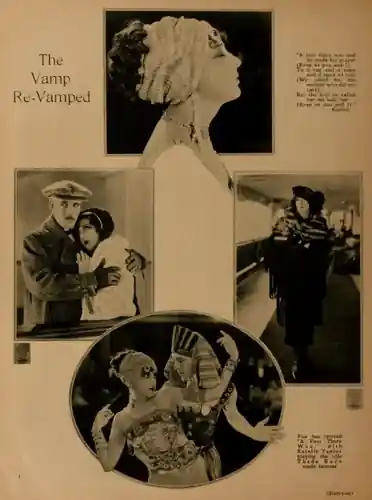
The narrative arc is rudimentary, almost elemental, yet the execution teems with subversive detail. When Schuyler pens a letter to his wife, the Woman’s lacquered fingernails stab the envelope like a bird of prey perforating a field mouse. The act is filmed in extreme close-up, a rarity for 1915, turning the epistolary betrayal into a pornography of small gestures. Later, aboard a Manhattan-bound liner, she drapes herself over a deckchair, legs crossed, casually feeding biscuits to seagulls while Schuyler signs away his fortune on promissory notes. Each signature is punctuated by her low-angle smirk, a visual metronome ticking toward doom.
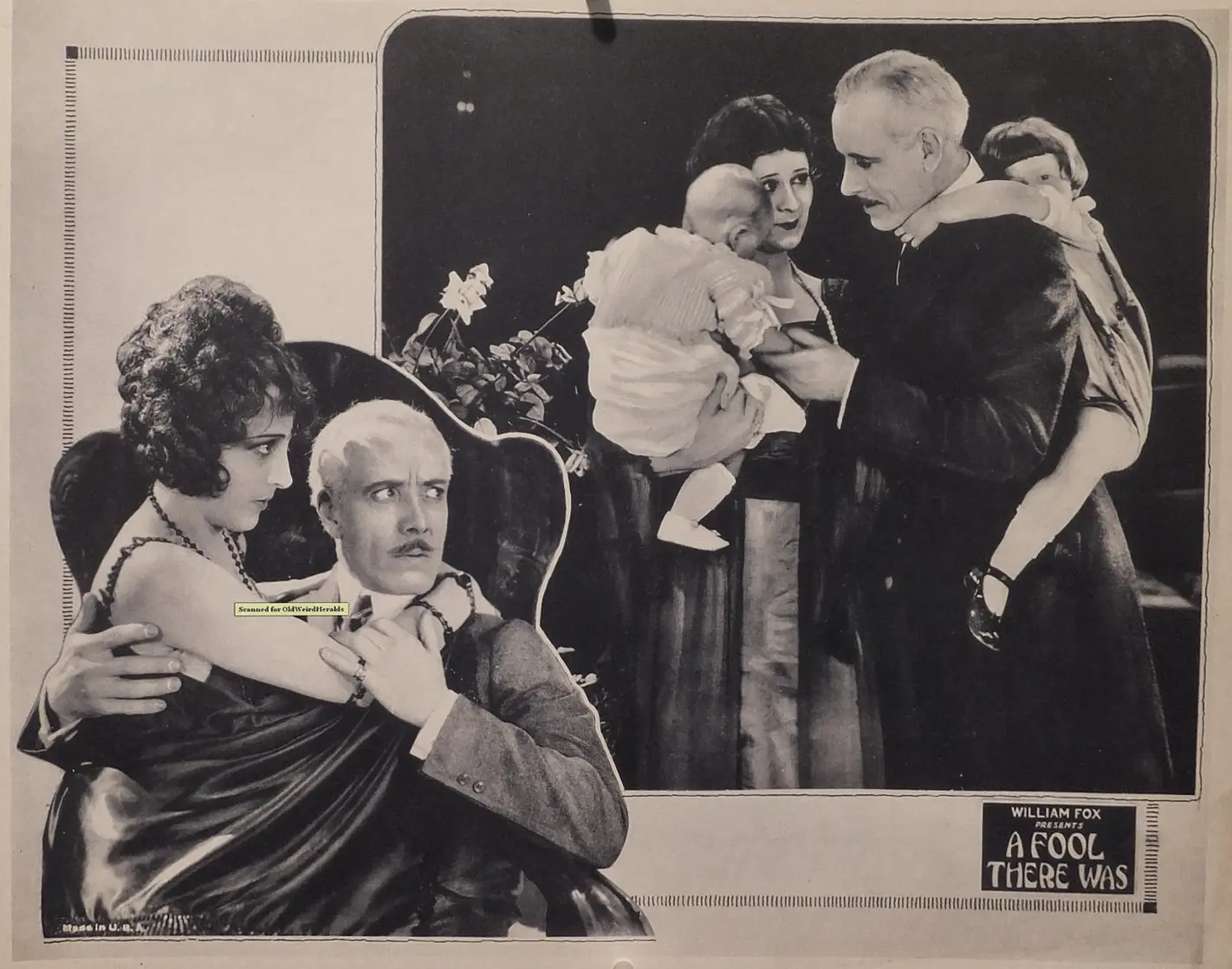
Back home, the director cross-cuts between two domestic tableaux: Schuyler’s wife (Mabel Frenyear) reads Little Women to their daughter, while in a velvet-curtained hotel suite the Woman reclines on a chaise, blowing cigarette halos that dissolve into double-exposure imps dancing above Schuyler’s prostrate form. The moral geometry is merciless; hearth equals naïveté, boudoir equals knowledge. Even the child’s rag doll, abandoned on a bearskin rug, rhymes visually with the Woman’s discarded satin slipper—innocence and experience locked in a danse macabre.
What still astonishes is the film’s refusal to moralize via religious platitudes. No clergy intervene; no spurned wife delivers a sanctimonious monologue. Instead, Powell weaponizes absence: the off-screen child’s unanswered letters become more accusatory than any courtroom verdict. When Schuyler finally staggers back to his brownstone, the door is bolted. Through a keyhole composition we glimpse his wife’s silhouette receding down a hallway veiled in funereal crepe. The camera lingers on his trembling hand, then irises out to black—an early instance of what would later be codified as film noir’s visual despair.
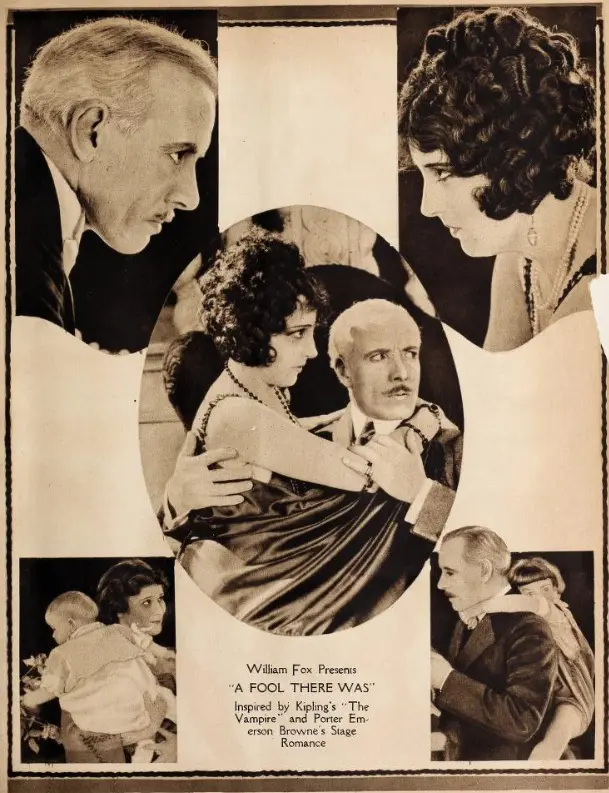
Critics of the era foamed at the mouth. The New York Dramatic Mirror branded it “an offense against civilization,” while the Women’s Christian Temperance Union picketed screenings, certain the film’s success would birth legions of husband-snaring jezebels. Their panic was not unfounded. Box-office ledgers recorded queues snaking around entire city blocks; exhibitors reported repeat viewings by women who arrived in discreet veils, eager to study the tactics of the vamp as though sneaking into a back-alchemy class.
Modern eyes may find Bara’s gestural vocabulary theatrical—arms flung wide in cruciform ecstasy, back arched like a panther in rut—yet the performance pulses with a sincerity that transcends period style. She acts not from the neck up but from the clavicle down, her spine conducting electricity that crackles through 108-year-old nitrate. When she purrs the intertitle “Kiss me, my fool,” the phrase detonates across time; it is Valentino’s “I am love” and Garbo’s “I want to be alone” welded into a single, sadistic sweetheart contract.
Technically the film is a bridge between Méliès-style trickery and Griffith’s emergent grammar. A matte shot places the ghostly figure of Schuyler’s daughter hovering over her father’s debauched revel, a proto-memory palace that anticipates the subjective superimpositions of Sunrise (1927). Tinting amplifies meaning: amber for Mediterranean languor, viridian for the wife’s parlour, sulfurous red for the vamp’s boudoir. These chromatic signifiers feel startlingly contemporary in an age where digital grading has become the lazy crutch of mood manipulation.
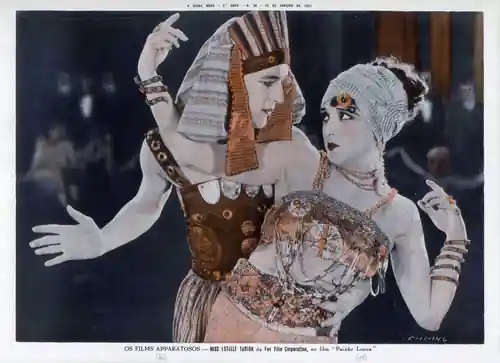
Comparative context sharpens the film’s fangs. Whereas Nanette of the Wilds (1916) sentimentalizes its backwoods temptress, and The Butterfly (1915) punishes its wayward heroine with death in childbirth, A Fool There Was lets its vamp survive, unrepentant, boarding yet another ocean liner in the final shot—an open-ended curse that prefigures the femme fatale’s immortality in Double Indemnity and Body Heat. The film doesn’t restore patriarchal order; it evacuates it, leaving a hole the size of a man’s ego.
Gender politics aside, the movie is also a covert class satire. Schuyler’s downfall is facilitated not merely by lust but by the aristocratic assumption that wealth indemnifies against consequence. The vamp, likely nouveau-riche or courtesan-royale, weaponizes the very capital that once insulated him. When she demands diamonds, she parrots the transactional lexicon of Wall Street: “I’ll take my dividends in emeralds tonight.” The line, delivered via intertitle, is both aphrodisiac and indictment.
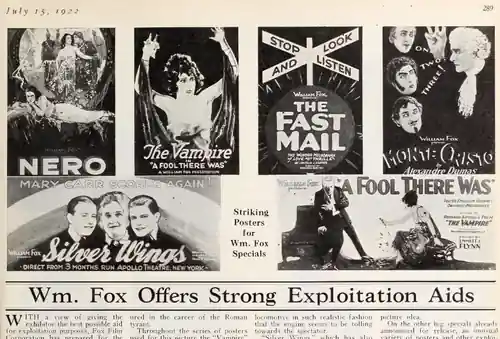
Yet the film’s most subversive coup lies in its marketing alchemy. Fox Studios fabricated Bara’s biography—born in the Sahara, raised by sheikhs, versed in necromancy—turning actress into archetype. The public swallowed the myth whole, proving that in the nascent twentieth century spectacle birthed reality rather than vice versa. One might argue that contemporary influencer culture merely refines the same sleight of hand, swapping sandstorms for ring lights.
Restoration efforts in 2021 by MoMA salvaged a near-complete 35 mm print from a Buenos Aires vault, revealing nuances lost for decades: the glint of a poison vial in the vamp’s beaded purse, the reflection of Schuyler’s wedding photo in her cracked hand mirror. These micro-details deepen the tragedy; we realize the vamp collects marital mementos like scalps, trophies of territorial conquest.
Viewers seeking proto-feminist vindication will be disappointed. The Woman possesses no backstory, no grievance against the patriarchy; she is appetite incarnate. Yet her very opacity renders her a Rorschach onto which society projects its dread of autonomous female desire. She is the return of the repressed, arriving at the very moment when American women were marching for suffrage and birth-control pamphlets circulated clandestinely.
Composer Gillian Anderson (no, not that one) premiered a new score with the Cleveland Orchestra in 2022, replacing the traditional salon waltzes with atonal strings and muffled tympani heartbeats. The result drags the film out of antique curiosity into avant-garde nightmare. During the climactic scene where Schuyler begs for alms on a rain-slick pier, Anderson’s cellos scrape like rusted hawser chains, fusing sound and image into an existential shriek.
Some cinephiles compare the film’s cautionary arc to Der Mandarin (1919), where a merchant’s obsession with a courtesan leads to bankruptcy and death. Yet whereas German Expressionism externalizes angst through twisted sets, A Fool There Was locates horror in the banality of luxury: velvet settees, champagne flutes, monogrammed pajamas. Evil wears not jagged shadows but haute-couture lace.
Academic discourse often pigeonholes the movie as a relic of “the yellow peril” hysteria because of Bara’s fabricated Oriental pedigree. Closer inspection reveals a more insidious xenophobia: the vamp’s racial indeterminacy—part Levantine, part Bohemian, part Manhattan vamp—embodies the era’s fear of mongrel cosmopolitanism eroding Anglo-Protestant stock. She is the melting pot as succubus.
Lest we dismiss the picture as mere morality play, rewatch the sequence where Schuyler, reduced to pawn-shop penury, attempts to telephone his former business partner. Powell frames the call inside a cavernous booth, the earpiece dangling like a noose. The partner’s refusal is conveyed through a single intertitle: “You are not among the living.” The line is both social death certificate and existential epitaph.
Film theorist Laura Mulvey once posited that classical cinema positions woman as spectacle, man as bearer of the look. A Fool There Was complicates the paradigm: the vamp returns the gaze with such voracity that the spectator—regardless of gender—feels devoured. The camera itself seems to blush, tinting the frame crimson whenever she confronts the lens head-on.
Home-video editions from Kino Lorber include a commentary track by Christina Newland who argues that the real tragedy is not Schuyler’s ruin but the vamp’s eternal itinerancy—no domicile, no dynasty, no resting place. She is the cinema’s first flâneuse, forever embarking, never arriving. The observation reframes the film as a covert elegy for female mobility in a culture that policed sidewalks as fiercely as bedrooms.
Contemporary directors mining similar terrain—Phantom Thread, Passages, Decision to Leave—owe a debt to this silent progenitor. The toxicity of obsessive liaison, the narcotic allure of self-annihilation, the erotic charge of financial domination: all were minted here in flickering silver nitrate.
Ultimately, A Fool There Was endures not because it cautions against feminine wiles but because it dramatizes the vertiginous moment when desire eclipses reason, when identity dissolves into appetite. We are all, at some midnight hour, Schuyler on that pier, pockets turned inside out, staring at the black water, hearing laughter that might be hers or our own.
IMDb 5.4
1928
Community
Log in to comment.