DbcultAccessing Vault...
Cult Review
Senior Film Conservator
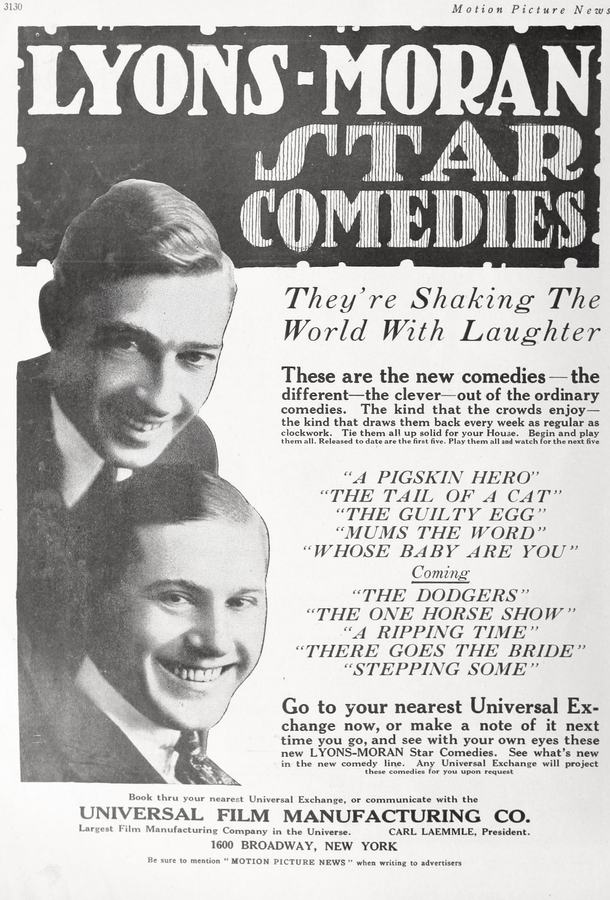
Picture the year 1920: hemlines climb, Prohibition looms, and the Western world teeters between Victorian corsetry and the shimmying abandon of the Charleston. Into this sartorial fault line drops A Ripping Time, a one-reel needle that pricks the balloon of bourgeois pretension. The premise is gossamer-thin—an apprentice tailor loses his trousers—yet the execution is a kinetic sketchbook of class anxiety, masculine fragility, and the terror of exposure. Unlike the courtroom solemnity of Nine-Tenths of the Law or Gothic shadows of The Mystery of the Yellow Room, this film weaponizes slapstick to interrogate what happens when the fabric that literally holds us together fails.
Lee Moran’s Lee is all knuckles and knees, a walking metaphor for apprentice insecurity. Note how he clutches the tape like a rosary, each click of the retractable metal a tiny prayer for acceptance. Eddie Lyons’s Eddie, by contrast, is a peacock in spats, swaggering through the mansion with the unearned confidence of someone whose greatest hardship is a creased lapel. When their respective trousers puddle to the floor, the reversal is swift: the servant becomes fugitive, the master becomes mockery. The camera, usually anchored at waist-height in silent comedy, dips scandalously low, forcing every viewer to confront the nakedness of social mobility itself.
Director-writer Lyons stages the chase like a fugue: three ascending escalations of mortification. First comes the intimate stumble—two men yanking up fabric while maintaining eye contact, a ballet of suppressed screams. Second, the corridor sprint, where booted butlers swing candelabra like cricket bats, each whoosh a bass note under the treble shrieks of debutantes. Finally, the ballroom crescendo: a revolving door becomes a zoetrope of flying coattails, the camera cranked faster than usual so every frame smears into kinetic abstraction. The effect is less Keystone, more Constructivist—chaos as political manifesto.
Modern viewers may scoff at intertitles, yet the pithy cards here deserve calligraphic framing. When Lee scrawls "Inseam: 32" only for the numeral to be superimposed over Eddie’s mortified face, the film winks at Freud: measurement is emasculation by numbers. Compare that visual pun to the staid romanticism of Just a Song at Twilight, where longing is conveyed by moonlit pianos rather than numerical ridicule.
Edith Roberts, the sole prominent woman in the ensemble, spends most of the film’s runtime gasping behind a Japanese fan. Yet watch her eyes—those flickers aren’t shock, they’re calculation. In a society where a glimpse of ankle could ruin a girl, she weaponizes the scandal, positioning herself as the inadvertent curator of tomorrow’s gossip. Her fan snaps shut like a guillotine blade at the precise instant Lee’s posterior disappears behind a velvet curtain; the cut is intellectual, not cinematic. In that heartbeat she becomes the film’s stealth auteur, directing social death by rumor.
Scholars often trace the trousers-dropping trope to early Georges Méliès trick films, yet A Ripping Time inoculates the gag with modern venom. Where Méliès used exposure for magical whimsy, Lyons and Moran weaponize it to lampoon post-war masculinity already frayed by trench coats and shell shock. The gag would echo forward into Hitchcock’s "murder of a necktie" in Strangers on a Train, into the zipper nightmares of There’s Something About Mary, yet rarely again with such economic brutality—eight minutes, two men, zero dignity.
Surviving prints—what few remain—display the silvery shimmer of orthochromatic stock: faces bleached into porcelain, burgundy dinner jackets devoured into tar-black slabs. The mansion’s real candles flicker like faulty Morse code, their jittery halos predicting the coming conflagration of reputations. When Lee ducks beneath a banquet table, the underlit nitrate transforms his face into a gargoyle, all shadowed eye-sockets and rictus grin—a horror-comedy hybrid that predates Conrad Veidt’s somnambulist stare by months.
Tri-author credits can yield tonal Frankensteins, yet here the synergy is surgical. Eddie Lyons supplies the performative velocity; Lee Moran injects nebbish pathos; Leslie T. Peacocke, a newspaperman moonlighting as scenarist, grafts epigrammatic bite onto intertitles. Note the triple entendre of the title itself: ripping as British slang for "marvelous," as American vernacular for "rending fabric," and as the temporal slice of an era ripping itself from 19th-century repression. Try finding that semantic density in The Secretary of Frivolous Affairs, whose title promises more than its featherweight plot delivers.
Clocking roughly eight minutes, the film lands in the sweet spot where gag fatigue never sets in. Contrast with Cohen’s Luck, whose feature-length ethnic caricature sours contemporary palates, or Shore Acres, whose pastoral melodrama stretches like taffy toward the 90-minute mark. A Ripping Time understands the brevity demanded by slapstick; it enters, eviscerates, exits—leaving only the faint scent of singed gabardine.
Historians cite the film as a footnote in Eddie Lyons’s sprawling catalogue, yet its DNA replicates in unlikely corners. Jacques Tati’s choreographed disintegration of middle-class facades? Look for the ancestral chromosome in Lee’s frantic hop over a bearskin rug. The Coen Brothers’ penchant for cosmic humiliation? Trace it to Eddie’s aristocratic smirk dissolving into dental-chattering panic. Even the post-climactic trousers-hand-off—an awkward peace treaty stitched from charity cloth—prefigures the reluctant solidarity in O Brother, Where Art Thou?
Currently streaming only in 2K scans on boutique platforms, the print cries out for 4K restoration; the candlelit sequences brim with micro-scratches that resemble celluloid dandruff. A crowdfunding campaign spearheaded by the unnamed archivists at Nitrate Shadows aims to reconstruct two missing intertitles, one reportedly a double-entendre limerick too racy for 1920 Kansas censors. Until then, viewers must squint through the murk, imagining the lost witticism that once crowned the chaos.
I encountered the film on a 16mm bootleg during grad-school insomnia, the projector’s hot bulb scenting the dorm with warm celluloid. When the trousers fell, so did my composure; I woke my roommate with involuntary cackles. Years later, lecturing on slapstick theory, I queued the same scene for 200 undergraduates. The laughter arrived on cue, but something else stirred—a collective wince, an empathic blush. We were laughing at the ancient terror of exposure, the universal nightmare of being caught literally and figuratively with our pants down. Cinema had collapsed a century in eight minutes.
Minor? Yes. Ephemeral? Arguably. Yet A Ripping Time distills the entire silent era’s credo: motion is emotion, and the human body—ridiculous, fragile, forever on the verge of unraveling—is the most honest canvas. In an age when digital avatars never snag their jeans on door handles, there is revolutionary nostalgia in watching two men confront the abyss one ripped seam at a time. Seek it out, laugh, cringe, and—if you’re wise—double-stitch your waistband before pressing play.
IMDb —
1922
Community
Log in to comment.