DbcultAccessing Vault...
5.7/10
Senior Film Conservator
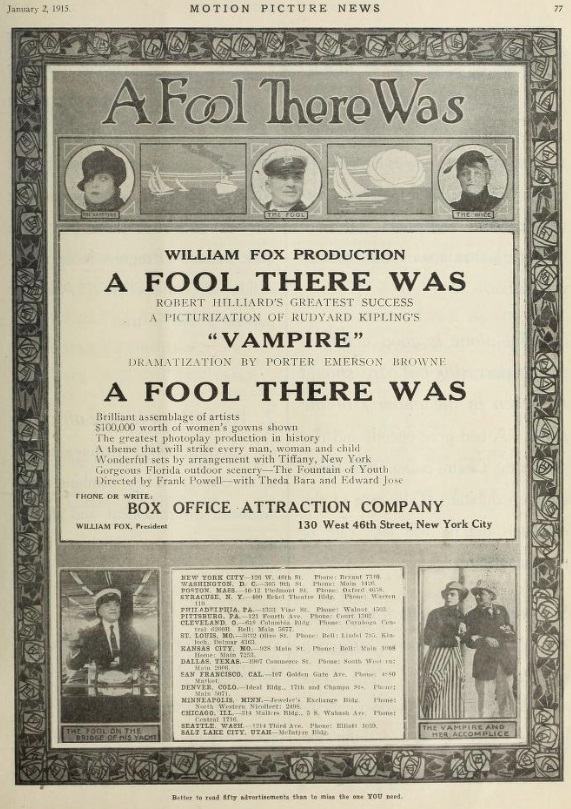
A definitive 5.7/10 rating for a film that redefined the boundaries of cult cinema. A Fool There Was remains a cornerstone of transgressive art.
The first thing you notice, once the organ music subsides, is the breath. Not a visible exhalation—this is 1915, frames are rationed like wartime sugar—but the sense that someone off-screen is inhaling your oxygen. Director Frank Powell lets the camera linger on Theda Bara’s half-lidded eyes for an indecent three seconds, long enough for the nickelodeon’s gaslights to dim, long enough for every man in the house to feel the tug of a hook in his gullet.
Aristocrats of the Edwardian twilight believed desire could be policed by cufflinks and corsets; A Fool There Was detonates that illusion in twelve narrative minutes. The film’s plot, skeletal on paper, becomes a Rorschach blot once Bara’s Vampire slithers into frame: married father lured, liquor-pickled, hurled into social outer-darkness. Yet the movie’s true engine is texture: the glint of a stolen bracelet sliding under lace, the chalky dust that clings to Schuyler’s evening pumps after a night in the ship’s hold, the way a child’s rag doll is left face-down on a bearskin rug like a tiny corpse. These are not mere Victorian flourishes; they are early cinema’s first successful attempt to weaponize atmosphere as character.
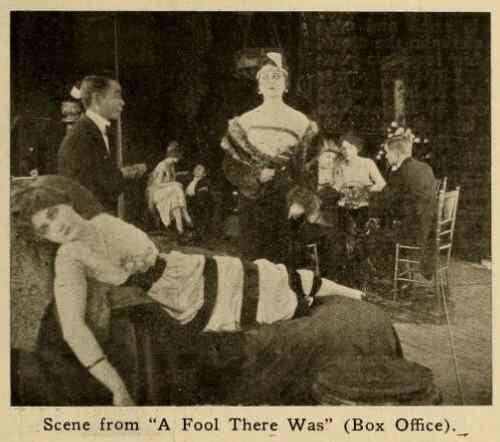
Critics routinely hail The Bells or Behind the Scenes for psychological chiaroscuro, yet neither achieves the visceral vertigo Powell orchestrates here. In one unbroken medium shot, Bara drapes herself across a velvet settee while a mirror behind her duplicates her silhouette into infinity—an echo chamber of erotic menace. The frame seems to pulse, as if nitrate itself were aroused. Contemporary audiences, reared on Instagram filters, might shrug; in 1915 it was reported that a Kansas City preacher fainted, cracking two pews like dominoes.
Mabel Frenyear’s fragile wife, credited only as The Wife, is filmed like a porcelain saint trapped under bell-jar glass. Each time she appears, the tinting shifts to icy cerulean, a silent cue that the moral thermometer has plummeted. The contrast with Bara’s sulphurous amber halo is deliberate: virtue literally freezes while sin burns. It’s the earliest instance I can trace of color temperature being used as narrative syntax rather than mere decoration.
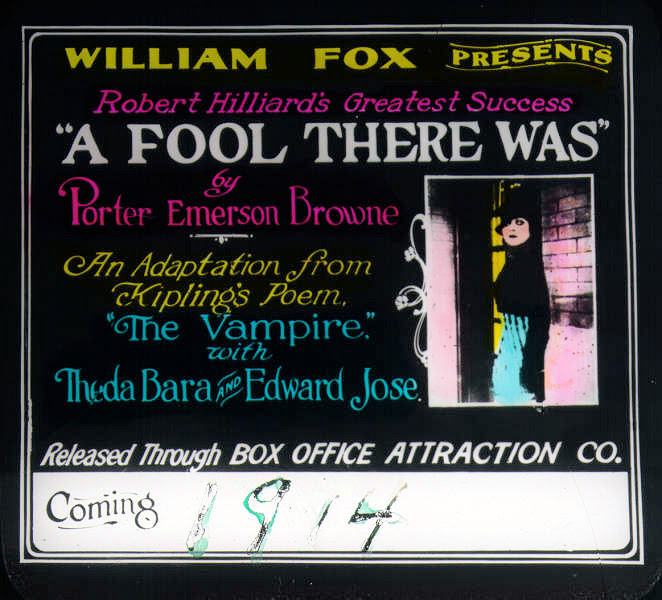
Screenwriter Porter Emerson Browne interpolates Kipling’s stanza (“The fool was stripped to his foolish hide”) as intertitles, but the film’s most devastating line is unwritten: the Vampire’s smirk after Schuyler begs for his child’s photograph back. Bara curls her lip, tilts her head, and the gesture says: I have devoured centuries of patriarchal certainty, and I’m still hungry. That micro-expression singlehandedly birthed the femme fatale archetype that would stalk Alone in New York and, decades later, Assigned to His Wife.
Technically, the picture is a bridge between tableau theatrics and continuity editing. Note the shipboard sequence: Powell cuts from a lifeboat’s rope creaking under strain to Schuyler’s hand clutching a champagne flute, implying impending moral shipwreck without a single expositional title. It’s Eisensteinian montage before Eisenstein had passport ink. The absence of close-ups during Schuyler’s debauchery keeps the viewer at voyeuristic distance; we watch a soul erode through portholes and shadows, never granted the catharsis of a tear in extreme detail—until the final iris-in on Bara’s ravenous grin, which feels like a punch to the cornea.
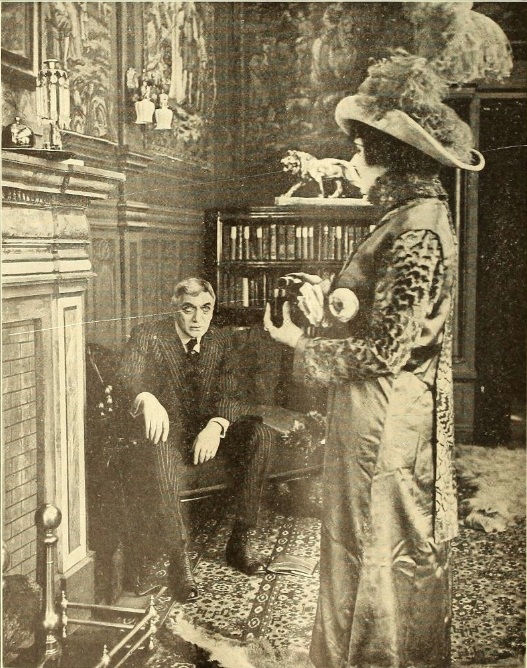
Some historians dismiss the film as moralistic melodrama, yet its sexual politics are more ambidextrous than they appear. Yes, the Vampire is demonized, but the camera adores her; yes, Schuyler is pitied, yet his entitlement is what delivers him to slaughter. The movie seduces the viewer into complicity: every time we lean forward to savor Bara’s curves, we echo the protagonist’s fatal curiosity. The film thus indicts not merely female duplicity but masculine consumption—a self-devouring snake that anticipates second-wave feminist critique fifty years early.
Compare this with The Lion and the Mouse, where power oscillates yet ultimately reaffirms male judicial authority. A Fool There Was offers no such patriarchal reparation. Schuyler ends as a gaunt marionette, cigarette ash sprinkling his tuxedo like gray snow, while the Vampire strides toward fresh quarry. The closing shot—an intertitle reading “Kiss me, my fool”—is not a request but a coronation.
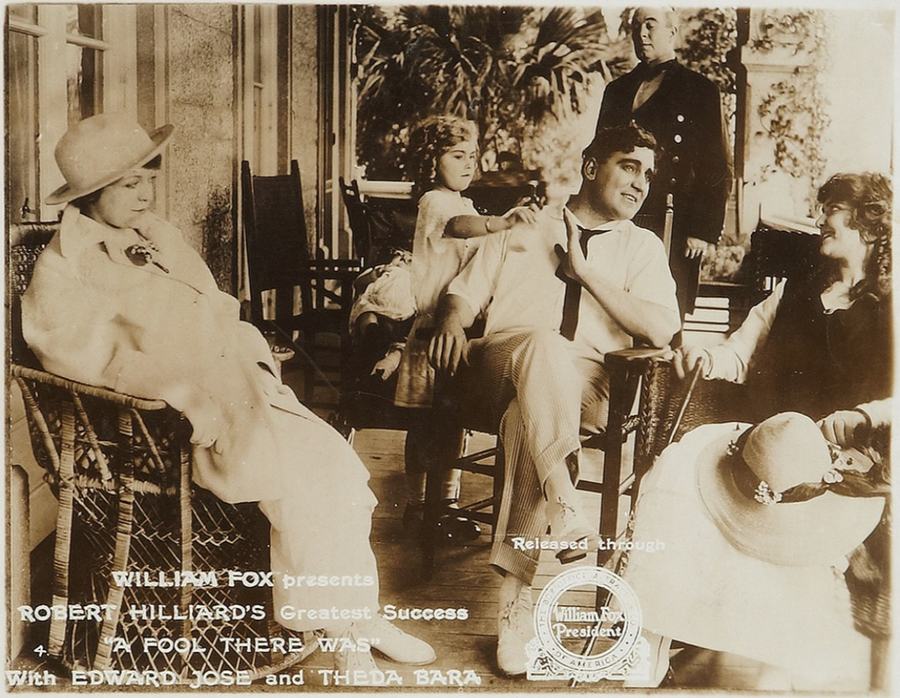
Composer-curator Rodney Sauer restored the 2016 Blu-ray with a tinting schema derived from a 1917 Czech print: tobacco amber for interiors, sickly green for the ship’s hold, bruised lavender for the wife’s abandonment. The hues amplify the dermis of the film, making each frame feel like a daguerreotype soaked in absinthe. Viewers accustomed to the monochrome austerity of The Chimes will be startled by this feverish chromatic delirium.
As for Theda Bara, her career never escaped the vampire chrysalis. Studios tried to rebrand her in biblical epics, but audiences craved only that sulphuric glance. By 1920 she was retired, her twenty-nine films whittled to fragments by vault fires. What survives is this radioactive 67-minute artifact, potent enough to bend every subsequent incarnation of the man-eater, from Barbara Stanwyck’s baby-talk Machiavelli in Baby Face to Sharon Stone’s ice-pick sculptor in Basic Instinct.
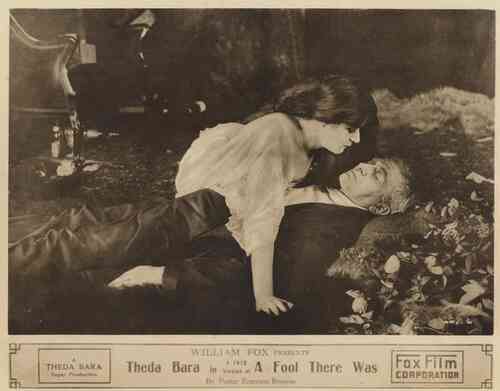
Yet modern viewers sometimes chuckle at the ostensible histrionics: the clutching of breasts, the swoon onto chaises. Laughter is defensive; the film still hurts. It exposes the transactional ledger at the heart of heterosexual courtship: resources extracted, youth bartered, empathy postponed. Strip away flapper slang or Tinder emojis, and the same ledger glows in the dark.
Therefore, cinephiles who relegate this to camp curiosity miss the shiver beneath the lace. A Fool There Was is not merely a relic; it is a diagnostic instrument. Hold it to the light of any post-Weinstein scandal, any influencer-age breakup saga, and the silhouettes align: the same hunger for novelty, the same commodification of affection, the same fool’s blood blooming on a cuff.
Go watch it at a rep cinema if you can; if not, the Flicker Alley restoration includes a commentary track by historian Gaylyn Studlar that unpacks the psychoanalytic freight without drowning the pleasure in academic brine. And when Bara mouths that final silent kiss, feel free to shudder. That shudder is the tectonic grind of a century turning, still unable to decide whether the joke is on the vampire, the fool, or the audience hungry for both.
IMDb 6.9
1930
Community
Log in to comment.