DbcultAccessing Vault...
Cult Review
Senior Film Conservator

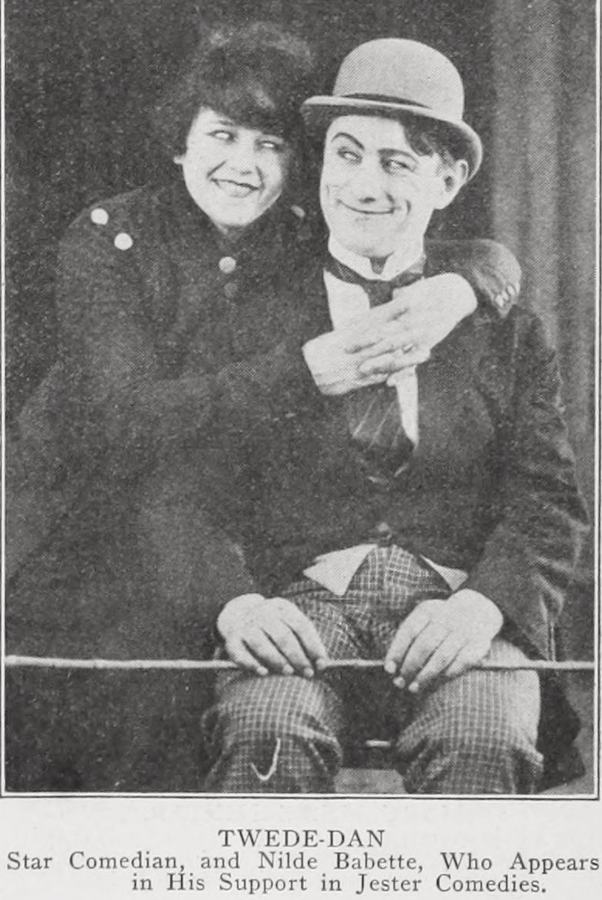
The opening tableau of *The Recruit* establishes a bucolic tableau: rolling fields, a modest farmhouse, and a young man whose eyes betray a restless yearning. Twede‑Dan, portrayed with earnest vulnerability by Marcel Perez, is not a soldier by birth but a lover by conviction. His decision to enlist is less about patriotism than about the alchemy of romance—he believes that a uniform will transmute him from ordinary to extraordinary in the eyes of his beloved.
Seiter’s direction employs a measured cadence, allowing the camera to linger on the protagonist’s clenched fists, the rustle of his uniform, and the distant echo of marching drums. The recruitment office scene, shot with stark chiaroscuro, underscores the institutional indifference Twede‑Dan confronts. The officer’s dismissive wave is a visual metaphor for societal gatekeeping, a theme that resonates across silent-era narratives where the individual’s desire collides with bureaucratic rigidity.
When the enlistment attempt fails, the narrative pivots into the realm of subconscious reverie. Here, the film’s visual language blossoms. Dream sequences are rendered in soft focus, with ethereal lighting that bathes Twede‑Dan in a golden aura, suggesting an inner heroism that reality denies. In one striking vignette, he leads a charge across a mist‑shrouded bridge, his silhouette framed against a crimson sky—a composition that recalls the heroic tableaux of *The Recoil* while retaining a uniquely intimate emotional core.
Nilde Baracchi, cast as the object of Twede‑Dan’s affection, delivers a performance that balances poise with palpable yearning. Her glances are laden with unspoken questions, and her eventual smile—when the dream culminates in a tender embrace—functions as the narrative’s emotional fulcrum. The chemistry between Baracchi and Perez is subtle yet resonant, echoing the nuanced relational dynamics found in A Man's Man, where love is conveyed through lingering looks rather than grand gestures.
Wilbert Shields, in the role of the seasoned sergeant, provides a counterpoint to Twede‑Dan’s idealism. His gruff demeanor and measured dialogue (rendered through intertitles) remind viewers of the harsh realities of military life, a thematic echo of the stark realism in After the War. Shields’ presence grounds the film, preventing the dream sequences from drifting into pure fantasy and instead anchoring them in a bittersweet awareness of what is unattainable.
The screenplay, co‑written by Seiter and Perez, is a study in economical storytelling. Intertitles are sparing, each line chosen for maximum impact. When Twede‑Dan declares, “I will wear the colors of our nation if it means I may stand before her,” the audience feels the weight of his resolve without the need for verbose exposition. This restraint mirrors the narrative efficiency of Shadows of Her Pest, where silence speaks louder than words.
Cinematographer Jacques LeBlanc employs a palette that, while constrained by the monochrome medium, suggests color through tonal contrast. The dream sequences are bathed in high‑key lighting, creating a luminous quality that feels almost sepia, hinting at nostalgia. In contrast, the waking world is rendered in low‑key shadows, emphasizing Twede‑Dan’s internal conflict. This visual dichotomy is reminiscent of the stylistic choices in Toys of Fate, where light and darkness delineate reality from aspiration.
The film’s pacing is deliberate, allowing the audience to inhabit Twede‑Dan’s oscillation between hope and disappointment. A particularly effective montage shows him laboring in the fields, his muscles straining, juxtaposed with a rapid succession of dream images: a battlefield, a medal ceremony, a jubilant crowd. The editing rhythm accelerates during the dream, then decelerates as he awakens, reinforcing the emotional whiplash of his experience.
Beyond its narrative, *The Recruit* offers a commentary on the social constructs of masculinity in the 1920s. Twede‑Dan’s belief that military service equates to romantic worth reflects a cultural zeitgeist where valor and courtship were intertwined. The film subtly critiques this notion by showing that his imagined heroics, while spectacular, are insufficient without genuine emotional connection—a lesson that aligns with the moral undercurrents of Her Life for Liberty.
The supporting cast, though limited in screen time, enriches the world-building. A village elder, portrayed by an uncredited actor, offers a proverb about dreams: “A man may chase the sun, but the moon will still guide his heart.” This line, delivered via intertitle, encapsulates the film’s central thesis—that aspiration, however lofty, must be tempered by authentic affection.
From a technical standpoint, the film’s set design is modest yet effective. The recruitment office’s wooden desk, the rusted rifles, and the simple village square all convey a lived‑in authenticity. Props are used sparingly, allowing the audience’s imagination to fill gaps—a technique that aligns with the minimalist aesthetic of The Model.
Music, though not present on the original print, has been reconstructed for modern screenings. A score that weaves a plaintive violin motif during Twede‑Dan’s waking moments and a triumphant brass fanfare during his dreams enhances the emotional dichotomy. This auditory layering mirrors the film’s visual contrast and deepens the viewer’s immersion.
The climax arrives not with a battlefield victory but with a quiet, intimate scene: Twede‑Dan, now back in his village, approaches the woman he loves under a starlit sky. He offers no medals, no grand declarations—only a simple, sincere promise that his heart will forever bear the courage he imagined. Her acceptance, conveyed through a tender smile and a hand placed over his, resolves the narrative arc without resorting to melodramatic excess.
In comparing *The Recruit* to its contemporaries, one notes its unique blend of personal drama and dreamlike escapism. While The Bushranger's Bride leans heavily on external conflict, and Three Weeks indulges in overt romantic melodrama, *The Recruit* finds a middle ground where internal struggle is as compelling as any external battle.
The film’s legacy endures in its subtle interrogation of the hero myth. It asks whether the trappings of valor are necessary for love, or whether love itself can sanctify the ordinary. This philosophical query remains relevant, inviting modern audiences to reflect on the ways we construct identity through societal expectations.
Overall, *The Recruit* is a masterclass in silent‑era storytelling, balancing visual poetry with narrative clarity. Its performances, direction, and thematic resonance coalesce into a work that feels both of its time and timeless. For scholars of early cinema, enthusiasts of romantic drama, and anyone intrigued by the interplay of aspiration and affection, this film offers a richly textured experience that rewards repeated viewings.
The film’s availability on curated streaming platforms, accompanied by scholarly commentary, ensures that its nuanced exploration of love, ambition, and the power of dreams continues to inspire. As the credits roll, the lingering image of Twede‑Dan’s silhouette against the night sky serves as a reminder that heroism often resides not in grand gestures, but in the quiet resolve to love sincerely, even when the world offers no uniform to wear.
IMDb 4.8
1919
Community
Log in to comment.