DbcultAccessing Vault...
6.7/10
Senior Film Conservator
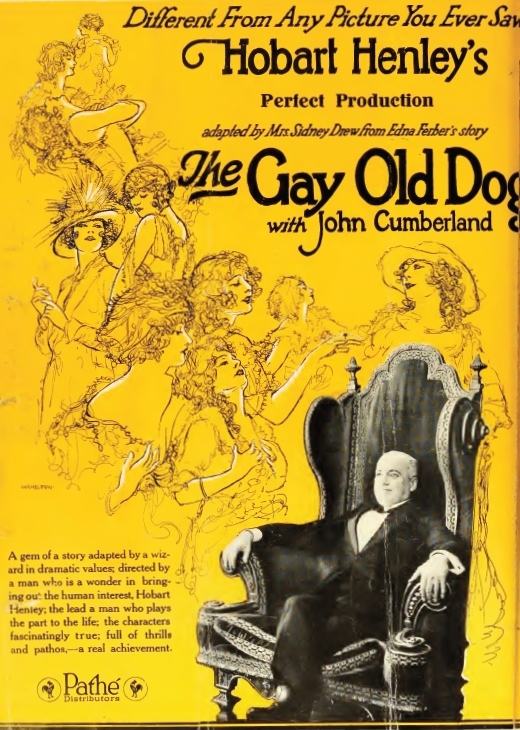
A definitive 6.7/10 rating for a film that redefined the boundaries of cult cinema. A Gay Old Dog remains a cornerstone of transgressive art.
In the annals of early cinema, certain films emerge not just as historical artifacts, but as poignant mirrors reflecting the societal anxieties and personal sacrifices of their era. Mrs. Sidney Drew and Edna Ferber’s 1919 collaboration, A Gay Old Dog, is precisely one such cinematic revelation. It’s a narrative that, despite its silent film origins, speaks volumes about the crushing weight of filial duty, the insidious creep of resentment, and the profound tragedy of a life lived not for oneself, but in thrall to the demands of others. This is not merely a story; it’s a lament, a stark portrayal of a man’s spirit slowly eroded by an inescapable pledge.
At its core, A Gay Old Dog introduces us to Jimmy Dodd, portrayed with compelling pathos by John Cumberland. He is the archetypal dutiful son, the bedrock upon which his widowed mother and three perpetually bickering, unwed sisters depend. This familial dynamic, fraught with unspoken expectations and overt demands, sets the stage for the film’s central conflict. Jimmy, on his mother’s deathbed, makes a solemn promise: he will not marry until his sisters are settled. This vow, seemingly born of love and loyalty, quickly transmutes into a gilded cage, trapping Jimmy in a life of perpetual self-denial. The film, in its quiet yet insistent way, forces us to confront the ethical dilemma of such a promise – is it a testament to character, or a recipe for profound, lifelong regret?
The initial attempts to fulfill this Herculean task are depicted with an almost farcical futility. Jimmy and his fiancée, Emily Harrison (played by Emily Lorraine), embark on a Sisyphean quest to find husbands for the Dodd sisters. The sisters themselves, embodied by Marie Chambers, Nell Tracy, Gertrude Robinson, Inez Ranous, and Frances Nelson, are not presented as malicious, but rather as self-absorbed, perhaps products of a societal structure that offered limited avenues for women beyond marriage. Their collective inability or unwillingness to find partners directly impacts Jimmy’s future, creating an immediate and palpable tension. The film subtly highlights the societal pressures on women of that era, where spinsterhood was often seen as a social failing, yet simultaneously, the sisters’ own personalities seem to contribute to their predicament.
The emotional pivot of the film arrives when Jimmy, recognizing the impossibility of his task, makes the agonizing decision to release Emily. This moment is imbued with a quiet devastation. Emily, a symbol of the life Jimmy could have had—a life of companionship, love, and perhaps, children—is allowed to slip away. She marries another, and her departure leaves a void in Jimmy’s life that nothing, not even eventual prosperity, can truly fill. The film’s genius lies in depicting this loss not with histrionics, but with a lingering sense of absence that permeates Jimmy’s subsequent years. It’s a testament to the screenplay’s foresight that this early sacrifice casts such a long, melancholic shadow over the entire narrative. One might draw a parallel to the inescapable societal constraints explored in films like Pride, where individual desires often clash tragically with the prevailing social order, though A Gay Old Dog focuses more intently on the internal, self-imposed prison.
Years, then decades, pass. The film masterfully conveys the passage of time, not through elaborate visual effects, but through the cumulative weight of Jimmy’s unfulfilled existence and the persistent, grating presence of his sisters. Their complaints, once perhaps merely irksome, become a constant backdrop to his life, a reminder of his stagnant state. Yet, life, in its unpredictable fashion, eventually offers a slight reprieve. Two of the sisters, through some undisclosed turn of events, finally marry, while the third, perhaps seeking a semblance of purpose or independence, finds work at a settlement house. This shift, while belated, finally removes the direct impediment to Jimmy’s freedom, but at what cost?
Concurrently, the film introduces a compelling backdrop: the advent of war. This global conflict, while bringing immense suffering, ironically becomes the catalyst for Jimmy’s professional success. His leather business flourishes, transforming him from a struggling provider into a man of considerable wealth. This juxtaposition of personal stagnation and professional boom is particularly sharp. It highlights the often-arbitrary nature of fortune and the bitter irony that financial success arrives only after his personal life has been irrevocably sacrificed. This prosperity, however, feels hollow, a gilded consolation prize for a life unlived.
With his newfound freedom and wealth, Jimmy attempts to reclaim a semblance of youth and romance. He courts younger, vivacious women, embarking on what his sisters, with their characteristic judgmentalism, derisively label as the antics of a “gay old dog.” This epithet, intended as a cutting remark, becomes a tragic descriptor of Jimmy’s belated, and ultimately pitiful, romantic endeavors. These attempts are depicted not as triumphant resurgence, but as clumsy, unfulfilling gestures, highlighting the deep chasm between his desire for connection and the years of emotional atrophy he has endured. The film masterfully conveys that some losses are simply irrecoverable, and youth, once spent, cannot be simply bought back with wealth or a change of heart.
The true emotional climax, however, arrives not through a grand confrontation, but a quiet, deeply poignant observation. Jimmy witnesses a parade, a public display of patriotism and sacrifice, as young men march off to war. Among them, he spots Emily’s son. This moment is a gut-punch of realization. The boy, a tangible representation of the family and future Jimmy had forsaken, marching off to a destiny that might have been his son’s, shatters his carefully constructed facade of contentment. It’s a powerful cinematic device, demonstrating how external events can trigger profound internal reckonings. This scene resonates with the backdrop of global conflict, much like how war shapes personal destinies in films such as The Eagle's Nest or The World Apart, but here, the war serves as a mirror, reflecting Jimmy's personal desolation.
The final confrontation between Jimmy and his sisters is the culmination of decades of suppressed resentment. When they once again reproach him for his romantic dalliances, the dam finally breaks. Jimmy, no longer the dutiful, silent son, unleashes a torrent of bitterness, blaming them unequivocally for the loss of Emily and the phantom child that might have been his. His command for them to leave and not return is not merely an act of anger, but a desperate, belated assertion of self, a reclaiming of agency that comes far too late to mend the fractured landscape of his life. This scene, even in its silent intensity, is cathartic, yet profoundly tragic. It underscores the film’s central thesis: that some sacrifices, however nobly intended, demand too high a price.
John Cumberland, as Jimmy Dodd, delivers a performance that transcends the limitations of silent cinema. His subtle expressions, the weariness in his posture, and the gradual hardening of his gaze speak volumes. He embodies the journey from hopeful youth to bitter old age with remarkable authenticity. Emily Lorraine, though her screen time as Emily Harrison is limited, leaves an indelible impression, representing the poignant 'what if' in Jimmy’s life. The ensemble of actresses portraying the sisters manage to convey their distinct personalities, from the overtly demanding to the quietly resentful, creating a believable, if exasperating, familial unit.
The screenplay, penned by Mrs. Sidney Drew and Edna Ferber, is a masterclass in character-driven drama. Ferber, already a celebrated author, brought a nuanced understanding of human psychology and social dynamics to the narrative. The film's pacing, its ability to compress decades into a compelling emotional arc, is a testament to their collaborative vision. The intertitles, crucial in silent films, are crafted with precision, often delivering sharp, impactful lines that propel the emotional narrative forward. The direction, likely overseen by Mrs. Sidney Drew herself, ensures that the visual storytelling is clear, compelling, and emotionally resonant, allowing the actors’ expressions and gestures to carry the brunt of the narrative weight.
A Gay Old Dog is rich with thematic resonance. It explores the destructive nature of unbridled self-sacrifice, particularly when that sacrifice is imposed by others, even if indirectly. Jimmy’s life becomes a cautionary tale about the perils of allowing external obligations to completely eclipse personal desires. The film also delves into the insidious growth of resentment. What begins as dutiful affection slowly curdles into a deep-seated bitterness, poisoning Jimmy’s soul and ultimately erupting in a devastating climax. This slow burn of emotional decay is one of the film’s most powerful achievements.
Moreover, the film offers a fascinating glimpse into early 20th-century societal norms, particularly regarding family structure and women’s roles. The expectation that a son would support his unmarried sisters, and that their marital status would dictate his own, speaks volumes about the patriarchal yet interdependent family units of the time. The sisters, in their dependence and complaints, represent a segment of women who, without independent means or marital prospects, were often left in a precarious social and economic position. Their eventual departures, spurred by marriage or work, signal a subtle shift in these societal dynamics, reflecting the burgeoning independence for women that was gradually emerging in the post-WWI era.
In conclusion, A Gay Old Dog is far more than a historical curiosity. It is a profoundly moving and intellectually stimulating film that, over a century later, still resonates with contemporary audiences. Its exploration of duty versus self, the corrosive power of unspoken resentment, and the irreversible consequences of choices made under duress remains timeless. The film challenges us to consider the true cost of our obligations and the silent battles fought within the confines of family. It serves as a stark reminder that while some promises are noble, others can become a life sentence, leaving behind only the echo of what might have been, and the profound, aching regret of a soul perpetually tethered to an unfulfilled past.
For those interested in the nuanced storytelling of early cinema and the enduring power of human drama, A Gay Old Dog offers a compelling, if heartbreaking, experience. It’s a film that lingers long after the final frame, prompting reflection on the intricate tapestry of family, sacrifice, and the elusive pursuit of personal happiness.
IMDb 6.5
1929
Community
Log in to comment.