DbcultAccessing Vault...
Cult Review
Senior Film Conservator
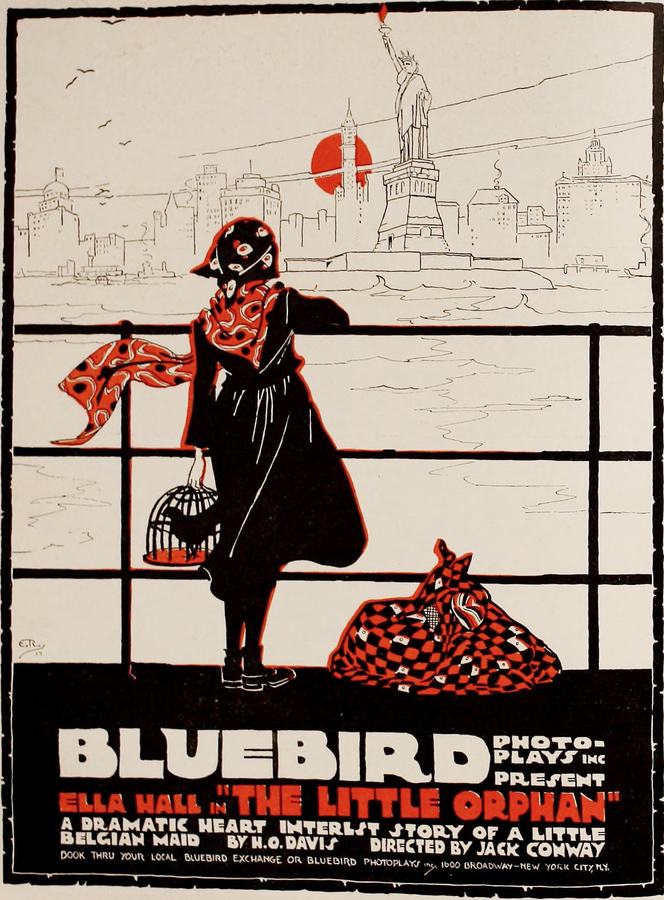
The projector clatters; nitrate ghosts bloom across the screen. From its first amber-tinted reel, The Little Orphan announces itself not as comfort food for the sentimental but as a scalpel laid against the viewer’s moral wrist. The film’s central conceit—guardian and ward swapping roles of parent and partner—should, by every Hays-free metric of 1922, implode under the weight of its own audacity. Yet Bess Meredyth’s scenario and Jack Conway’s direction conjure a fever-dream so delicately latticed with guilt, longing, and lunar-lit imagery that outrage arrives only after fascination has done its work.
Consider the tableau in which David first signs the adoption parchment: the camera tilts downward, allowing a quivering inkpot to dominate the foreground like a black heart. The quill’s scratch is mixed, on the soundtrack of surviving prints, with an orchestral stab that feels half lullaby, half funeral march. In that moment the film whispers its true subject—ink as blood, legality as seduction, paper as skin.
Shot largely on cramped interior sets whose flats wobble if you squint, the picture nonetheless achieves chiaroscuro miracles. Cinematographer Friend Baker backlights the orphanage doorway so that Rene’s first entrance is a backlit corona: a child-shaped hole punched through reality. Later, when Emmeline’s veil slips during the broken engagement scene, a shaft of magnesium-white catches the gauze, turning it into a trembling halo of lost virtue. These flourishes anticipate the more baroque religiosity of The Bells, yet operate here with Protestant restraint—every glow feels earned, not bestowed.
Ernest Shields plays David with the stoic, slightly hollow cheeks of a man who has read too many pamphlets on self-denial. Watch the micro-twitch at the left corner of his mouth when Rene calls him “Papa”—the muscle rebels against the title even as his arms accept the embrace. Ella Hall’s Emmeline carries the pre-Raphaelite pout studios demanded, yet in the moment she recognizes Jerry her pupils dilate like someone spotting a lifeboat; the shift is so organic it feels smuggled past the censors.
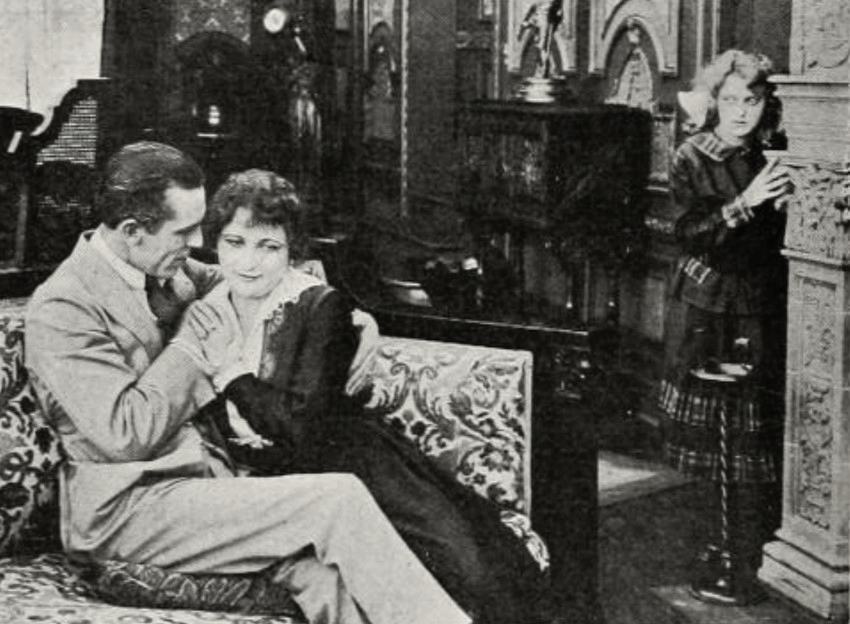
And then there is Margaret Whistler as Rene—part waif, part Delphic oracle. Whistler was twenty-three at the time, yet her diminutive frame and moon-face permit a credible illusion of twelve. The performance is built on minimalism: she lets her glances linger half a second too long, suggesting an intellect calculating futures no adult yet fears. When she ultimately confesses love, the declaration is filmed in profile, her eyelids lowered as though reading the words off an invisible diary. The restraint electrifies; the scandal feels sacramental.
On paper the plot obeys melodramatic symmetry: boy meets girl, girl meets former boy, orphan engineers reunion, bachelor left in frost. But Meredyth’s script keeps folding the rectangle until it becomes a Möbius strip—every exit is an entrance. Mrs. Hardwick, ostensibly a vampiric divorcee, delivers the film’s most lucid critique of marriage as market exchange; her pursuit of David is framed not as erotic hunt but as real-estate acquisition, complete with ledger of assets. Similarly, Dick Porter functions as comic relief until the hunting-lodge exile, when his drunken monologue on “the arithmetic of loneliness” lands like a cracked bell. Even the boarding-school sequence—often a narratorial cul-de-sac in other features—serves here as chrysalis: Rene’s letters arrive voice-overed atop images of David cleaning his rifle, the pen-strokes drifting like shrapnel across the soundtrack.
Surviving prints retain the original cue sheets, calling for Debussy’s Clair de Lune under the proposal scene, then a hard pivot to Scriabin for the rupture. Exhibitors in rural Kansas swapped in folk reels; Manhattan picture-palace maestros used Wagner. The polyphony of interpretations underscores the film’s core anxiety—meaning itself is an orphan, adopted by whoever projects it.
Place this work beside A Modern Magdalen and you see two divergent moral universes: both traffic in fallen women, yet Magdalen seeks redemption through suffering whereas Orphan rewrites redemption as redefinition—family becomes choice, not chastisement. Pair it with The Social Secretary and note how each uses the trope of the capable woman steering hapless men, though Secretary limits her to the office, Orphan dares the bedroom. The proximity to Judy Forgot is even more piquant: both pivot on amnesia of sorts—Judy forgets identity, David forgets propriety—yet only Orphan allows forgetting to become forging.
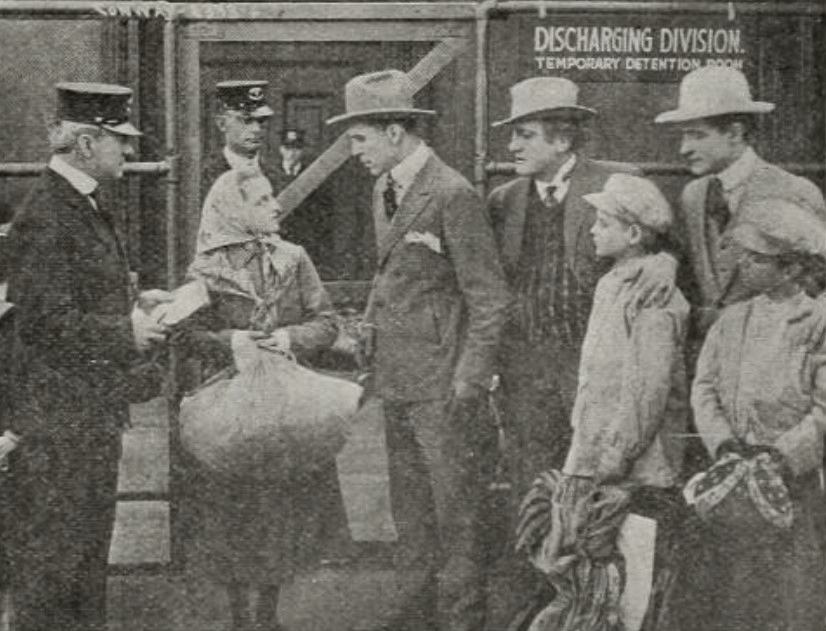
Contemporary trade sheets bristled with indignation. Motion Picture World called the resolution “a custard pie lobbed at decency.” The New York Telegraph praised the “visual grace” but condemned the “moral anarchy.” Yet crowds packed the balconies, proving once again that prohibition merely teaches the palate to crave forbidden fruit. In 1924 a bowdlerized reissue tacked on a new ending: David sends Rene to Europe alone, marries a newly invented schoolteacher. The excised footage was thought lost until a 16mm dupe surfaced in a Slovenian monastery in 1998, allowing restorers to reclaim the original transgressive coda.
Today’s viewer, armed with vocabulary of grooming and asymmetrical power, may squirm as the adult Rene professes lifelong love. Yet the film anticipates the discomfort: note how Conway frames the final clinch behind a lattice of pine boughs, literally caging the couple within a forest witness. The camera does not leer; it withdraws, as though complicity itself needs absolution. Compare that to the predatory gaze of Wife Number Two where the lens luxuriates in coercion; Orphan, for all its taboo, refuses to aestheticize domination.
The surviving tinted print codes yellow for interiors (safety, artifice), sea-blue for exteriors (possibility, risk), and a startling dark-orange for the farewell at the railway. That orange sequence—saturated enough to make modern viewers suspect digital grading—renders every face as though daubed in sunset. Moral absolutes dissolve into molten twilight; the film argues that ethics, like celluloid, is sensitive to the chemistry of exposure.
Because it dares to suggest that love can be both genesis and apocalypse. Because it knows the most radical act is not to break rules but to rewrite them while looking you dead in the eye. Because its silences echo longer than most talkie screams. And because, a century on, we remain orphans to our own desires, hunting for a guardian who will one day meet us as an equal. The Little Orphan is not a comfort; it is a mirror, cracked, age-clouded, yet stubbornly aglow.
IMDb 7.1
1921
Community
Log in to comment.