DbcultAccessing Vault...
1.9/10
Senior Film Conservator
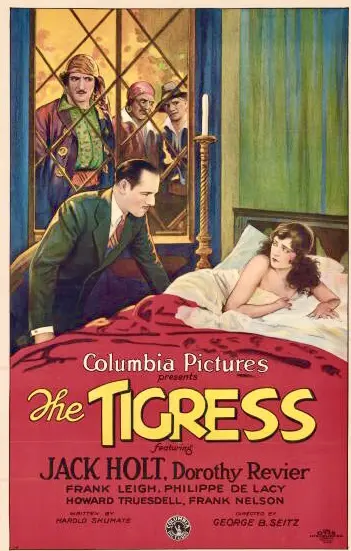
A definitive 1.9/10 rating for a film that redefined the boundaries of cult cinema. The Tigress remains a cornerstone of transgressive art.
Is 'The Tigress' (1927) worth watching today? Short answer: yes, but with significant caveats. This silent-era revenge drama offers a fascinating glimpse into early Hollywood's portrayal of 'exotic' cultures and the raw power of nascent cinematic storytelling, making it a valuable watch for film historians, silent film enthusiasts, and those curious about the roots of the revenge genre. However, it is decidedly not for viewers seeking modern pacing, nuanced character development, or an escape from the occasionally problematic tropes of its time.
This film works because of Dorothy Revier’s electrifying, physically demanding performance as Mona, which anchors the melodrama with genuine intensity, making her quest for vengeance palpable even across nearly a century. This film fails because its narrative, while propelled by a strong central premise, often leans too heavily into silent-era theatricality and relies on cultural stereotypes that feel jarringly dated today, hindering its universal appeal. You should watch it if you appreciate the artistry of silent cinema, are fascinated by early cinematic depictions of moral ambiguity and justice, or want to witness a compelling female lead performance that predates many of cinema's more celebrated heroines.
'The Tigress' unfolds against a backdrop of simmering tension between two disparate worlds in rural Spain: the free-spirited, nomadic gypsy community and the rigid, property-owning gentry. This friction explodes into outright conflict with the brutal murder of Tser, the revered elder and chief of the gypsy band, during a fateful deer poaching expedition. The immediate, and perhaps too convenient, accusation falls upon Winston Graham, the stoic, land-rich estate owner whose deer were the object of the gypsies’ hunt. This act of violence isn’t merely a crime; it’s a catalyst, igniting a primal need for retribution within Tser's daughter, Mona.
Mona, portrayed with a fierce, almost predatory grace by Dorothy Revier, is no ordinary woman. She is an expert knife-thrower, a skill that transforms from a mere carnival trick into a potent symbol of her unwavering resolve. Her journey is not simply about revenge for a father; it’s a visceral demand for justice against a system that she perceives as inherently biased against her people. The film, in this sense, becomes less a whodunit and more a study of the psychological toll of vengeance, and the blurred lines between justice and personal retribution. It’s a compelling setup, even if the execution occasionally falters under the weight of silent film conventions.
The beating heart of 'The Tigress' is undoubtedly Dorothy Revier's performance as Mona. In an era often defined by exaggerated gestures and broad expressions, Revier delivers a portrayal that, while undeniably theatrical, possesses an underlying current of genuine emotion and formidable strength. Her eyes, often shadowed with grief and burning with determination, convey more than many intertitles ever could. Her physicality is precise, from the coiled tension in her stance as she prepares to throw a knife to the subtle tremble of her hand when confronted with moral quandaries.
One particularly memorable moment sees Mona practicing her knife-throwing, not with a flourish, but with a grim, almost ritualistic intensity. Each thud of the blade against the target echoes her single-minded focus, a visual metaphor for her unwavering commitment to avenging her father. This isn't a performance that seeks pity; it demands respect. Revier makes Mona a force of nature, a 'tigress' in every sense of the word, capable of both fierce loyalty and terrifying wrath. It’s a testament to her skill that she elevates what could have been a stock character into something far more compelling, standing out even against more bombastic performances of the period, like those seen in Revelation.
Opposite Revier, Jack Holt as Winston Graham provides a stark, stoic counterpoint. Holt, known for his rugged, often morally ambiguous characters, embodies Graham with a quiet strength that initially reads as coldness, perfectly setting him up as the prime suspect. His performance is less about overt emotion and more about understated resolve, a man caught in a difficult situation. The chemistry between Revier and Holt, though largely unspoken, crackles with an intriguing tension, evolving from animosity to something more complex as the plot unfolds.
The supporting cast, including Frank Leigh and Harold Truesdale (briefly, as the ill-fated Tser), fulfill their roles effectively within the silent film paradigm. Truesdale’s brief appearance as the murdered chief establishes the emotional stakes, his demise serving as the narrative's inciting incident. While individual performances outside of Revier and Holt are less developed, they collectively contribute to the film’s melodramatic atmosphere, sketching a community deeply affected by the tragic events, unlike the more comedic ensemble work in a film like Fig Leaves.
The film's direction, typical of its era, relies heavily on visual cues and expressive staging to convey its narrative. Filmmakers effectively utilize the Spanish setting, even if it's clearly a backlot interpretation, to create an 'exotic' backdrop for the unfolding drama. There are moments of genuine visual flair, particularly in the depiction of Mona’s knife-throwing prowess, which is shot to emphasize both its danger and her skill. The editing, while not as sophisticated as later silent epics, is competent, maintaining a decent pace for the story's progression.
The use of close-ups is particularly effective in highlighting Revier's intense expressions, drawing the audience into her emotional turmoil. The sequences depicting the gypsy camp life, despite their stereotypical undertones, attempt to build a sense of community that is then shattered by the murder. While it lacks the groundbreaking visual experimentation of a film like The Nut, 'The Tigress' understands the power of a well-framed shot to convey mood and advance the plot without dialogue.
Pacing in silent films can be a contentious point for modern viewers. 'The Tigress' maintains a relatively brisk pace for its genre, driven forward by Mona’s singular mission. The narrative rarely sags, moving from the initial crime to Mona’s preparations, her infiltration, and the inevitable confrontations. This propulsive quality is a significant strength, preventing the melodrama from becoming tiresome. Title cards are used judiciously, providing necessary exposition without over-explaining, allowing the visual storytelling to do most of the heavy lifting.
The emotional resonance, primarily carried by Revier, is surprisingly potent. The film manages to evoke sympathy for Mona’s plight, even as her methods verge on the extreme. The underlying score (which, of course, would have been live or recorded accompaniment) would have played a crucial role in amplifying these emotions, guiding the audience through moments of suspense, grief, and eventual catharsis. It’s a testament to the filmmakers that the core emotional beats still land, even without their intended musical accompaniment, perhaps more effectively than some of the more overtly sentimental films of the era, such as The Accidental Honeymoon.
Viewing 'The Tigress' through a contemporary lens inevitably brings its portrayal of the gypsy community into question. The film, like many from its period, traffics in stereotypes: the 'exotic' and 'passionate' nature of the gypsies, their perceived lawlessness (poaching), and their adherence to a primal, blood-for-blood justice. While the film attempts to imbue Mona with dignity and agency, the broader depiction of her people can feel reductive and culturally insensitive today. This isn't to say the film is without merit, but rather that it serves as a valuable historical artifact, reflecting societal attitudes of the 1920s.
One could argue that the film inadvertently highlights the timeless struggle of marginalized communities against entrenched power structures, even if its representation is flawed. It’s a fascinating paradox: a film that champions a strong female avenger from an 'othered' group, yet simultaneously reinforces generalizations about that group. This duality makes 'The Tigress' a compelling watch for those interested in film as a cultural document, prompting reflection on how far cinematic representation has, or hasn't, come. It works. But it’s flawed.
Yes, 'The Tigress' offers substantial value for specific audiences today. For silent film aficionados, it's a solid entry into the revenge drama subgenre, showcasing a powerful lead performance. For film students and historians, it provides insight into early Hollywood's narrative conventions and cultural depictions. It's a journey into a bygone era of storytelling, complete with its unique strengths and undeniable shortcomings. If you approach it with an understanding of its historical context, there's much to appreciate.
However, if you're looking for a casual watch with modern sensibilities, you might find its pacing and melodramatic style challenging. It requires a certain patience and willingness to engage with a different cinematic language. It is absolutely not for those who are easily put off by dated cultural portrayals or expect the narrative sophistication of contemporary cinema.
A captivating lead performance: Dorothy Revier brings fierce intensity to Mona, making her a memorable silent film heroine.
Engaging revenge plot: The central conflict is clear, compelling, and drives the narrative forward effectively.
Historical value: Offers a fascinating window into 1920s filmmaking, societal views, and genre conventions.
Solid visual storytelling: Despite limitations, the film uses visual cues and staging adeptly to convey emotion and plot.
Decent pacing: For a silent film, it avoids excessive sluggishness, maintaining interest throughout.
Dated cultural stereotypes: The depiction of the gypsy community is often generalized and problematic by modern standards.
Melodramatic tendencies: Some scenes lean heavily into silent film theatricality, which might not resonate with all modern viewers.
Limited character depth: Beyond Mona and Graham, supporting characters are largely archetypal.
Predictable plot points: The revenge narrative, while engaging, follows a fairly conventional arc.
Lack of modern polish: As expected for its age, it lacks the technical sophistication and narrative nuance of contemporary cinema.
'The Tigress' (1927) is a compelling slice of silent cinema that, despite its age and some undeniable flaws, still possesses a raw, visceral power. Dorothy Revier's performance as Mona is a standout, transforming a potentially one-dimensional revenge plot into a captivating study of grief, determination, and cultural clash. While its reliance on period-specific stereotypes regarding the gypsy community is a significant drawback when viewed today, it also serves as a potent reminder of cinema's evolving social consciousness. It's a film that demands a certain historical empathy from its audience, but for those willing to engage, it offers a rewarding glimpse into the foundational storytelling of early Hollywood.
It’s not a flawless gem, nor is it a forgotten masterpiece, but 'The Tigress' is far from a cinematic relic to be merely observed. It's a film that, through its central performance and its unwavering commitment to its dramatic premise, still manages to claw its way into the viewer's consciousness. For those with an appreciation for silent film, or simply a curiosity for the roots of cinematic revenge, it's a journey worth taking. It earns a solid recommendation for its historical significance and Revier's unforgettable turn, securing its place as a fascinating, if imperfect, entry in the annals of early cinema.
IMDb 6.2
1935
Community
Log in to comment.