DbcultAccessing Vault...
Cult Review
Senior Film Conservator
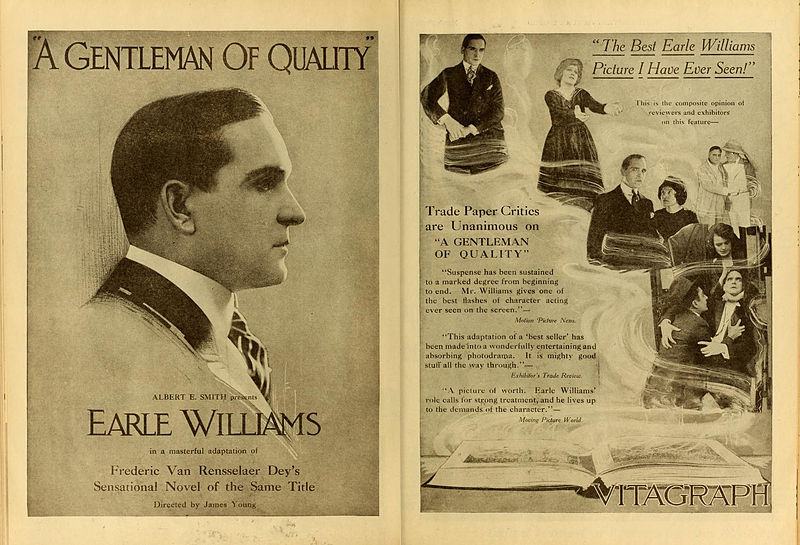
Stepping back into the golden, or perhaps more accurately, the sepia-toned, age of silent cinema, one often encounters narratives of grand ambition, sweeping romance, and melodramatic twists that would make modern screenwriters blush. Yet, within this rich tapestry, certain films stand out for their sheer audacity in storytelling, their intricate plotting, and their profound exploration of human identity. A Gentleman of Quality, a film that might easily be overlooked by contemporary audiences, is precisely one such gem, a testament to the sophisticated narrative capabilities of early filmmaking. It’s a work that doesn't just tell a story; it weaves an elaborate, almost dizzying, web of fate, mistaken identity, and long-buried secrets, demanding our full, undivided attention.
The film commences with the familiar trope of youthful rebellion, introducing us to John Ashton, a spirited individual chafing under the thumb of a contentious stepfather. His subsequent flight to the bustling anonymity of London sets in motion a chain of events so improbable, yet so meticulously orchestrated, that it feels less like coincidence and more like the inexorable hand of destiny. Concurrently, in a parallel universe of opulence and expectation, Lord John Hertford, a man of aristocratic standing, enters into matrimony with the captivating Lady Mercy Covington. The stage is set for a life of privilege and companionship, only for it to be spectacularly upended on their wedding night by Lord Hertford's inexplicable disappearance. Here, the narrative truly begins its dizzying ascent into the realm of high melodrama.
Ashton's journey in London takes a cruel turn when he is involved in a severe traffic accident. The amnesia resulting from this trauma, coupled with an uncanny resemblance, leads to a most extraordinary deception: Ashton is mistaken for the vanished Lord Hertford. What follows is a profoundly unsettling, yet dramatically compelling, sequence where Ashton, stripped of his own memory, begins to inhabit a life that isn't his. Lady Mercy, desperate and perhaps emotionally vulnerable, accepts him as her missing husband, leading to a second, albeit bewildering, marriage. The layers of irony and tragedy are already piling up, creating a palpable tension that underpins every subsequent interaction. Kathryn Adams, as Lady Mercy, must convey a complex cocktail of confusion, hope, and burgeoning affection for a man she believes to be her husband, yet who carries an unsettling air of unfamiliarity. Her performance, even through the medium of silent film, would have been pivotal in grounding this fantastical premise.
Meanwhile, the plot expands its geographical scope, sending Lady Mercy's intrepid cousin on a relentless quest for the true Lord John. This search culminates in India, where the cousin locates Lord John, leaving him in the care of a doctor after receiving a cable from Lady Mercy, erroneously confirming her husband's 'return.' This particular narrative thread introduces a prolonged period of dramatic suspense, as the cousin's return journey is tragically interrupted by a shipwreck, stranding him for a staggering seven years. This protracted delay is not merely a plot device; it serves to underscore the profound isolation and lack of immediate communication that characterized the era, amplifying the stakes and the sense of predestined entanglement. Imagine the despair, the lost years, the irreversible changes wrought by such an extended absence. It's a narrative mechanism that feels both archaic and timeless in its emotional weight.
It is during this seven-year interlude that the most astonishing revelation unfurls: John Ashton and Lord John Hertford are, in fact, twin brothers. This isn't merely a convenient plot twist; it is a meticulously woven thread of a larger, darker tapestry – a consequence of a shadowy Sicilian vengeance that saw them separated and abducted in infancy. This element injects a potent dose of gothic melodrama and ancestral curse into the already complex narrative, elevating it beyond a simple tale of mistaken identity to one steeped in the profound and often brutal repercussions of historical grievances. The performances of Earle Williams, tasked with embodying both the bewildered Ashton and the 'true' Lord John (even if briefly on screen as the latter), would have been crucial in differentiating these roles, or rather, in portraying Ashton's evolving identity as he unknowingly steps into his brother's shoes.
The climax of this intricate saga arrives with the cousin's belated return, armed with years of accumulated correspondence. The discovery, buried within these long-unopened letters, is a crushing blow: the real Lord John Hertford had died shortly after embarking on his journey back to England. This final, tragic revelation solidifies Ashton's unwitting, yet rightful, place within the Hertford lineage and at Lady Mercy's side. It's a resolution born not of choice or agency, but of a bewildering confluence of fate, deception, and the grim reaper's impartial hand. The narrative, penned by Frederic Van Rensselaer Dey and Edward J. Montagne, is a masterclass in sustained complexity, managing to keep its multitudinous threads taut without snapping.
At its heart, A Gentleman of Quality is a profound meditation on identity. What truly defines us? Is it our birthright, our name, our memories, or the relationships we forge? John Ashton lives a borrowed life, yet through his actions and his developing affection for Lady Mercy, he imbues that borrowed identity with his own essence. Lady Mercy, too, grapples with the fluidity of identity, accepting a man she believes to be her husband, only to find that the essence of her relationship transcends the name. This theme resonates powerfully, inviting audiences to ponder the very nature of selfhood. The film suggests that identity is not merely an immutable fact but a dynamic construct, shaped by circumstance, perception, and the passage of time.
The omnipresence of fate is another undeniable undercurrent. From the initial quarrel with the stepfather to the traffic accident, the shipwreck, and the delayed discovery of letters, the characters seem less like agents of their own destiny and more like pawns in a cosmic game. The Sicilian vengeance, a shadowy force from the past, further emphasizes this sense of inescapable destiny, suggesting that certain events are predestined, their roots stretching back generations. This fatalistic worldview, common in many melodramas of the era, is handled with a certain grace here, never feeling entirely arbitrary, but rather like the logical, if convoluted, unfolding of a grand design. It evokes a sense of epic struggle against forces beyond human control, a feeling that connects it to other grand narratives of the period.
The film also subtly, yet effectively, explores the societal constructs of class and expectation. Ashton, a runaway from a less privileged background, finds himself thrust into the highest echelons of aristocracy. His assimilation, albeit under false pretenses, speaks to the fluidity, or perhaps the fragility, of social barriers when confronted with extraordinary circumstances. The film doesn't overtly critique class structures, but it certainly highlights the stark contrast between Ashton's original life and the one he unwittingly inherits, adding another layer of complexity to his psychological journey.
In an era devoid of spoken dialogue, the burden of storytelling fell squarely on the shoulders of the actors and the visual language of cinema. Earle Williams, likely playing the dual role of John Ashton and Lord John Hertford (though primarily Ashton mistaken for Lord John), would have had to deliver a performance of nuanced physicality and facial expression. The transformation from a runaway youth to a bewildered aristocrat, and then to a man grappling with a borrowed identity, requires considerable skill. Similarly, Kathryn Adams as Lady Mercy Covington would have needed to convey her character's emotional journey – from shock and confusion to tentative acceptance and eventual love – through gestures and gaze alone. The supporting cast, including Robert Bolder, James Carpenter, George C. Pearce, Ronald Byram, and Joyce Moore, would have been vital in supporting the intricate plot, each playing their part in the grand deception and eventual revelation.
The pacing of A Gentleman of Quality, typical of many silent features, would have been deliberate, allowing audiences to absorb the visual information and the narrative twists conveyed through intertitles. Yet, for a story so dense with plot points – a disappearance, an accident, a mistaken identity, a second marriage, a global search, a shipwreck, a seven-year gap, a twin revelation, and a posthumous discovery – the film demands a carefully calibrated rhythm. The writers, Frederic Van Rensselaer Dey and Edward J. Montagne, deserve significant credit for constructing a narrative that, despite its complexity, manages to maintain coherence and dramatic tension across its runtime. Their ability to weave so many threads into a single, compelling tapestry speaks volumes about their craft.
Silent cinema was a fertile ground for melodrama, often presenting heightened emotions and fantastical scenarios that captivated audiences. Films like The Lost Bridegroom would similarly explore the dramatic complications arising from a missing spouse, though perhaps without the added layer of twin brothers and Sicilian vendetta. The sheer scope of A Gentleman of Quality – its international settings, its long stretches of time, its intricate web of coincidences – places it firmly within the tradition of grand, epic storytelling that characterized the era. It exemplifies the ambition of filmmakers to push the boundaries of narrative, even without the benefit of synchronized sound.
Comparing it to films like Hoodman Blind, which also delves into convoluted plots involving mistaken identities and hidden pasts, we see a common thread of dramatic irony and the manipulation of audience expectations. These films weren't just about simple good versus evil; they often explored the moral ambiguities arising from extraordinary circumstances. The audience, privy to information that the characters are not, experiences a powerful sense of dramatic tension, waiting for the inevitable moment of truth. This narrative technique was a hallmark of the period, drawing viewers deeper into the emotional turmoil of the protagonists.
The 'Sicilian vengeance' element, while perhaps leaning into exoticized tropes common at the time, serves a vital function in elevating the stakes. It transforms a domestic drama into a saga with international implications and historical depth, demonstrating how past sins can cast long shadows over future generations. This blend of personal tragedy with broader, almost mythical forces was a powerful draw for audiences seeking escapism and high drama, much like the serialized adventures found in The Broken Coin, albeit in a more contained, feature-film format focusing on personal destiny rather than episodic thrills.
In an age where cinematic narratives often prioritize realism or rapid-fire pacing, A Gentleman of Quality serves as a potent reminder of the enduring power of classic melodrama. It asks us to suspend disbelief and immerse ourselves in a world where fate is a palpable force, where identities are fluid, and where the past relentlessly pursues the present. It’s a film that, despite its age and silent format, speaks volumes about human resilience, the complexities of love, and the relentless pursuit of truth.
The intricate plotting, the reliance on visual storytelling, and the demanding performances from its cast—particularly Earle Williams and Kathryn Adams—all combine to create a compelling cinematic experience. It’s a film that not only entertained its contemporary audiences but also offers modern viewers a fascinating glimpse into the narrative sophistication and thematic depth that characterized the silent era. For those willing to engage with its unique rhythm and embrace its grand dramatic flourishes, A Gentleman of Quality remains a truly captivating journey into the heart of a bygone cinematic age, proving that quality storytelling, regardless of technological advancements, always finds a way to resonate. It is a testament to the fact that even without sound, a film can tell a story so rich, so full of twists and turns, that it leaves an indelible mark on the imagination.
IMDb 6.6
1931
Community
Log in to comment.