DbcultAccessing Vault...
Cult Review
Senior Film Conservator
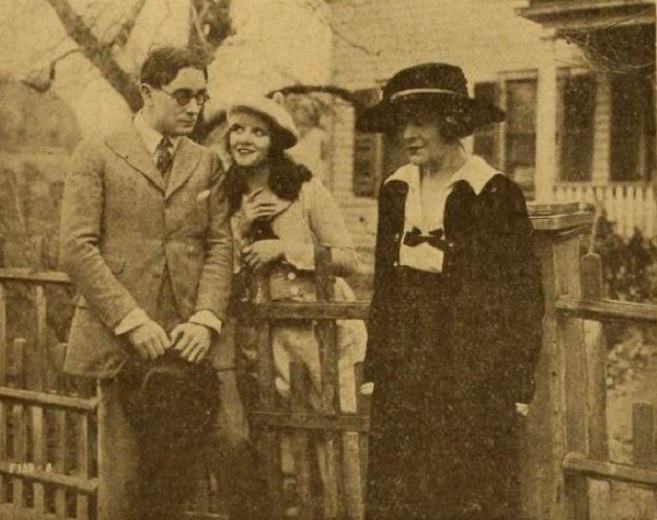
The silent era often grappled with the dichotomy of the 'fallen woman' and the 'reformed soul,' but few entries navigate this terrain with the nuanced fragility found in A Girl Like That. Released in an era where cinema was rapidly evolving from mere spectacle into a sophisticated medium for character study, this film serves as a luminous vehicle for Olive Thomas, whose screen presence transcends the static limitations of early 20th-century celluloid. The narrative, penned by Roswell Dague and Paul West, avoids the simplistic moralizing of its contemporaries, opting instead for a gritty exploration of environmental determinism versus individual agency.
Nell Gordon, portrayed with a haunting vulnerability by Thomas, is introduced not as a villain, but as a victim of her own heritage. Her father, a man whose life has been a sequence of illicit maneuvers, represents the gravitational pull of the past. Unlike the protagonists in The Inner Struggle, Nell’s conflict is not merely internal; it is a claustrophobic external pressure exerted by the likes of Bill Whipple and Joe Dunham. These men are the personification of the underworld’s leech-like nature, viewing Nell’s intelligence and 'expert' bookkeeping skills as nothing more than a skeleton key to the Wheaton bank’s riches.
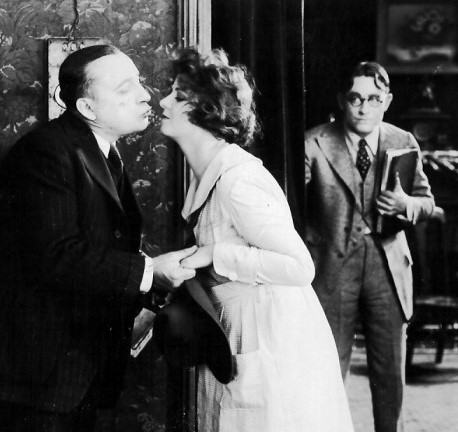
When Nell arrives in the idyllic town of Wheaton, the film shifts its visual language. The dark, cramped interiors associated with her father’s criminal cohorts are replaced by the airy, open spaces of the Rev. Dr. Singleton’s home and the structured, respectable confines of the bank. This transition is vital. It mirrors the 'reformation' films of the period, such as His Turning Point, where environment acts as a catalyst for moral realignment. In Wheaton, Nell is not defined by her father’s crimes but by her own utility and grace.
The character of Jim Brooks, the bank cashier, is played with a sincerity that could easily have descended into caricature. However, Owen Moore provides a grounding influence that makes Nell’s subsequent internal crisis palpable. When she finally obtains the combination to the safe—the very object of her infiltration—the film reaches a crescendo of silent tension. The physical slip of paper containing the numbers becomes a talisman of her old life, a weight that threatens to pull her back into the abyss. The brilliance of the screenplay lies in the timing of Jim’s proposal. It isn't just a romantic gesture; it is a formal invitation into a different social stratum, a direct challenge to her identity as 'a girl like that.'
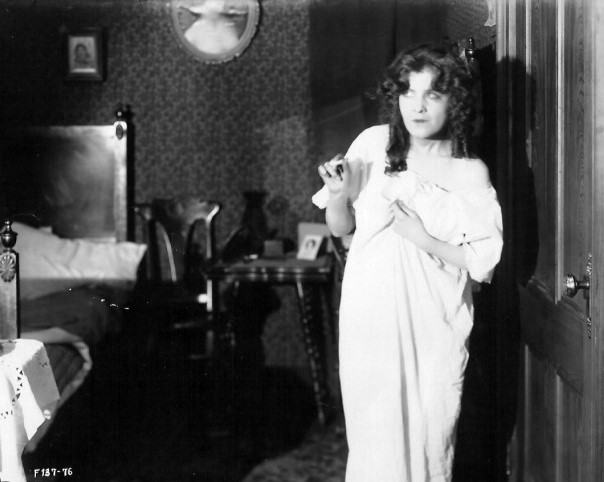
The turning point of the film is marked by a startling brutality. The refusal of Nell’s father to coerce his daughter further, resulting in his murder at the hands of Whipple and Dunham, shatters the last vestige of Nell’s loyalty to the criminal underworld. This is a significant departure from the more sentimental resolutions found in films like Silver Threads Among the Gold. Here, redemption is birthed through trauma. Nell’s realization that her father died protecting her autonomy transforms her from a passive participant in a heist into an agent of vengeance.
The sequence where she confesses her true identity to Tom Hoadley, the sheriff, is a masterclass in silent acting. Without the aid of synchronized dialogue, Thomas conveys a complex tapestry of shame, relief, and resolve. It is a moment of profound vulnerability that echoes the dramatic weight of The Red Woman, where the protagonist must confront societal prejudices to find her own truth. Nell’s decision to leave Wheaton, to spare Jim the disgrace of her past, highlights a nobility that her detractors—and perhaps even she herself—never suspected she possessed.
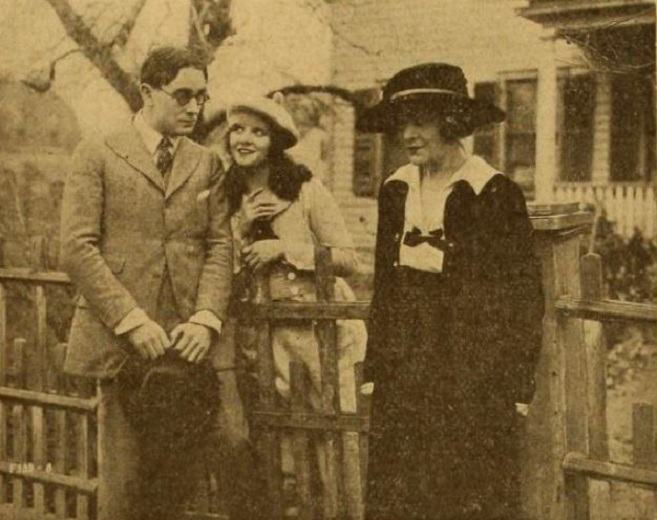
Technically, A Girl Like That demonstrates a keen understanding of pacing. The climax, set within the darkened halls of the bank, utilizes shadow and light to heighten the stakes. As Nell lures the crooks into a trap, the cinematography emphasizes her isolation. She is caught between two worlds—the law she has come to respect and the outlaws she once called family. The gunfight is staged with a visceral intensity that was quite advanced for 1917, reminiscent of the high-stakes conflict in Through the Wall.
The physical wounding of Nell during the confrontation is a necessary narrative device. In the logic of silent melodrama, blood often serves as a purifying agent. By taking a bullet, Nell literally sheds her old self. Her awakening in Jim's arms is not merely a 'happy ending' in the conventional sense; it is a resurrection. She has survived the 'inner struggle' and emerged, not as the daughter of a crook, but as a woman defined by her own choices. This thematic depth elevates the film above standard genre fare like Double Trouble, providing a more substantive look at the cost of social mobility.
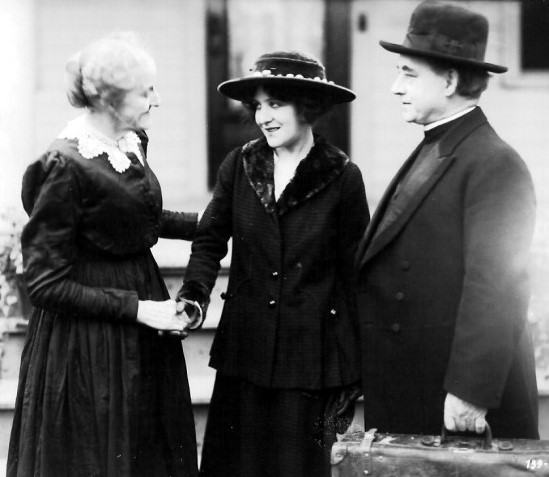
When placed alongside works like La revanche or Draft 258, the latter also featuring Olive Thomas, one can see the emerging archetype of the 'Modern Woman'—someone who is capable of navigating both the domestic sphere and the dangerous peripheries of society. Thomas herself was a figure of immense public fascination, and her performance here captures that zeitgeist. She manages to imbue Nell with a sense of 'resourcefulness' that feels modern even by today's standards. She is not a damsel in distress; she is the architect of the villains' downfall.
The film also touches upon the class anxieties of the time. The bank, as a symbol of community trust and capital, represents the stability that characters in Checkers often seek but rarely find through honest means. Nell’s infiltration of this space is a subversion of the American Dream, which she then rectifies by protecting that very institution. This arc provides a satisfying moral resolution for an audience that was, in 1917, increasingly concerned with the preservation of traditional values amidst a rapidly changing world.
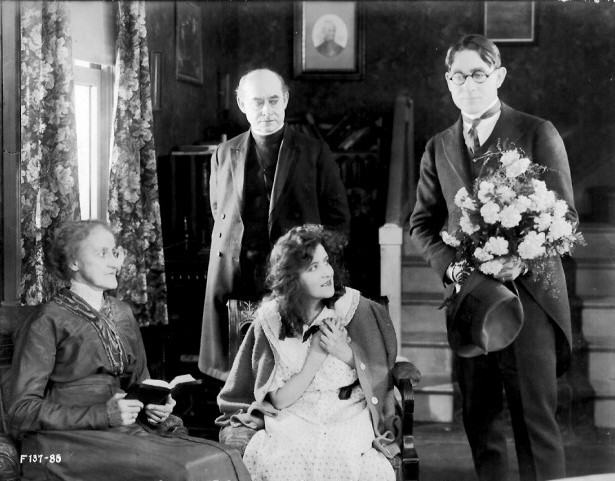
In the grand tapestry of silent cinema, A Girl Like That stands as a testament to the power of subtle storytelling. It eschews the grandiosity of epics like The Fall of a Nation in favor of a smaller, more intimate human drama. The performances are universally strong, with Thomas delivering a career-defining turn that balances the ethereal with the earthy. The supporting cast, including the menacing John T. Dillon and the stoic William J. Butler, provide the necessary friction to make Nell’s journey feel earned rather than inevitable.
While some might find the coincidences of the plot—the timely proposal, the serendipitous intervention of the sheriff—to be hallmarks of a bygone era's narrative convenience, they function here as essential components of a moral fable. Like the tragic trajectories in Romeo and Juliet, the timing is everything. However, unlike the star-crossed lovers, Nell Gordon is granted a second chance. She is allowed to survive her tragedy, providing a glimmer of hope that even those born into the darkest circumstances can find their way into the light.
Ultimately, the film is a fascinating artifact that rewards modern viewers with its psychological depth and visual clarity. It reminds us that the struggle for identity and the desire for belonging are universal themes that require no spoken words to be understood. If you are looking for a silent film that offers more than just historical curiosity, A Girl Like That is a compelling, emotionally resonant journey through the heart of a woman who refused to be defined by her name.
IMDb 5.2
1926
Community
Log in to comment.