DbcultAccessing Vault...
Cult Review
Senior Film Conservator
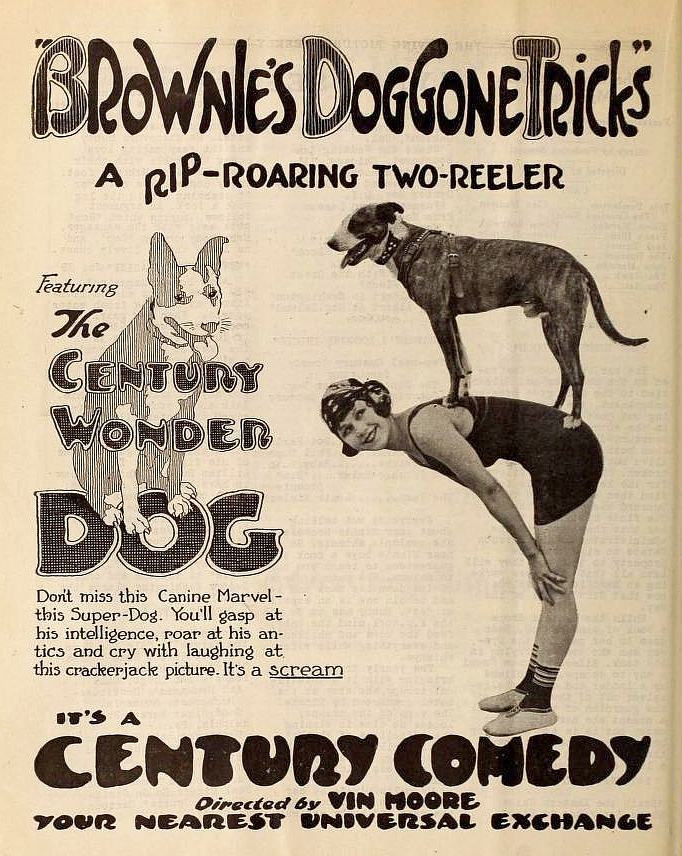
To understand the sheer kinetic absurdity of Brownie's Doggone Tricks, one must first grasp the cultural earthquake that was the 'shimmy' in the late 1910s. This was not merely a dance; it was a symptom of a shifting social paradigm. In this film, Minnie—portrayed with a delightful, mugging intensity by Dot Farley—becomes the vessel for this cultural anxiety. Her initial failure to shimmy is presented as a profound social handicap, a lack of modern currency that renders her the laughingstock of her provincial peers. The solution—a book of guarantees and a piece of ice down the spine—is a masterpiece of silent-era physical comedy. It suggests that modern grace is not an innate talent but a mechanical, almost violent reaction to external stimuli.
Once Minnie masters 'it,' the film pivots into a fascinating, if broad, critique of gender role reversal. The sight of Phil Dunham, as the 'Hubby,' relegated to 'k.p. work' and the tending of cows while his wife is consumed by the rhythmic pulsations of her new craft, serves as a comedic warning against the 'distractions' of modernity. Unlike the more grounded domestic struggles seen in Marie, Ltd., where professional ambition and home life clash with a degree of realism, Brownie's Doggone Tricks treats the domestic sphere as a site of pure slapstick subversion. The baby, the chickens, and the very fabric of rural life are sacrificed at the altar of the shimmy, creating a vacuum that only a theatrical troupe—and a very clever dog—can fill.
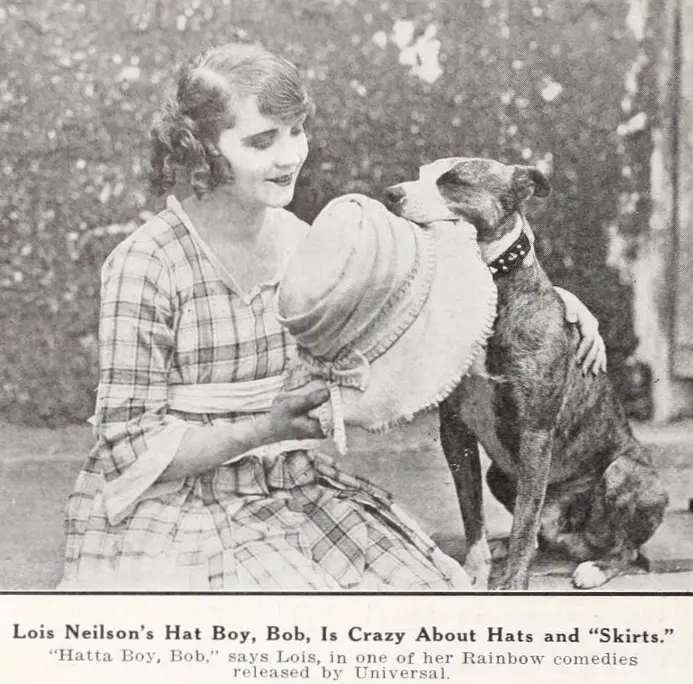
The arrival of the yearly train is a classic trope, bringing the 'other' into the hermetic seal of the small town. The theatrical troupe represents a sophisticated, perhaps even decadent, alternative to Minnie’s frantic domesticity. Enter the 'vamp,' played with predatory elegance by Lois Nelson. In the hierarchy of silent film archetypes, the vamp is a force of nature, much like the elemental dangers found in The Girl with the Champagne Eyes. However, here she is placed in a comedic context, her 'vamping' of the husband serving as a punchline to his earlier emasculation.
The hotel, conducted by Minnie, becomes a labyrinth of comedic suspense. The scenes of the vamp and hubby 'making love'—a term used in the 1919 sense of flirtation and clandestine affection—under tables and behind closed doors, utilize the space with a theatrical flair. The use of feet as a medium for secret communication under the dinner table is a brilliant bit of direction, highlighting the physical nature of the comedy. It is a moment of high tension that mirrors the suspenseful domestic dramas like The Return of Helen Redmond, yet it is immediately punctured by the intervention of a four-legged moralist.
While the human actors provide the histrionics, the true soul of the film lies in Brownie the Dog. In the pantheon of silent-era animal stars, Brownie occupies a unique space. He is not the wild, untamed force of nature seen in Tarzan of the Apes; rather, he is a hyper-domesticated agent of order. Brownie is the 'general housemaid,' the babysitter, and the private investigator. His intelligence is presented as superior to that of the philandering husband and the distracted wife. When Brownie pulls Minnie by her skirts to witness the husband’s betrayal, he is not just a pet; he is the narrative’s moral compass.
The sequence where Brownie forces the husband out from under the bed is a masterclass in canine performance. It requires a level of timing and interaction that rivals the best work of Phil Dunham or Dot Farley. The dog’s ability to navigate the physical comedy—biting the husband's foot under the table—creates a chain reaction of accusations and misunderstandings. When the husband accuses a neighbor of stabbing him with a fork, the film reaches a peak of farcical brilliance. It is a moment of pure misdirection, where the dog’s secret intervention causes a rupture in the social fabric of the dinner party.
The final act of the film shifts from domestic farce to a high-energy chase, a staple of the Century Comedy brand. The catalyst? Sausages. This transition from the moral weight of infidelity to the primal pursuit of food is a stroke of comedic genius. It reminds the audience that for all his 'human' cleverness, Brownie is still a dog. The chase that follows is a whirlwind of movement, utilizing the rural setting to its fullest potential. This is not the somber, heavy-hearted pursuit of justice found in The Grasp of Greed; it is a celebration of motion for motion's sake.
The editing in this sequence is remarkably tight for 1919. The 'lively chase' involves the entire cast, creating a visual cacophony that resolves the tensions of the previous scenes. The husband’s guilt, the vamp’s intrusion, and Minnie’s shimmy-induced neglect are all subsumed into the singular goal of catching the dog. It is a democratic ending—everyone is equally foolish in the face of Brownie’s speed and cunning. This kinetic energy is what separates these short comedies from the more languid pacing of contemporary dramas like A Girl Named Mary.
Reflecting on Brownie's Doggone Tricks, one is struck by how well the film balances its various elements. It is a satire of dance crazes, a domestic comedy, a 'vamp' melodrama, and an animal showcase all rolled into a brief runtime. The performances are heightened, yet they fit the internal logic of this distorted world. Dot Farley’s Minnie is a whirlwind of energy, her 'ice-induced' shimmying remains one of the most memorable images of the era. Phil Dunham provides the perfect foil, his transition from a hardworking husband to a bumbling adulterer being handled with great comedic timing.
But the film ultimately belongs to Brownie. His performance suggests a level of training and 'acting' that paved the way for future canine stars. In a cinematic landscape often dominated by the melodrama of Gli spettri or the historical weight of When Broadway Was a Trail, Brownie's Doggone Tricks offers a refreshing, albeit chaotic, respite. It is a reminder that the silent era was not just about grand gestures and tragic heroines; it was also about a dog, a piece of ice, and the sheer joy of a well-timed bite to the ankle. The film’s ability to weave these disparate threads into a coherent, hilarious narrative is a testament to the skill of the Century Comedy writers and the indefatigable spirit of its four-legged star.
In the broader context of 1919 cinema, where films like Her Official Fathers explored complex family dynamics, Brownie's adventures stand as a beacon of pure, unadulterated slapstick. It doesn't ask for the viewer's pity, like The Gates of Gladness, nor does it require the patience of a five-act play. It demands only that you watch, laugh, and perhaps keep a closer eye on your sausages.
Final Thought: If you find yourself in a domestic rut, don't buy the book. Just get a dog like Brownie. He might steal your sausages, but he’ll save your marriage—or at least make the collapse of it incredibly entertaining to watch.
IMDb —
1917
Community
Log in to comment.