DbcultAccessing Vault...
Cult Review
Senior Film Conservator
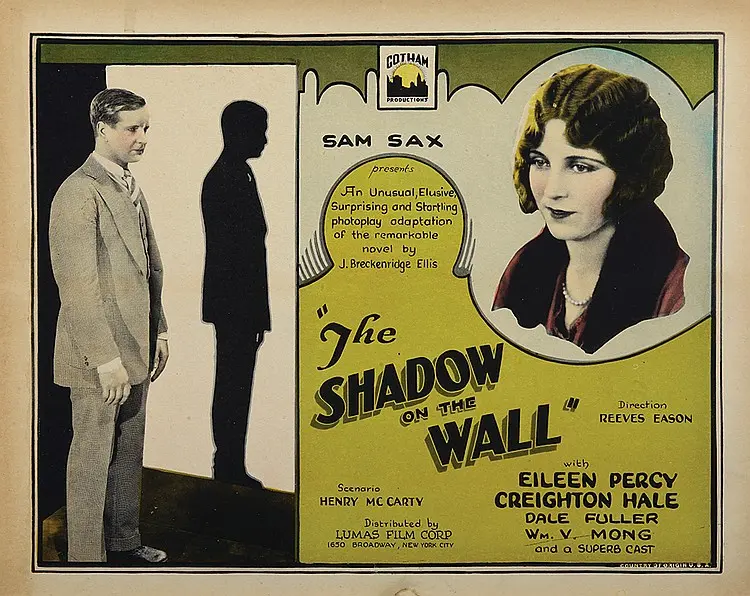
Is this film worth watching today? Short answer: Yes, but primarily for those who appreciate the structural ingenuity of 1920s crime dramas over modern high-octane pacing. This film is for the cinema historian and the fan of 'gentleman thief' narratives; it is not for those who cannot tolerate the theatrical exaggerations of the silent era.
1) This film works because it utilizes a brilliant visual metaphor—the shadow—as both a plot device and a symbol of George’s fractured identity.
2) This film fails because it relies on an extraordinarily convenient third-act revelation that retroactively simplifies the moral complexity of George's character.
3) You should watch it if you enjoy films like The House Built Upon Sand or The City of Silent Men, where the line between criminal and hero is blurred by circumstance.
The Shadow on the Wall, directed with a keen eye for atmospheric tension, centers on a premise that feels both archaic and strangely modern. George Walters (Creighton Hale) is not your typical villain. He is the 'polite burglar,' a man whose criminality is tempered by a certain level of class and restraint. This archetype was popular in the 1920s, often seen in works like A Man and His Money, but here it is given a darker edge by the presence of William V. Mong’s Uncle Bleary.
The scene where George’s identity is 'proven' is the film’s most iconic moment. The family gathers in a dimly lit study, and the profile of George is compared to the shadow of a bust. It is a masterclass in silent film lighting. The way the light hits Hale’s face, carving out a silhouette that matches a cold piece of stone, is haunting. It suggests that identity is something that can be projected, a mask that fits if the lighting is just right. It is a simple trick, but in the context of 1925, it was a high-concept hook that still feels clever today.
However, the film isn't just about a con. It quickly evolves into a domestic thriller. When George realizes that the lawyer Glaxton (Hardee Kirkland) is poisoning the father, the film shifts gears. We move from a 'heist' film into a 'rescue' narrative. This transition is handled with surprising fluidity, though it does demand a significant suspension of disbelief from the audience. George’s sudden pivot to morality is a bit abrupt, but Creighton Hale’s expressive performance makes the internal conflict visible.
Creighton Hale provides a performance that is remarkably grounded for the period. While many of his contemporaries were still leaning into the broad, pantomime-style gestures of the early 1910s, Hale uses his eyes and posture to convey George’s mounting guilt. There is a specific moment when George is recognized by a friend of the daughter as the man who robbed her. The panic in his eyes, followed by a calculated 'polite' deflection, is a great example of nuanced acting. It reminds one of the subtle character work found in '49-'17.
The supporting cast is equally strong. Sally Rand, before she became a legendary fan dancer, shows real promise here as a dramatic actress. Her interactions with Hale provide the emotional stakes necessary for George’s eventual redemption. William V. Mong as Uncle Bleary is the perfect foil—a greasy, manipulative presence that makes George’s criminal life seem like a cage rather than a choice. Mong has a way of lurking in the corners of the frame that makes him feel like a constant threat, even when he isn't speaking.
The film’s pacing does suffer in the middle section. There is a lot of back-and-forth regarding the poisoning plot that feels repetitive. We see Glaxton hovering over the father’s bed one too many times. It lacks the tight narrative economy of a film like Pasteur, which manages to keep its stakes high without stalling the plot. Yet, the atmosphere remains thick enough to carry the viewer through the slower moments.
Yes, The Shadow on the Wall is worth watching for anyone interested in the evolution of the crime-thriller genre. It offers a unique blend of melodrama and proto-noir aesthetics that was ahead of its time. The central 'shadow' conceit is a visual treat that justifies the runtime alone. If you can move past the dated 'lost son' tropes, you will find a film with a surprising amount of soul.
Technically, the film is a fascinating artifact. The cinematography by the uncredited camera team (standard for many B-productions of the era) uses shadows not just for the 'proof' scene but to establish a sense of dread throughout the Warring household. The house itself feels like a character—a maze of secrets where the walls have ears and the shadows have teeth. This use of space is reminiscent of The House Built Upon Sand, where the domestic environment reflects the internal state of the characters.
The writing by Elsie Werner and Henry McCarty is sharp, particularly in how they handle the 'polite burglar' dialogue (via intertitles). There is a wit to George’s character that makes him likable despite his flaws. When he is confronted with his past, his responses are not those of a desperate criminal, but of a man who has mastered the art of social camouflage. This complexity is often missing from silent films of this tier, which frequently opted for black-and-white morality.
One of the most debatable aspects of the film is the ending. The revelation that George is actually the genuine son feels like a 'have your cake and eat it too' moment from the writers. It negates the weight of his choice to be good. If he were just a stranger choosing to save a family, the story would be more powerful. By making him the actual heir, the film retreats into the safety of destiny. It works. But it’s flawed. It’s a classic example of the era’s need for a perfectly tied-up ending, similar to the resolutions in If Marriage Fails.
Pros:
Cons:
When compared to other 1925 releases like Breaking Home Ties, The Shadow on the Wall stands out for its genre-blending. While many films of the time were strictly melodramas or strictly comedies, this film attempts to be a psychological thriller. It doesn't always succeed—some of the transitions are clunky—but the ambition is evident. It shares a certain DNA with The City of Silent Men in its exploration of the 'reformed' criminal, but it adds a layer of gothic mystery that makes it more visually engaging.
The film also touches on themes of class and social mobility. George’s ability to 'pass' as a wealthy heir suggests that the only difference between a burglar and a gentleman is a suit and a good profile. This subtle critique of the upper class—who are easily fooled by a shadow—is an unconventional observation for a film that eventually rewards George with that very status. It’s a bit subversive, even if the ending tries to walk it back.
"Identity is a mask we wear until the light reveals who we truly are—or who we want to be."
The Shadow on the Wall is a fascinating, if slightly uneven, piece of silent cinema. Its strengths lie in its visual storytelling and the charisma of Creighton Hale. While the plot relies on tropes that have since become cliches, the execution of the 'shadow' motif remains a highlight of 1920s filmmaking. It is a film about the masks we wear and the light that eventually exposes us. Despite a middle-act slump and a resolution that feels a bit too 'Hollywood' for its own good, it remains a compelling watch for those willing to engage with the language of the silent screen. It is a solid B-movie that occasionally reaches for A-list brilliance. Final Rating: A must-watch for silent film buffs, a 'skip' for the casual modern viewer.
IMDb 5.4
1927
Community
Log in to comment.