DbcultAccessing Vault...
Cult Review
Senior Film Conservator
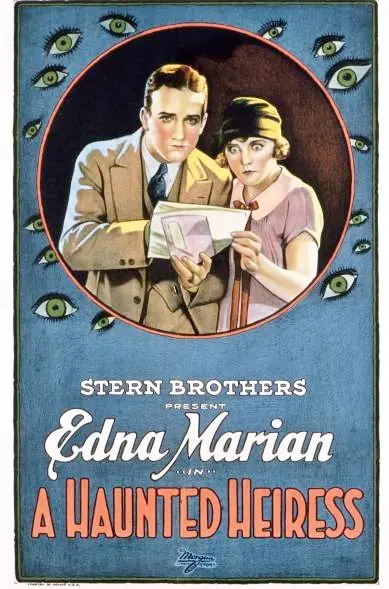
Is 'A Haunted Heiress' worth watching today? Short answer: absolutely, but with a crucial caveat. This silent film gem is a delightful watch for classic cinema enthusiasts, especially those who appreciate early suspense and a strong female lead, but it might not resonate with viewers seeking modern horror or fast-paced narratives.
It's a curious little picture, a relic from an era when cinema was still finding its voice, yet it speaks volumes about timeless themes of greed, vulnerability, and unexpected heroism. It works. But it’s flawed.
For those accustomed to the rapid-fire editing and jump scares of contemporary cinema, 'A Haunted Heiress' will demand a shift in perspective. It’s not a film that assaults your senses; rather, it invites you to lean in, to observe, and to appreciate the nuances of an art form in its infancy.
The film’s charm lies in its simplicity and the earnestness of its performances. While the 'spooks' are more quaint than terrifying by today's standards, the underlying tension of Edna's predicament remains surprisingly effective. This is silent cinema at its most engaging, offering a window into early genre filmmaking.
This film works because... it delivers a surprisingly engaging narrative driven by a plucky protagonist and a clear, compelling conflict that transcends its era.
This film fails because... its pacing, while characteristic of its time, can feel sluggish to contemporary audiences, and the 'haunting' elements are more quaint than genuinely frightening.
You should watch it if... you have an appreciation for silent era storytelling, enjoy historical context in cinema, or are curious about the origins of the thriller genre and the resilience of early heroines.
Francis Corby's narrative for 'A Haunted Heiress' is a masterclass in building a straightforward, yet compelling, premise. We meet Edna, a woman on the precipice of destitution, her very survival threatened by an insistent landlady and an empty purse. This immediate establishment of vulnerability is crucial; it grounds her later bravery in a very human struggle.
The arrival of news concerning her grandfather's estate isn't just a plot device; it's a desperate hope. Corby smartly introduces the antagonist early: a crooked lawyer whose transparent eagerness to acquire Edna's dilapidated inheritance immediately raises suspicions. It's a classic villain archetype, but effective.
Edna's refusal to sell, despite her dire circumstances, is her first act of defiance and establishes her character's strength. Her journey to the ancestral home isn't just a change of scenery; it's a deliberate step into the lion's den, a move that propels the story from domestic drama into a burgeoning thriller.
The 'reign of terror' orchestrated by the lawyer's henchmen, simulating spooks, is the film's central conceit. It’s a clever twist on the haunted house trope, revealing the true horror to be human deceit rather than supernatural forces. This preys on Edna's isolation and the psychological toll of manufactured fear, a tactic that feels surprisingly modern.
The emergence of a mysterious, black-robed figure aiding Edna adds a layer of intrigue. This figure’s gradual reveal as the lawyer's assistant, motivated by pity and burgeoning love, provides a satisfying resolution. It's a romantic flourish that ensures our heroine finds both justice and companionship, a common and comforting trope of the era, but one that feels genuinely earned here.
Edna Marion, in the titular role, carries the film with an understated grace that is often overlooked in discussions of silent era stars. Her performance is not one of broad, theatrical gestures, but rather a nuanced portrayal of resilience and quiet determination.
Consider her scenes of initial destitution: there's no histrionics, just a weary slump of the shoulders, a subtle furrow of the brow that communicates profound despair. When she receives the news of her inheritance, her relief is palpable, not through an exaggerated smile, but a slight widening of the eyes and a momentary relaxation of her posture.
Her refusal to sell the estate to the crooked lawyer is delivered with a subtle stiffening of her spine, a quiet defiance that speaks louder than any intertitle could. It’s a powerful moment that defines her character as more than just a damsel in distress.
During the manufactured haunting, Marion excels at conveying fear without resorting to caricature. Her wide-eyed glances, quick movements, and the way she clutches her chest are all effective without being over-the-top. The scene where she first encounters a 'ghost' in the dimly lit hallway, her hand flying to her mouth, is a testament to her ability to draw the audience into her terror.
Her interaction with her rescuer, the black-robed figure, is also beautifully handled. The gradual shift from fear to trust, and then to mutual affection, is conveyed through gentle glances and hesitant smiles. Marion proves that a powerful performance in the silent era wasn't about loudness, but about precision and emotional honesty. She stands apart from some of her more overtly dramatic contemporaries, offering a performance that feels remarkably grounded.
While 'A Haunted Heiress' might not boast the grand scale of a D.W. Griffith epic like The Payment, its direction, attributed to Francis Corby, demonstrates a clear understanding of how to build tension within the confines of silent cinema. The film's strength lies in its ability to create atmosphere through simple yet effective techniques.
Corby uses camera placement to great effect. When Edna first arrives at the dilapidated estate, the long shots emphasize its isolation and imposing nature, immediately establishing a sense of unease. Inside, tighter framing creates a claustrophobic feel, especially when the 'ghosts' begin their work.
The pacing, while slower than modern films, is deliberate. Corby allows scenes to breathe, building suspense through lingering shots and the gradual accumulation of spooky incidents. For instance, the sequence where Edna is alone in the house and hears unexplained noises is stretched just enough to make the audience anticipate the next 'scare,' even if it's a simple sheet-clad figure.
Editing is also used to enhance the fear. Quick cuts between Edna's terrified face and the source of the 'haunting' amplify the psychological impact. While not revolutionary, these choices showcase an early grasp of cinematic language for suspense. It’s a testament to how much could be achieved with limited tools, proving that good storytelling transcends technological advancements.
The cinematography of 'A Haunted Heiress' is surprisingly effective in creating its desired atmosphere, especially given the technological limitations of its time. The use of light and shadow is paramount in silent films, and here, it's deployed with a degree of artistry that elevates the simple plot.
Interiors of the old homestead are often dimly lit, with pools of light strategically placed to highlight Edna's vulnerability and obscure the 'spooks.' This plays directly into the psychological aspect of the haunting, making the audience, like Edna, question what lurks in the darkness. The flickering light from a single candle, casting long, dancing shadows, is a classic, yet potent, visual.
The portrayal of the 'ghosts' themselves relies heavily on practical effects and clever lighting. The henchmen, draped in sheets or cloaks, are often filmed in low light or from angles that obscure their human forms, making them appear more ethereal. This visual ambiguity is crucial; it allows the audience's imagination to fill in the gaps, making the 'threat' more unsettling than any detailed monster could be.
One particularly memorable visual is the shot of the black-robed figure emerging from the shadows to assist Edna. The contrast of the dark figure against the slightly brighter background creates a striking image, imbuing the character with an almost mythical quality before their true identity is revealed. It's a simple but effective visual shorthand for heroism and mystery.
Discussing the pacing of 'A Haunted Heiress' requires an understanding of the cinematic conventions of the silent era. Films of this period often had a slower, more deliberate rhythm compared to today's productions. This wasn't a flaw; it was the norm, allowing audiences to absorb the visual storytelling and read the intertitles.
For modern viewers, this slower pace can initially feel challenging. The build-up to the 'haunting' is gradual, and the reactions of characters are often extended. However, this deliberate speed also allows for a deeper immersion into Edna's emotional state. We feel her isolation, her fear, and her eventual resolve more keenly because the film takes its time.
The film's runtime, likely around 15-20 minutes, prevents the pacing from becoming truly tedious. It's a brisk enough experience that even with its period-appropriate rhythm, it doesn't overstay its welcome. This conciseness is a strength, ensuring that the narrative remains focused and impactful.
It’s a crucial distinction to make: the pacing isn’t 'bad,' it’s 'different.' Approaching 'A Haunted Heiress' with this understanding transforms a potential hurdle into an opportunity to appreciate a distinct form of storytelling. It reminds us that cinema, in its early days, was as much about evocative imagery and character expression as it was about plot momentum.
Absolutely. While 'A Haunted Heiress' may not deliver the kind of visceral scares or intricate plot twists expected from modern thrillers, its value lies in its historical significance and its surprisingly effective storytelling. It's a snapshot of early cinema, showcasing how fundamental narrative principles were applied even in short-form productions.
For film students, historians, or anyone with a genuine curiosity about the evolution of film, this is an invaluable piece. It demonstrates the nascent stages of genre filmmaking, particularly the thriller and the 'damsel in distress' trope, but with a heroine who exhibits genuine agency.
Beyond its academic merits, the film is simply charming. Edna Marion's performance is compelling, and the simple story of good versus greedy evil is timeless. It’s a reminder that sometimes, the most effective narratives are the most straightforward. It offers a gentle, engaging experience that transports you to another era, without requiring a significant time commitment.
What makes 'A Haunted Heiress' a valuable watch?
It's a strong example of early silent film suspense. The lead performance by Edna Marion is captivating. Its themes of greed and resilience are timeless. It offers a fascinating glimpse into cinematic history.
What truly allows 'A Haunted Heiress' to endure, despite its age, is the universality of its core narrative. It taps into primal fears: the fear of destitution, the fear of being alone, and the fear of being exploited. These are anxieties that transcend generations and cinematic styles.
The film’s central conflict – a vulnerable woman fighting against powerful, deceitful men – is a narrative that continues to resonate. While the 'spooks' themselves are not terrifying, the insidious nature of the lawyer's plot, designed to psychologically break Edna, is genuinely unsettling. The true horror isn't the supernatural, but the malevolence of human nature.
Moreover, the film champions a strong female protagonist. Edna isn't passive; she actively resists, investigates, and battles her tormentors. Her resourcefulness and courage are admirable, making her a character easy to root for. This portrayal of female resilience feels remarkably progressive for its time.
The romantic subplot, though brief, provides a satisfying emotional anchor. The assistant’s decision to aid Edna out of pity and love is a classic narrative device that provides a hopeful counterpoint to the film’s darker themes. It’s a simple story, yes, but one told with conviction and clarity, proving that sometimes, less is indeed more.
In the grand tapestry of cinema, 'A Haunted Heiress' is a small but surprisingly sturdy thread. It's not a forgotten masterpiece, nor does it attempt to redefine its genre. Instead, it’s a confident, well-executed example of early silent suspense, driven by a compelling central performance from Edna Marion.
Its 'haunting' elements are more charming than chilling, a testament to the era's nascent special effects, but the human drama at its core – a woman fighting for her inheritance and her dignity against avarice and deceit – remains potent. This isn't just a historical curiosity; it's a testament to the enduring power of simple, effective storytelling.
For those willing to adjust their expectations to the cadence of the silent screen, 'A Haunted Heiress' offers a rewarding experience. It's a film that quietly asserts its worth, proving that even without dialogue, a strong narrative and a determined heroine can resonate across the decades. It earns a solid recommendation for anyone with an appreciation for the foundational works of cinema.
IMDb 5.7
1933
Community
Log in to comment.