DbcultAccessing Vault...
6.6/10
Senior Film Conservator
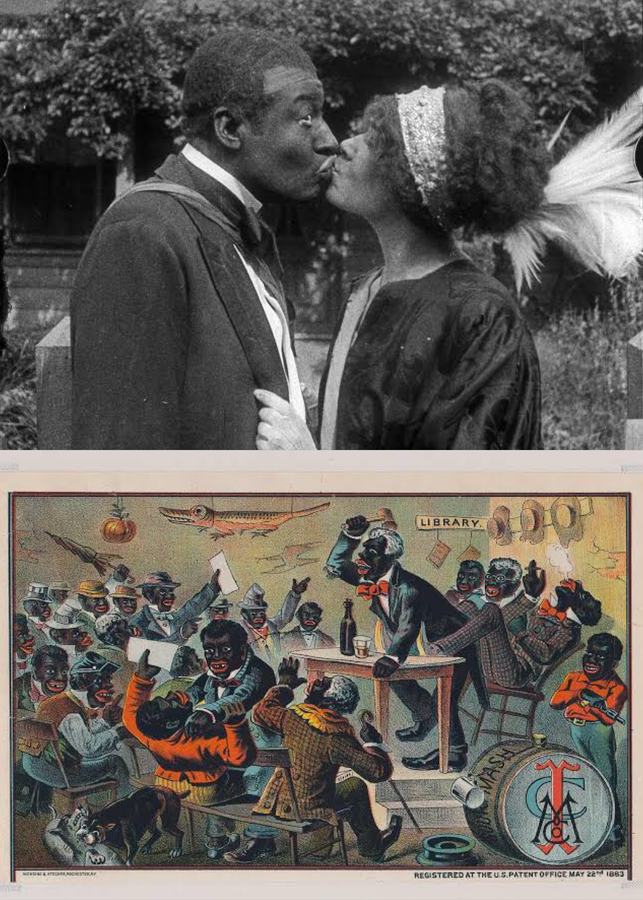
A definitive 6.6/10 rating for a film that redefined the boundaries of cult cinema. Lime Kiln Club Field Day remains a cornerstone of transgressive art.
They say nitrate remembers what historians erase, and nowhere does celluloid whisper louder than in Lime Kiln Club Field Day, a 1913 time-capsule that spent a century locked inside a Pennsylvania barn like a fugitive dream. Viewed today, its very grain seems to hum with transgression: Black faces refusing the century’s scorched stereotypes, a cakewalk that doubles as an act of cultural trespass, a love triangle staged not in the plantation big house but in the rickety heart of Black leisure. The plot, deceptively simple, is a roundelay of desire: three men, each nursing a private fracture of pride, chase the same woman through church suppers, fish-fry flirtations, and a moonlit fairground where the air smells of cane smoke and perilous hope.
Set in a fictional Southern town named after the club that anchors its social life, the narrative splinters across vignettes rather than acts. Bert Williams—vaudeville’s reigning tragicomedian—plays the bumbling deacon who hides longing behind a mask of slapstick. His rival, a slick-tongued dandy in a boater hat, struts like a man who’s memorized every page of The Love Tyrant and mistaken them for scripture. The third suitor, a riverbank philosopher, speaks so rarely that when he does the soundtrack of cicadas seems to hush in deference. All three orbit Odessa Warren Grey, whose screen presence is less coquette than centrifuge: one look from her and the film’s tonal gravity shifts.
What astonishes is the casual sovereignty of Black space. Cigar store loiterers, porch storytellers, and ballroom swells all share the frame without the usual minstrel cue cards. Directors Edwin Middleton, T. Hayes Hunter, and Sam Corker Jr. allow their ensemble to clown, court, and collide with the improvisational rhythms of a Saturday night that refuses curfew. The camera, static by necessity, becomes a fascinated guest rather than a colonizing eye. When Williams tips his bowler hat to wipe sweat, the gesture feels stolen from a private scrapbook; when Odessa’s smile crests, it lights the shot like the yellow bulb rigged just out of view.
The footage—long thought lost—was excavated in 2014 from the Biograph studio’s vaults, misfiled under “outtakes.” Only 21 of an estimated 60 minutes survive, yet what remains is so vibrantly intact it seems to wink at death. MoMA curators reassembled fragments in their original sequence, eschewing intertitles because none were ever shot; the result is a silent film that breathes like early What Happened to Mary serials but aches with a racial subtext those white cliffhangers never carried. The decision to leave gaps—where laughter, music, or a lover’s quarrel once lived—creates a ghost-track more eloquent than any title card. You supply the banjo, the crowd’s roar, the rustle of taffeta yourself.
Technically, the print is a marvel of 1913 craftsmanship. Deep-focus staging allows barroom brawls to erupt in the background while foreground flirtations continue unscathed, predating the celebrated depth of field in The Redemption of White Hawk by a full decade. Hand-tinted carnival lights flicker amber and sea-green, colors that anticipate the lyric palettes of later Les amours de la reine Élisabeth prestige pictures. Yet here the hues feel anarchic, splashed by a crew who knew they were tinting Black skin without the usual burden of caricature.
Williams’ performance is a masterclass in double-consciousness. His trademark slow-burn takes—eyes widening like a man who’s just noticed the world is tilted—echo the vaudeville routines that made him America’s first Black Broadway star, yet inside this Afro-Southern setting the shtick acquires existential heft. Watch him tip-toe across a puddle to impress Odessa: the pratfall that follows is pure slapstick, but the mortified pause afterward belongs to a man who recognizes the cost of clowning for bread and affection. The moment reframes every prior minstrel grin into a question mark aimed at the audience: Are you laughing with me or through me?
“I used to think the mask was my skin,” Williams once told the Chicago Defender. “Now I know my skin is the mask I can’t remove.”
That tension electrifies the courtship scenes. When he competes in the cakewalk—a dance invented by enslaved people to mock plantation pageantry—his shuffle is simultaneously homage and exorcism. The camera lingers on his derby-hatted silhouette against a chalk-dust floor, and for eight seconds silent cinema achieves the polyphony jazz would later claim. You realize you are watching a man dance his way out of history’s straitjacket, one syncopated heel-click at a time.
History remembers her as a chorus girl who married well and vanished; the film remembers her as centrifugal force. She glides through scenes in high-necked lace, eyes flicking between amusement and appraisal, refusing to be the passive prize the plot insists upon. In a surviving two-shot, she intercepts a love letter, reads it, then pockets it with a half-smile that could freeze moonshine. No intertitle articulates her thoughts; none is needed. The gesture invents a proto-feminist gauntlet: I will choose, not be chosen. Contemporary viewers may glimpse in her the antecedent to Anna Held’s coquettish authority, yet Grey’s sensibility feels earthier, as though she’s tasted clay and found it sweet.
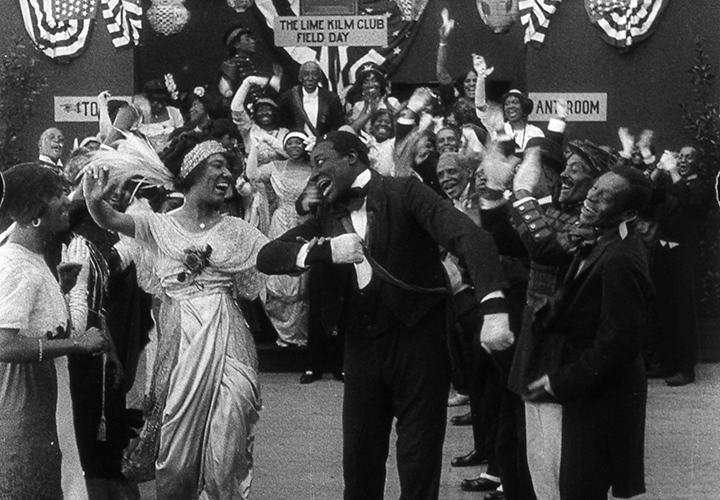
The humor is laced with region-specific spice. A fish-bite contest on the riverbank turns into a slapstick baptism; a church raffle for a ham becomes a shoving match that parodies the era’s political pork barrels. One extended gag involves Williams attempting to board a moving streetcar—actually a re-purposed trolley borrowed from the Westinghouse Works lot—only to be outpaced by a mule cart. The sequence spoofs both modernity’s promises and Jim Crow’s realities: the trolley’s conductor, a white extra kept off-screen, never brakes, suggesting the machinery of progress has no room for Black passengers. Yet the film refuses to curdle into protest; it lampoons, then pirouettes back to courtship, as if love were the only reliable transit available.
Because no original score survives, programmers must choose: commission new work, or embrace the void? At its MoMA premiere, a trio played a collage of ragtime, string-band blues, and post-minimal hum, syncing cymbal crashes to on-screen door slams. I preferred the screening where a lone pianist withheld major chords during the love triangle, letting the projector’s clack become a metronome of anxiety. Silence became the fourth suitor, wooing us with negative space. Each time Williams stuttered a proposal, the hush felt like a held breath that never exhales.
Released the same year as The Life and Passion of Jesus Christ, this film declined to sanctify suffering. Instead it luxuriates in Black leisure as an act of civil rights avant la lettre. The cakewalk’s giddy strut, the hog-calling contest, the lantern-lit picnic where couples sway to an unseen fiddle—all stake claim to public joy at a time when segregation statutes were metastasizing. The very act of preservation—Black bodies rendered in silver halide without the alibi of criminality—constitutes a manifesto. Consider it a Southern counterpart to the urban panorama of Traffic in Souls: both map geographies of desire, one trafficking salvation, the other sensuality.
Critics hunting for lineage might splice its DNA into Oscar Micheaux’s later polemics, yet the film’s closest spiritual cousin is the open-air naturalism of Un día en Xochimilco. Both trust the vernacular textures of weekend recreation to carry narrative weight. Where Mexican boatmen float through floating gardens, the Lime Kiln clubbers drift across dance floors; where Xochimilco’s trajineras become stages for flirtation, the cakewalk platform converts into a courtship coliseum. Both movies understand that festival spaces are laboratories where social rules can be bent before they break.
Unlike the damsel-chase mechanics of The Springtime of Life, the pursuit here is laced with meta-irony. The men film themselves filming their own performances of masculinity: the preacher quotes scripture while palming a flask; the dandy recites fashion-plate prose but can’t afford shoelaces. Odessa watches their pageant with the amused detachment of a woman who’s read ahead in the script. In one fragment, she turns from the camera, lifts her skirt hem an inch to free a trapped thorn, then re-enters the dance. The gesture lasts three seconds yet unmans centuries of fragile chivalry: the male gaze trips over its own shoelaces.
Viewing the film in 2024 feels like eavesdropping on ancestors who didn’t know you’d exist. Their jokes about debt, their side-eye at census takers, their improvisational flair for joy—all resonate with the memes and TikTok duets of today. The cakewalk becomes an early form of viral dance; the stolen love letter prefigures screenshot romances. Cinema here functions as temporal short-circuit, proving that Black modernity was never a deferred project but a clandestine continuum. The archive, long a mausoleum, suddenly becomes group chat.
Should archivists stabilize the scratches or let them speak? MoMA opted to preserve the emulsion flares that streak across Odessa’s cheek like comets, arguing that decay is part of the text. I agree: each scratch is a scar of exile, every light-leak a reminder of the vault doors that sealed this world away. Digital tools could erase them, but to do so would sand off the history of suppression. Instead we taste the soot of nitrate, the vinegar tang of rebirth, and remember that preservation is negotiation with mortality.
By the time the surviving reel judders to its stop, the love triangle has not resolved so much as evaporated into the humid night. Who won Odessa’s hand? The footage never says, perhaps because the filmmakers knew that in 1913 a Black woman’s choice was itself a cliffhanger too radical to answer. Yet the triumph is not narrative closure but cinematic presence: bodies once confined to the margins now occupy the center of the universe. Williams’ last discernible action—he doffs his bowler, bows toward the camera, and breaks the fourth wall into a grin—feels like a message lobbed across a century: We were here, we are here, we will be here. The film ends; the echo doesn’t.
If you leave the theater (or the streaming window) humming a tune you can’t name, that’s the sound of history revising itself in real time. Lime Kiln Club Field Day is not a relic; it’s a revenant, tapping contemporary Black cinema on the shoulder and whispering, Remember where you came from, then run further. Go watch it, then dance yourself home on a rhythm older than the medium, younger than tomorrow’s headlines.
IMDb —
1917
Community
Log in to comment.