DbcultAccessing Vault...
4.9/10
Senior Film Conservator
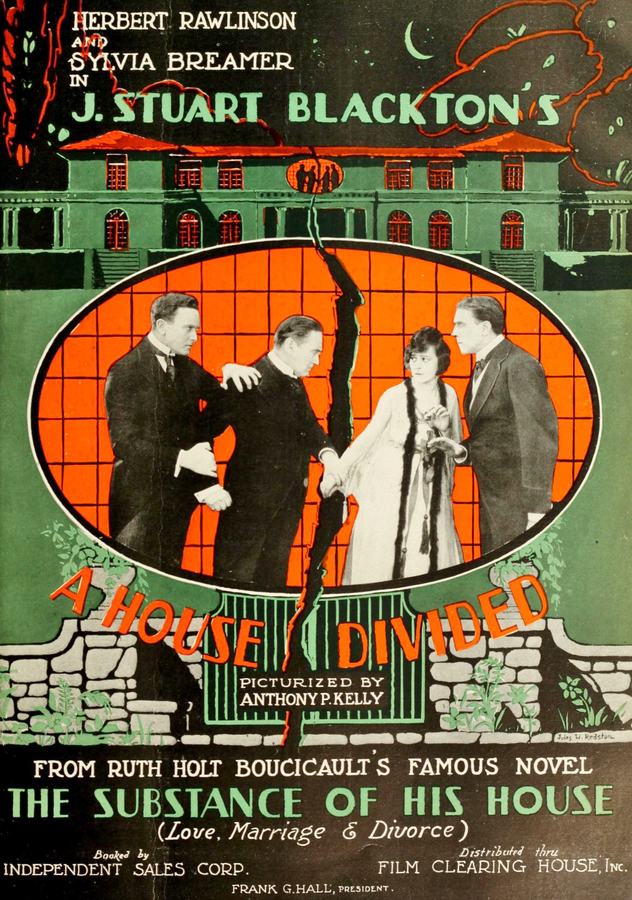
A definitive 4.9/10 rating for a film that redefined the boundaries of cult cinema. A House Divided remains a cornerstone of transgressive art.
When the silver screen first embraced narratives of tangled affection and social propriety, A House Divided emerged as a quintessential example of melodramatic craftsmanship. Directed by an anonymous hand yet anchored by performances from Herbert Rawlinson and Sylvia Breamer, the film weaves a tapestry of class, duty, and yearning that resonates beyond its 1920s origins. Its thematic preoccupations echo those found in contemporaneous works such as A Welsh Singer and The Little Girl That He Forgot, yet it distinguishes itself through a layered exploration of marital legality and personal agency.
The chiaroscuro lighting, a hallmark of the period, serves not merely as atmospheric garnish but as a narrative device. Shadows cloak Sir Arthur’s stately manor, reflecting the oppressive weight of aristocratic expectations. In contrast, the Parisian sequences burst with a softer illumination, hinting at the possibility of rebirth. The camera’s fluid pans during the wild party scene, where Sheelah Delayne flaunts her theatrical bravado, capture the frenetic energy of a generation eager to defy convention. This kinetic energy is later tempered by static, contemplative frames that linger on Mary’s despondent gaze, underscoring her internal conflict.
Mary Lord, portrayed by the luminous Baby Ivy Ward, evolves from a naïve ward into a woman ensnared by societal shackles. Ward’s expressive eyes convey a spectrum of emotions without reliance on intertitles, a testament to her silent-era prowess. Philip Carmichael, embodied by Herbert Rawlinson, oscillates between political ambition and heartfelt remorse; Rawlinson’s measured gestures articulate a man torn between public duty and private desire. Sheelah Delayne, rendered with flamboyant flair by Sylvia Breamer, operates as both antagonist and tragic figure, her flamboyance masking a deep-seated vulnerability that surfaces in the courtroom confession.
The narrative architecture of A House Divided is meticulously segmented into three acts, each marked by a pivotal ceremony that redefines relational hierarchies. The initial mock marriage, a satirical echo of aristocratic frivolity, sets the stage for the ensuing moral quandary. The second, clandestine French union, functions as a desperate attempt at redemption, while the final annulment orchestrated by Sheelah signifies a sacrificial act of compassion that realigns the moral compass of the story.
During the raucous soirée, the faux nuptials between Philip and Sheelah serve as a narrative catalyst. This scene, replete with exaggerated vows and theatrical gestures, lampoons the institution of marriage while foreshadowing the legal entanglements that later ensnare the protagonists. The director’s decision to juxtapose this farcical event against the solemnity of Sir Arthur’s manor underscores the dichotomy between public spectacle and private suffering.
Escaping the oppressive English aristocracy, Philip and Mary seek solace in France, a locale historically associated with liberty and artistic freedom. Their secret ceremony, conducted under a muted chapel light, is filmed with lingering close‑ups that emphasize the intimacy of whispered vows. The French setting functions as a liminal space, allowing characters to temporarily transcend the rigid social codes that govern their English existence.
The courtroom sequence epitomizes the clash between statutory law and personal truth. When Sheelah presents the marriage certificate and her infant son—purportedly Philip’s— the film pivots to a stark examination of bigamy statutes. Mary’s forced testimony, wherein she denies the marriage to preserve Philip’s reputation, is a heartbreaking tableau of self‑effacement. The director employs a static, wide‑angle shot that captures the oppressive architecture of the courtroom, mirroring Mary’s sense of entrapment.
At its core, A House Divided interrogates the gendered expectations of early twentieth‑century Britain. Mary’s trajectory—from ward to wife, to alleged bigamist—highlights the limited agency afforded to women, whose identities were often subsumed under patriarchal authority. Conversely, Philip’s oscillation between political ambition and personal fidelity illustrates the male privilege of navigating multiple spheres without enduring the same level of societal censure.
When examined alongside Beyond the Law, which similarly explores legal entanglements and moral ambiguity, A House Divided offers a more nuanced portrayal of female sacrifice. Whereas Beyond the Law leans heavily on male redemption, this film grants Mary a tragic agency, culminating in her self‑imposed disappearance—a narrative choice that subverts the conventional happy‑ending trope prevalent in many silent dramas.
The lullaby that recurs in the film’s denouement functions as an auditory leitmotif, bridging past affection with present reconciliation. Its reintroduction during the final scene, when soldiers chant the same melody, triggers a visceral recognition in Mary, underscoring the power of memory as a narrative conduit. Light, too, operates symbolically: the dimming of the manor’s chandeliers mirrors the waning of Sir Arthur’s influence, while the soft glow of the French chapel signifies hope. Water, present in the riverine scenes that bookend Mary’s wanderings, symbolizes both cleansing and the inexorable flow of destiny.
Rawlinson’s portrayal of Philip is marked by a restrained gravitas; his measured posture and occasional glances toward the camera convey an inner turmoil that words cannot articulate. Ward’s performance, particularly in the scenes of silent despair, showcases a mastery of facial nuance that rivals the era’s most celebrated thespians. Breamer’s Sheelah oscillates between coquettish bravado and genuine sorrow, delivering a performance that refuses to be reduced to a mere antagonist.
Ruth Holt Boucicault and Anthony Paul Kelly’s script weaves intricate dialogue‑free storytelling with intertitles that are sparingly used, allowing visual expression to dominate. The pacing, while deliberate, maintains audience engagement through strategic climaxes—most notably the courtroom revelation and the final French reunion. The screenplay’s ability to sustain tension without resorting to melodramatic excess is a testament to its structural integrity.
Although A House Divided remains a lesser‑known gem within the silent canon, its exploration of marital legitimacy, gendered oppression, and personal redemption resonates with contemporary audiences attuned to discussions of consent and autonomy. Modern scholars often cite the film when examining early cinematic representations of legal versus emotional marriage, positioning it alongside works such as The Eleventh Commandment in academic discourse.
The film survives in a partially restored 35mm print housed at the British Film Institute, with select scenes digitized for streaming platforms specializing in classic cinema. Its availability, though limited, invites renewed scholarly attention and offers cinephiles an opportunity to experience a narrative that deftly balances spectacle with introspection.
In sum, A House Divided stands as a masterful confluence of visual storytelling, thematic depth, and performative brilliance. Its intricate plot, anchored by compelling characters and underscored by a deft directorial hand, invites repeated viewings and scholarly analysis. For enthusiasts of silent drama seeking a film that transcends its era while speaking to enduring human concerns, this work remains an essential viewing experience.
IMDb 6.3
1930
Community
Log in to comment.