DbcultAccessing Vault...
Cult Review
Senior Film Conservator
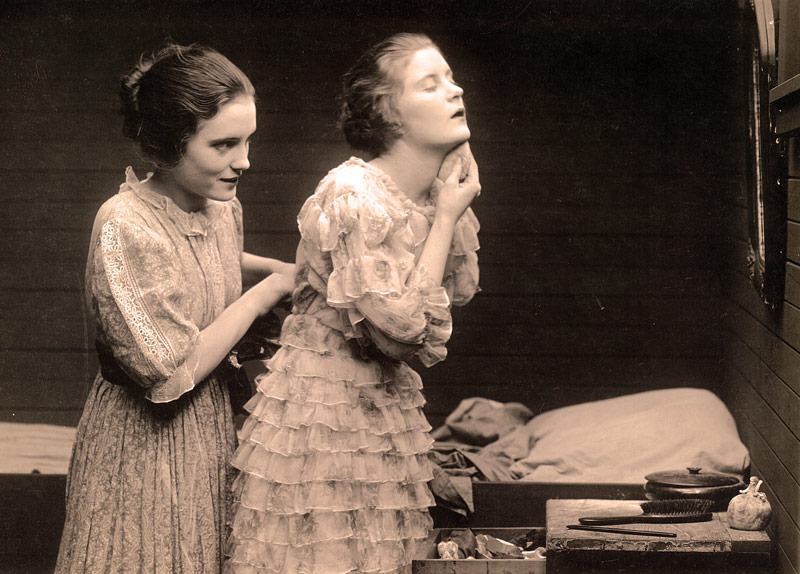
Step into the flickering, sepia-toned world of early cinema, and you’ll often find narratives that, while seemingly simplistic on the surface, delve into profound societal anxieties and human desires with surprising depth. Such is the case with The Wharf Rat, a 1916 offering that, despite its age, still buzzes with a peculiar energy and a narrative audacity that continues to captivate. It’s more than just a period piece; it’s a fascinating window into the storytelling sensibilities of a bygone era, rendered with a sincerity that modern blockbusters often struggle to emulate.
At its core, The Wharf Rat is a sprawling melodrama, a tapestry woven with threads of familial strife, gender performance, misdirected vengeance, and the enduring power of love. The film introduces us to Carmen Wagner, a character whose very existence is shaped by the bitter legacy of her father’s ruined musical career—a career, we are told, systematically dismantled by the relentless, corrosive nagging of her stepmother. This foundational trauma ripples through generations, infecting Carmen’s grandfather, a violinist of considerable talent himself, with a virulent strain of misogyny. His son’s artistic demise, in his eyes, is a direct indictment of all women, and he vows to protect his beloved granddaughter from a similar fate.
His solution? A radical, almost theatrical, act of pre-emptive protection: raising Carmen as a boy. This isn't merely a disguise; it’s an indoctrination, designed to instill in her a profound aversion to femininity, to shield her from the perceived dangers of her own gender. It’s a premise that immediately sets The Wharf Rat apart, inviting us to ponder the social constructs of gender long before such discussions became commonplace. One might even draw a thematic parallel to films like The Incomparable Mistress Bellairs, where identity and perception are fluid, though perhaps less overtly driven by such a specific, almost philosophical, agenda.
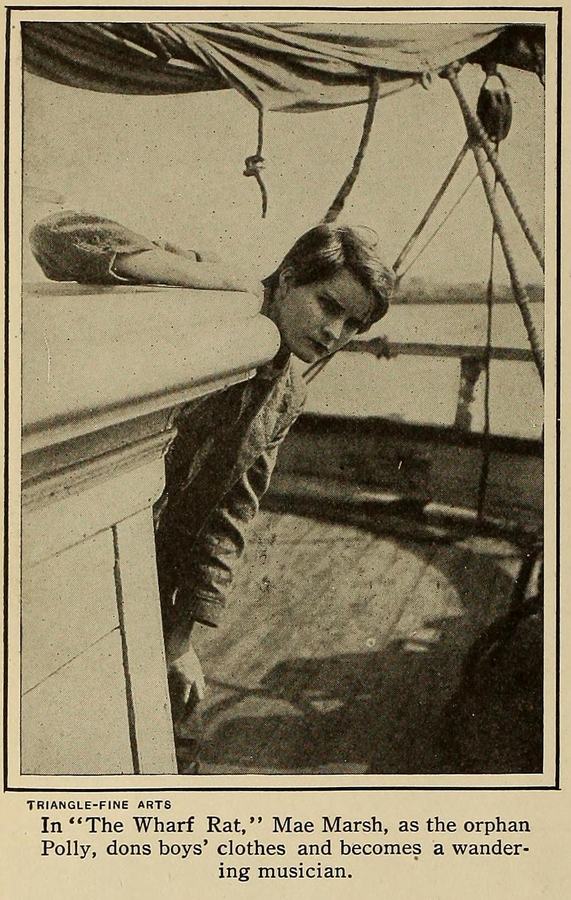
In this carefully constructed charade, Carmen, in her boy’s garb, encounters Edward Holmes, a law clerk whose earnest demeanor provides a stark contrast to the eccentricities surrounding Carmen. Their burgeoning friendship is a delicate bloom, oblivious to the deeper currents of deception and the grandfather’s deeply ingrained prejudices. It’s a moment of innocent connection, a brief respite before the storm. The relative peace, however, is shattered with the inevitable re-emergence of the stepmother, a figure of relentless malevolence. Discovering the grandfather clandestinely imparting music lessons to Carmen—a defiant act against her decree—she drives him from the house, severing the last vestiges of their fractured family unit.
Carmen’s response is immediate and unwavering: she flees, casting her lot with her grandfather. Their bond, forged in adversity and shared artistic passion, transforms them into vagabond musicians, their violins now their only means of survival, their stages the unforgiving streets. This shift into a life of itinerancy injects a romantic, yet melancholic, strain into the narrative, echoing the struggles of artists against an indifferent world, a theme that resonates across various cinematic landscapes, perhaps even in the dramatic struggles seen in Der Eid des Stephan Huller, though with vastly different stakes.
The narrative takes a sharp turn as Carmen and her grandfather embark on a ship, inadvertently crossing paths with Edward once more. The stepmother, relentless in her pursuit, has now employed Edward to track them down. This plot device, while convenient, underscores the pervasive nature of her malice. Edward’s subsequent false arrest of an innocent Italian musician and his daughter, a tragic case of mistaken identity, costs him his position and plunges him into a state of professional disgrace. It’s a poignant moment, highlighting the fragility of reputation and the harsh consequences of errors, themes explored in more overt crime dramas like The Man Who Disappeared, albeit in a different context.
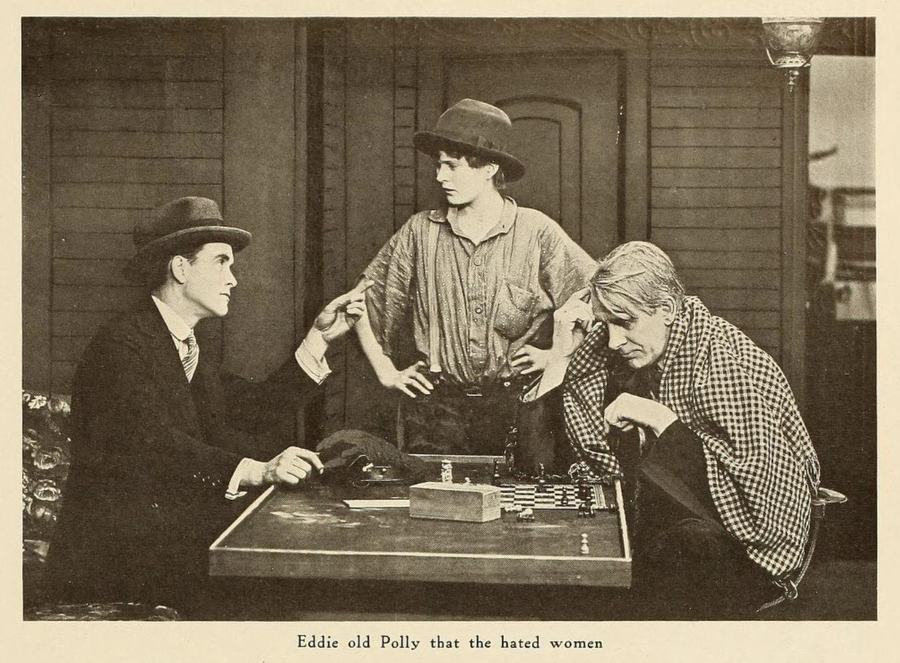
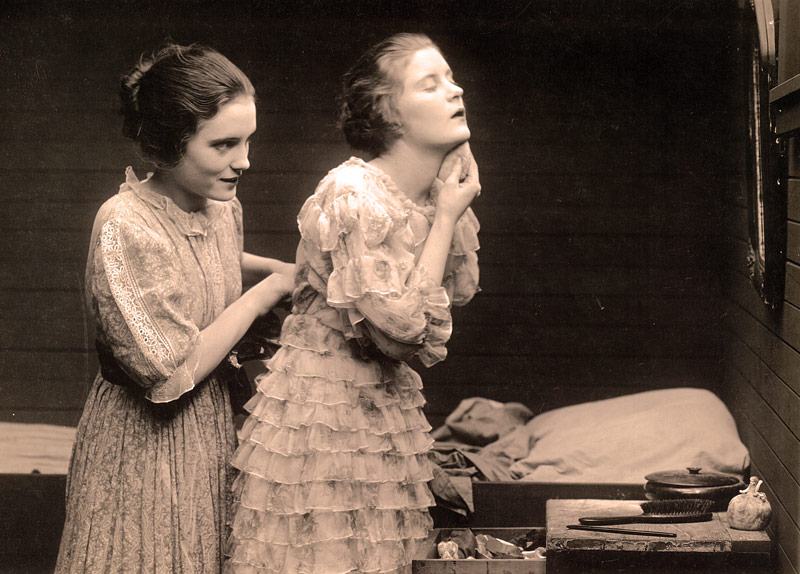
In his plight, Edward stumbles upon Carmen and her grandfather living a precarious existence on a derelict vessel, a symbolic haven for their outcast status, their music still their lifeline. The old hulk, a decaying monument to forgotten voyages, becomes a crucible for new beginnings. A pivotal moment arrives when Edward, in a heroic act, protects Carmen from a drunken sailor, sustaining serious injury. Taken in and cared for within the confines of the dilapidated ship, he becomes a witness to Carmen’s true self. It is here, amidst the creaking timbers and the lapping waves, that Carmen sheds her boy’s clothes, embracing her feminine identity. She dons women’s apparel, mimicking the flirtatious charm of the dock watchman’s daughter, subtly, yet powerfully, coquetting with Edward. The reveal is both a recognition and a rediscovery; Edward finally identifies her as the girl he was initially hired to find, but now, the context has shifted entirely. The professional obligation has dissolved, replaced by a burgeoning, undeniable affection.
Their love, however, remains a precarious secret, hidden from the ever-watchful, woman-hating grandfather. This clandestine romance adds a layer of tension, a ticking clock to their burgeoning happiness. The stepmother, a relentless force of nature, remains a looming threat. New detectives, yet again dispatched by her, locate Carmen, and Edward, ever the protector, is knocked unconscious defending her. Carmen is forcibly taken away on a steamer, seemingly sealing her fate. But this is silent melodrama, and true love, as always, finds a way. Edward, recovering swiftly, embarks on a desperate pursuit in a fast motorboat, a thrilling chase sequence that injects a dose of pure action into the narrative. Carmen, seeing her chance, takes a daring leap from the steamer, rescued by Edward in a dramatic flourish. The stepmother, in a final, impotent display of rage, pursues them in a pilot boat, but their escape is assured, culminating in the promise of marriage and enduring happiness.
The success of a silent film hinges almost entirely on the expressive power of its performers, and The Wharf Rat is blessed with a cast capable of conveying intricate emotional landscapes without uttering a single word. Mae Marsh, as Carmen, is nothing short of extraordinary. Her portrayal of a young woman navigating a forced gender identity, then slowly blossoming into her true self, is nuanced and deeply affecting. Marsh, known for her expressive eyes and delicate yet powerful presence, brings a poignant vulnerability to Carmen’s boyish facade and an alluring confidence to her feminine re-emergence. Her transformation is not merely physical; it’s an internal journey made manifest through subtle gestures and profound emotional shifts. Her performance here is arguably as compelling as her work in Emmy of Stork's Nest, showcasing her versatility.
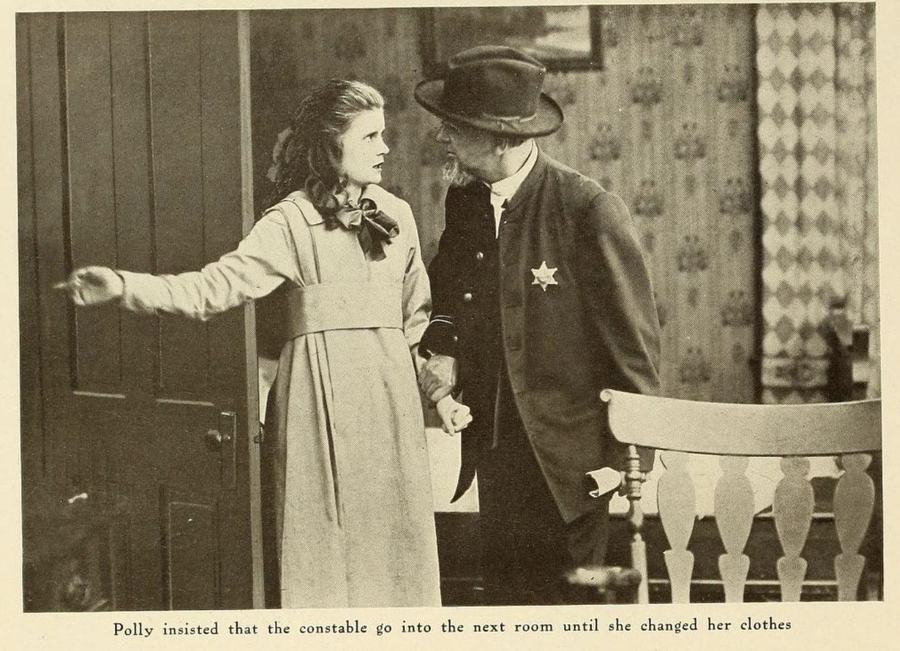
Spottiswoode Aitken, as the grandfather, delivers a performance that balances his character’s hardened misogyny with an undeniable, if misguided, love for Carmen. His internal conflict, the tension between his deep affection and his ingrained prejudice, is vividly portrayed through his intense expressions and often rigid physicality. He avoids becoming a mere caricature, instead presenting a complex figure whose actions, however extreme, stem from a place of profound, if misdirected, care. Lillian Langdon’s stepmother is the quintessential villainess of the era—unrelenting, vindictive, and thoroughly detestable. Her presence injects a vital dose of antagonism, driving much of the plot’s conflict and providing a clear opposing force to the protagonists’ desires. William H. Brown, Jack Brammall, Robert Harron, Josephine Crowell, and Pauline Starke all contribute to the film’s rich tapestry, each playing their part in creating a believable, if melodramatic, world. Harron, in particular, as Edward Holmes, provides a stable, earnest counterpart to Marsh’s more volatile Carmen, his integrity and steadfastness shining through.
A significant part of the film's enduring appeal must be attributed to its writer, Anita Loos. A pioneering female screenwriter, Loos possessed a keen understanding of human nature and a remarkable ability to craft narratives that were both entertaining and subtly subversive. Her contributions to early cinema are invaluable, and The Wharf Rat serves as an excellent example of her skill in weaving together dramatic tension, character development, and social commentary. The audacious premise of a girl raised as a boy, the exploration of gender roles, and the complex motivations of the grandfather all speak to Loos’s distinctive voice. She wasn't afraid to tackle themes that, for the time, were quite progressive, presenting them within the accessible framework of a melodrama. Her writing imbues the characters with a certain psychological depth, making their struggles and triumphs resonate beyond the confines of the silver screen. Her ability to craft such compelling narratives perhaps draws a line to the intricate plotting seen in films like The House of Mystery or even the dramatic twists of Judex, albeit with a more character-driven focus.
The central theme of gender identity and performance is undoubtedly the most striking aspect of The Wharf Rat. Carmen’s journey from enforced masculinity to embraced femininity is a powerful, if allegorical, exploration of self-discovery. It challenges the rigid societal expectations of gender prevalent at the time, suggesting that identity is not merely assigned but discovered and chosen. The grandfather’s misogyny, while extreme, also prompts reflection on the origins of prejudice and the damaging effects of trauma passed down through generations. His eventual, albeit reluctant, acceptance of Carmen’s true self, and her relationship, implies a softening of his hardened worldview, a testament to love’s transformative power.
The film also delves into themes of class and social mobility. Carmen and her grandfather’s life as vagabond musicians, their existence on a derelict ship, contrasts sharply with Edward’s initial status as a law clerk and the stepmother’s apparent wealth. The journey of these characters, particularly Edward’s fall from grace and subsequent redemption, speaks to the precariousness of social standing and the resilience required to overcome adversity. The dramatic chases and escapes, particularly the climactic steamer jump and motorboat pursuit, while thrilling, also symbolize the desperate struggle for freedom and autonomy against oppressive forces. These sequences, with their urgent tempo and high stakes, might remind one of the relentless pursuit narratives found in films like Zatansteins Bande or the dramatic tension of Time Lock No. 776, though The Wharf Rat grounds its action in a more personal, emotional struggle.
In an era dominated by rapid technological advancements in cinema, The Wharf Rat stands as a testament to the enduring power of compelling storytelling and heartfelt performances. It’s a film that, despite its century-old vintage, manages to touch upon themes that remain relevant today: the fluidity of identity, the corrosive nature of prejudice, the pursuit of happiness against all odds, and the redemptive power of love. The expressive acting, particularly from Mae Marsh, combined with Anita Loos’s intelligent script, elevates this melodrama beyond mere escapism. It’s a film that invites us to look beyond the surface, to appreciate the artistry and ingenuity of early filmmakers who, with limited tools, managed to craft narratives that resonate deeply with the human experience.
For those with an appreciation for the history of cinema, or simply for a story told with passion and dramatic flair, The Wharf Rat is a rewarding experience. It reminds us that the fundamental elements of powerful storytelling—compelling characters, high stakes, and a journey of transformation—are timeless, transcending the limitations of technology or the passage of years. It's a vibrant piece of cinematic history, offering insights into societal norms and individual resilience, and it certainly deserves its place among the rediscovered treasures of the silent era. Its blend of romance, adventure, and social commentary makes it a captivating watch, proving that even without synchronized sound, the emotional resonance can be profound and lasting. Just as The Shielding Shadow offered its own brand of mystery and intrigue, The Wharf Rat offers a unique blend of character-driven drama and adventurous escapism, leaving a lasting impression long after the final fade to black.
IMDb —
1918
Community
Log in to comment.