DbcultAccessing Vault...
Cult Review
Senior Film Conservator
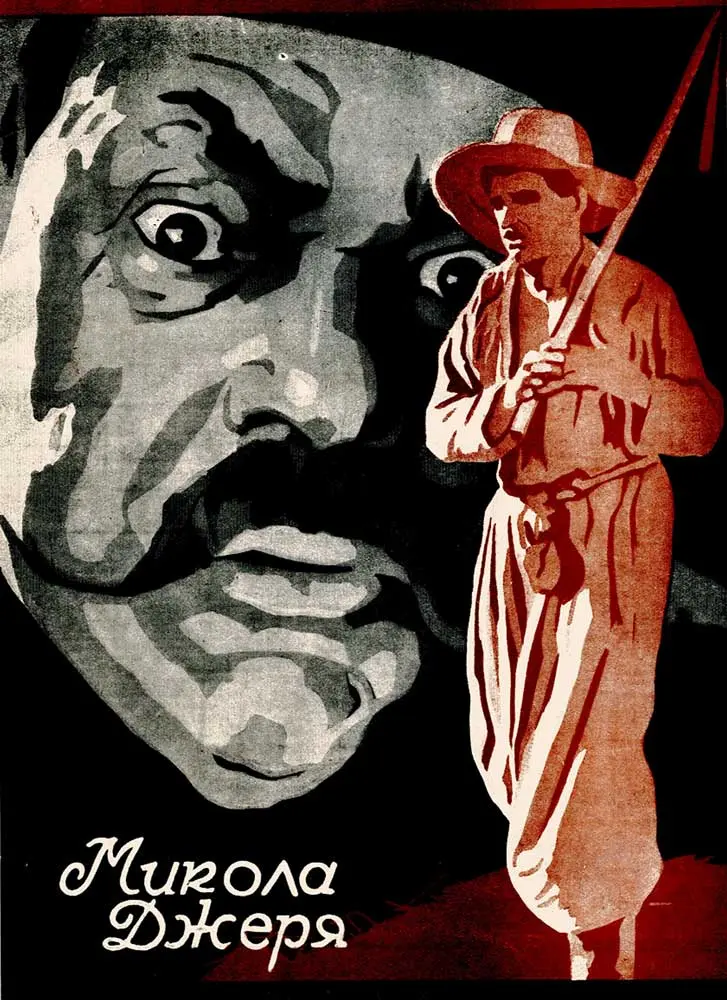
Mykola Dzherya, an early Ukrainian dramatic effort, is a film that demands a specific kind of patience, but it certainly offers rewards for those willing to engage with its particular rhythms. It isn't a universally accessible picture, nor does it attempt to be, but for viewers interested in the foundational steps of Eastern European cinema and a stark portrayal of rural life, it holds genuine historical and artistic weight.
This film works because of its unflinching commitment to depicting the harsh realities of peasant life, offering a raw, often unsettling glimpse into a world governed by tradition and rigid hierarchy. It fails because its narrative can feel plodding, relying on visual exposition that, while historically interesting, doesn't always translate into dynamic storytelling for a modern audience. You should watch it if you appreciate silent-era social dramas and are prepared for a film whose primary value lies in its historical context and its stark, almost documentarian approach to character struggle.
For most casual viewers seeking entertainment, the answer is likely no. Mykola Dzherya is an archival piece, a window into early cinematic ambition and a specific cultural moment. It moves slowly. The dramatic arcs, while clear, unfold with a deliberation that can feel alien to contemporary pacing. However, for film students, historians, or anyone with a deep curiosity about the origins of national cinemas, it absolutely warrants attention.
Mykola Dzherya, directed by a crew working within the nascent Soviet film industry, offers a fascinating, if sometimes stiff, attempt at social realism. The film's strength lies in its ground-level perspective. We aren't presented with grand, sweeping historical events, but rather the grinding daily struggle of a single man against forces far greater than himself. Mykola's plight, from his back-breaking labor to his yearning for Odarka, feels authentic, even through the filter of a century-old silent film.
Dmitriy Kapka, in the titular role, delivers a performance that, while theatrical by today's standards, is undeniably committed. His expressions, often exaggerated for the silent screen, communicate Mykola's simmering resentment and quiet determination. When he glares at the landlord or shares a tender moment with Odarka, there's a raw honesty that cuts through the film's technical limitations. It's not a nuanced performance in the modern sense, but it serves the story's blunt emotional demands.
The cinematography, while not groundbreaking, effectively conveys the oppressive environment. Wide shots of barren fields and cramped village dwellings underscore the characters' limited horizons. There’s a particular sequence where Mykola is forced to endure a public humiliation by the landowner that, despite its age, retains a certain potency. The camera holds on his face, showing the humiliation slowly giving way to a spark of defiance. This is where the film finds its rhythm, even if those moments are interspersed with longer, less impactful stretches.
The film's exploration of social injustice and the individual's struggle against an oppressive system is its most enduring theme. Mykola Dzherya isn't just a character; he's an archetype of the exploited peasant. His journey, from passive suffering to active resistance, aligns with the broader revolutionary narratives prevalent in Soviet cinema of the time. However, the film avoids becoming purely propaganda, grounding Mykola's struggle in personal stakes—his love for Odarka and his desire for dignity. This personal angle keeps the film from feeling entirely didactic.
One debatable aspect is the film's portrayal of community. While Mykola is a strong individual, the supporting villagers often feel like a monolithic entity, either passively accepting their fate or actively hindering Mykola's progress through fear. This simplification prevents a deeper exploration of collective action or nuanced internal village dynamics, which would have added significant texture to the narrative. It’s a missed opportunity to show the complex web of loyalties and fears that existed in such communities.
Mykola Dzherya is a tough watch, but a rewarding one for the right audience. It’s not a film that entertains in the modern sense, nor does it possess the technical polish or narrative sophistication of later silent-era works. Instead, it offers a stark, often primitive, yet undeniably sincere look at a specific time and place. Its value lies less in its dramatic prowess and more in its honest, if somewhat clunky, attempt to capture the spirit of an individual fighting against the odds. Approach it as a historical artifact with a beating heart, and you might find something worthwhile.
IMDb 6.6
1934
Community
Log in to comment.