DbcultAccessing Vault...
Cult Review
Senior Film Conservator
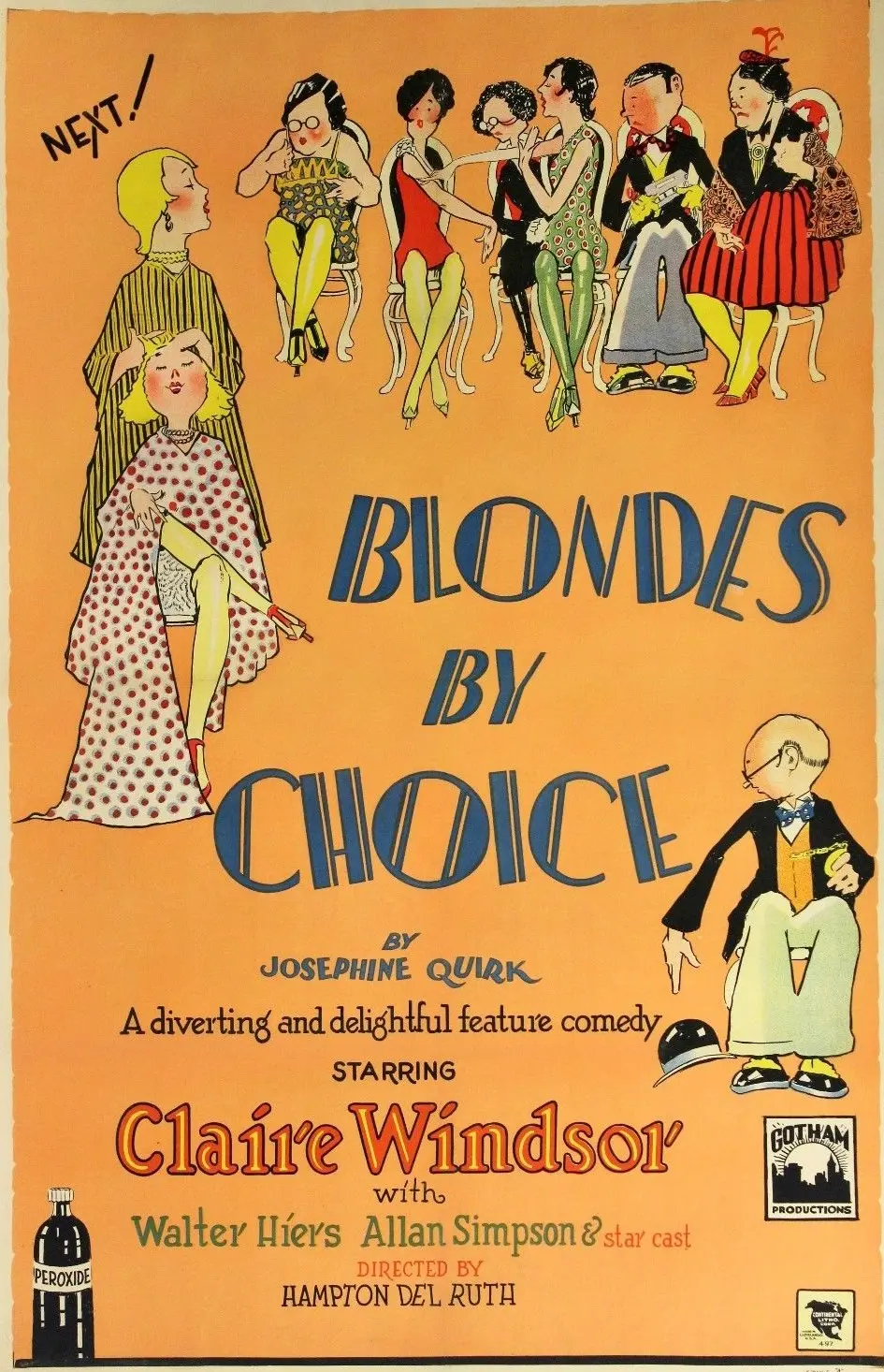
Is Blondes by Choice worth watching today? Short answer: yes, but with significant caveats that place it firmly in the category of historical curiosity rather than timeless, universally appealing entertainment. This film is primarily for ardent silent film enthusiasts, film historians, and those with a keen interest in early cinematic portrayals of societal expectations and gender roles. It is emphatically not for casual viewers seeking modern pacing, complex narratives, or readily accessible emotional resonance without a deep appreciation for the era's unique storytelling conventions.
At its core, Blondes by Choice is a fascinating artifact, a window into a specific cultural moment. It grapples with themes that, surprisingly, remain relevant, even if its execution feels undeniably quaint. The film’s central premise, while simple, offers a remarkable lens through which to view early 20th-century societal pressures regarding appearance and identity, particularly for women navigating new urban landscapes and burgeoning industries.
This film works because of its audacious thematic exploration for its time. It dares to question the superficiality of societal ideals and the internal conflict that arises when one attempts to conform. The performances, while broad by today's standards, often convey genuine emotion and character through the expressive physical language typical of silent cinema.
This film fails because its pacing is undeniably slow, a common characteristic of the era that can test the patience of contemporary audiences. Character development, while present, often relies on archetypes rather than nuanced portrayals, and some of the narrative resolutions feel simplistic or hastily achieved.
You should watch it if you appreciate the historical context of silent cinema, are curious about early explorations of social commentary, or enjoy dissecting how filmmakers conveyed complex ideas without spoken dialogue. It's an educational experience as much as it is an entertainment one.
The plot of Blondes by Choice, while straightforward, carries a surprising amount of thematic weight. We follow Lily, a young woman who arrives in the city with dreams of becoming an actress. She quickly discerns that success, both professional and romantic, seems reserved for blondes. Her decision to dye her hair, a literal transformation, acts as the central catalyst for the entire story.
This premise, even now, resonates with contemporary anxieties about self-image and societal pressures. The film cleverly uses Lily's new blonde persona to explore the double-edged sword of conformity. Initially, it brings her the attention she craves – minor roles, the gaze of the charming producer Jack Gardner, and an elevated social standing.
However, this newfound 'success' comes at a cost. The film subtly, and sometimes not so subtly, illustrates how Lily's authentic self becomes obscured. Her relationship with Walter Hiers’ unassuming stagehand, who admired her before her transformation, becomes strained, highlighting the superficiality of her new connections versus the depth of her old ones. The narrative effectively uses these character dynamics to illustrate the film's core message.
One particularly effective sequence involves a montage of Lily’s early auditions. Before her transformation, she’s overlooked, a face in the crowd. Post-transformation, she catches the director’s eye almost immediately, but the roles offered are invariably shallow, requiring little more than a pretty, blonde face. It’s a stark, if silent, critique of the industry’s nascent objectification.
The climax, which sees Lily's natural hair color accidentally revealed during a crucial public event, is a classic silent film trope, yet it serves its purpose admirably. It forces Lily, and by extension the audience, to confront the artifice and the genuine consequences of her choices. This revelation isn't just about hair; it's about identity, integrity, and the often painful journey toward self-acceptance.
What truly fascinates isn't the 'choice' itself, but the silent film's remarkable ability to convey complex social anxieties through gesture and tableau alone. It’s a masterclass in visual storytelling, even if the narrative beats feel familiar.
The cast of Blondes by Choice delivers performances characteristic of the silent era, relying heavily on exaggerated facial expressions and broad physical movements to convey emotion and intent. While this style might appear melodramatic to modern eyes, it was the lingua franca of the time, and within that context, many actors shine.
Claire Windsor, as Lily, carries the emotional weight of the film. Her initial wide-eyed innocence and subsequent conflicted expressions are particularly compelling. We see her internal struggle through subtle shifts in her posture and the way her eyes betray her burgeoning doubts, even when her smile is bright. There’s a scene where she’s applying her new blonde wig (or perhaps preparing for a dye) in front of a mirror, and the hesitation in her movements speaks volumes about the gravity of her decision.
Walter Hiers, often a comedic relief actor, here plays a more understated role as the earnest stagehand. His quiet devotion to Lily, and his visible confusion and disappointment as she changes, provides a grounded emotional anchor. Hiers' ability to convey heartbreak with just a slump of his shoulders and a downcast gaze is surprisingly effective. It’s a performance that, while lacking overt theatrics, leaves a lasting impression.
Bodil Rosing, as Lily's pragmatic aunt, offers a wonderfully restrained performance. She represents the voice of tradition and wisdom, her disapproval conveyed not through grand pronouncements, but through subtle gestures of concern and quiet observation. Her presence grounds the more fantastical elements of Lily's transformation, reminding the audience of the film's moral compass.
Jack Gardner’s portrayal of the charming but ultimately shallow producer is a classic villain archetype, but he plays it with enough charisma to make his allure understandable. He embodies the superficial world Lily is trying to enter, making his eventual rejection of Lily’s true self all the more impactful. The way he dismisses her after her true hair color is revealed is brutally simple and effective.
Paul Perez's direction in Blondes by Choice, while not groundbreaking, is competent and serves the story well. The film utilizes classic silent era techniques: clear establishing shots, medium close-ups for emotional emphasis, and judicious use of intertitles to advance the plot and provide character insight. There's a particular elegance in how Perez frames Lily's transformation, often showing her silhouette against a bright background, symbolizing her emergence into a new, artificial light.
The cinematography, while not pushing any boundaries, is effective in creating the film's atmosphere. The black and white palette is skillfully employed to highlight contrasts – the stark difference between Lily's natural dark hair (often shown in flashback or shadows) and her luminous blonde locks. Lighting is used to great effect, particularly in scenes of introspection, where Lily is often bathed in soft, melancholic light, contrasting with the harsh, bright lights of the stage.
One memorable visual is the recurring motif of mirrors. Lily frequently gazes into them, initially with hope and later with growing disillusionment. These mirror shots are not just functional; they are psychological, reflecting her internal conflict and the fracturing of her self-image. It’s a simple yet powerful visual metaphor.
The pacing of Blondes by Choice is, as expected for a silent film, deliberate. Scenes often linger, allowing the audience to absorb the visual information and the actors' expressions without the urgency of spoken dialogue. This can be a challenge for modern viewers accustomed to rapid-fire editing and constant narrative progression. However, for those willing to adjust their expectations, this slower pace allows for a deeper appreciation of the visual storytelling and the nuances of performance.
The film’s tone balances between lighthearted social commentary and genuine melodrama. There are moments of comedic misunderstanding, particularly in Lily’s early attempts to navigate her new social circles. Yet, these are often underscored by a melancholic undercurrent, as the audience witnesses the emotional toll her choices take. The balance isn't always perfect, but it generally manages to convey its message without becoming overly preachy or saccharine.
It works. But it’s flawed. The reliance on intertitles, while necessary, sometimes breaks the visual flow, and some scenes feel extended beyond their dramatic necessity. This is a common criticism of silent films, and Blondes by Choice is no exception.
My most unconventional observation about Blondes by Choice is how it inadvertently highlights the inherent limitations of silent film in portraying subtle internal change. While Claire Windsor is excellent, the suddenness of Lily’s transformation and subsequent disillusionment feels less like organic growth and more like a series of plot points. The lack of interior monologue means we are largely left to infer her deeper emotional shifts, which can sometimes feel like a leap rather than a gradual understanding.
Here's a debatable opinion: The film’s central premise, while quaint, arguably champions a superficiality that modern audiences might find gratingly simplistic. While it ultimately critiques the 'blonde ideal,' it spends a significant portion of its runtime indulging in the very notion it seeks to dismantle. One could argue it inadvertently reinforces the power of appearance, even in its condemnation.
Furthermore, I believe the film misses an opportunity to explore the male characters' complicity in perpetuating these beauty standards. While Jack Gardner's character is clearly superficial, the film focuses predominantly on Lily's internal struggle, rather than casting a wider net on the societal mechanisms at play. It's a missed beat that could have elevated its social critique.
Blondes by Choice is more than just a relic; it’s a compelling piece of cinematic history that, despite its age, still manages to provoke thought. It's a film that demands patience and an open mind, offering rich rewards for those willing to engage with its unique storytelling language. While it won't appeal to everyone, its historical significance, combined with a surprisingly resonant theme, makes it a worthwhile watch for dedicated cinephiles and anyone curious about the foundational elements of film. It’s not a flawless Revenge or a lost The Devil's Circus, but it carves its own niche as a thoughtful, if slow-burning, social commentary. Seek it out if you’re ready for a journey back in time, and you might just find a surprising amount of modern relevance in its silent frames.
IMDb —
1919
Community
Log in to comment.