DbcultAccessing Vault...
7.2/10
Senior Film Conservator
A definitive 7.2/10 rating for a film that redefined the boundaries of cult cinema. A Kick for Cinderella remains a cornerstone of transgressive art.
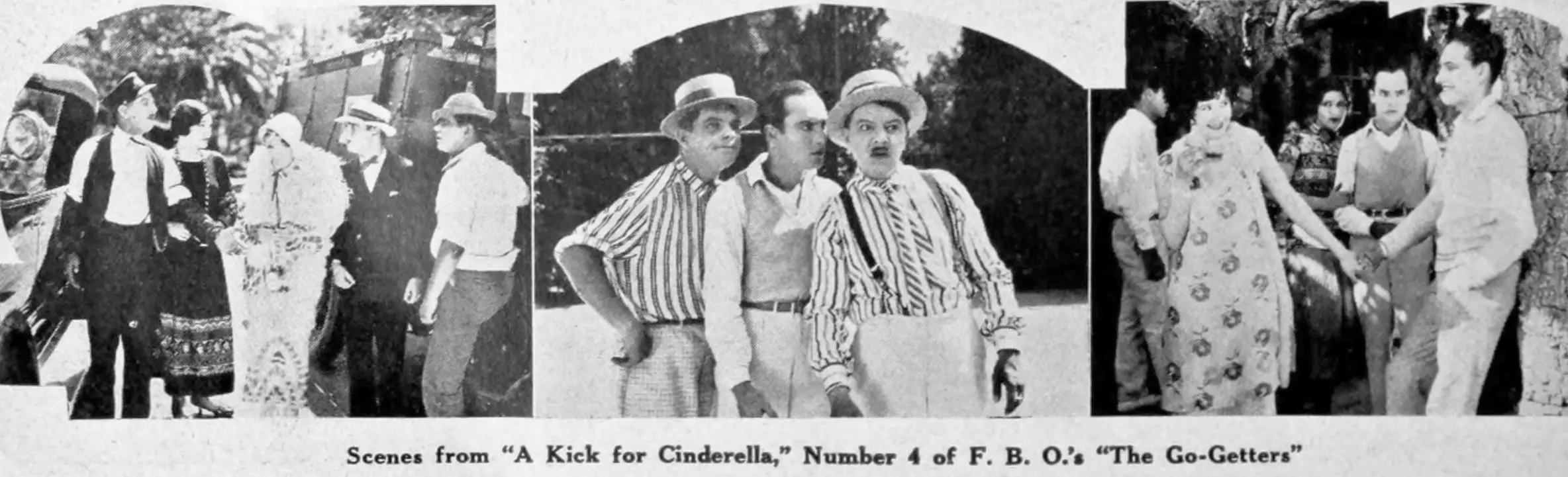
Stepping back into the nascent days of cinema, one encounters a particular charm in the silent film era's unadulterated commitment to visual storytelling and physical comedy. Among these treasures, A Kick for Cinderella emerges as a buoyant, effervescent romp, a testament to the enduring appeal of well-executed slapstick and the timeless narrative of mistaken identity. Released during a period when the world was rapidly transforming, this film, penned by the ingenious George Marion Jr., offers a delightful escape into a universe where audacity trumps ability and the racket of laughter echoes louder than any tennis ball's thwack. It's a comedic conceit as old as theatre itself, yet rendered with a fresh, kinetic energy that defines its particular charm.
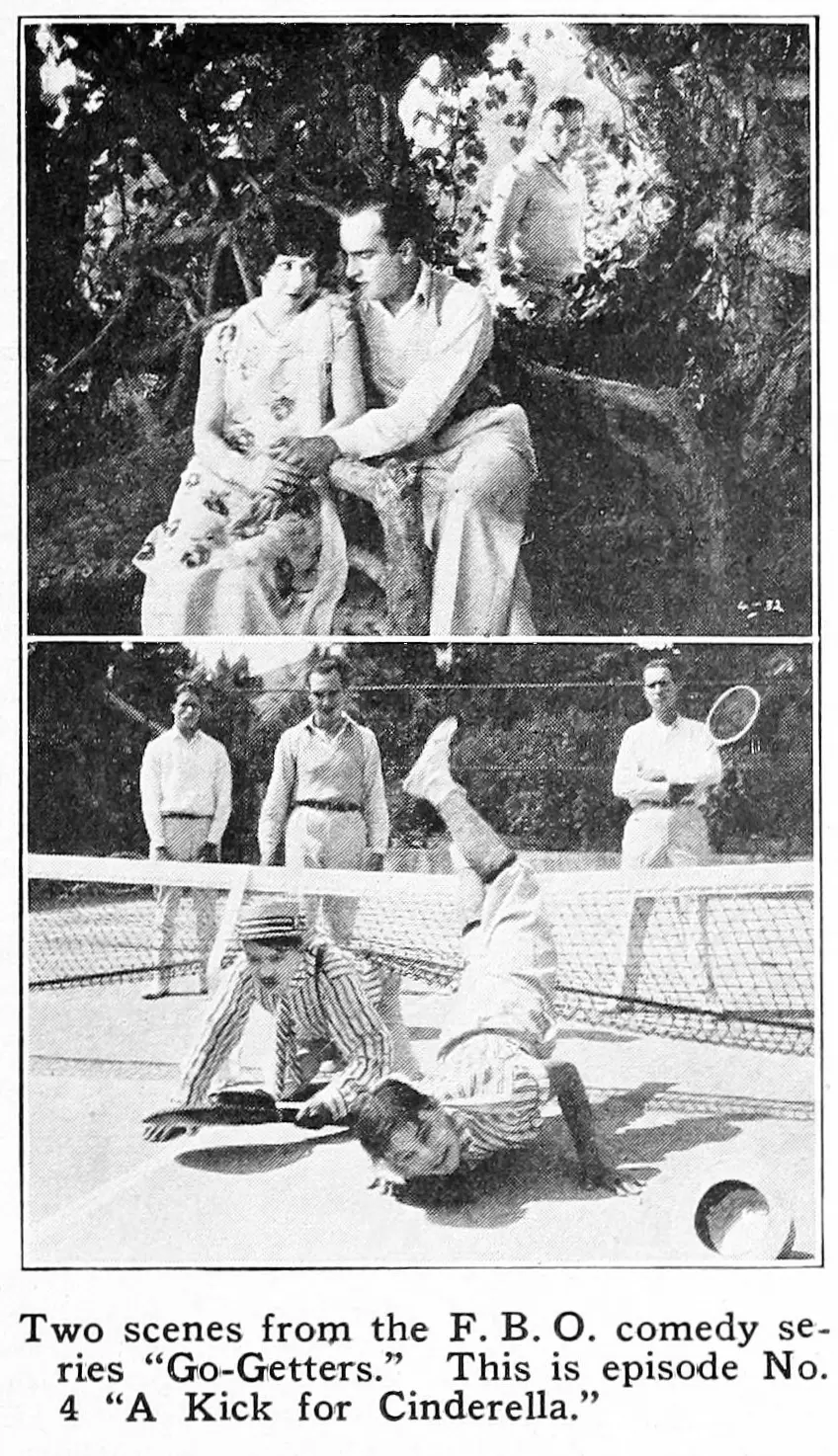
The premise, deceptively simple, is the engine of its hilarity: two hapless, yet supremely confident, individuals, Kit and Al, decide to masquerade as bona fide tennis champions, despite possessing no discernible skill in the sport whatsoever. This audacious deception forms the bedrock of every comedic set-piece, every near-miss, and every exaggerated pratfall. Their journey into the world of professional tennis is less a series of matches won and more a ballet of bluffs and frantic improvisations. The very idea of two complete novices attempting to navigate the highly competitive and often aristocratic world of tennis is inherently amusing, a potent brew of class satire and pure, unadulterated silliness. One might draw parallels to other silent-era comedies that revel in the absurdity of social climbing or skill-based deception, such as the masterful The Champeen, which similarly explores the humorous pitfalls of athletic fakery, albeit within a different sporting arena. Both films excel at extracting maximum comedic mileage from their protagonists' glaring incompetence.
The genius of A Kick for Cinderella lies not just in its high-concept premise, but in its meticulous execution of physical comedy. Kit Guard and Al Cooke, as our titular fraudsters, deliver performances that are a masterclass in silent-era acting. Their exaggerated expressions, their frantic movements, and their perfectly timed reactions to impending disaster are what elevate the film beyond a mere collection of gags. Kit Guard, with his often bewildered yet determined demeanor, forms an excellent foil to Al Cooke's more impulsive, perhaps slightly more naive, character. Their chemistry is palpable, a synchronicity born from countless hours of honing their craft in front of the camera, understanding how to convey complex emotions and intricate comedic beats without uttering a single word. They don't just act; they embody the very spirit of comedic desperation, making their blunders feel both catastrophic and utterly hilarious.
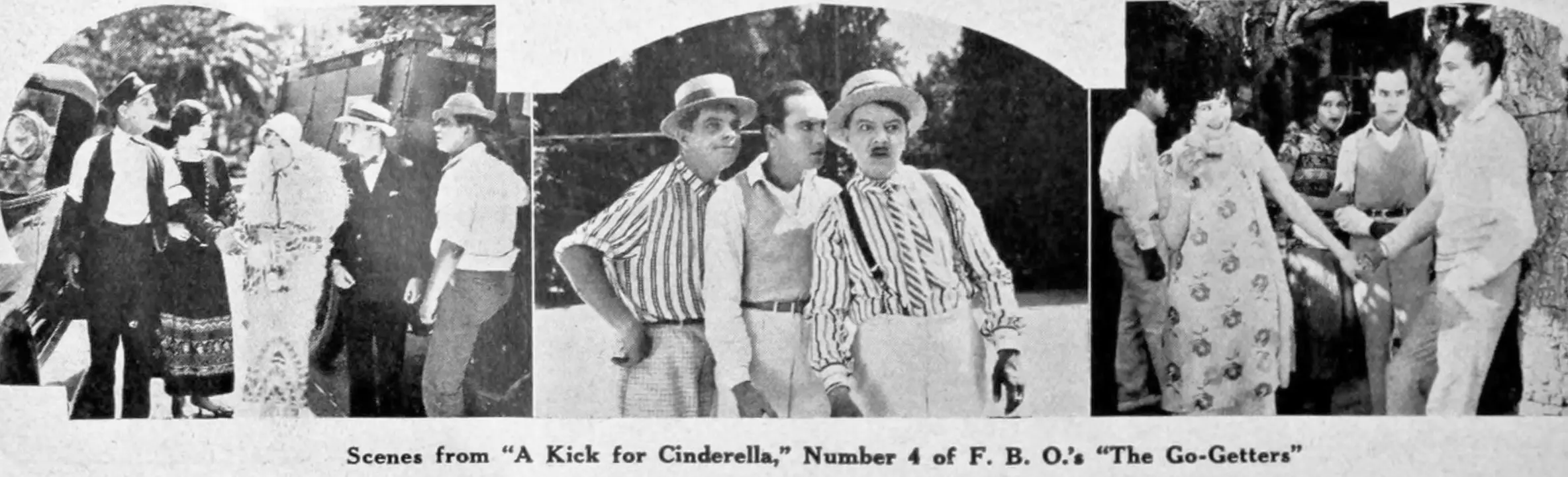
The film's 'Cinderella' element, personified by the charming Alberta Vaughn, adds a layer of romantic intrigue and a touch of aspirational fantasy to the unfolding chaos. Vaughn, a notable presence in many silent comedies, brings a vivacious energy to her role, her character often caught in the periphery of Kit and Al's escalating charade. Her presence introduces a potential love interest, a motivation for our heroes to maintain their elaborate ruse, and perhaps even a moral compass in their otherwise self-serving quest for glory. Stanley Taylor and George O'Hara round out the supporting cast, each contributing to the rich tapestry of reactions and misunderstandings that fuel the narrative. Taylor, often playing the straight man or the unwitting antagonist, provides a crucial anchor for the more outlandish antics of Kit and Al. O'Hara's contributions, though perhaps less central, add texture to the film's social milieu, helping to build the world in which these comedic events unfold. Their collective efforts ensure that the film is not just a showcase for its leads, but a well-rounded ensemble piece where every character plays a vital role in the comedic machinery.
George Marion Jr.'s screenplay is remarkably astute in its construction of comedic situations. He understands that the humor stems not just from the characters' lack of skill, but from their increasingly elaborate attempts to conceal it. The gags are not merely random acts of slapstick; they are logical, albeit absurd, consequences of the initial deception. Imagine the desperate flailing of a man trying to hit a tennis ball he can't see, or the elaborate charade of feigning injury to avoid an impossible shot. These are the moments that truly shine, demonstrating a sophisticated understanding of comedic timing and visual storytelling. The narrative arc, despite its farcical nature, maintains a surprising coherence, building momentum with each escalating lie and near-exposure. This structural integrity allows the audience to become fully invested in the protagonists' predicament, rooting for them not out of genuine admiration, but out of sheer delight in their resourceful, if misguided, efforts.
The visual aesthetics of A Kick for Cinderella are typical of its era, yet they possess a timeless quality that speaks to the clarity of early filmmaking. The sets, though perhaps simple by today's standards, effectively convey the lush environment of a tennis club, providing a stark contrast to the unrefined actions of Kit and Al. The costumes, particularly the tennis attire, become integral to the characters' attempts at blending in, adding another layer to their masquerade. The cinematography, while not groundbreaking, is functional and effective, always prioritizing the comedic action and ensuring that every gag is clearly visible and impactful. The medium shot, for instance, is frequently employed to capture the full physical comedy of the actors, allowing their entire bodies to become instruments of humor. This commitment to visual clarity is a hallmark of silent cinema, where every gesture and every movement had to convey meaning without the aid of spoken dialogue. In this regard, the film is a masterclass in non-verbal communication, relying on the universal language of laughter.
One cannot discuss the film without acknowledging its place within the broader context of silent comedies. While perhaps not as overtly philosophical as a Chaplin or Keaton feature, it shares their foundational belief in the power of the underdog and the humor derived from human folly. It’s a film that doesn't preach; it simply entertains, inviting the audience to revel in the sheer absurdity of its premise. This pure, unadulterated entertainment value is a significant reason for its enduring appeal. It's a reminder that sometimes, the most profound cinematic experiences are found in the simplest, most joyful narratives. The film’s lighthearted approach to its subject matter stands in stark contrast to more dramatic fare of the period, such as Strife or Die Legende von der heiligen Simplicia, which delved into more serious social or moral dilemmas. A Kick for Cinderella, by contrast, offers a respite, a moment of unburdened laughter.
The pacing of the film is another element that contributes significantly to its success. Silent comedies often relied on a brisk tempo, a rapid succession of gags and escalating predicaments to maintain audience engagement. A Kick for Cinderella is no exception, moving with a sprightly energy that keeps the narrative from ever feeling bogged down. The lack of dialogue necessitates a constant stream of visual information, and the film delivers, with each scene building upon the last, tightening the comedic noose around Kit and Al. This relentless forward momentum is crucial for a film that relies so heavily on situational humor, ensuring that the audience is always anticipating the next blunder, the next narrow escape. It's a testament to the skill of the director (uncredited, but undoubtedly a master of the form) that the film maintains this vibrant energy throughout its runtime, never allowing the comedic tension to slacken.
Furthermore, the film subtly touches upon themes that resonate even today: the desire for recognition, the allure of easy fame, and the often-humorous lengths to which people will go to achieve them. Kit and Al are not malicious; they are simply opportunistic, driven by a universal human impulse to improve their station, however fraudulently. This underlying humanity, despite their comedic flaws, makes them oddly relatable. We're not meant to condone their actions, but we can certainly empathize with the impulse, and laugh at the inevitable consequences. This exploration of human nature through a comedic lens is a hallmark of great storytelling, regardless of the era. It's similar in its exploration of ambition to films like The On-the-Square Girl, which also features characters navigating social expectations and personal aspirations, albeit with a different tone.
The legacy of films like A Kick for Cinderella is often overlooked in favor of the more monumental works of the silent era. Yet, it is in these charming, unassuming comedies that one finds the true pulse of popular entertainment of the time. They were the blockbusters, the crowd-pleasers, providing much-needed levity in an increasingly complex world. They perfected the language of visual comedy, laying the groundwork for generations of comedians and filmmakers to come. One can see echoes of its spirit in later films that celebrate the joy of the underdog or the triumph of wit over skill. It’s a delightful reminder of a time when cinematic storytelling was still finding its voice, and that voice, in this instance, was a hearty laugh.
In conclusion, A Kick for Cinderella is more than just a historical curiosity; it is a vibrant, engaging comedy that continues to entertain. Its stellar performances by Kit Guard and Al Cooke, coupled with George Marion Jr.'s clever writing, create a timeless piece of cinematic farce. Alberta Vaughn's presence adds a touch of grace and romantic possibility, enhancing the film's overall appeal. For aficionados of silent cinema, or indeed anyone with an appreciation for well-crafted humor, it offers a refreshing plunge into a world where the only requirement for success is a healthy dose of chutzpah and an uncanny ability to dodge a tennis ball, both literally and metaphorically. It’s a film that reaffirms the universal power of laughter and the enduring magic of the silver screen, proving that sometimes, all you need is a good kick to get a laugh. Its simple joy stands as a testament to the era's ability to craft narratives that, despite their age, feel eternally fresh and endlessly amusing. This film, much like its protagonists, might not be a grand champion, but it certainly knows how to win over an audience with its irresistible charm and unflagging spirit of fun.
IMDb —
1918
Community
Log in to comment.