DbcultAccessing Vault...
5.7/10
Senior Film Conservator
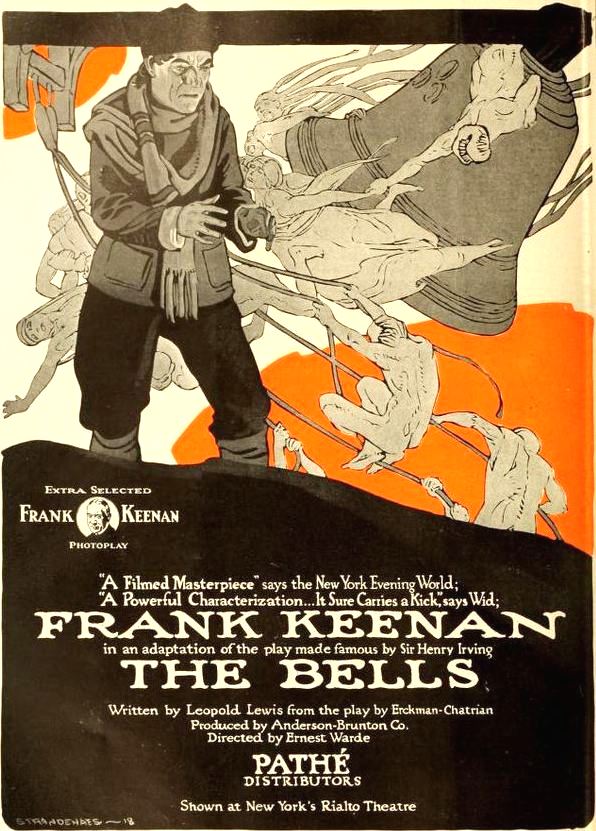
A definitive 5.7/10 rating for a film that redefined the boundaries of cult cinema. The Bells remains a cornerstone of transgressive art.
Stepping into the shadowy realm of early cinema often feels like unearthing a forgotten language, a lexicon of gestures and exaggerated expressions that speak volumes without uttering a single word. Among these venerable relics, The Bells (1918) emerges not merely as an artifact, but as a vibrant, pulsating testament to the silent era's profound capacity for psychological drama. This isn't just a film; it's an experience, a visceral journey into the heart of a man haunted by his own heinous past, a chilling precursor to the psychological thrillers that would dominate later decades. Its enduring power lies in its relentless focus on internal turmoil, a narrative choice that, even today, feels remarkably modern in its execution.
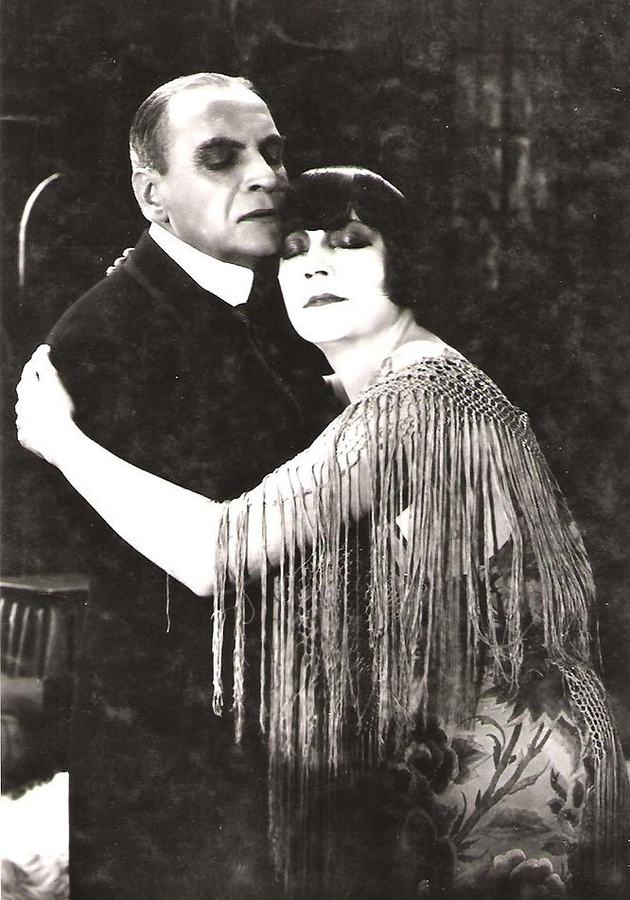
The film, a masterful adaptation of the popular stage play by Alexandre Chatrian and Emile Erckmann, filtered through the cinematic lens of Gilson Willets and Jack Cunningham, plunges us into the life of Mathias, an outwardly respectable Alsatian innkeeper. Yet, beneath this veneer of normalcy, a dark secret festers: a murder committed years ago, the blood money from which funded his current prosperity. Frank Keenan, in a performance that demands our unwavering attention, embodies Mathias with an intensity that is both mesmerizing and deeply unsettling. His portrayal transcends mere acting; it becomes a raw, unvarnished excavation of a soul in torment. Every twitch, every furtive glance, every sudden gasp is a brushstroke in a portrait of escalating paranoia, a man slowly consumed by the very crime he believed he had buried. The brilliance here isn't in what is said, but in what is conveyed through sheer, unadulterated physicality and facial expression – a hallmark of truly great silent acting.
What sets The Bells apart is its ingenious method of driving the protagonist towards his inevitable collapse. There are no detectives hot on his trail, no direct witnesses suddenly appearing. Instead, the film constructs a suffocating atmosphere of self-incrimination, where seemingly innocuous events coalesce into a terrifying symphony of suggestive coincidences. The relentless ringing of sleigh bells, a sound forever linked to his victim, becomes a leitmotif of his impending doom. A traveling mesmerist, whose hypnotic gaze seems to penetrate the very depths of Mathias’s hidden guilt, throws him into a state of terrified vulnerability. These aren't external pressures in the traditional sense; they are manifestations of an internal psychological landscape, projections of a conscience demanding retribution. It’s a remarkable study in the power of the mind to turn against itself, a self-inflicted torture more potent than any prison sentence.
The narrative unfolds with a grim, almost fatalistic precision, each scene building upon the last to tighten the noose around Mathias's sanity. His initial composure, a brittle shield against his past, begins to crack under the strain. We witness his descent in agonizing detail: the sleepless nights, the haunted eyes, the sudden outbursts of irrational fear. It's a masterclass in visual storytelling, where the absence of dialogue forces the audience to engage more deeply with the characters' internal states, interpreting every nuance of their expressions and body language. This immersive quality is precisely why silent films, when done well, can be so profoundly affecting, often more so than their sound counterparts which sometimes rely too heavily on exposition.
While Frank Keenan's performance as Mathias is undoubtedly the gravitational center of The Bells, the supporting cast provides crucial anchors to his spiraling reality. Lois Wilson, as his daughter Annette, brings a delicate innocence to the screen, her burgeoning romance with Christian (Edward Coxen) offering a stark contrast to Mathias's darkening world. Her presence serves to highlight the tragic irony of Mathias’s situation: his crime, committed for the sake of his family's future, ultimately destroys his own peace and threatens to cast a long shadow over their happiness. Edward Coxen, as Christian, embodies the upright, honest suitor, providing a moral compass against which Mathias’s depravity is starkly measured. Albert R. Cody and Joseph J. Dowling, among others, fill out the village tapestry, their reactions to Mathias's increasing erratic behavior subtly reinforcing the sense of impending doom.
The ensemble works in concert to create a believable, lived-in world, making Mathias's isolation within his own guilt all the more poignant. Carl Stockdale, Frank Keenan, and Ida Lewis, alongside Burton Law, each contribute to the atmosphere, whether through brief, impactful appearances or through their consistent portrayal of characters who, in their own ways, are affected by the innkeeper's hidden past. It's a testament to the directorial vision that even minor roles feel integral to the unfolding tragedy, each face a potential mirror reflecting Mathias's deep-seated fears. The collective effort elevates the film beyond a simple character study, transforming it into a communal drama where the protagonist's internal struggle has tangible, if indirect, repercussions on those around him.
The success of The Bells on screen owes much to its theatrical origins and the skillful hands that translated it to a new medium. The original play by Alexandre Chatrian and Emile Erckmann had been a sensation, known for its dramatic intensity and psychological depth. Gilson Willets and Jack Cunningham faced the challenge of translating this stage-bound narrative into a compelling cinematic experience, where dialogue was absent and visual storytelling reigned supreme. They largely succeeded, understanding that the core appeal lay in Mathias's internal torment, a concept perfectly suited to the expressive capabilities of silent film. The adaptation retains the play's dramatic thrust while cleverly employing cinematic techniques – close-ups, parallel editing, and symbolic imagery – to amplify the psychological horror.
This era of filmmaking was particularly adept at taking theatrical properties and reinventing them for the screen, often enhancing their emotional impact through visual means. Comparisons can be drawn to other films of the period that grappled with moral dilemmas and the crushing weight of guilt. For instance, a film like Le roman d'un caissier, if it similarly explores the hidden crime of an ordinary man, would find a thematic kinship with The Bells. Both narratives would hinge on the slow, agonizing unraveling of a character whose public persona masks a dark, secret transgression. The silent film format, with its reliance on pantomime and stark visual metaphors, was uniquely suited to depicting these internal battles, often with more chilling effect than spoken words could achieve.
The direction and cinematography of The Bells are pivotal in constructing its pervasive atmosphere of dread. The use of shadows, the stark contrast between light and dark, and the deliberate pacing all contribute to a sense of claustrophobia, mirroring Mathias's internal state. The camera often lingers on his face, allowing us to witness every flicker of fear, every tremor of regret. This intimate portrayal of mental anguish is a testament to the filmmakers' understanding of silent cinema's unique power. They didn't just tell a story; they immersed the audience in a psychological landscape, making us complicit in Mathias's torment.
The dream sequences, in particular, are executed with a startling psychological realism for the era. These moments, where Mathias's subconscious unleashes its full fury, are not merely fantastical interludes but direct extensions of his waking nightmare. They are hallucinatory, terrifying visions that blur the lines between reality and delusion, pushing him further towards the brink. Such sequences demonstrate a sophisticated understanding of the human psyche, a willingness to explore the darker recesses of the mind long before such themes became commonplace in cinema. In this respect, The Bells can be seen as a significant early contribution to the nascent genre of psychological horror, paving the way for future explorations of madness and guilt on screen.
The enduring appeal of The Bells lies in its timeless exploration of guilt and conscience. It posits that true justice is often meted out not by external authorities, but by the relentless, inescapable judgment of one's own mind. Mathias's torment is self-generated, a psychological prison of his own making, and the film brilliantly illustrates how this internal struggle can be far more devastating than any physical confinement. It's a cautionary tale, stripped bare of sentimentality, focusing instead on the raw, visceral consequences of a hidden crime. This theme resonates powerfully across generations, making the film's message as potent today as it was over a century ago.
When considering other films of the era that delve into moral quandaries, one might look at Sins of Great Cities or even The Devil's Toy. While their specific plots might differ, the underlying current of moral reckoning, of characters grappling with the repercussions of their choices, unites them with The Bells. However, The Bells distinguishes itself through its singular, almost claustrophobic focus on one man's internal disintegration, making the external world merely a canvas for his mental anguish. It is less about the 'sins' themselves and more about the psychological aftermath, the slow, torturous grind of a conscience under siege.
In conclusion, The Bells (1918) is far more than a historical curiosity; it is a profound piece of cinematic art. Frank Keenan’s tour-de-force performance, coupled with astute direction and a gripping adaptation of its source material, delivers a psychological drama that remains deeply impactful. It reminds us of the silent film era's capacity for sophisticated storytelling and its ability to delve into the most complex human emotions without the crutch of spoken dialogue. For anyone interested in the origins of psychological thrillers or simply in witnessing a masterclass in silent acting, this film is an absolute must-see, a chilling echo from the past that continues to resonate with unsettling clarity into the present day.
IMDb —
1914
Community
Log in to comment.