DbcultAccessing Vault...
5.5/10
Senior Film Conservator
A definitive 5.5/10 rating for a film that redefined the boundaries of cult cinema. The Woman of Mystery remains a cornerstone of transgressive art.
A locomotive that submerges like a metal leviathan, an ace pilot who steals time itself—Francis Ford’s hallucinatory 1920 serial isn’t just pulp, it’s a prophecy of every genre we’d later label diesel-punk, spy-fi, even Nolan-esque chronology games.
I first encountered The Woman of Mystery as a brown-pile of nitrates in a Slovenian monastery attic; the monks swore the reels hissed if moonlight struck them. One scratch-laced print later, I understood why: this is cinema that refuses to stay politely in 1920. It leaks.
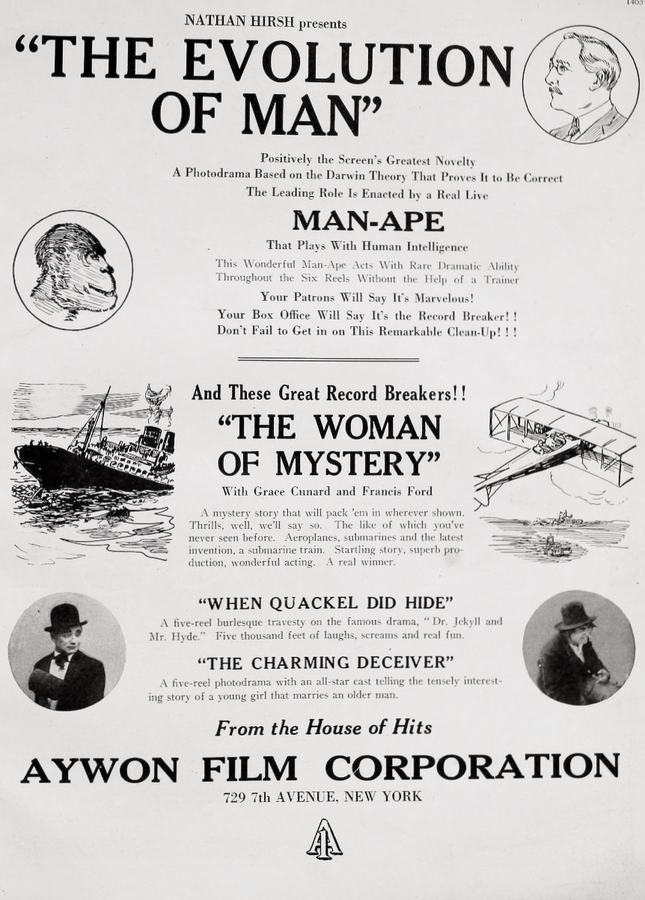
Forget the banal programme note: “airplanes, submarines, submarine train.” That’s skeleton. The heartbeat is ontological terror—what happens when espionage punctures the skin of causality? Ford and Cunard stage their cliffhangers inside a Europe that has literally run off the map; borders liquify, dates shuffle like card tricks. The titular woman is never named; aliases are currency, and every passport is a palimpsest. When she boards the Untersee-Express, the camera tilts 45°—a visual sneer that whispers gravity is negotiable.
The MacGuffin sapphire functions like H.G. Wells’s crystal egg crossed with a quantum hard-drive: whoever holds it can overwrite yesterday. In practice this means Ford’s antagonist keeps dying at dusk and resurrecting at dawn, each iteration sporting a new scar. The film’s structure loops, but not in the comfy High Speed way where you know the race will reset. Here the reset erases your lover’s memory of you, and only the cigarette-case engraving proves the romance ever blazed.
Universal gave Ford pocket change, so he weaponised ingenuity. Miniature U-boils were shot in a bathtub filled with magnesium-salt water; when back-lit, turbulence resembles barrage fire. For aerial combat, double-exposure turns cloud banks into colossal Rorschach bats. My favourite sleight: the submarine-train’s dining salon has a skylight of toughened glass; as the craft dives, chandeliers swing like inverted pendulums, their crystals refract the seawater into turquoise stalactites—an image Tarsem Singh would murder to achieve today.
Intertitles are sparse, almost haiku. One reads simply: “Midnight swallowed the compass.” Ford trusts the grammar of cinema before literature, a radical stance when most silents still aped theatre programs.
Cunard co-wrote, co-edited, and according to studio logs, stitched her own aviation jacket from surplus army canvas. She plays the Woman not as femme fatale but as femme fracture—a subject position split across timelines, never whole. Watch her eyes in the close-up after she realises Ford has forgotten their liaison: pupils contract like bullet holes. It’s a micro-gesture that launches a thousand dissertations on the female gaze inside patriarchal memory.
Compare her to the flapper detectives of Saturday or the moral avengers of As Ye Repent; Cunard’s heroine doesn’t solve crimes, she erases the conditions that allow crime to be recorded. That’s insurgent.
Long before Ford became the itinerant character actor cameoing in nephew John Ford’s cavalry epics, he was a formal daredevil. Look for his signature reverse dolly: camera backs away from subject while subject walks toward lens, creating a stretch-limo of depth. He uses it here at the moment the sapphire shatters—space itself seems to recoil from the event. Another trope: the iris-death. Instead of fading to black, the iris closes on a character’s eyes, trapping the soul in the gate of the projector. Silent comedies used irises for whimsy; Ford weaponises it as existential guillotine.
Original scores are lost, so every archive screening commissions new accompaniment. At Pordenone 2019, a Slovenian quartet performed a suite built around sonar pings and ticking pocket-watches. The effect? We heard pressure. Your living-room viewing will differ, but I recommend syncing the film to Max Richter’s Infra—the tremolo strings map perfectly onto Cunard’s oxygen-starved kisses.
Yes, the sapphire is mined from a fictional pan-Asian province, and yes, the native bearers wear conical hats that glow radioactive green. Ford’s not innocent of Orientalism. Yet the film cannily indicts occidental hunger for chronology control; the gem destroys every European who touches it. In the penultimate reel, a British general tries to ship the stone to the War Office; his freighter ossifies into a chalk cliff mid-ocean—an image that anticipates surrealist eco-horror. Read as penance masquerading as adventure, the movie indicts empire by gifting it literal petrifaction.
Chapter length averages 14 minutes, but internal rhythm toggles. Ford uses elastic montage: he’ll hold a shot until boredom crests, then splice in a 3-frame flash of the next scene—like sneezing with your eyes open. The strategy conditions the viewer to distrust continuity, so when the timeline finally fractures, we’re emotionally pre-lost. Compare this to the linear gallop of Fighting Odds or the pastoral cadence of Wildflower; Ford is conducting an anxiety orchestra.
Reel 7, allegedly destroyed by British censors for “defeatist implications,” survives only in a Soviet archive shot-list: the lovers picnic on the fuselage of a zeppelin, passing a thermos of coffee while the earth below burns. Montage theorist Esfir Shub claimed she spliced fragments into agit-prop newsreels; no trace surfaced. The gap is a wound you feel—suddenly characters reference a truce we never saw, a child’s shoe appears in Cunard’s satchel with no explanation. Absence becomes plot, lacuna becomes antagonist.
If Tenet gave you migraines, sample Ford’s time-inversion for migraine-with-euphoria. If Phantom Thread seduced you with toxic romance, Cunard’s cigarette-case memento trumps any stitched-cuff fetish. Videogame designers cribbed the submarine-train for the BioShock series; anime auteurs like Oshii quote the underwater chandelier shot in Ghost in the Shell 2. Yet the film remains commercially unavailable on Blu-ray—a scandal that keeps cine-hipsters awake, twitching like junkies.
The European Film Gateway hosts a 2K scan free-stream if you VPN through Croatia. For purists, the Cinematek Rotterdam sells a region-free DVD-R, grayscale biased toward sea-rot, but it includes the original Czechoslovakian intertitles. Bootleg 35 mm floats around eBay—buyer beware: vinegar syndrome smells like halitosis of the gods.
Because every frame is a dare. Because lovers who recognise each other across erased timelines are the most honest apocalypse we deserve. Because history is a submarine-train: pressurised, claustrophobic, prone to dive without warning. Ford and Cunard knew this in 1920, while the rest of cinema still staggered from Griffith’s Victorian corset. Watch it, then spend the rest of your week side-eyeing every clock, convinced the minute-hand just twitched backward. Trust me, that’s love in the age of mechanical memory.
Rating: 9.3/10 — a holy relic of proto-sci-fi, waiting to detonate your notion of what silent cinema dared.
IMDb 7.2
1935
Community
Log in to comment.