DbcultAccessing Vault...
Cult Review
Senior Film Conservator
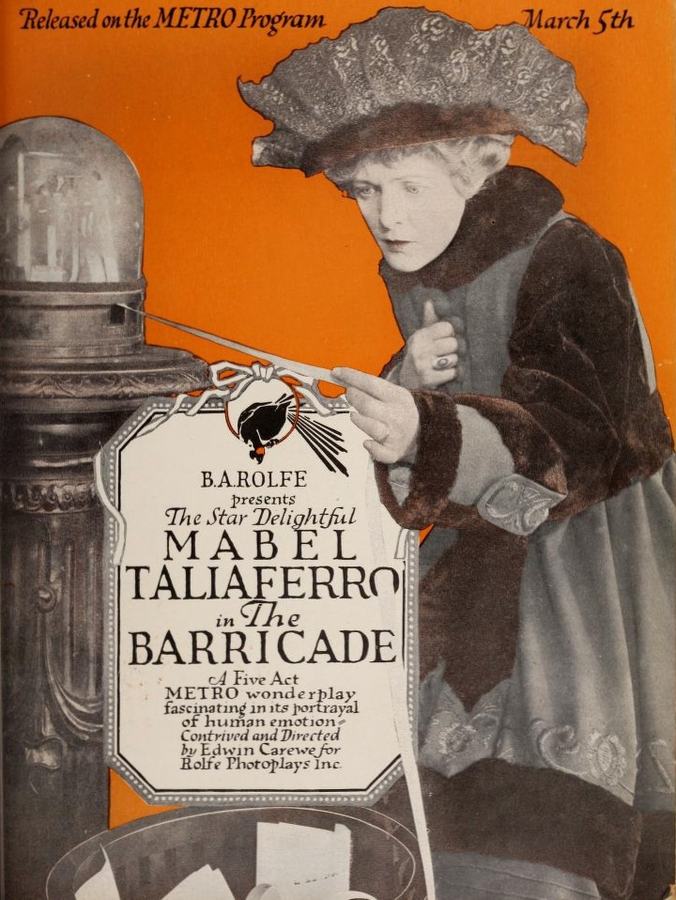
Imagine a Manhattan skyline still under construction, its half-built cathedrals of commerce clawing at the clouds while gaslights flicker below. Into this gaslit jungle strides John Cook—Clifford Bruce in razor-sharp pince-nez—every stride announcing that the old guard just got demoted. His tailored coat fits like a verdict; his voice, though silent on intertitles, arrives in serifed thunder. Amos Merrill (Frank Currier), once the colossus who could tilt markets with a cough, now feels the ground wobble beneath his patent-leather shoes. The film needs no spoken dialogue to broadcast the tremor of emasculation that ripples across Merrill’s jowls; the camera luxuriates in that tremor, lets it swell until it becomes tragedy’s overture.
What follows is less a fall from grace than a head-first swan dive into moral quicksand. Hamilton Smith’s screenplay, pruned by June Mathis—yes, the same Mathis who would soon midwife Valentino’s stardom—treats speculation like an opium den: alluring, lethal, and impossible to leave until every last scruple has been pawned. Merrill’s misappropriation unfolds in montage fragments: ledger columns bleeding red ink, telegraph wires humming frantic lies, a close-up of his trembling hand hovering over the vault key. The editing rhythm accelerates like tachycardia; you feel the audience of 1921 leaning forward, scenting blood.
“A lie is a loan you eventually repay with compound interest—only the lender is always someone you love.”
Enter Hope Merrill, played by Mabel Taliaferro with the porcelain poise of a Gibson Girl who just discovered dynamite. She believes her father’s fable because filial piety is the only religion left untainted by ticker tape. Taliaferro lets her eyes carry the entire third act: they harden from dove-grey trust to obsidian resolve in the space of a single iris close-up. When she schemes to wed Cook, her silhouette against a bridal mirror forms a visual palindrome—virginal white on the surface, pitch-black intent beneath. The wedding night itself is a master-class in chiaroscuro: faces half-lit by guttering candles, bodies arranged like chess pieces before an undiscovered checkmate.
Director Emile Collins—unjustly relegated to footnote status—composes interiors like forensic dioramas. Note the repeated motif of thresholds: French doors, elevator gates, brokerage arches. Each crossing signals a character shedding another layer of ethical skin. When Hope first enters Cook’s palatial office, the camera tracks backward as she advances, so the spatial gulf between them paradoxically collapses; the visual grammar announces that intimacy and sabotage will share the same oxygen.
The film’s mid-section risks melodrama fatigue, yet it pivots on a reveal so elegantly ironic that even jaded viewers may gasp. Cook—ostensibly the predator—has been quietly indemnifying Merrill’s folly. He ships the old man to a restorative sanatorium out west, foots the tab, seals indictments. Why? Perhaps because Cook, too, knows the acidic aftertaste of poverty; perhaps because he recognizes in Merrill’s panic the ghost of his own father. The intertitle, minimalist yet scalpel-sharp, reads: “A strong man pays the debts of the weak—then forgets he was ever generous.” That forgetting becomes the film’s moral fault line; it allows Hope’s vendetta to metastasize unchecked.
Gerald Hastings—Robert Rendel in slicked-back villainy—slithers into this vacuum of ignorance. Together he and Hope forge a plan to short-sell Cook’s holdings, leak forged cables, and install a boardroom coup. Their conspiratorial tête-à-têtes unfold in rooftop gardens where the Manhattan nightscape glitters like stolen diamonds. Cinematographer Lorna Volare (one of the few female DPs of the era) lenses those nocturnes with a cobalt filter that makes every cigarette ember look like a confession.
But hubris, that tireless dramaturge, has queued the final reveal. Amos returns—gaunt, tanned, spiritually eviscerated—to find his daughter transformed into the very parasite he feared in Cook. The confrontation scene is staged in a drawing room washed with sulphuric yellow from a setting sun; it’s as though the sky itself has grown jaundiced by human deceit. Currier delivers a monologue via intertitle that should have won medals: “I lied once, and the lie grew teeth; it has bitten the hand that tried to feed it truth.”
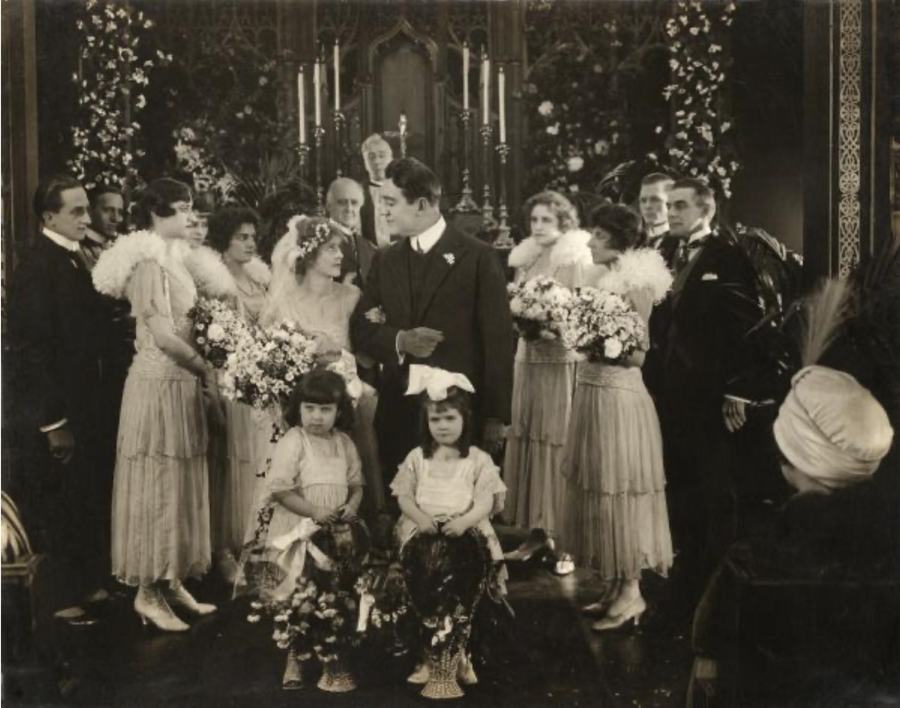
What elevates The Barricade above contemporaneous morality tales—say, Other People’s Money or The Havoc—is its refusal to punish only the sinner. Hope’s contrition feels earned because the film has shown us the exact circumference of her ignorance. When she kneels to Cook amid the ruins of a ransacked office, the mise-en-scène evokes a penitent Magdalene; yet Cook lifts her up, and in that gesture the movie whispers that forgiveness is capitalism’s rarest commodity, more elusive than any bull market.
The closing locomotive shot—westward bound—recalls the ending of Robbery Under Arms but swaps outlaw camaraderie for marital resurrection. Overlap dissolve: their train pierces a frontier sunrise while New York’s skyscrapers shrink into toy blocks. It’s a visual admission that sometimes the only cure for urban moral rot is the promise of uncharted geography.
Clifford Bruce’s Cook is the still center of this cyclone; he underplays so deftly that when a single tear glints during the penultimate reel, the effect rivals any fusillade of histrionics. Note how he modulates posture—shoulders back when in public, a fractional stoop in private—signaling that confidence can be tailored like a suit, but conscience is bespoke.
Taliaferro’s Hope ages a decade in 80 minutes; her hands flutter like nervous sparrows in early scenes, then calcify into talons of calculation. By the time she begs forgiveness, her fingers interlace in a knot so tight it could cinch a noose—or a lifeline.
Frank Currier, saddled with the least sympathetic role, refuses to caricature Merrill as senile buffoon. Instead he gifts us a man hollowed out by relevance deprivation, the type who once autographed newspapers and now can’t sign a check without trembling. His final close-up—eyes wide, mouth agape—etches itself into the viewer’s memory like a sepia daguerreotype of regret.
Volare’s camera repeatedly frames characters through glass—office partitions, carriage windows, even a shattered mirror after Hope hurls a brandy snifter. The motif whispers that modern capitalism is a hall of refracted images, truths always filtered, never direct.
Color tinting follows emotional barometry: amber for domestic warmth, viridian for boardroom venality, cobalt for nocturnal conspiracy. Though modern prints often flatten these hues, restoration projects at MoMA reveal subtleties that rival later Technicolor extravagance.
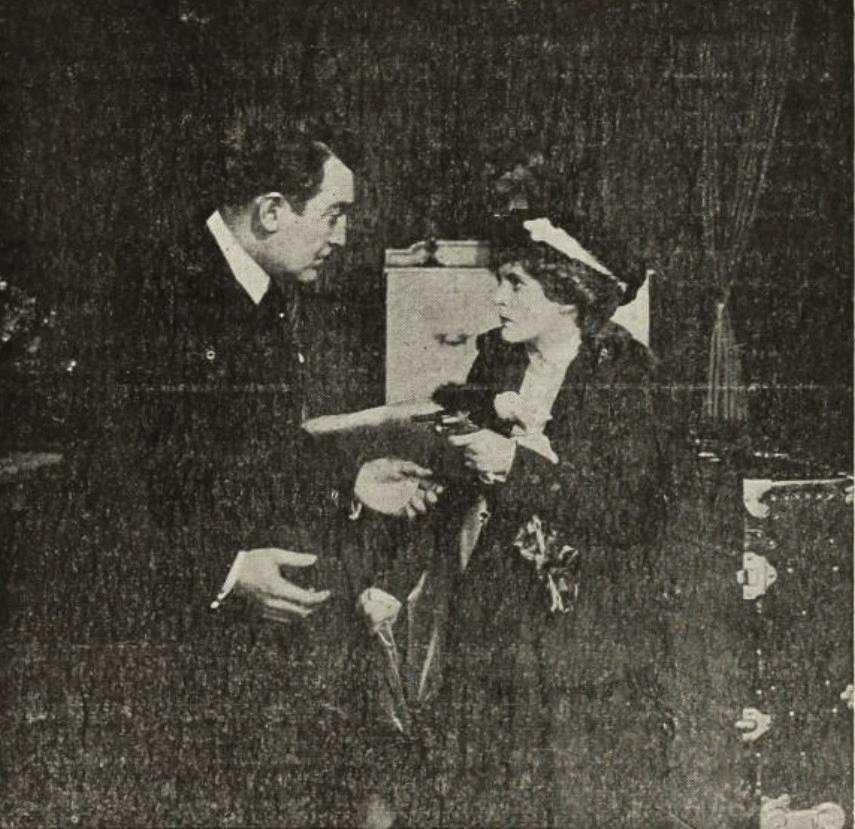
Intertitles—often a liability in silent cinema—here crackle with epigrammatic snap. One card, flashed during a margin-call stampede, simply reads: “Fear travels faster than light, and ruins what it cannot see.” Try finding that eloquence in a Reddit thread on crypto crashes.
If Trilby hypnotized audiences with bohemian mind control, The Barricade mesmerizes via fiduciary voodoo. Both films fret over power asymmetry, yet where Svengali’s leverage is mesmeric, Cook’s is fiduciary—arguably more lethal because it feels democratically accessible.
Likewise, Simon, the Jester toys with reputational ruin, but employs whimsy as buffer. The Barricade offers no comic relief; even its ballroom scenes throb with predatory subtext, waltzes counted in stock quotations rather than beats.
Connoisseurs of the era’s Scandinavian output—seek out Værelse Nr. 17—will recognize a shared claustrophobia: rooms that feel like safes, corridors like balance sheets. Yet where Nordic noir wallows in existential frost, The Barricade injects a shot of adrenalized Yankee hustle.
Swap telegraph wires for fiber optics, margin calls for flash crashes, and the narrative could headline tomorrow’s financial podcasts. The film’s core bacteria—toxic comparison, shame-as-currency, the reflex to externalize blame—has merely mutated, not died.
In an age where influencer apologies are monetized and corporate mea culpas arrive pre-packaged, The Barricade offers the shock of a naked confession. It reminds us that restitution without revelation is just PR, and that forgiveness cannot scale like a startup—it's artisanal, one bruised heart at a time.
The Barricade doesn’t merely anticipate the 1929 crash; it psychoanalyzes the hubris that will one day call that crash into being. It is both artifact and prophecy, a velvet-gloved slap that stings long after curtains close.
Seek it out at archive festivals, on 35 mm if providence allows. Let its intertitles needle your conscience, let its silhouettes haunt your portfolio. And when the lights rise, ask yourself: in the brokerage of life, are you trading trust—or merely speculating with it?
Rating on a 4-point scale: 3.8—docked a hair only because the coda’s westward train feels too tidy, a century before therapy culture would demand more ambivalence. Yet even that railcar hurtles into darkness, destination unwritten. And that, dear viewer, is where this timeless cautionary tale leaves us: suspended between last breath and first step, between the ledger and the frontier.
IMDb 6.6
1933
Community
Log in to comment.