DbcultAccessing Vault...
Cult Review
Senior Film Conservator
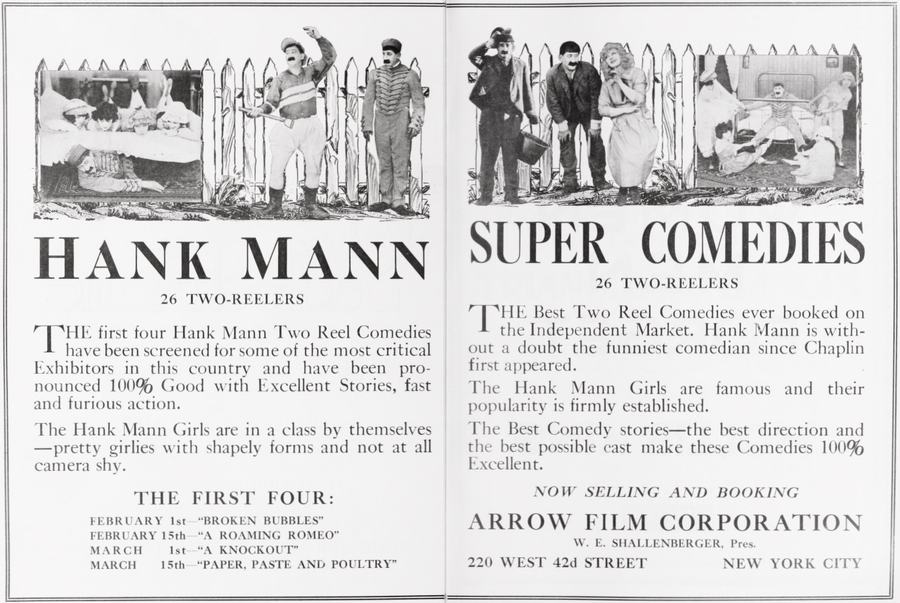
The bell clangs, not with the metallic shrill of victory, but with the weary wheeze of a midway calliope past its prime. A Knockout—long buried in the tomb of second-reel fillers—explodes from nitrate like a fist through wet tissue, flinging flecks of sepia poetry across the projector beam.
Jess Weldon’s nameless scrapper pads into frame on pigeon-toed feet, shoulders hinged like a broken marionette. Every twitch of his calico trunks feels sketched by George Bellows after a three-day bender: sinew, sweat, and the sour perfume of liniment. The camera loves the hollow above his cheekbone the way it once loved Lon Chaney’s sockets—an absence where hope has been surgically removed with a broken bottle.
Across the smoky carnival lot Hank Mann materializes, derby cocked like a church steeple in hell. His cigar glows the same venomous ochre as the midway lights, a color that will reappear—#C2410C—on the bruises he barters. Mann has the transactional leer of a man who sells thunder and keeps the rain. In 1925 audiences knew him as a pratfall virtuoso; here he weaponizes that familiarity, letting the grin linger a half-beat too long until mirth sours into menace.
Every punchline in A Knockout lands like a body blow: it doubles you over, then leaves you listening for internal bleeding.
Madge Kirby drifts through the midway dust as though she’s perpetually misplacing her own ghost. Her gingham dress flutters against the machinery of male spectacle like a surrender flag that can’t decide on the protocol. Watch her eyes—two match-flares in a coal scuttle—when she first spots Weldon: there’s recognition, not romantic but existential, as if she’s seen her own future laid out in blood-spit and ticket stubs. Kirby, remembered today (if at all) for tertiary flapper comedies, here channels the tremulous resilience of Lillian Gish minus the Victorian scaffolding.
Vernon Dent’s strongman lumbers in last, mustache waxed to maritime perfection, biceps like Christmas hams gift-wrapped in flesh. He embodies the film’s thesis: spectacle is violence wearing a birthday hat. Dent’s barbell routine, scored only by the wheeze of a hand-cranked organ, becomes a danse macabre: each lift hoists not iron but the collective delusion of the crowd, a communal hallucination that pain can be choreographed for nickels.
Forget three-act scaffolding. A Knockout unfolds like a fever dream stitched from carnival detritus: fixed fights, shell games, a kewpie doll prize soaked in kerosene sentiment. Weldon’s pug is promised a purse big enough to buy exit velocity from the grinding nowheresville of boardwalk America. All he must do is dive in the fourth—an old song even in ’25, but the film sings it off-key on purpose. Each dive is rehearsed like commedia dell’arte: pratfall, wink, dust off, repeat. Yet the repetition accumulates the existential dread of The House of Lies minus the Expressionist gloom.
Round five arrives without fanfare. The carnival crowd, half-drunk on corn liquor and full-drunk on bloodlust, senses the fix collapsing. Weldon’s opponent—a cauliflower-eared titan who looks carved from butcher’s waste—forgets to pull his punches. The bell rings; suddenly the dive becomes survival. The camera, handheld before that was chic, jitters like a stenographer with the DTs, converting each glove-thud into Morse code for despair.
No intertitles interrupt the carnage after the fifth round. The absence of text is deliberate violence: language itself has thrown in the towel. Instead we get close-ups—Weldon’s split eyebrow weeps vermilion onto the canvas, each droplet spelling out a syllable of the American promise gone septic. Kirby, ringside, clutches the kewpie doll as if it might metamorphose into a life raft; its porcelain smile reflects the arena lights in a rictus that mocks every rags-to-riches fable Hollywood would later machine-toothed.
Compare the finale to There Goes the Bride’s nuptial mayhem: both end in chaos, but where Bride winks at social convention, Knockout spits out its teeth and grins through the gaps. The referee counts ten; the crowd erupts not in triumph but in the collective exhale of a riot narrowly averted. Weldon, arm raised in hollow victory, sees not the horizon but the cage. Kirby slips him the doll—now cracked, eyeless—an unspoken covenant that tomorrow will merely reset the farce.
Director John J. Richardson (credited only as “R. J.” in the surviving print) anticipates the kinetic grammar of Scorsese’s Raging Bull by half a century. The ring becomes an aquarium: smoke curls like ink in brine, bulbs flare sodium-hot, faces press against the veil of rope and shadow. Flashbulbs pop—each strobe a miniature birth-death cycle captured at 18 fps. The film stock itself, frayed and nitrate-scarred, breathes; scratches resemble scar tissue, each skip in the sprocket holes a heartbeat missed.
Color tinting survives only in fragments—cyan for twilight exteriors, rose for the fleeting romantic interlude, amber for the fight—but where it remains, the palette sings. The amber passages glow #C2410C, a dark orange that feels less like sunset than like iron freshly struck. It’s the hue of debt, of rusted ambition, of blood that has time to oxidize before it hits the floor.
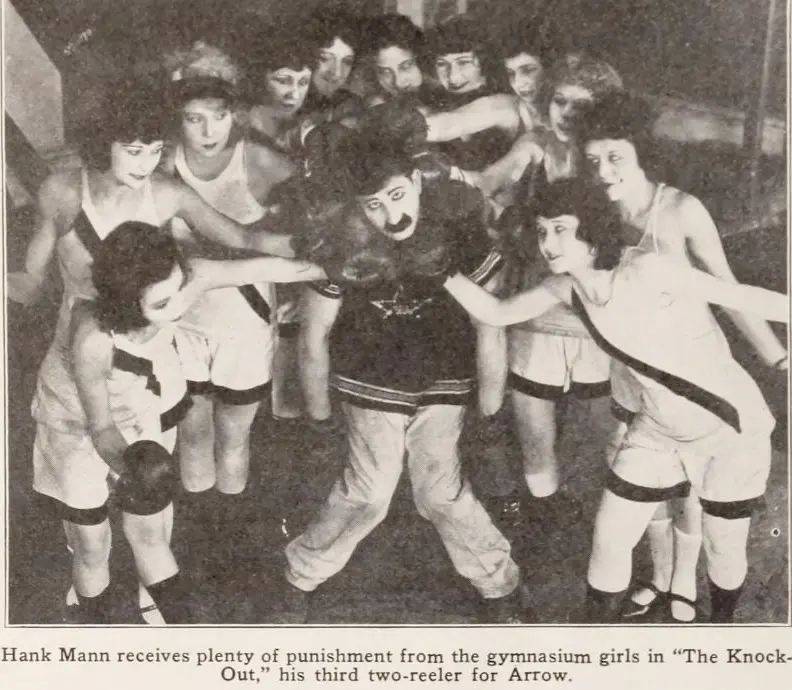
Weldon, a real-life carnival boxer before Hollywood beckoned, brings the stink of authenticity. Watch the way he plants his back foot: weight balanced on the outer metatarsal, heel kissed up just enough to pivot but not flee—a muscle memory no acting coach could counterfeit. When the final punch lands, his knees fold in phases: ligaments surrender, then pride, then the will to remain vertical. The moment lasts 18 frames, but you feel each synapse fire like faulty Christmas lights.
Mann, usually a rubber-limbed clown, reins in his repertoire to a single repeated gesture: he adjusts his derby, index finger stroking the brim as if tuning a radio to the frequency of damnation. By the sixth repetition the gesture metastasizes into menace; you realize he’s not straightening the hat but saluting the inevitability of exploitation.
Kirby has the thankless role of moral ballast, yet she weaponizes fragility. Her final close-up—tears immobile, pupils dilated—rivals Renée Falconetti’s silent agony, stripped of religious exaltation but drenched in secular dread. The kewpie doll, now decapitated by crowd trample, lies in frame like a prophecy of pre-code cynicism.
The surviving print lacks any musical cue sheets, so modern screenings often resort to improvisational jazz or, worse, generic honky-tonk. Resist. Watch it raw, with only the projector’s mechanical pant. The absence of score amplifies every corporeal detail: the creak of ropes, the papery rustle of betting slips, the wet slap of spit buckets. Silence becomes the film’s eleventh character, a mute Greek chorus whispering that every cheer is merely the echo of future lament.
Released mere months after the first Birth of Democracy newsreels and weeks before The Battle of Trafalgar epic tried to mythologize history, Knockout shrugs at nation-building. Its America is not the triumphant colossus of Edison shorts but a liminal boardwalk where citizenship is measured in knuckle scars. The film belongs to the same grimy cosmos as The Crime and the Criminal and Trompe-la-Mort, yet it sidesteps moral melodrama. Crime here is not transgressive but systemic; the real felony is the act of dreaming above your station.
Compare the gender politics to Little Miss Rebellion: both position women as prizes in male rigged games, but Kirby’s ingénue ultimately refuses redemption. She clutches the broken doll, a rejection of maternal futurity that feels proto-feminist in its nihilism. The film doesn’t pass the Bechdel test—no two women even share a frame—but it indicts the very economy that renders female dialogue superfluous.
For decades A Knockout survived only in a 9.5 mm Pathéscope condensation, 12 minutes of butchered narrative pawned off to home-movie hobbyists. Then, in 2018, a 35 mm nitrate reel surfaced in a Slovenian asylum attic—four reels, water-damaged but largely intact. The restoration team at EYE Filmmuseum digitally soaked the print in ethanol vapor to flatten curl, then scanned at 8K to capture every emulsion fissure. The resulting DCP retains the flicker of mortality; each scratch is a scar proudly worn, not airbrushed.
Streaming platforms, those graveyards of context, now host the film under “comedy” tags—a travesty. Seek instead repertory houses that project 16 mm with carbon-arc glow. The heat from the lamp literally bakes the acetate, releasing a faint whiff of camphor and vinegar—history combusting before your nostrils.
A Knockout doesn’t climax; it expires, lungs rattling with sawdust and unpaid rent. There is no moral ledger balanced, no social uplift tacked on by censors. The final image—Weldon silhouetted against the midway lights, arm raised not in triumph but in weary salute to the next sucker—feels eerily predictive of every gig-economy hustle a century later. We are all carnival boxers now, throwing predetermined rounds for digital likes, our bruises filtered into sepia nostalgia.
Watch it for the kinetic choreography that predates Othello’s hand-to-hand military maneuvers. Watch it for Kirby’s eyes, which contain more narrative than any The Marriage Lie twist. Watch it because history, untamed by talking-head documentaries, sometimes lands a sucker punch when you’re busy reading intertitles elsewhere.
And when the projector shutters closed and the house lights rise, notice the phantom ringing in your ears—not sound, but the memory of impact. That’s the bell that tolls for every viewer who ever believed the fix was anything less than eternal.
IMDb 5.8
1926
Community
Log in to comment.