
DbcultAccessing Vault...
Cult Review
Senior Film Conservator
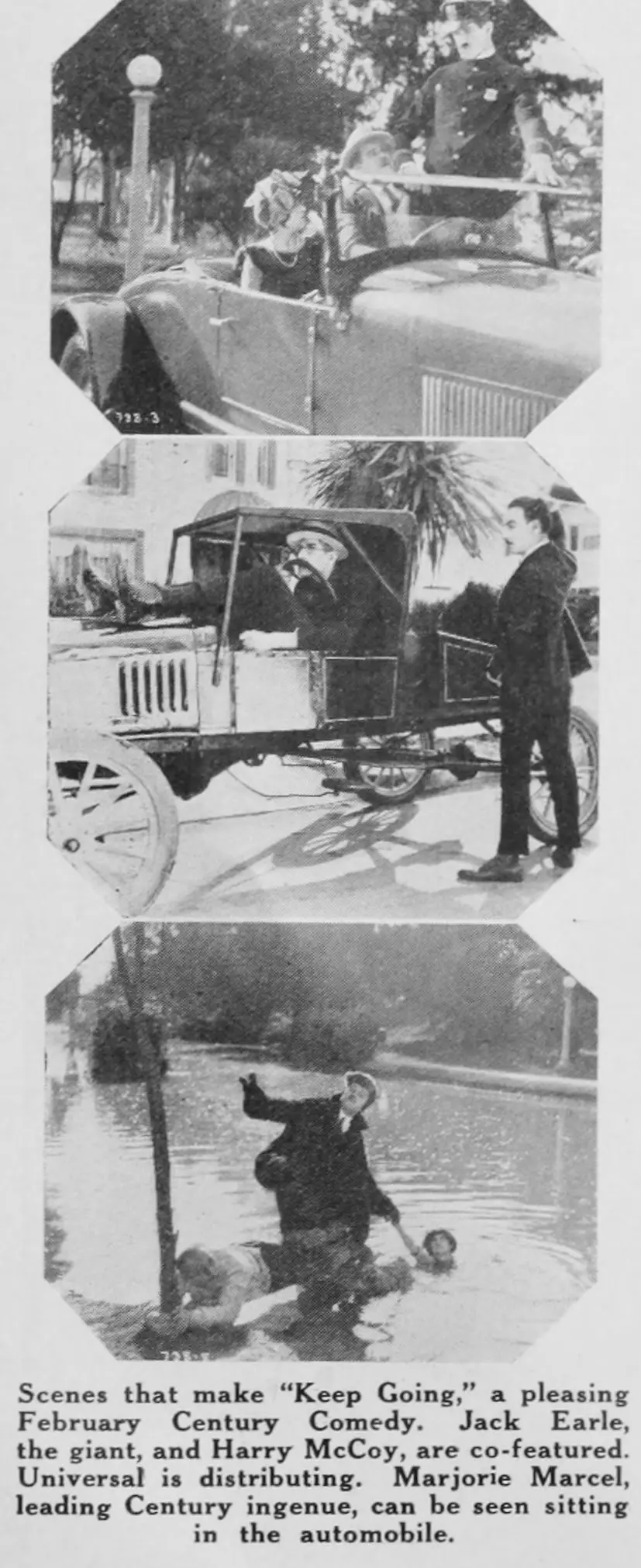
In the early 1920s, the cinema was not merely a medium of storytelling but a laboratory for the physics of the human body. Keep Going (1922), directed by the often-underappreciated Robert P. Kerr, serves as a quintessential example of how silent comedy utilized mundane regulations to spark narrative fire. The inciting incident—a motor vehicle violation involving a roadster pushed beyond the leisurely pace of twelve miles per hour—is more than a plot device; it is a commentary on the burgeoning speed of modernity. Harry McCoy, playing the frantic driver, embodies that nervous energy of a generation caught between horse-drawn sensibilities and internal combustion.
Jack Earle, whose imposing physical presence often defined his roles, plays the foil with a bureaucratic rigidity that slowly melts into a more human, albeit opportunistic, character. Unlike the heavy-handed drama found in films like Moral Suicide, Kerr’s work here opts for a lightness that masks a cynical undercurrent. The shredding of the ticket is a moment of law-bending grace that suggests a world where rules are secondary to the charisma of the individual. This sets a precarious moral foundation for the events that follow in the pastoral landscape.
The transition from the dusty road to the stagnant pond marks a shift in the film’s tonal register. Marjorie Marcel, portrayed with the wide-eyed vulnerability typical of the era's ingenues, becomes the catalyst for a rescue sequence that is both technically impressive for 1922 and emotionally poignant. The pond is not merely a body of water; it is a stage for a comedy of errors that borders on the tragic. When Marjorie falls, the subsequent scramble by both Jack and Harry is a masterclass in slapstick timing.
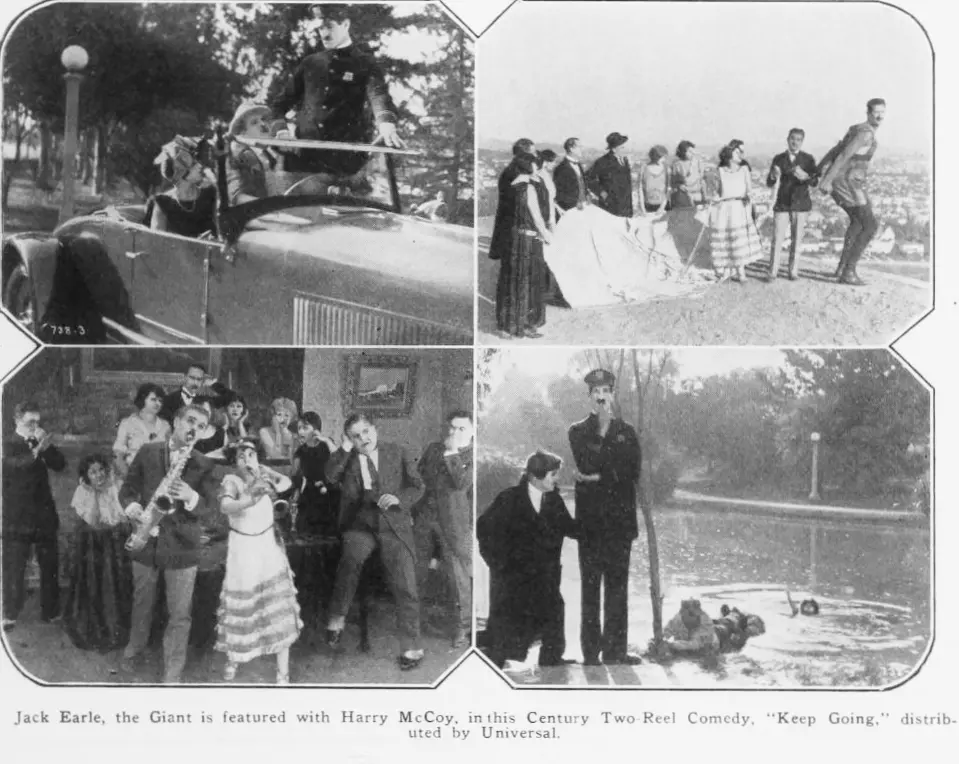
The actual mechanics of the rescue are where Harry McCoy truly shines. His movements are a blur of frantic altruism, a stark contrast to the more deliberate, perhaps even hesitant, actions of the lawman Jack. However, the brilliance of Kerr’s direction lies in the placement of the camera at the moment Marjorie awakens. The "gaze" is the central theme here. As Marjorie’s eyes flutter open, the visual field is dominated by Jack. Through no malice of his own, but rather through the sheer luck of positioning, Jack becomes the hero in the eyes of the saved. This subversion of the hero's reward is a theme explored with far more gravity in A Champion Loser, yet in 'Keep Going,' it retains a bitter, comedic sting.
The final act of the film, from which the title is derived, elevates the short from a simple gag reel to a piece of existentialist art. Harry’s decision to "keep going" is not merely an exit from a scene; it is an exit from a social contract that has failed him. He has performed the labor, taken the risk, and yet the social capital—the love of the maiden and the acclaim of the community—is handed to the man who represents the very authority Harry initially bypassed.
This ending resonates with the melancholic atmosphere of Ragged Robin, where the protagonist must reconcile with a world that does not recognize their inherent worth. In 'Keep Going,' the resolution is handled with a shrug of the shoulders and a step forward into the unknown. It is a remarkably modern sentiment for a film of its age. There is no grand confrontation, no exposure of the truth. There is only the road, the motor, and the necessity of motion.
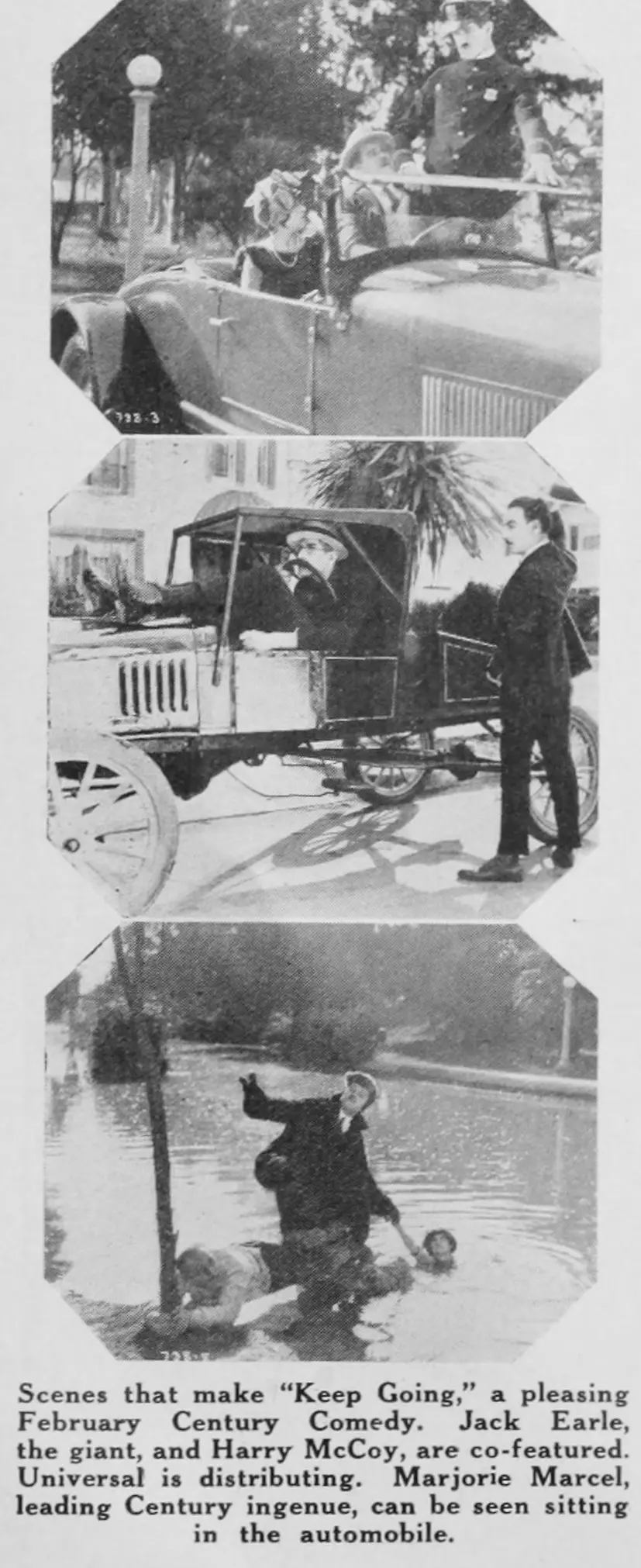
Technically, 'Keep Going' benefits from the crisp cinematography that characterized the early 1920s before the heavy use of soft-focus lenses became the industry standard. The outdoor lighting is handled with a naturalistic flair that highlights the textures of the roadster and the shimmering surface of the pond. Kerr’s pacing is relentless, echoing the twelve-mile-per-hour transgression of the opening scene. He understands that in comedy, the space between the action and the reaction is where the meaning resides.
While perhaps not as grandiose as Famous Battles of Napoleon, the film’s stakes are no less significant to its characters. It is a battle of the ego, a struggle for identity in a world that is beginning to move too fast for simple truths to keep up. The cast, particularly Henry Murdock in his supporting capacity, provides a solid framework for the central trio to operate within. Marjorie Marcel’s performance, though limited by the script’s requirements for her to be a passive object of rescue, nonetheless captures the genuine disorientation of the era’s transitioning social roles.
In conclusion, 'Keep Going' is a vital piece of silent cinema that deserves more than a footnote in the history of slapstick. It is a film about the injustice of the visible and the quiet dignity of the overlooked. It reminds us that sometimes, the only thing left to do when the world gets the story wrong is to put the car in gear and drive away. It is a sentiment as relevant today as it was when the first audiences watched that roadster break the speed limit on a flickering screen a century ago.