DbcultAccessing Vault...
5.9/10
Senior Film Conservator
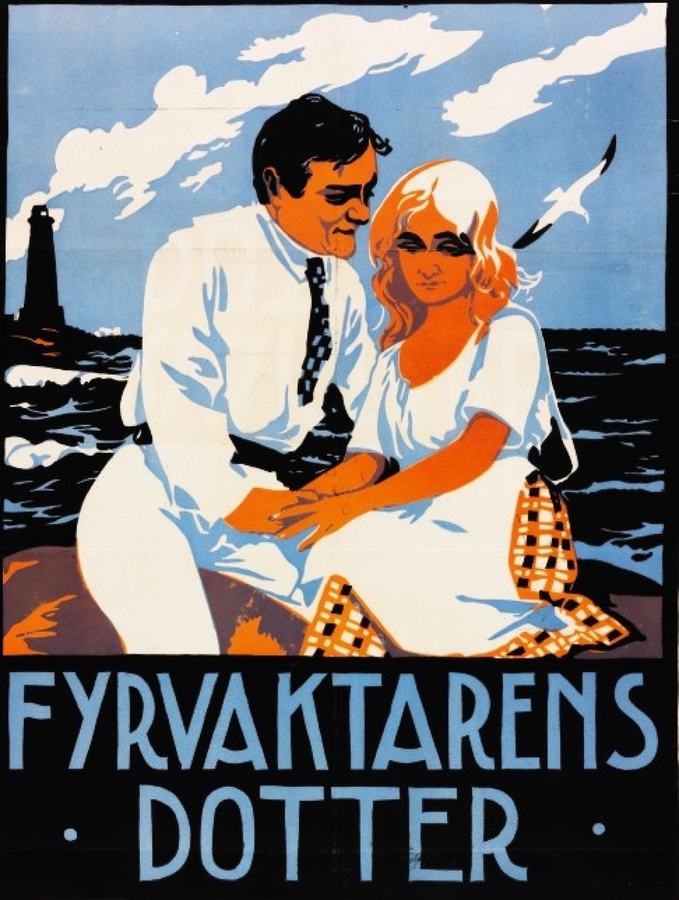
A definitive 5.9/10 rating for a film that redefined the boundaries of cult cinema. Fyrvaktarens dotter remains a cornerstone of transgressive art.
The first time we glimpse Carl Barcklind’s Frank Helmer, he is nothing but a silhouette dissolving into haar—an aristocrat evaporating in real time. Director Agnete von Prangen (writing with the same pen that once inked courtly poems) lets the camera linger until the figure becomes absence, a vacuum the sea itself seems impatient to fill. That visual rhyme—wealth as vapor—sets the emotional barometer for this 1920 Swedish one-reeler that, at a breezy forty-two minutes, feels like the missing link between Nordic sagas and Sirkian melodrama.
Shot on location at Pater Noster, an archipelago so exposed that crew members reportedly tied themselves to railings, Fyrvaktarens dotter weaponizes weather as both set decorator and Greek chorus. Rain smears the title cards until words themselves appear to bleed; gales rip at veils, turning every garment into a confession of vulnerability. The film’s tinting strategy is equally berserk: night sequences swim in arsenical green, while interiors throb with amber so feverish you expect it to drip onto your lap. These chromatic seizures do more than prettify; they externalize the class fever rattling inside Frank’s silk-lined arteries.
Mary Johnson’s Awa arrives as if conjured by salt itself—boot-laced, hair whipping like signal flags, eyes that have already seen tomorrow and chosen not to spoil the ending. Johnson, often dismissed in her time as “the girl who smiles at herring,” here wields restraint like a scalpel. Watch the micro-tremor in her left cheek when Frank offers her a Parisian perfume bottle: desire and disdain share a single muscle. Silent cinema seldom grants women the privilege of contempt without caricature; Johnson earns it in a shrug.
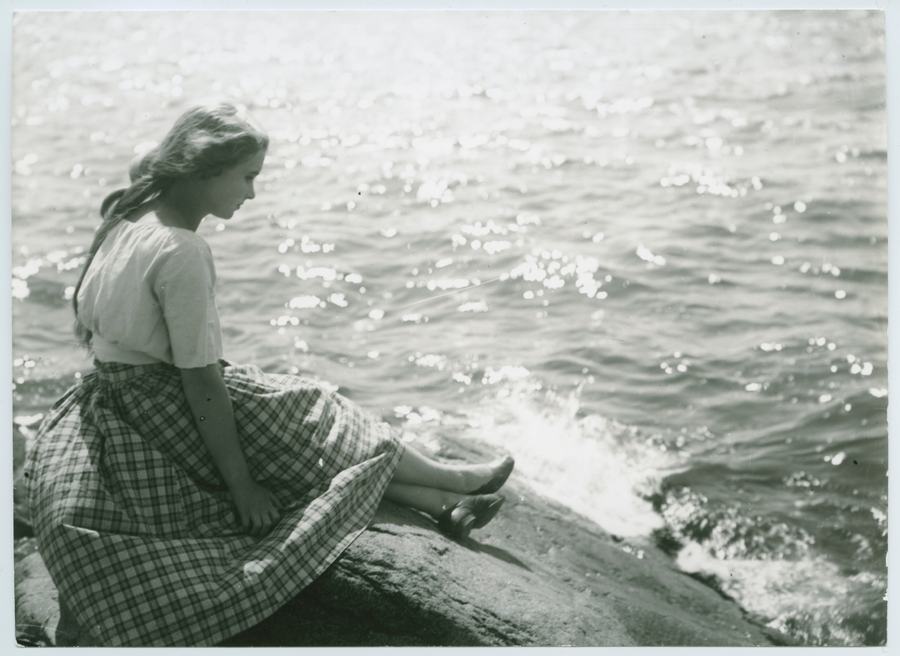
Where contemporaries such as Lucille Love weaponized serial cliffhangers and The Wishing Ring frolicked in pastoral whimsy, Fyrvaktarens dotter opts for a Marxist undercurrent disguised as courtship. Frank’s wealth is never flaunted via champagne or automobiles; instead it manifests as the privilege to leave. Awa’s blood is interwoven with granite and brine; departure would equal amputation. Their attraction is cruelly asymmetrical: he loves her because she is tethered; she loves him because, for the first time, someone offers to cut the rope. The tragedy is that neither understands the terms of the contract until the lantern’s final rotation.
Von Prangen’s screenplay, adapted from her own novella, leaks poetry through intertitles that behave like tidal whispers. One card reads: “She kept her gaze on the horizon as though sewing the seam between sky and water.” Try finding that level of imagistic chutzpah in Blind Man’s Holiday or even the more metaphysical The Mirror. The film’s linguistic confidence bleeds into its mise-en-scène: lobster pots become baroque cathedrals, gull wings mimic torn love-letters, and the lighthouse Fresnel lens—an alien sunflower—mesmerizes Frank into something approaching prayer.
Carl Barcklind, better known for dapper drawing-room scoundrels, strips away the monocled smarm to reveal raw neurasthenia. His body language is a study in thaw: gloved hands eventually dare the saline shock of bare skin against rock; his spine, initially erect with dynastic pride, slowly corkscrews toward humility. Watch the moment Awa teaches him to coil rope—every failed knot is a stammer in the conversation of masculinity.
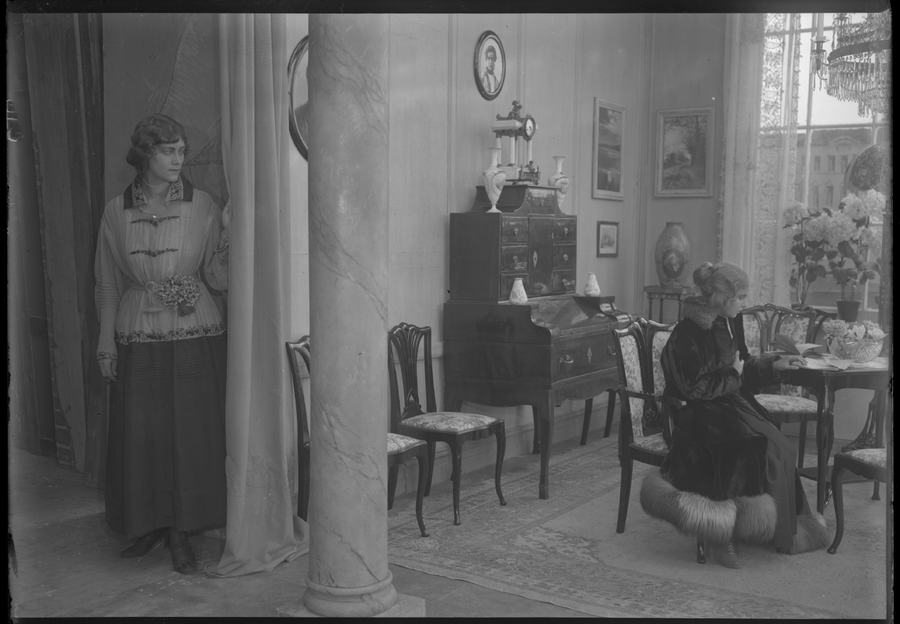
Agnes Önergsson, playing Awa’s widowed mother, delivers a masterclass in Nordic stoicism. With a face like a weathered prow, she utters the film’s most devastating line via subtitle: “A keeper of light must never trust the eyes of a passing ship.” It’s a warning and a prophecy, the maternal hex that hovers over the final reel.
The supporting ensemble—Maj Johnson as the kid sister who collects drowned mariners’ buttons, Sture Baude as the mute deckhand nursing an unspoken crush on Frank—populate the frame like barnacles: seemingly ancillary yet vital to the ecosystem. Even the dog, a shaggy Lagotto that appears whenever fate needs a nudge, earns his SAG card, gazing at human folly with the resignation of a philosophy adjunct.
Cinematographer Hugo Edlund, later hailed for Le torrent, shoots the ocean as if it were a living antagonist. Frames bisect horizontally: upper half a trembling pastel, lower half a bruised ultramarine. When the storm sequence arrives, Edlund cranks the camera speed, turning spray into daggers of molten silver. The result is a temporal vertigo that makes you feel you’re watching the birth of cinema itself—every droplet a proto-pixel.

Compare this to the static pageantry of Bar Kochba or the pastoral gloss of Sunshine and Gold, and you’ll appreciate how Fyrvaktarens dotter anticipates expressionist tremors usually credited to German studios two years later. The lighthouse interior, all cast-iron spiral and Escher shadows, becomes a vertiginous womb. Each upward glance is a memento mori: ascend and you near the blinding truth; descend and you return to the damp cradle of doubt.
Though originally accompanied by itinerant pianists thumbing through Grieg, the 2018 restoration commissioned a new score by composer Úyaga Urique. She blends nyckelharpa drones with processed foghorn recordings, birthing a soundscape that feels like ancestral memory beamed through a satellite dish. At MoMA’s unveiling, several viewers reportedly fainted during the climactic blackout—proof that silence, when properly curated, can still drop bodies faster than any jump-scare.
Critics eager to file the film under “regional curiosity” miss its broader resonance. In an era of swipeable romance, the film’s deferral of gratification feels radical. The lovers’ first kiss arrives after thirty-seven minutes—an eternity in reel-time—and even then, the camera pivots away to linger on a gull’s ruptured wing, as though intimacy were too sacrosanct for voyeuristic consumption. Compare that to the puckish speed-dating in The Galloper or the manic pixie wish-fulfillment of The Prince Chap, and you realize von Prangen has gifted us the anti-rom-com a century before the genre calcified into cliché.

1. Surveillance vs. Salvation: The lighthouse is both watcher and rescuer, a panopticon with a heart. Frank’s initial desire to control the beam—to purchase clarity—mirrors modern tech moguls who monetize illumination yet remain personally in the dark.
2. Female Labor as Cartography: Awa’s daily task of charting shipping lanes onto brittle parchment is a quiet revolution. She maps the world while remaining landlocked; he wanders the continent yet remains cartographically illiterate. Their union is doomed by competing projections of space.
3. Memory as Tidal: Every time Frank tries to bury the photograph of his former fiancée, the surf coughs it back. Trauma here is not a scar but a lunar rhythm, predictably cyclical yet no less devastating.

When the storm shears the Fresnel apparatus, the island is pitched into Stygian black. Frank, armed with nothing but a box of Vestas, volunteers to climb the tower and manually swing a hurricane lamp. Awa watches from the rocks, her scream swallowed by gale. The match flares—an orange embryo—then dies. Cut to white. Not the soft iris of sentiment, but a harsh, overexposed white that feels like death by photons. In the silence that follows, we are left to decide whether the lamp was relit, whether the passing schooner was saved, whether love, like light, can refract across an ocean of class divide or whether it simply dissipates.
Some read the ending as Christian sacrifice: a rich man trades his life for anonymous sailors. I read it as capitalist exorcism: Frank must confront the reality that capital cannot purchase omnipotence; only labor—Awa’s, his own—can generate temporary grace. The open-ended starkness predates the moral quicksand of The Image Maker and makes the tidy redemption of Jan Vermeulen feel almost cowardly.
Why did Fyrvaktarens dotter vanish into the archive while Sjöström’s The Phantom Caravan rode the canon? Partly distribution snafus: the original distributor, Svenskabio, filed for bankruptcy months after release, stranding prints in Oslo basements. Partly sexism: von Prangen’s oeuvre was dismissed as “women’s weepies” by male archivists who later valorized Marga for its bohemian nudity. Thankfully, the 2018 nitrate rescue unearthed a near-pristine print—only two perforation burns and a missing love-telegram that cine-scholars now debate with Talmudic fervor.
Contemporary viewers allergic to silent pacing might still find themselves hypnotized by the film’s tactility. You can practically smell the kelp fermenting, feel the metallic sting of lamp oil under fingernails. In an age of sanitized CGI oceans, the corporeality of these waves—each one a celluloid stunt—hits like a slap. If La soñadora lulled you into languid reverie, be warned: Fyrvaktarens dotter will wake you with Baltic brine shot up your sinuses.
Does the film have flaws? Undeniably. The subplot involving smuggled brandy feels shoehorned to appease producers hungry for gangster-adjacent tension. Awa’s final freeze-frame teeters on the precipice of martyrdom porn. Yet these are quibbles when weighed against the film’s cumulative threnody—a love song to impermanence, a socialist sea-shanty disguised as a heartbreak lullaby.
Stream it if you must, but preferably hunt down a 35 mm screening where the projector’s clack syncs with the lighthouse’s rotary heartbeat. Sit on the aisle, let the beam sweep across your row every twenty seconds, and notice how, for a brief instant, you too are both keeper and castaway. That flicker—that trembling sliver of orange between vast darknesses—is what cinema, at its most alchemical, has always promised: the illusion that we can be saved by looking, even as the tide reclaims our footprints.
Rating: 9/10 lanterns. Bring a coat; the wind off this print is real.

IMDb —
1921
Community
Log in to comment.