DbcultAccessing Vault...
Cult Review
Senior Film Conservator
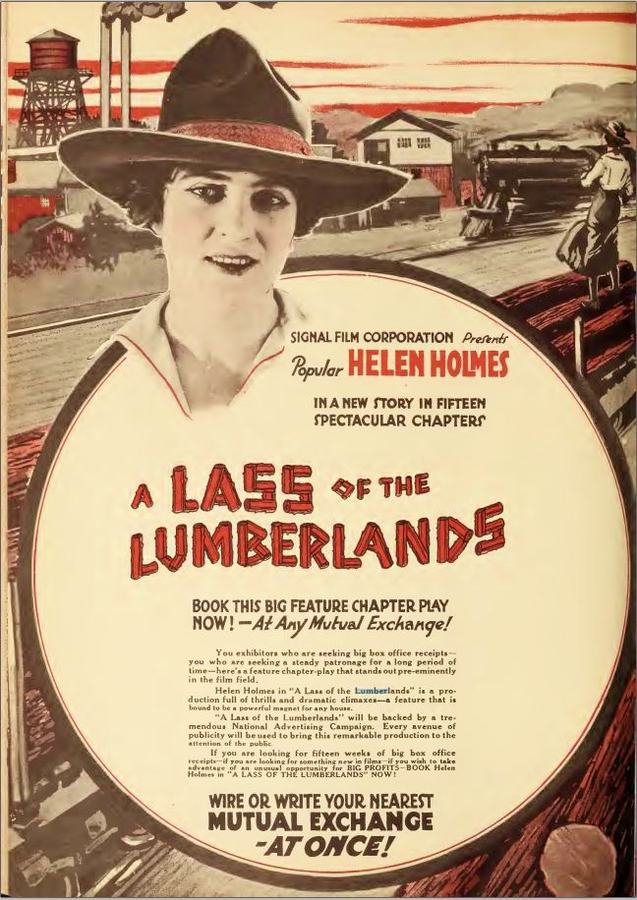
Step into the shadowy, untamed heart of early American cinema, and you might just stumble upon a forgotten gem like A Lass of the Lumberlands. This isn't merely a silent film; it's a visceral, uncompromising plunge into the darkest corners of human ambition, a narrative that, even in its episodic infancy, pulses with a raw, almost shocking intensity. Released during an era when cinema was still finding its voice, this production, particularly its inaugural chapter, 'The Lumber Pirates,' lays bare the cutthroat realities of industrial expansion and the profound moral decay it often engendered. It’s a stark reminder that the struggles for power and resources are as old as civilization itself, and often, just as brutal.
At the vortex of this swirling maelstrom of greed and desperation stands 'Dollar' Holmes, a name that, in its very utterance, encapsulates the man's singular, all-consuming obsession. Thomas G. Lingham, in a role that must have demanded a formidable presence even without spoken dialogue, embodies Holmes with a terrifying conviction. Holmes isn't just a timberland owner; he's a personification of rapacious capitalism, a man whose soul has been meticulously chiseled down to a single, gleaming facet: profit. His initial predicament—a binding contract with a formidable combine, demanding ten million feet of timber by an immovable deadline—sets the stage for a classic struggle against an unforgiving clock and an even less forgiving market. The stakes are immense, not just financially, but psychologically. Holmes has, we are told, set his heart 'fiercely on a boy to inherit the fortune he means to pile up.' This seemingly minor detail is, in fact, a crucial stroke of characterization, revealing a patriarchal worldview deeply entwined with his material aspirations. The desire for a male heir isn't merely a personal preference; it's an extension of his empire-building, a perpetuation of his legacy through a male lineage, a common sentiment of the era that this film uses to amplify his eventual downfall.

The narrative truly ignites with a cataclysmic forest fire, an act of nature that, in a cruel twist of fate, incinerates half of Holmes's standing timber. This disaster, rendered with what must have been impressive visual effects for its time, serves as a visceral metaphor for the fragility of human enterprise in the face of elemental forces. It also acts as the ultimate catalyst for Holmes's descent into outright villainy. Greer, the president of the trust, seizes upon this vulnerability with a 'sneering letter,' a passive-aggressive missive hinting at Holmes's imminent ruin. This corporate machination highlights the often-invisible battles waged within the boardrooms, battles that could be just as devastating as any physical confrontation. Holmes, cornered and desperate, realizes his only salvation lies in acquiring the adjoining lands, specifically those held by the Klamath Indians.
Here, the film pivots from a tale of corporate intrigue to a harrowing indictment of colonial exploitation. Sleepy Dog, the chief of the Klamath tribe, embodies a quiet dignity, refusing to sell his people’s ancestral lands. This resistance, rooted in cultural heritage and a deep connection to the land, stands in stark contrast to Holmes's transactional worldview. The tension here is palpable, a clash of civilizations played out on the unforgiving frontier. It's a theme echoed in other films of the era that touched upon indigenous struggles, though perhaps rarely with such blunt force. One might draw a thematic parallel to the underlying tensions in a film like The Silent Battle, where societal forces clash with individual will, though the specific context of indigenous exploitation here makes Lumberlands particularly poignant.
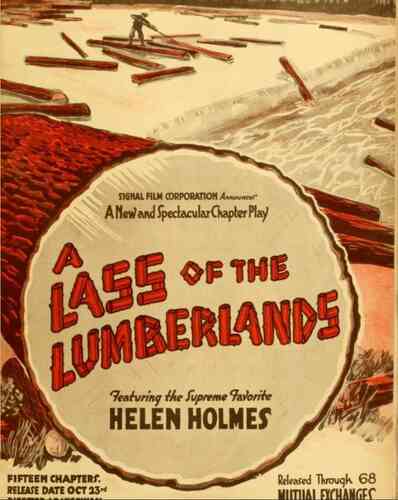
The film then delivers a gut-wrenching blow to Holmes's already fragile psyche: his wife gives birth to a daughter. This event, intended to be a moment of joy, instead unleashes a 'wild rage of double disappointment' in Holmes. His reaction is shocking in its brutality—he curses both his wife and the babe, then flees into the 'deep woods.' This scene is crucial, not only for showcasing Holmes's misogyny and profound psychological imbalance but also for setting his wife's tragic trajectory into motion. It’s a powerful, if disturbing, portrayal of toxic masculinity and the devastating impact of unmet expectations, a theme that resonates even today. The raw, unfiltered emotion, conveyed through silent acting, must have been incredibly impactful for audiences of the time.
It is in this state of furious despair that Holmes encounters Dill, a bootlegger, selling illicit whiskey to his loggers. This chance meeting sparks Holmes's most despicable plan yet. He strikes a Faustian bargain with Dill: immunity from punishment in exchange for intoxicating the Klamath tribe while Chief Sleepy Dog is away. The subsequent scene, depicting the Klamaths made drunk and then manipulated into deeding their lands for a paltry $100 apiece, is a chilling portrayal of calculated exploitation. It's a moment that speaks volumes about the moral bankruptcy of Holmes and the systemic injustices faced by indigenous peoples during this period. This act isn't just a crime; it's a profound betrayal of trust and a blatant disregard for human dignity. The acquisition of these lands, and crucially, the exclusive right to the region's one river for log-floating, allows Holmes to turn the tables on the trust, dictating terms that grant him a heavy interest and a directorship. He has not merely survived; he has triumphed, but at an unspeakable moral cost.
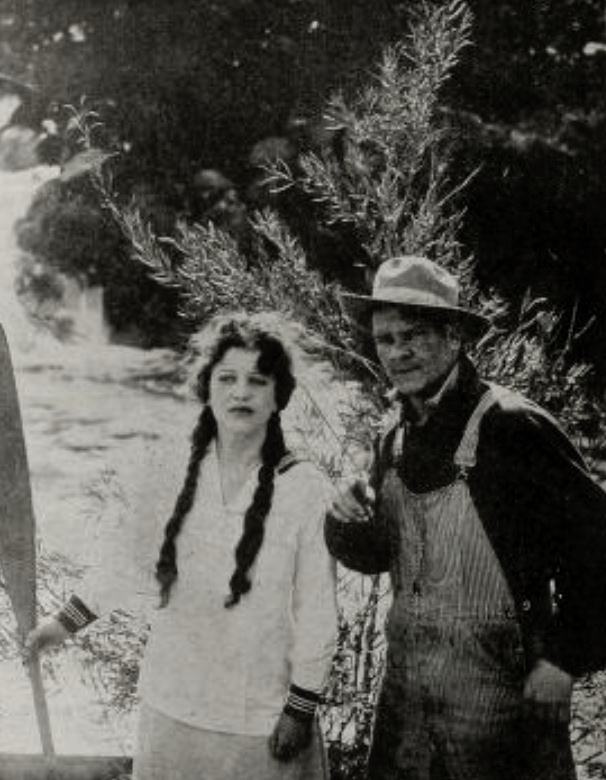
The return of Sleepy Dog brings the narrative to its inevitable, bloody climax. Holmes's confrontation with the chief escalates swiftly, culminating in murder. The act itself—Holmes murdering Sleepy Dog and throwing his body over a cliff—is a brutal, definitive statement of his complete moral collapse. It's a moment of pure, unadulterated evil. The fact that his wife witnesses this horror adds another layer of tragic irony and accelerates her own desperate flight. This sequence, with its sudden violence and the subsequent terror of the wife, must have been a gripping piece of early cinematic suspense. The film doesn't shy away from the horrific consequences of Holmes's actions, emphasizing the domino effect of his initial greed.
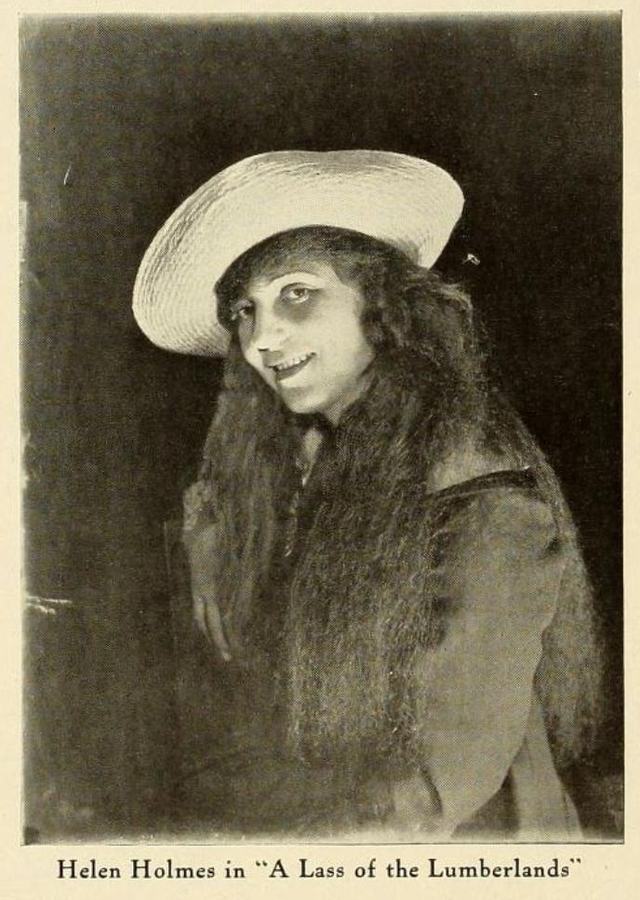
The wife's escape, clutching her infant, is a heart-rending sequence of primal fear and maternal instinct. Her journey through the wilderness, attempting to cross a treacherous log jam, is fraught with peril. The climax of this harrowing flight—a blast of dynamite blowing up the king-log, plunging her and the babe into the swirling current—is a masterful stroke of dramatic tension. It leaves the audience on a cliffhanger of epic proportions, a testament to the serial format's power to compel viewership. This scene, undoubtedly a stunt showcase for Helen Holmes, who plays the wife, would have been a thrilling spectacle. The image of the mother clinging to a log, protecting her infant, epitomizes vulnerability and resilience in the face of overwhelming odds. It's a stark contrast to Holmes's calculated cruelty, offering a glimmer of human tenderness amidst the pervasive darkness.

From a technical perspective, even without seeing the film, one can infer the ambitious staging required for such a plot. The forest fire, the log jam, the dynamite blast—these were not minor undertakings for early filmmakers. The collaboration between writers Ford Beebe and E. Alexander Powell clearly aimed for high drama and action, a template that would define many serials for decades to come. The cast, including Paul Hurst and Frank Hemphill alongside Lingham and Helen Holmes, would have been tasked with conveying complex emotions and motivations through exaggerated facial expressions and body language, the lingua franca of silent film. The intensity of Holmes's character, for example, would have relied heavily on Lingham's ability to project menace and avarice without a single spoken word. The portrayal of the Klamath tribe, while undoubtedly filtered through the ethnographic biases of the era, still serves as a crucial narrative device to highlight themes of injustice and exploitation.
The film’s thematic richness is undeniable. It functions as a critique of unchecked capitalism and the devastating impact of industrial expansion on both the environment and indigenous populations. Holmes’s character is a microcosm of the 'robber baron' mentality, a figure driven by an almost pathological need for control and wealth, regardless of the human cost. His disdain for his daughter, rooted in a patriarchal desire for a male heir, adds another layer to his villainy, suggesting a deep-seated insecurity and a warped sense of legacy. The film doesn't merely present these issues; it dramatizes them with a visceral force, creating a narrative that feels both epic and deeply personal. One could argue that its exploration of these dark themes places it in conversation with other early films that tackled societal ills, albeit perhaps with less overt violence. For instance, the ruthless ambition could be distantly compared to the power plays in Vendetta, where personal desires drive extreme actions.
The serial format itself, with its relentless pace and cliffhanger endings, was perfectly suited to this kind of high-stakes melodrama. It ensured audience engagement week after week, building anticipation for the next installment of Holmes's villainy and the wife's struggle. This episodic structure allowed for a gradual escalation of tension and a deeper exploration of character arcs, even if those arcs often trended towards the melodramatic. The writers understood the power of leaving an audience hanging, a technique that remains effective in serialized storytelling even today. The very title, A Lass of the Lumberlands, hints at a future trajectory for the infant daughter, suggesting she will become a central figure, perhaps even a heroine, in subsequent episodes, carrying the weight of her father’s sins and her mother’s suffering. This promise of a future protagonist, rising from the ashes of tragedy, is a classic serial trope, designed to hook viewers for the long haul.
Considering the context of its release, A Lass of the Lumberlands emerges as a surprisingly complex and daring piece of early cinema. It doesn't shy away from depicting murder, exploitation, and profound human cruelty. While some aspects, particularly the portrayal of indigenous people, might be viewed through a critical modern lens, the film's willingness to engage with such stark themes is commendable. It serves as a valuable historical document, reflecting not only the cinematic techniques of its era but also the prevailing social anxieties and moral debates. The film’s raw energy and its unflinching look at the destructive consequences of greed position it as more than just an action serial; it's a potent, albeit unpolished, work of social commentary. Its dramatic intensity and exploration of human depravity make it a fascinating subject for study, offering insights into the nascent art form's capacity for complex storytelling.
The narrative, as penned by Ford Beebe and E. Alexander Powell, demonstrates a keen understanding of pacing and dramatic escalation. They weave together corporate espionage, personal tragedy, and violent crime into a tapestry that, despite its sensational elements, feels grounded in a dark reality. The character of Holmes is not merely a mustache-twirling villain; his motivations, however twisted, are clearly delineated, making his actions understandable, if not forgivable. His obsession with a male heir, his fury at the loss of timber, and his ruthless pursuit of power all coalesce into a portrait of a man consumed by his own desires. The tragic fate of his wife and child, left in such a precarious state at the episode's conclusion, is a powerful emotional anchor, ensuring that the audience's investment goes beyond mere spectacle. This is not just a story about lumber; it's a story about the destruction of a family, a community, and a soul, all sacrificed at the altar of avarice. The sheer audacity of the plot, from the drunken manipulation of a tribe to the cliffside murder and the dynamite-laden river escape, speaks to a creative ambition that pushed the boundaries of what was expected from cinema at the time. It’s a compelling, if disturbing, testament to the power of early narrative filmmaking.
In conclusion, A Lass of the Lumberlands, even from the summary of its opening episode, reveals itself to be a potent, captivating piece of early cinema. It’s a film that doesn't just entertain; it provokes, challenges, and forces us to confront uncomfortable truths about human nature and societal structures. The blend of high-octane action, moral decay, and tragic consequences makes it a compelling artifact from a bygone era, yet its themes remain strikingly relevant. It reminds us that stories of greed, power, and survival are timeless, and that even in the silent era, filmmakers were crafting narratives with profound depth and visceral impact. This is a film that, despite its age, still holds the power to grip, to shock, and to leave an indelible mark on the viewer, much like the mighty rivers and vast forests it depicts.
IMDb 5.7
1924
Community
Log in to comment.