DbcultAccessing Vault...
7.8/10
Senior Film Conservator
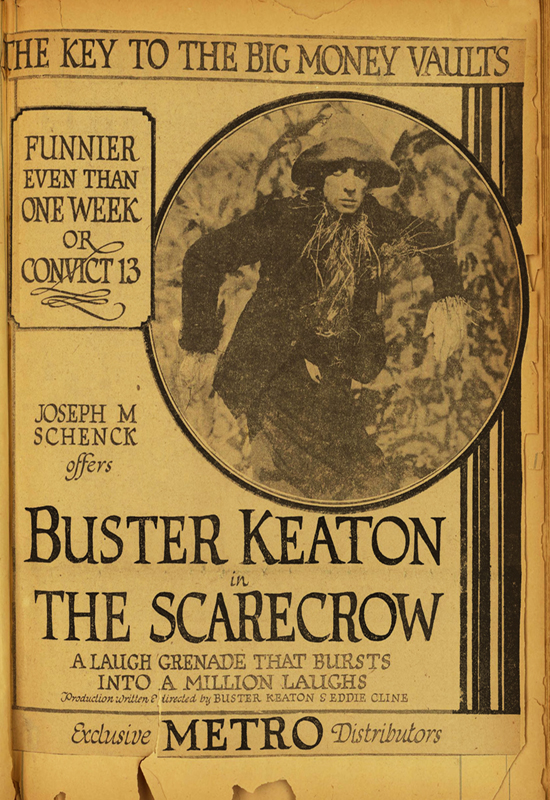
A definitive 7.8/10 rating for a film that redefined the boundaries of cult cinema. The Scarecrow remains a cornerstone of transgressive art.
There’s a certain magic to the early works of Buster Keaton, a kind of unadulterated cinematic joy that few filmmakers have ever truly captured. His 1920 short, "The Scarecrow," stands as a pristine jewel in his prodigious output, a testament to his burgeoning genius as a performer, director, and gag-writer. It’s a film that, even a century later, feels astonishingly fresh, a perfectly calibrated machine of laughter and inventive spectacle. From its opening frames, we are plunged into a world where ingenuity trumps grandeur, and the absurd is merely a logical extension of everyday life.
The narrative, deceptively simple, centers on two farmhands, played by Keaton himself and the formidable Joe Roberts, both vying for the affections of the same young woman, portrayed with charming vivacity by Sybil Seely. But to merely state the plot is to miss the profound richness of the execution. This isn't just a love triangle; it's a canvas for Keaton's mechanical mind to paint a vibrant landscape of Rube Goldberg-esque contrivances and breathtaking physical comedy. The film’s very premise, that of two men sharing a single, compact room transformed into a marvel of efficiency, is a stroke of comedic brilliance. Every piece of furniture, every utensil, serves multiple purposes, shifting and transforming with the pull of a string or the push of a lever. A bed becomes a table, a stove transforms into a bathtub, and the very act of preparing breakfast is an elaborate ballet of precision and timing. It’s a vision that speaks volumes about the era's fascination with efficiency and innovation, filtered through Keaton’s unique brand of deadpan humor.
Keaton, as always, is the stoic heart of the storm. His character, nameless yet utterly distinct, is a master of resourcefulness, even if his attempts at romance often go hilariously awry. He’s not a buffoon; he’s a pragmatist, an engineer of the everyday, whose solutions to problems are always ingenious, if sometimes wildly impractical. Joe Roberts, a frequent collaborator and a physical presence of considerable heft, provides the perfect foil. His rivalry with Keaton is less malicious and more a spirited contest of wills, each man trying to outdo the other in displays of supposed prowess or romantic overtures. The introduction of Sybil Seely's character, the farmer's daughter, immediately ignites this simmering competition, turning their peaceful, if eccentric, cohabitation into a battleground for affection.
The gags in "The Scarecrow" are not merely isolated jokes; they are meticulously constructed sequences, each building upon the last with an almost architectural precision. The famous scene where Keaton disguises himself as a scarecrow to avoid the farmer’s wrath (played by Joe Keaton, Buster’s own father) is a masterclass in situational comedy. It’s not just the visual gag of the disguise, but the subsequent interaction with Luke the Dog, a canine performer of extraordinary talent, that elevates it. Luke, a recurring and beloved character in Keaton’s shorts, adds another layer of unpredictable charm, his intelligent responses often eliciting as much laughter as Keaton’s own antics. The way Keaton interacts with animals, treating them as fellow players rather than mere props, is a testament to his gentle nature and his profound understanding of comedic timing.
What sets Keaton apart from his contemporaries, even the great Chaplin, is his unflappable composure. While Chaplin often mined pathos and sentimentality, Keaton remained the 'Great Stone Face,' his deadpan expression a perfect counterpoint to the escalating chaos around him. This allows the audience to project their own emotions onto him, making his triumphs all the more satisfying and his predicaments all the more humorous. His physical agility is, of course, legendary. The sequence where he attempts to propose to Sybil Seely, only to be repeatedly interrupted and ultimately chased, is a breathtaking display of acrobatic skill and precise choreography. He navigates fences, ditches, and even a river with an effortless grace that belies the inherent danger and difficulty of the stunts. It’s a kinetic ballet, a symphony of movement that must have left audiences in 1920 utterly spellbound.
The chase itself is a highlight, a prolonged, exhilarating pursuit that showcases Keaton's mastery of the medium. The farmer, enraged by the perceived impropriety, becomes a relentless pursuer, adding a frantic energy to the proceedings. The gags come thick and fast: a boat that conveniently loses its bottom, a series of increasingly elaborate obstacles, and Keaton's ingenious, split-second improvisations to escape capture. It's a testament to the collaborative genius of Keaton and Edward F. Cline, who crafted a screenplay that is both lean and bursting with inventive energy. Their understanding of visual storytelling, of conveying character and conflict through action rather than exposition, is exemplary.
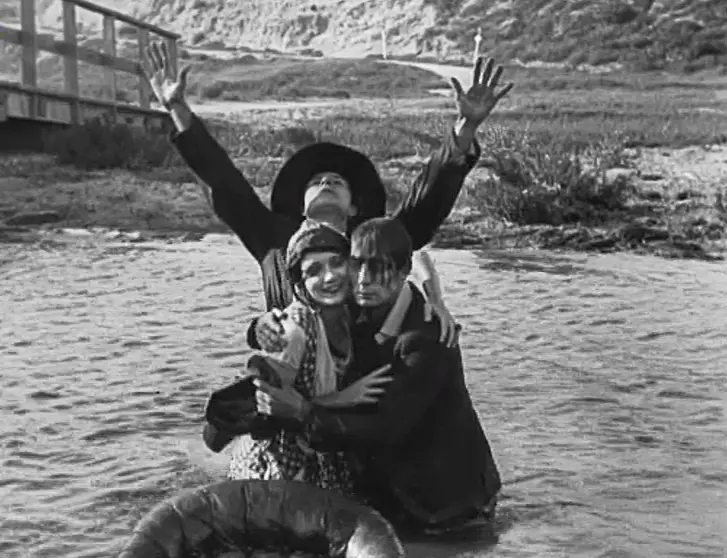
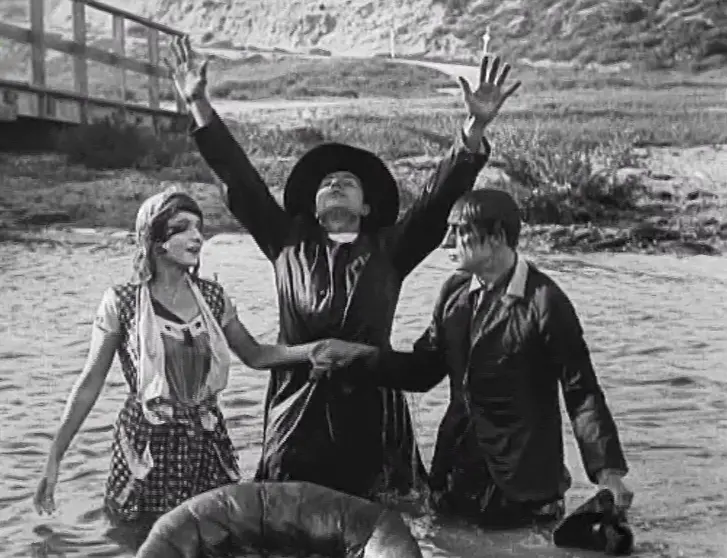
The climax of "The Scarecrow" is perhaps its most iconic and delightfully absurd moment. Cornered by the angry farmer, Keaton's character finds an unexpected solution to his romantic woes: a quick, impromptu wedding ceremony, performed by a passing minister, all while still on the run. The image of Keaton, mid-chase, pausing for a hasty marriage before resuming his sprint, is etched into the annals of film history. It perfectly encapsulates his character’s pragmatism and his ability to find a solution, no matter how outlandish, to any problem. It’s a moment that elicits gasps of surprise and bursts of laughter in equal measure, a truly unforgettable piece of cinematic comedy.
Beyond the laughs, the film offers a glimpse into the social fabric of early 20th-century America. The rural setting, the simple aspirations of the characters, and the emphasis on self-reliance all speak to a particular moment in time. Yet, the themes of love, rivalry, and the pursuit of happiness are timeless, making the film resonate across generations. Keaton's work, often lauded for its technical brilliance, also possesses a profound humanity. His characters, despite their extraordinary circumstances, are relatable in their desires and their foibles.
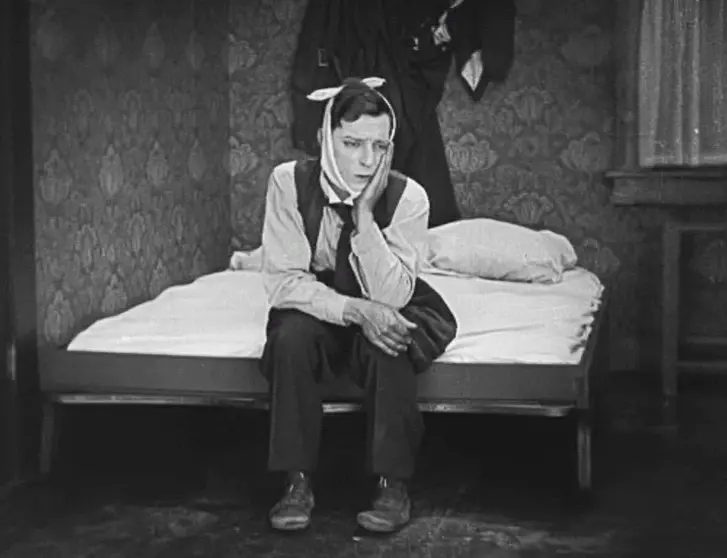
When considering Keaton’s body of work, "The Scarecrow" holds a significant place. It’s a film where his signature elements – the deadpan expression, the mechanical inventiveness, the breathtaking stunts, and the underlying sweetness – are all present and perfectly honed. It demonstrates his complete control over the craft, his ability to direct, write, and perform with unparalleled precision. While short films often served as proving grounds, this particular entry feels like a fully realized vision, a miniature masterpiece that foreshadows the grandeur of his later features like "Sherlock Jr." and "The General."
The supporting cast, though given less screen time, contributes significantly to the film's success. Sybil Seely is a charming presence, embodying the object of affection with grace and a touch of independent spirit. Joe Roberts is, as ever, a formidable and humorous antagonist, his bulk providing a wonderful contrast to Keaton's agility. Even the minor roles, like Al St. John and Edward F. Cline, add texture to the rustic world Keaton creates. And of course, Luke the Dog deserves special mention for his impeccable comedic timing and delightful performance. The collaborative spirit among this core group of performers and writers is palpable, resulting in a cohesive and consistently entertaining experience.
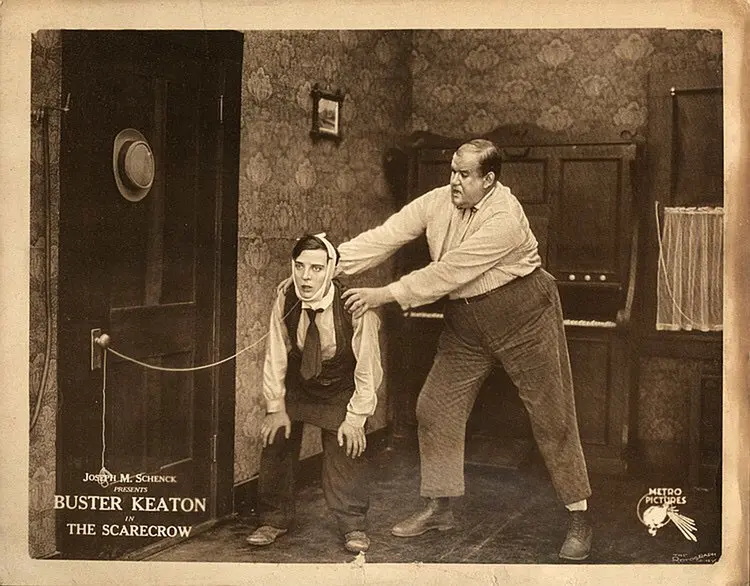
In an age dominated by CGI and elaborate special effects, there's something incredibly refreshing about Keaton's practical, on-screen wizardry. His stunts are real, his gags are meticulously constructed, and the laughter they provoke is entirely genuine. "The Scarecrow" is a reminder of the power of pure, unadulterated physical comedy, executed with unrivaled grace and intelligence. It’s more than just a silent film; it’s a vibrant piece of performance art, a kinetic symphony of human ingenuity and resilience.
To watch "The Scarecrow" today is to gain a deeper appreciation for the foundational elements of visual storytelling. It’s a masterclass in how to convey character, motivation, and emotion without a single spoken word, relying instead on expression, movement, and the clever manipulation of the environment. Buster Keaton didn't just make films; he engineered experiences, meticulously crafting every frame to maximize its comedic and narrative impact. This particular short is a prime example of that meticulous craftsmanship, a timeless piece of entertainment that continues to captivate and delight audiences, proving that true genius, like true love, knows no temporal bounds. It’s a film that demands to be seen, studied, and cherished, a vital piece of cinematic heritage that reminds us why we fell in love with movies in the first place. Its legacy is not just in its laughter, but in its enduring demonstration of what can be achieved with imagination, precision, and a stone-cold poker face.
IMDb 6.8
1934
Community
Log in to comment.