DbcultAccessing Vault...
6.1/10
Senior Film Conservator
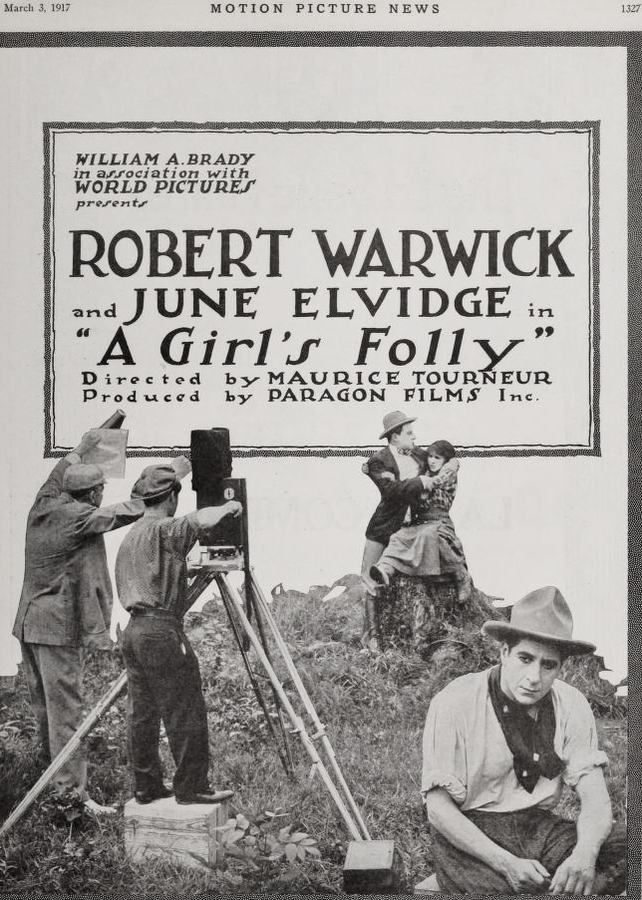
A definitive 6.1/10 rating for a film that redefined the boundaries of cult cinema. A Girl's Folly remains a cornerstone of transgressive art.
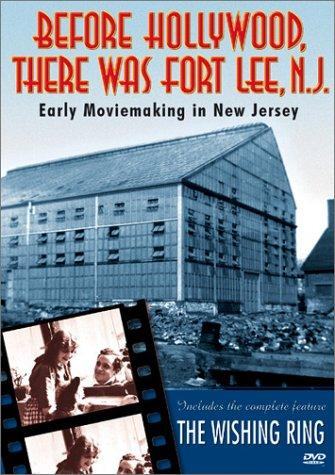
Maurice Tourneur’s 1917 opus, A Girl's Folly, exists as a staggering anomaly within the landscape of early American cinema. While his contemporaries were often preoccupied with the rigid moralism of Victorian melodrama, Tourneur—a former illustrator and assistant to the sculptor Auguste Rodin—brought a quintessentially French aesthetic sensibility to the burgeoning New Jersey film scene. This film is not merely a narrative; it is a profound meditation on the artifice of creation, a self-reflexive journey that predates the meta-cinematic tropes of Godard or Fellini by several decades. The visual grammar here is opulent, favoring a deep-focus pictorialism that transforms the screen into a living canvas.
Unlike the youthful naivety explored in Seventeen, which treats the pangs of adolescence with a lighter touch, A Girl's Folly delves into the psychological friction between reality and the projected image. The protagonist, Mary Peartree, portrayed with a delicate blend of yearning and vulnerability by Doris Kenyon, is a surrogate for every dreamer who looked at a flickering screen and saw a way out. Her rural environment is captured with a soft, almost elegiac light, contrasting sharply with the harsh, industrial glare of the film studio she eventually infiltrates.
The genius of Tourneur lies in his willingness to peel back the velvet curtain. In the middle act of the film, we are treated to an unprecedented look at the World Film Corporation's inner workings. This isn't just a backdrop; it is a character in its own right—a sprawling, chaotic machinery of dreams where sets are built and struck with a cold efficiency that mocks the romanticism of the stories they produce.
We see the cameras, the reflectors, the harried directors, and the extras lounging in a state of perpetual boredom. It is a fascinating juxtaposition to the grim realism found in Lost in Transit. Where that film deals with the physical displacement of the body, Tourneur deals with the displacement of the soul. Mary’s introduction to the 'flickers' is a sequence of high-comedy and low-pathos. The scene where she attempts to act for the camera—over-gesturing in the theatrical style of the day only to be corrected by the director—is a masterclass in subtle irony. It highlights the burgeoning divide between the stage and the screen, a transition that many actors of the era failed to navigate.
Robert Warwick, as the matinee idol Kenneth Moore, provides a performance of surprising complexity. He is the catalyst for Mary's 'folly,' yet he is not depicted as a mustache-twirling villain. Instead, he is a man weary of his own celebrity, a figure who recognizes the hollowness of the industry but lacks the conviction to leave it. His interaction with Mary is fueled by a casual, almost negligent charm that is far more dangerous than overt malice. This dynamic echoes the thematic tensions in Destiny's Toy, where the whims of the powerful dictate the trajectories of the innocent.
The presence of Josef von Sternberg in the credits—serving as an assistant to Tourneur—cannot be overlooked. One can see the nascent seeds of Sternberg’s later obsession with light and shadow, with the way a face can be sculpted by a single lamp. The textures of the costumes and the meticulous composition of the frame suggest a level of craft that was years ahead of its time. While a film like Imar the Servitor relies on more traditional narrative beats, A Girl's Folly prioritizes the atmosphere of the moment.
Mary’s journey to the city is a descent into a specific kind of urban loneliness. The 'big city' is not the land of opportunity she envisioned, but a place of cramped boarding houses and predatory expectations. This thematic thread aligns the film with His Brother's Wife, exploring the social constraints placed upon women who dare to seek independence outside the domestic sphere. Tourneur utilizes the mise-en-scène to emphasize Mary’s isolation; she is often framed through windows or doorways, trapped within the architectural confines of her own ambition.
The screenplay, co-written by the legendary Frances Marion, avoids the easy resolution of a happy ending. Mary does not become a star. She is not discovered in a whirlwind of glory. Instead, she is chewed up by the system and spat back out, her only consolation being a return to the very life she once despised. It is a cynical, yet honest, appraisal of the American Dream. This narrative subversion is as sharp as the deductive reasoning in A Study in Scarlet, yet it operates on an emotional rather than intellectual level.
One cannot discuss A Girl's Folly without mentioning the 'Western' being filmed within the movie. It serves as a brilliant parody of the genre's tropes—the exaggerated heroism, the staged gunfights, the artificiality of the 'frontier.' By showing us the artifice, Tourneur forces the audience to question the authenticity of all cinematic narratives. This level of sophistication is rarely seen in 1917. Even ambitious projects like The Spirit of the Conqueror often fall back on traditional heroics, whereas Tourneur is interested in the deconstruction of the hero.
The use of double exposure and clever editing during the studio sequences creates a sense of frantic energy that mirrors Mary’s internal state. When compared to the more static camerawork of The Third String, the fluidity of Tourneur's camera is breathtaking. He understands that the camera is not just an observer, but a participant in the emotional arc of the character. The richness of the visual field reminds one of The Heart of a Painted Woman, where the aesthetic beauty often belies a darker, more tragic core.
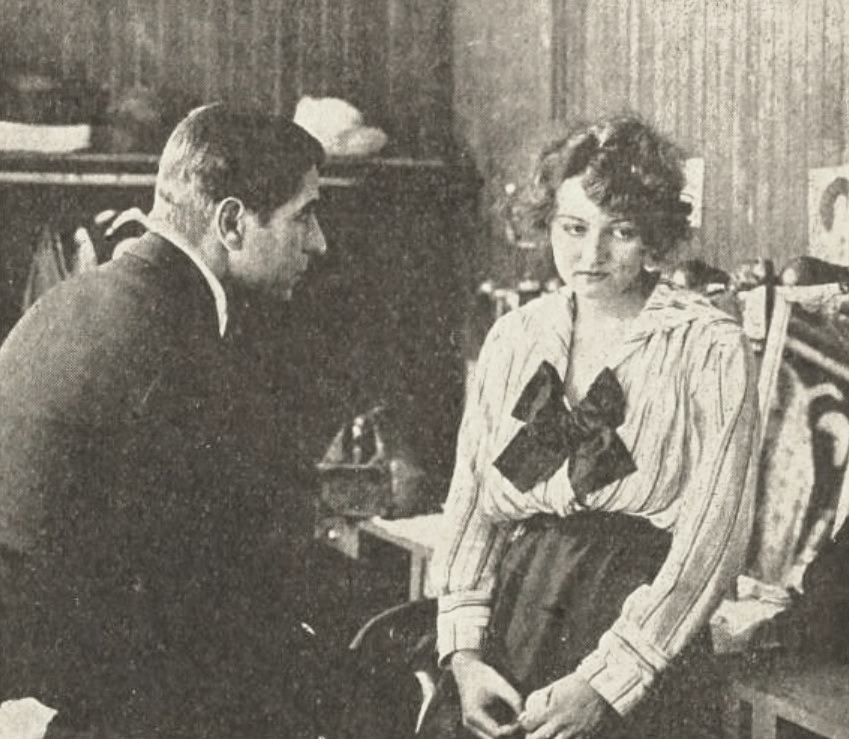
The ensemble cast provides a vivid tapestry of early 20th-century archetypes. Johnny Hines offers a comedic relief that feels grounded rather than slapstick, while the brief appearances by future stars like Leatrice Joy add a layer of historical fascination to the viewing experience. These actors were the pioneers of a new language, and watching them navigate the experimental sets of 1917 is like watching the birth of a modern mythology. Even in smaller roles, the cast exhibits a naturalism that stands in stark contrast to the hammy performances often found in Playing Dead.
The film’s pacing is deliberate, allowing the audience to soak in the details of the environment. Tourneur is never in a rush to get to the next plot point; he is more interested in the texture of a room or the way light hits a dusty floor. This contemplative style is a far cry from the operatic intensity of Herod, choosing instead a quiet, devastating intimacy. It shares more DNA with the character-driven nuances of Sunday, focusing on the internal shifts of the protagonist rather than external spectacle.
In the final act, when Mary returns to her mother and her jilted suitor, the film reaches a crescendo of melancholic beauty. The 'folly' of the title is not just Mary's mistake in chasing fame; it is the folly of a society that commodifies dreams and sells them back to the desperate. The final shots are haunting, capturing a sense of loss that cannot be easily articulated. It lacks the saccharine sentimentality of The Little Girl Next Door, opting instead for a bittersweet acceptance of one's lot in life.
As we look back on A Girl's Folly from the vantage point of the 21st century, its relevance remains undiminished. In an era of social media and digital self-fashioning, the story of a young person trying to find their worth through an artificial lens is more pertinent than ever. It is a work of profound empathy and technical brilliance, a testament to the fact that Maurice Tourneur was one of the true poets of the silent screen. While films like Pasquale or The Legacy of Happiness may offer more conventional entertainment, A Girl's Folly offers something far rarer: a mirror held up to the very nature of cinema itself.
A cinematic relic that breathes with modern vitality, Maurice Tourneur’s masterpiece is an essential artifact for any serious student of the moving image.
IMDb 6.8
1936
Community
Log in to comment.