DbcultAccessing Vault...
Cult Review
Senior Film Conservator
Few cinematic artifacts possess the quiet, resonant power of Béla Balogh’s A Lélek órása. This Hungarian silent film, a veritable gem from an era often overshadowed by its Western counterparts, emerges not merely as a historical curiosity but as a profound philosophical treatise on the human condition, meticulously crafted and emotionally searing. To categorize it as a simple narrative would be to diminish its intricate tapestry; it is, rather, an experience, a journey into the very architecture of grief, redemption, and the elusive nature of time itself.
At its core, the film introduces us to Elek, portrayed with a mesmerizing intensity by Gyula Stella. Stella's Elek is no ordinary horologist; he is a savant of the soul, a recluse whose life is devoted to the esoteric art of 'soul-watching.' His workshop, depicted with a palpable sense of antiquated wonder, is a sanctuary of ticking gears and shimmering brass, each instrument a testament to his singular obsession. Stella’s performance is a masterclass in silent acting, his eyes conveying volumes, his subtle gestures speaking directly to the viewer’s subconscious. He eschews overt theatrics for a deeply internalized portrayal, making Elek’s intellectual and spiritual pursuits utterly believable, even compelling.
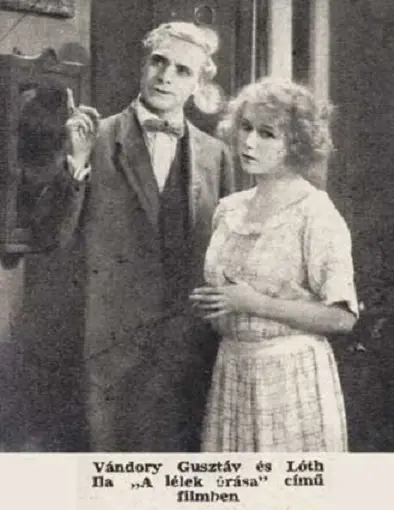
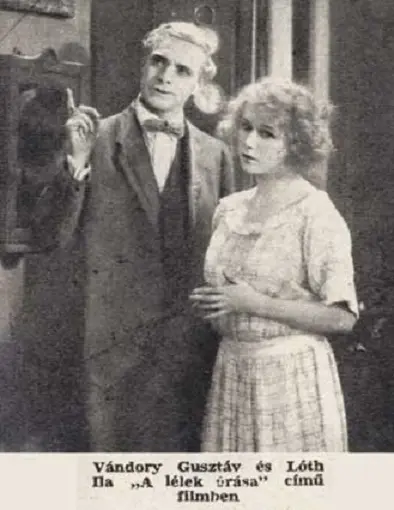
The narrative’s true impetus arrives with Elza, brought to life with heartbreaking vulnerability by Rózsa Szilassy. Elza is a woman adrift, her spirit fractured by an unspecified, yet profoundly felt, tragedy. Szilassy’s portrayal is a delicate dance between despair and a flickering hope, her expressive face a canvas for the tumultuous emotions raging within. She is not merely a character; she is a representation of every soul burdened by an unseen wound, seeking solace in the most unconventional of places. Her companion, Anna, played by Ila Lóth, serves as a crucial counterpoint. Lóth imbues Anna with a grounded skepticism, her concern for Elza palpable, her practical nature a stark contrast to Elek’s mystical inclinations. This dynamic tension between faith and reason, mysticism and pragmatism, forms a powerful undercurrent throughout the film.
Béla Balogh, as both director and writer, demonstrates an astonishing command of visual storytelling. Without the crutch of dialogue, he constructs a world rich in symbolism and emotional resonance. The pacing is deliberate, allowing the audience to absorb each meticulously composed frame, to ponder the deeper implications of Elek’s elaborate contraptions and Elza’s silent suffering. The film’s aesthetic is one of muted grandeur, with shadows and light employed not just for illumination but for psychological effect, reflecting the characters' inner turmoil and moments of clarity.
As Elek delves into Elza’s 'soul-watch,' its delicate balance disrupted by an encroaching shadow, the film subtly reveals fragments of her past. This is where the genius of Balogh’s narrative structure truly shines. Rather than a straightforward flashback, we witness these memories as ethereal visions, filtered through the lens of Elek’s empathetic understanding and his mystical device. The presence of Gusztáv Vándory, likely as a charismatic yet ultimately manipulative figure from Elza’s past, adds a layer of tragic complexity. Vándory’s ability to convey both charm and veiled malice through his expressions and posture is commendable, sketching a villain who is both alluring and destructive without uttering a single word. This exploration of past trauma and its lingering effects on the present resonates deeply, echoing themes found in later psychological dramas.
The supporting cast, including Bella Muzsnay, Gyula Mészáros, and Gida von Lazar, contribute to the film's immersive atmosphere, each actor bringing a nuanced presence that enriches the cinematic world without distracting from the central emotional core. Stella’s Elek, through his interactions with these characters, reveals layers of his own humanity, proving that even the most reclusive of souls can be touched by the plights of others.
While A Lélek órása stands as a singular achievement, it is fascinating to consider its thematic kinships within the broader tapestry of early cinema. The film's preoccupation with the inner workings of the human psyche and the subtle machinations of fate brings to mind the melancholic introspection of films like A bánat asszonya, another Hungarian work that delves into profound emotional landscapes. Both films demonstrate a sophisticated understanding of cinematic expression beyond mere plot progression, favoring mood and psychological depth.
The concept of a benevolent, albeit unconventional, figure attempting to mend broken lives also finds echoes in films like An Amateur Orphan, where a protagonist, often an outsider, navigates societal complexities to bring about a form of healing or understanding. However, A Lélek órása elevates this trope to a spiritual plane, transcending social commentary for a more universal exploration of existential angst. Similarly, the meticulous construction of a unique mechanism, central to Elek's character, could be seen as a metaphorical cousin to the ingenious contraptions or quests in fantastical narratives like Jack and the Beanstalk, albeit with a profoundly different, introspective purpose.
Balogh's innovative use of visual metaphor to convey complex emotional states predates and perhaps even influences later cinematic movements. The film's exploration of hidden truths and unseen forces shaping human destiny aligns it, in spirit, with mysteries such as The Unseen Witness, though the 'witness' here is not a detective or a hidden observer, but the very mechanism of time and the empathetic gaze of the watchmaker himself. The film’s quiet defiance of conventional storytelling, its willingness to delve into the abstract, marks it as a work of true artistic courage.
What truly sets A Lélek órása apart is its profound humanism. Despite its fantastical premise, the film remains deeply rooted in relatable human experience. The silent performances compel viewers to engage more actively, to interpret every glance, every gesture, every subtle shift in posture. This active participation fosters a deeper empathy for Elza’s plight and Elek’s unwavering dedication. The film’s climax, a poignant confrontation with the specters of Elza's past, is handled with a delicate touch, avoiding melodrama for a more nuanced resolution. The ticking of Elek’s mystical timepiece, once merely a sound, becomes the very heartbeat of a soul striving for re-integration, a powerful auditory metaphor in a silent medium.
The film’s lasting impact lies in its ability to transcend its historical context. It speaks to universal themes of healing, memory, and the search for meaning in a chaotic world. Béla Balogh's direction is masterful, maintaining a delicate balance between the ethereal and the deeply personal. He never allows the film to become overly sentimental or abstract, grounding its philosophical inquiries in the tangible emotions of its characters. The visual language employed is consistently inventive, utilizing close-ups to reveal intimate emotions and wider shots to establish the oppressive or liberating environments.
In an era that often glorified grand narratives or stark social realism, A Lélek órása dared to explore the interior landscape with an almost spiritual reverence. It is a testament to the power of early cinema to convey complex ideas and profound emotions without the aid of spoken dialogue. The film’s legacy is not just its technical prowess or its historical significance in Hungarian cinema, but its enduring message about compassion and the intricate, delicate work required to mend a broken spirit. It reminds us that sometimes, the most profound healing comes from understanding the hidden mechanisms of our own souls, a task that requires a watchmaker of the deepest empathy.
For those who appreciate cinema that challenges, inspires, and lingers long after the final frame, A Lélek órása is an indispensable viewing experience. It is a film that rewards repeated visits, each viewing revealing new layers of meaning and emotional depth, much like the intricate mechanisms of Elek’s own creations. It stands as a beacon of artistic ambition and emotional intelligence from a bygone era, proving that the language of film, when wielded by a master like Balogh, can truly speak to the soul.
IMDb 5
1934
Community
Log in to comment.