DbcultAccessing Vault...
6.6/10
Senior Film Conservator
A definitive 6.6/10 rating for a film that redefined the boundaries of cult cinema. The Log of the U-35 remains a cornerstone of transgressive art.
There is a peculiar, almost voyeuristic discomfort in watching The Log of the U-35. Unlike the staged heroics found in contemporary dramas such as For a Woman's Fair Name, this 1917 documentary offers no cushioning layer of fiction. It is a raw, maritime ledger written in salt, iron, and black powder. As a blogger who has trawled through the depths of silent-era cinema, I find that few films possess the haunting gravitational pull of this footage. Hans Brennert didn't just film a movie; he captured the slow-motion suicide of an era.
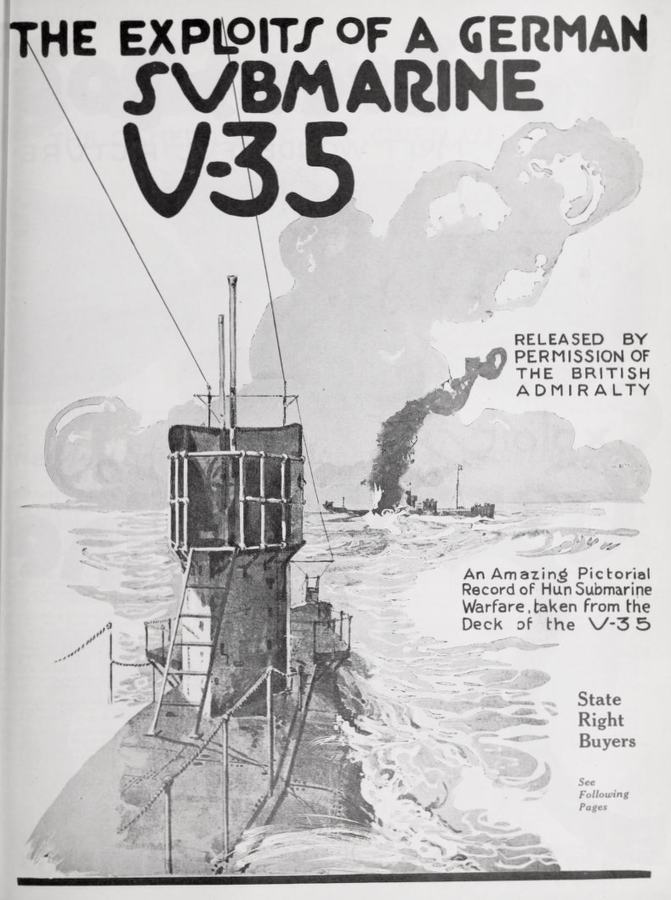
The cinematography of Brennert is surprisingly sophisticated for the period. While many films of 1917, like Little Jack, were still grappling with the transition from stage-bound compositions to dynamic storytelling, The Log of the U-35 utilizes the cramped, oscillating deck of a submarine to create an atmosphere of claustrophobic tension. The camera becomes an extension of the periscope. We are placed in the position of the hunter, looking out over the Mediterranean expanse for the silhouettes of our prey.
What strikes the modern viewer is the lack of artifice. In From Dusk to Dawn, we see the calculated lighting of a studio; here, we see the harsh, unforgiving glare of the sun reflecting off the whitecaps. The way Brennert captures the spray of the water against the lens adds a layer of verisimilitude that no scripted drama of the time could replicate. It’s a reminder that while films like Brændte vinger were exploring the fires of passion, Brennert was recording the literal fires of burning merchantmen.
The film’s central fascination lies in its repetitive, almost ritualistic depiction of destruction. We see a ship on the horizon—often a beautiful, multi-masted schooner that looks like a relic from a previous century. The U-35 approaches. There is a strange, archaic politeness to these early encounters. Unlike the 'unrestricted' warfare that would later define the conflict, we see the crews being allowed to board lifeboats. The vulnerability of these men, bobbing in the vast emptiness of the sea while their livelihood is systematically demolished, provides a human counterpoint to the mechanical dominance of the U-boat.
When the deck gun finally fires, the impact is visceral. We watch as the masts of these vessels groan and snap, disappearing into the churn. It is a sequence of events that feels more real than the domestic tragedies of It Happened to Adele. There is a specific shot of a cargo ship listing heavily to port, its bowels exposed to the camera, that stays with you long after the reel ends. It is the visual definition of 'attrition.'
Comparing The Log of the U-35 to the fictional output of 1917 reveals a fascinating dichotomy in what audiences were seeking. While films like The Frame-Up or Our Little Wife offered escapism through intricate plots and social comedy, the 'U-Boat film' offered the terrifying thrill of the 'real.' There is no 'other man' here as in The Other Man; the only antagonist is the ocean and the inescapable march of technology.
The stoicism of the crew, including the legendary Lothar von Arnauld de la Perière (though the film focuses on the vessel's collective identity), stands in stark contrast to the melodramatic flourishes of He Got His. These are men at work, and their work is the erasure of the enemy's logistical capacity. The film doesn't ask for your sympathy, nor does it explicitly demand your hatred; it simply presents the reality of the blockade with a cold, journalistic detachment.

The lack of sound in The Log of the U-35 actually enhances its power. The silence of the sinking ships creates an eerie, dreamlike quality. In a film like The Girl of the Sunny South, the silence is filled by the viewer's imagination of dialogue and music. Here, the silence is filled by the imagined roar of the waves and the scream of twisting metal. It is a much more demanding experience for the viewer.
We see the U-35 returning to port, decorated with flowers and greeted by cheering crowds. This moment of propaganda provides a sharp, dissonant end to the journey. After witnessing the lonely deaths of so many ships, the festive atmosphere on land feels hollow. It brings to mind the themes of internal struggle seen in The Combat, though the scale here is global rather than personal. The triumph is real, but the cost is etched into every frame of the preceding footage.
One cannot discuss this film without acknowledging its place in the evolution of the documentary. Brennert was a pioneer of the 'embedded' camera. While Ill Starred Babbie relied on the whims of fate to drive its plot, the U-35 relied on the precision of German engineering. The film documents the transition from the 19th-century naval tradition to the 20th-century industrial slaughter. The visual juxtaposition of the submarine—a sleek, dark, underwater predator—against the wooden masts of the schooners is a masterclass in symbolic imagery, whether intentional or not.
The film also captures the sheer boredom of war. Between the explosions, there are long stretches of the crew simply existing—cleaning the deck, staring at the horizon, or managing the complex machinery of the boat. These moments of quiet are just as telling as the sinkings. They remind us that the men on the U-35 were not the caricatures found in Nattliga toner, but individuals caught in the gears of a global machine.
In the pantheon of 1917 cinema, The Log of the U-35 stands alone. It lacks the moralizing tone of Moral Courage or the mystery-box plotting of The Page Mystery. Instead, it offers a terrifyingly honest look at the mechanics of war. It is a film that demands to be seen not just by historians, but by anyone interested in the power of the moving image to document—and perhaps inadvertently critique—the darker impulses of humanity.
The restoration of this footage is a miracle of archival work. Seeing the clarity of the Mediterranean water and the sharp lines of the U-boat's hull over a century later is a dizzying experience. It bridges the gap between the 'then' and the 'now' in a way that few other silent films can. While the fictional stories of the era have largely faded into the mists of nostalgia, the reality of the U-35 remains as sharp and dangerous as a torpedo.
Ultimately, Hans Brennert’s work is a testament to the endurance of the image. Long after the U-35 itself was scrapped or sunk, and long after the men who sailed her passed into history, their actions remain preserved on this flickering celluloid. It is a grim, beautiful, and utterly essential piece of cinematic history that reminds us that the ocean never forgets, and thanks to Brennert, neither do we.
"A haunting, non-fiction descent into the abyss of the Great War. Essential viewing for the brave."

IMDb 5.7
1936
Community
Log in to comment.