DbcultAccessing Vault...
Cult Review
Senior Film Conservator
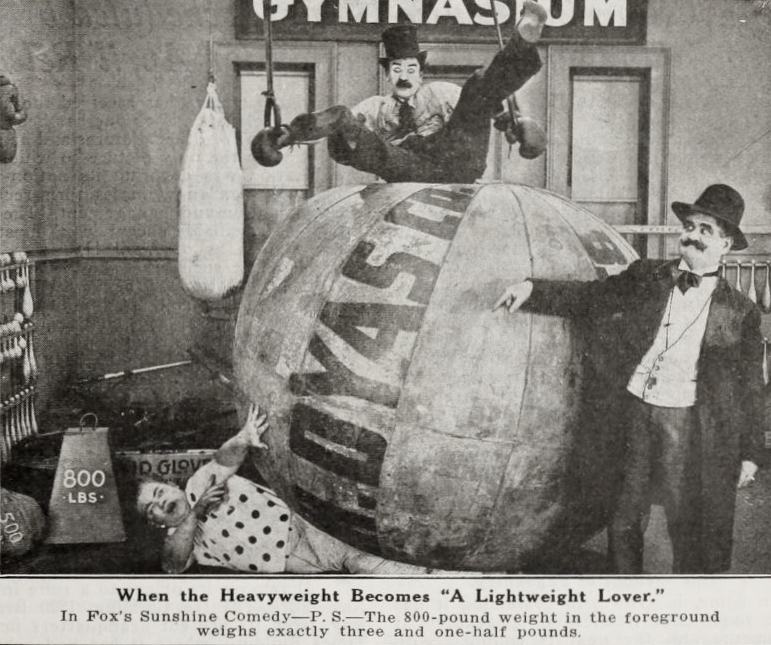
There is a moment, roughly twelve minutes in, when the camera pirouettes above the carnival’s central thoroughfare, capturing a swirl of parasols, straw boaters, and paper lanterns that flicker like dying suns. In that single crane shot, A Lightweight Lover announces its thesis: the world itself is a rigged amusement, and every heart is merely another token slipped into the slot. Jack Cooper’s unnamed drifter—equal parts Chaplin’s Tramp and Baudelaire’s dandy—slides through the crowd as if greased by his own indifference. His tuxedo, a rental paid for with pawned cufflinks, gleams under carbon-arc lamps, but the satin lapels are already fraying, a premonition stitched in frayed thread.
Director Hampton Del Ruth, better known for splintering screen comedy into shrapnel-like gags, here opts for a languid, almost tropical pacing. Scenes breathe, swell, exhale. The joke is rarely the punchline; it is the pause that follows, the silence in which the viewer realizes the gag is on us. When Cooper’s gigolo teaches a lonely widow to dance the Charleston on a pier, the camera retreats to a respectful long shot, letting the tinny orchestra and slap of waves perform the satire. The widow’s pearls fly off like startled pigeons; the man pockets them without breaking step. Cynicism, the film whispers, is just generosity with the lights turned low.
Marvel Rea, often relegated to background flapper roles, receives here a manifesto of a character. Her Sadie sells cigars and dreams two cents apiece, but her eyes price the crowd at far less. Watch the micro-movement when she spots Cooper’s conman: a half-lidded smirk, a tilt of the tray so the foil wrappers catch the light like counterfeit stars. She does not fall for him; she collides with him, a deliberate crash engineered to test which of them will dent. Their repartee, mostly conveyed through intertitles that snap like rubber bands, feels plucked from a lost Anita Loos novel:
He: “You smell like tomorrow morning.”
She: “Then quit breathing tonight.”
Rea’s performance is a masterclass in negative space acting; the real drama occurs in the seconds she allows herself to not react, letting the viewer pour suspicion into the vacuum.
Edgar Kennedy’s carnival strongman, billed only as The Impervious, stomps through the midway like a living exclamation point. His barbells are painted the same candy-stripe red as the popcorn stand, suggesting strength itself is just another confection. In a surreal detour, he enters a photographic booth and emerges with dozens of identical portraits—postcards of hypertrophied vanity—then distributes them as tips. The sequence plays like a Eisensteinian montage compressed into slapstick: the replication of the self as currency, the bicep as legal tender. When he finally confronts Cooper over Rea’s affections, the showdown takes place not on the lifting platform but on a hall-of-mirrors borrowed from another production, distorting every grunt into grotesque opera. Victory, meaningless, ricochets between reflections until both men appear Lilliputian.
Though shot in standard grayscale, the film’s palette is anything but neutral. Del Ruth achieves chromatic suggestion through tinting and strategic set dressing. Dawn sequences flicker with amber washes that make faces resemble cough-drop wrappers. Night scenes bathe in cyan, the color of dead televisions. A pivotal Ferris-wheel ride alternates between rose and sickly green gels, so the lovers appear to bloom and decay in the span of a single revolution. The effect is subliminal synesthesia: you swear you can taste rust when the screen goes vermilion.
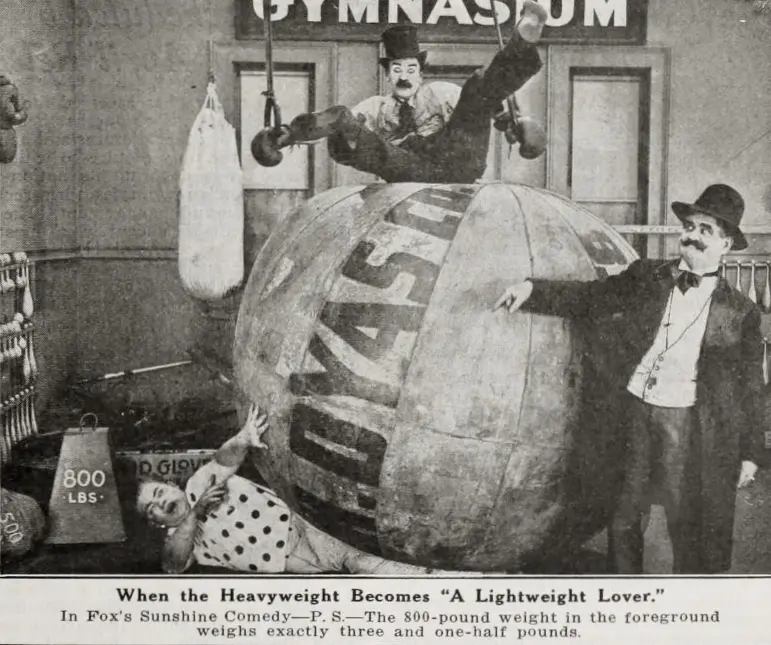
No synchronized score survives, yet the film vibrates with music. During a late-night chase through a funhouse tunnel of love, the only audible elements are projector rattles and the occasional cough from the orchestra pit. Still, you hear a muted trumpet solo, a brush-snare heartbeat, the wet pluck of a stand-up bass. The absence is so deliberate it becomes instrumentation, a reminder that flappers did not merely dance to jazz—they inhaled it, let it oxidize in the bloodstream until every gesture swung.
Where Polly Ann mythologizes the circus as redemptive family, A Lightweight Lover insists it is a centrifuge that flings loners into darker orbits. Lilli may flirt with voyeurism, but Del Ruth stages voyeurism as oxygen—everyone breathing everyone else’s exhalations of desire. The cynicism here feels closer to German kammerspiel than to Hollywood’s Jazz-Age confectionaries. Yet the comic timing is quintessentially American: a custard-pie nihilism that lands, then asks you to laugh at the stain.
Critics still debate whether a seventh reel was ever completed. Accounts describe a denouement set at dawn, where the lovers attempt to escape by hot-air balloon, only to find the balloon is a carnival prop—canvas and paper, incapable of buoyancy. They ascend nonetheless, borne by collective hallucination, until the first breeze shreds the craft into confetti above the sea. No footage has surfaced; some argue the scene is apocryphal, a cinephile’s urban legend. Personally, I believe the reel existed and was cannibalized for its silver nitrate, the same fate that befell countless silents during wartime shortages. The balloon becomes the film’s ghost, a rumor of escape that convinces us endings can still be lighter than air.
Weight is everywhere and nowhere. Characters speak of being “weighed down” yet chase featherweight dreams. The penny scale reappears like a leitmotif, its coin-slot a mouth that swallows aspirations and excretes tickets redeemable for tin toys. When Rea’s Sadie finally steps on it, barefoot and defiant, the scale registers “0”. She has achieved the immaterial state the men fumble toward. Cooper’s gigolo watches, horrified, realizing his own con game has been reverse-pickpocketed: she has stolen the very concept of mass from his universe.
Viewed today, the film anticipates dating-app courtship: rapid appraisals, curated personas, the illusion of inexhaustible options. The midway’s endless booths resemble smartphone tabs—each promising novelty yet delivering the same caramelized aftertaste. Del Ruth’s satire feels prophetic: we are all lightweight lovers now, trading hearts like limited-edition badges, ghosting when gravity threatens return.
Archivists at MoMA rescued a 35 mm nitrate dupe marred by cider-colored burns. Rather than diminish, the scorch marks augment: flares resemble cigarette holes in evening attire, revealing the void beneath the revelry. The damage is a co-author, a memento mori baked into celluloid. If you attend a screening—rare as blue moons—arrive early, sit front-row center, let the projector’s clatter become the calliope. You will emerge weightless, uncertain whether you have watched a film or been flicked by it, like ash from a carnival patron’s cigarillo, drifting above a boardwalk that already belongs to yesterday’s tide.
A Lightweight Lover is not merely a curio; it is a Rosetta Stone for understanding how American cinema learned to laugh at its own hollowness. Every found fragment should be digitized, crowd-funded, celebrated. In an age when pop culture recycles nostalgia as content, here is the genuine artifact—brittle, scorched, irreverent—reminding us that being lightweight is not the same as being without consequence. After all, a feather dropped from sufficient height can still blind an eye.

IMDb 4.3
1925
Community
Log in to comment.