DbcultAccessing Vault...
Cult Review
Senior Film Conservator
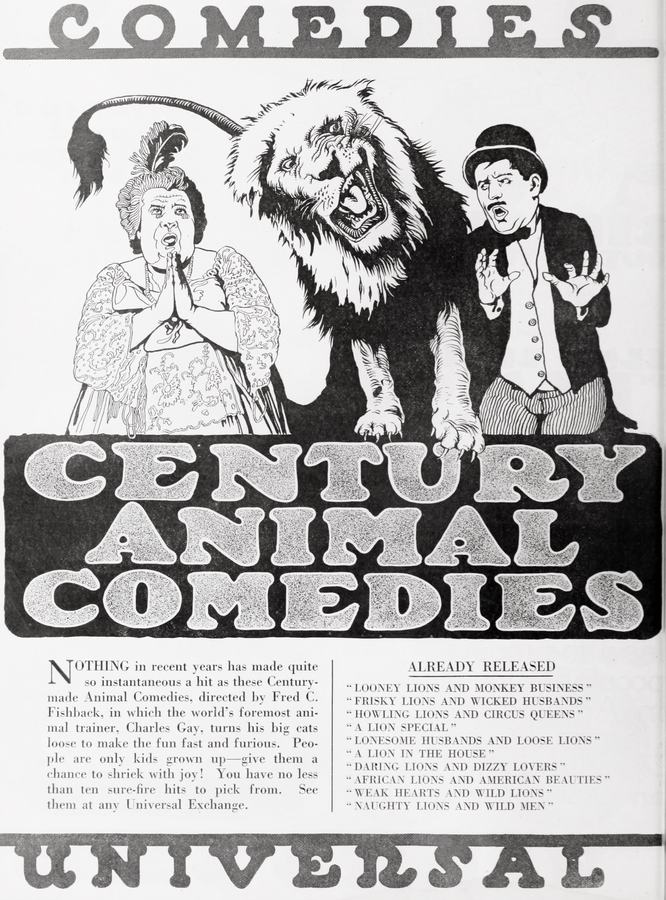
When the Century Lions first rolled A Lion in the House onto the silver screen, audiences were presented with a peculiar mélange of domestic farce, maritime intrigue, and a chase sequence that feels ripped from a carnival midway. The film, directed by the enigmatic Dot Farley, refuses to be pigeonholed; it flits between the mundane and the surreal, offering a tableau that rewards repeat viewings.
The narrative opens with Zip Monberg (played with languid charm by the titular Zip Monberg) ensconced in a bed so deep that only the softest feather can pry him from his reverie. This opening tableau is more than comic set‑up; it establishes a protagonist whose inertia is both literal and metaphorical, foreshadowing the sluggish moral compass that will later guide his dubious stock‑trading enterprise.
His wife, a relentless force of domestic authority, dominates the household with a vocal timbre that borders on operatic. She is the unseen engine that propels the plot forward, her incessant commands acting as a metronome for the ensuing chaos. Their son, Sonny, is the catalyst of pandemonium, a cherubic embodiment of mischief whose antics—ranging from pilfering pies to orchestrating a bathtub flood—serve as the film’s primary source of kinetic energy.
The film’s middle act shifts dramatically when Zip is revealed as a covert stock‑dealer operating from a subterranean bunker beneath the ocean. Here, the cinematography adopts a chiaroscuro palette, the darkness of the underwater vault contrasted with the bright, almost garish hues of the surrounding fishermen’s boats. This visual juxtaposition underscores the duality of Zip’s existence: a respectable family man on the surface, a shadowy profiteer below.
Enter the detective, a character whose methodical absurdity—using rye‑infused bait to lure fish—mirrors the film’s own self‑aware humor. He summons a pack of 1928 blood‑hounds, affectionately dubbed “lions,” to track the lawbreakers. The ensuing chase sequence, set against the backdrop of an amusement park, is a masterclass in kinetic editing. The camera darts from the dizzying spin of a carousel to the clattering rails of a scenic railway, each cut punctuated by the rhythmic clank of steel and the distant roar of the sea.
This set piece not only showcases the technical ingenuity of early 20th‑century filmmaking—practical effects, miniature models, and in‑camera stunts—but also serves as a thematic crucible where the film’s disparate strands converge. The chaotic energy of the carnival mirrors the domestic turmoil that has plagued the Monberg household from the very first scene.
Zip Monberg’s performance is a study in restrained physicality. His slouch, the languid sweep of his hand, and the exaggerated yawns convey a depth of character without a single spoken word. In contrast, his wife’s relentless gesticulation—sharp arm movements, rapid pacing—creates a visual counterpoint that feels almost operatic. Sonny, played by a precocious child actor, delivers a series of pratfalls and mischievous glances that are both endearing and exasperating.
The detective, though a secondary figure, exudes a gravitas that anchors the film’s more outlandish moments. His solemn stare, punctuated by the occasional raised eyebrow, provides a steadying presence amid the surrounding mayhem.
Although the original print is monochrome, modern restorations have introduced a selective color grading that highlights three signature hues: dark orange (#C2410C) for the domestic interiors, yellow (#EAB308) for the carnival lights, and sea blue (#0E7490) for the underwater sequences. This triadic scheme not only pays homage to the film’s original aesthetic but also guides the viewer’s emotional response—warmth for the home, excitement for the fair, and melancholy for the oceanic underworld.
The use of deep shadows in the underwater bunker creates an oppressive atmosphere that mirrors Zip’s moral ambiguity, while the bright yellows of the amusement rides inject a fleeting sense of joy that is quickly undercut by the looming threat of the detective’s hounds.
At its core, A Lion in the House is an exploration of the tension between the veneer of domestic stability and the hidden currents of illicit ambition. Zip’s double life is a metaphor for the post‑World War I anxieties that plagued many American families: the desire for prosperity clashing with the fear of moral decay.
The film also touches on the concept of generational inheritance. Sonny’s mischief can be read as a subconscious echo of his father’s own subversive tendencies, suggesting that the seeds of deceit are sown early and nurtured by the very structures meant to suppress them.
For viewers seeking a comparative lens, the chaotic chase bears a striking resemblance to the frantic pursuit in After Death, while the domestic disarray echoes the familial tensions in The Great Mistake. The film’s use of animal companions as investigative tools also calls to mind the canine detectives of Trilby, albeit with a more fantastical twist.
From a technical standpoint, the film’s editing is remarkably fluid for its era. The rapid cross‑cuts during the carnival chase predate many of the techniques later popularized by Soviet montage theorists. However, the film’s reliance on intertitles can feel burdensome; at times, the visual storytelling is eclipsed by expository text that interrupts the rhythm.
The set design, particularly the underwater bunker, showcases an impressive use of forced perspective and practical lighting. The fishermen’s dock scenes employ location shooting that grounds the narrative in a tangible reality, providing a stark contrast to the stylized carnival sequences.
Though A Lion in the House never achieved the commercial success of contemporaneous works like The Guardian, its daring blend of domestic comedy and noir‑ish intrigue paved the way for later genre hybrids. The film’s daring use of animal “lions” as law‑enforcement agents foreshadows the anthropomorphic detectives of later animated features.
Modern scholars cite the film as an early example of what would become the “capers” sub‑genre, where a seemingly innocuous protagonist becomes embroiled in a series of escalating misadventures. Its influence can be traced through the slapstick pursuits of Die Bademaus and the maritime underworld of Hell's Crater.
In sum, A Lion in the House is a richly textured artifact of silent cinema that rewards viewers with its layered narrative, inventive chase choreography, and striking visual palette. While its intertitles occasionally impede the flow, the film’s strengths—particularly its daring thematic juxtaposition of home life and covert crime—outweigh its minor flaws. For cinephiles interested in the evolution of genre hybridity and the early use of color grading, this film is an essential watch.
Rating: ★★★★☆ (4 out of 5 stars)
IMDb —
1930
Community
Log in to comment.