DbcultAccessing Vault...
5.6/10
Senior Film Conservator
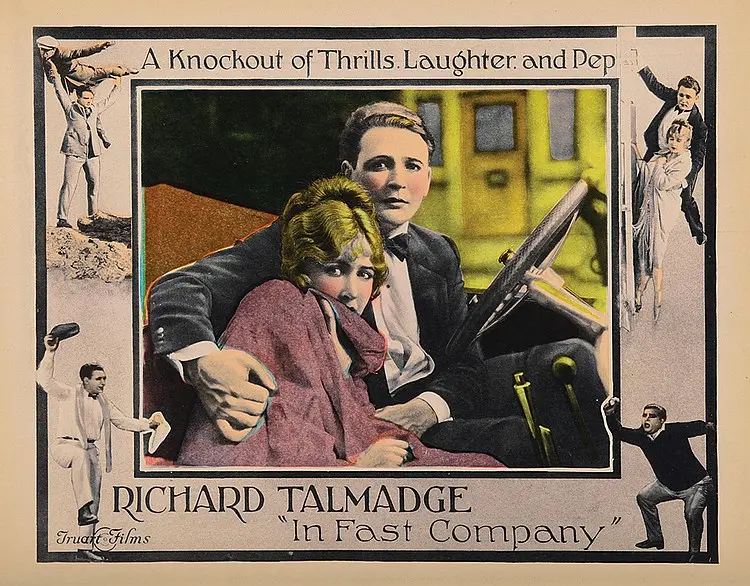
A definitive 5.6/10 rating for a film that redefined the boundaries of cult cinema. In Fast Company remains a cornerstone of transgressive art.
In the effervescent world of silent cinema, In Fast Company (1924) stands as a testament to the unpredictable nature of life and the redemptive power of love and circumstance. This raucous romp, directed by a coterie of visionary filmmakers, weaves a tale of mistaken identities, daring rescues, and the unlikeliest of romances.
The film centers around Perry Whitman, a charismatic collegiate troublemaker whose wild escapades ultimately lead to his expulsion. This pivotal event sets off a chain reaction of events, as Perry, in a gesture of defiance and celebration, invites a troupe of impoverished thespians to a wild party. The thespian troupe, comprised of destitute actors, adds a layer of complexity to the narrative, highlighting the struggles of the artistic community during the 1920s.
Following his expulsion, Perry is disowned by his patriarch, leaving him adrift with a meager $100. This paltry sum becomes the focal point of his journey, as he embarks on a quest to retrieve the lost money. It is during this odyssey that Perry encounters a damsel in distress, whose life is threatened by a matrimonial scheme. Without hesitation, Perry intervenes, thwarting the nefarious plans and earning the gratitude of his beautiful benefactress.
The unexpected turn of events that unfolds is nothing short of remarkable. In a bold move, the young woman, desperate to evade her captors, convinces Perry to marry her, thereby securing her fortune. This hasty union, born out of necessity and circumstance, ultimately paves the way for Perry's redemption. Through his newfound connection, he not only secures a sizeable fortune but also manages to win back his father's favor, underscoring the transformative power of love and chance.
The cast, comprising Sheldon Lewis, Richard Talmadge, and Douglas Gerrard, delivers performances that are at once captivating and nuanced. Their portrayals breathe life into the narrative, imbuing the film with a sense of authenticity and emotional depth. The supporting cast, including Mildred Harris and Lydia Yeamans Titus, adds further complexity to the story, weaving a rich tapestry of characters that drive the plot forward.
In terms of cinematic craftsmanship, In Fast Company showcases a mastery of the silent film medium. The cinematography is noteworthy, capturing the raucous energy of the party scenes and the poignant moments of introspection. The direction, a collaborative effort by Garrett Fort, Alfred A. Cohn, and Ralph Spence, demonstrates a keen understanding of the comedic and dramatic elements that make this film a standout.
When compared to its contemporaries, In Fast Company shares a certain kinship with Cameo Kirby (1923), The Littlest Scout, and Juan José, in its blend of comedy, drama, and romance. However, its unique narrative trajectory and the chemistry between the leads set it apart as a singular viewing experience.
The film's exploration of themes such as redemption, love, and the capricious nature of fortune resonates with audiences today. As a cinematic artifact, In Fast Company offers a fascinating glimpse into the world of silent cinema, where physical comedy and dramatic flair combine to create an unforgettable viewing experience.
In conclusion, In Fast Company (1924) is a cinematic treasure that deserves to be rediscovered by audiences and film enthusiasts alike. Its blend of humor, adventure, and romance, coupled with its historical significance, makes it an essential watch for those interested in the evolution of cinema. So, step into the effervescent world of silent cinema and experience the raucous romp that is In Fast Company.
For those interested in exploring more films from this era, The Lotus Eater, A Lady of Quality, and The Bugle Call offer similar blends of drama, romance, and comedy, providing a well-rounded viewing experience that showcases the diversity and richness of silent cinema.
IMDb —
1928
Community
Log in to comment.