DbcultAccessing Vault...
Cult Review
Senior Film Conservator
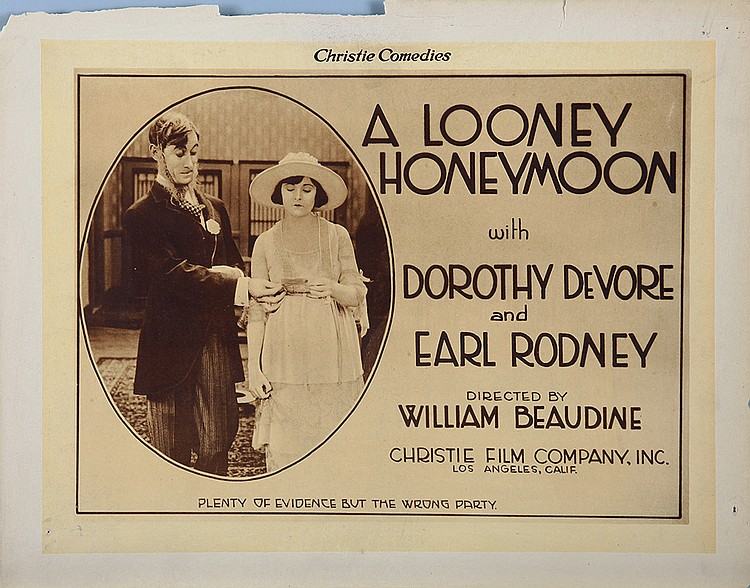
Marriage, that antique sacrament sold to the masses as destiny’s soft landing, receives a custard-pie baptism in A Looney Honeymoon. The film—shot in 1926, premiered abroad in 1927, and lately resurrected by an Italian archive—unspools like a fever dream stitched from lace veils and ticker-tape. Its very title is a prank: the honeymoon is less a romantic getaway than a centrifuge that flings every social pretense outward until only the bare, ridiculous skeleton of desire remains.
Director László Kovács—no, not the cinematographer, but a forgotten Budapest slapstick savant—builds the narrative inside a floating palace of Art-Deco excess. Observe the first tableau: a wedding march scored by a ship’s brass band whose tuba belches soap bubbles. The bride, Irma (played with porcelain fragility by Claire Windsor), clutches a bouquet of electric light-bulbs instead of roses. Each bulb flickers on the beat, a visual pun announcing that matrimony is an illuminated farce waiting to blow a fuse.
Silent comedy often ages into fossilized mime; A Looney Honeymoon refuses such embalming. Kovács choreographs chaos with Eisensteinian montage but pumps it full of helium. Cross-cut irises—those circular maskings reminiscent of early Méliès—squeeze faces into portholes, then balloon outward until the ocean itself seems to laugh. In one breathtaking gag, the groom’s monocle drops into a soup tureen; the camera plunges after it, underwater-style, revealing a submerged world of pearl onions floating like miniature moons. The monocle becomes a crystal ball in which the future of this marriage is foretold: cloudy, soupy, and likely to induce indigestion.
Compare this aquatic whimsy to the claustrophobic dread of The Lurking Peril, where every shadow threatens murder. Here, peril is social, not mortal: the terror of being unmasked as a fraud before the ship’s aristocratic fauna. The ocean liner is a floating Versailles; its class strata are enforced by cufflinks and cutlery placement. Yet Kovács delights in letting steerage crash the ballroom, quite literally when a coal-dusted stoker tango-leaps through a skylight and lands in a pyramid of meringue.
If you hunt for proto-feminist signals, they flicker like faulty Morse lamps. Irma begins as ingénue, ends as saboteur. Mid-film, she swaps her wedding gown for a steward’s trousers, cuffing her husband with his own handcuffs (conjured from a magician’s valise). The image is electric: a woman in drag, wielding phallic authority, while the man squirms in lace. Yet the film refuses to crown her empress; power is a hot potato, scalding whoever grips it too long. By finale, both spouses dangle from the ship’s funnel, each holding the other’s belt buckle, a symbiotic stalemate suspended above the Atlantic abyss.
This seesaw anticipates the gender trench warfare of The Battle of the Sexes (1928), though without the latter’s sermonizing. Kovács is no pamphleteer; he is a pyrotechnician, lighting fuses and skipping away. The result feels closer to anarchic jazz than to suffragist rhetoric.
The print screened at Il Cinema Ritrovato arrived sans intertitles, a blessing disguised as archival lacuna. Without textual crutches, the film becomes pure visual music: crescendos of pratfalls, staccato of eyebrow lifts, largo of oceanic silence. A live ensemble composed a retro-score on the spot—ukulele, toy piano, typewriter—turning the venue into a cabaret where the audience supplied its own subtitles in laughter, gasps, and the occasional wolf-whistle.
This communal combustion feels revolutionary in our era of algorithmic isolation. Try replicating it while streaming Apartment 29 on your tablet; the pixels will not wink back.
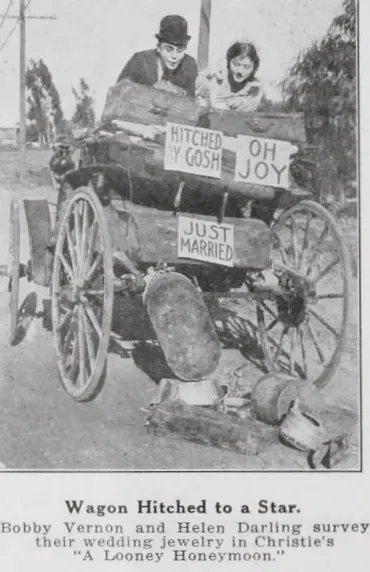
Beneath the froth lies an uncomfortable cargo. The stowaway chimp—named “Mrs. Roosevelt” in the script—functions as comic relief, yet her presence evokes the human zoos of Europe’s colonial exhibitions. When Irma shares banana mush with the ape, mirroring her own gilded cage of matrimony, the metaphor sours. Kovács may not have intended critique; nevertheless, the image festers. One recalls Umanità, where primate and proletariat lock eyes across species bars, forcing viewers to confront the animal within civilization’s spectacle.
The camera work, attributed to Karl Struss acolyte Heinrich Blau, sloshes like bootleg gin. Double exposures superimpose roulette wheels over honeymoon sheets; the spinning numbers foretell conjugal debt. A drunken tilt-shot—achieved by strapping the camera to a seesaw—makes the ballroom’s chandeliers drip like melting Gruyère. These visual hangovers prefigure the delirious excesses of The Devil’s Double, though here the demon is domesticity itself.
Claire Windsor’s Irma oscillates between doe-eyed vulnerability and predatory cunning without the usual Keystone hysterics. Watch her pupils when the groom confesses a pre-marital fling: the iris contracts, not in sorrow but calculation, like a gambler counting cards. Opposite her, Conrad Nagel essays the milquetoast bridegroom with such sweaty conviction you can almost smell his fear through the celluloid. His high tenor of panic—conveyed via eyebrow semaphore—provides counter-rhythm to Windsor’s fluid guile.
Supporting eccentrics pirouette in and out: a countess addicted to auctioning her own jewels, a deaf telegraph operator who mistakes wedding vows for stock quotes. Each embodies what Eisenstein called “typage,” yet Kovács lets them sprawl beyond caricature into grotesque humanity. The effect is Brechtian: you laugh, then feel the laugh sputter into ash.
Plot? A Möbius strip masquerading as a farce. The honeymoon cruise is both linear journey and ouroboros: the final reel loops back to the wedding photo seen in the opening shot, but now the frame is cracked, the glass spider-webbed by gunshot. Time folds, trapping the couple in eternal recurrence, a comic cousin to the fatalistic spiral of Birth.
Scholars trace the DNA of A Looney Honeymoon through later screwball staples: the train-set shenanigans of Twentieth Century, gender masquerades of Sylvia Scarlett, the maritime chaos of Monkey Business. Yet Kovács’ film is edgier, its cynicism unsoftened by Production Code moralities. Imagine if Saving the Family Name guzzled absinthe while juggling hand grenades.
The recent 4-K restoration mines the original camera negative from Budapest’s Magyar Filmlabor, salvaging cyan tones that flicker like absinthe on water. Tints alternate between amaretto amber for interior soirées and nocturnal sea-green that borders on mercury poison. The grain structure—once scrubbed into plastic oblivion—now breathes, a reminder that flesh, like film, is particulate.
If your idea of nuptial bliss involves Instagram-filtered sunsets and matching hashtags, steer clear. But for viewers who crave their comedy spiked with hydrochloric insight—who relish witnessing the institution of marriage stripped to its polka-dotted underwear—A Looney Honeymoon is mandatory. It will not soothe; it will detonate. And as the end title card (hand-painted) jeers: “They lived happily ever after… until the next port.”
In the cyclonic canon of silent mischief, this film earns a berth beside The Spitfire and The Governor—works that jeer at human pretense while pirouetting on the edge of the abyss. Bon voyage, and mind the custard pie lurking in your lifeboat.
IMDb 4.6
1934
Community
Log in to comment.