DbcultAccessing Vault...
Cult Review
Senior Film Conservator
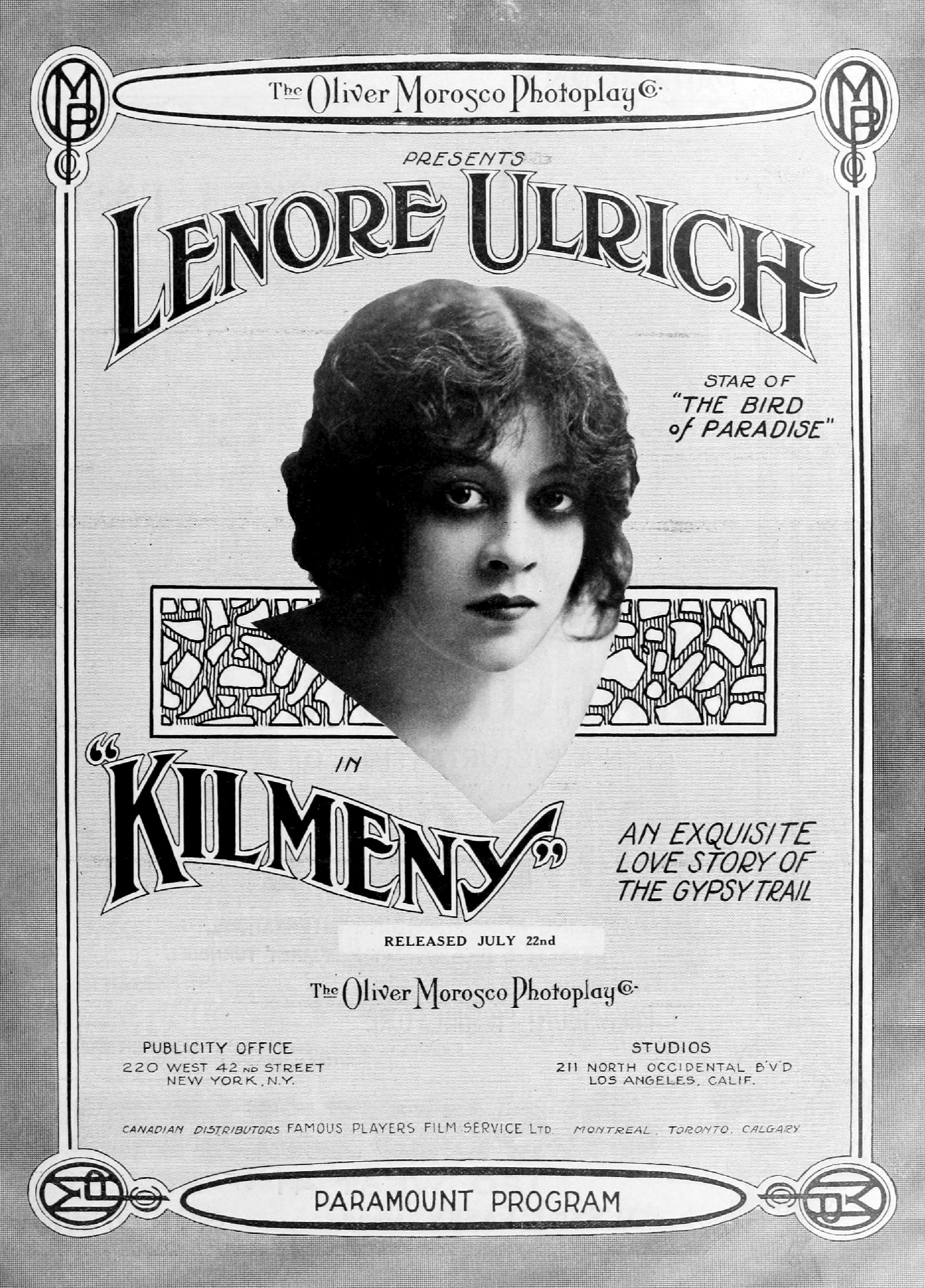
Stepping back into the cinematic annals of 1915, one encounters Kilmeny, a film that, despite its silent era origins, speaks volumes through its powerful narrative and evocative performances. This isn't just a story; it's a sociological commentary, a deeply personal odyssey, and a masterclass in the visual storytelling that defined early cinema. It plunges us into a world where identity is not merely inherited but forged, broken, and reforged on the anvil of circumstance and societal expectation. From the very first frames, we are captivated by a tale that explores the chasm between two disparate worlds: the untamed freedom of the Romani life and the gilded cage of aristocratic English society.
The film opens with a seemingly innocuous childhood encounter that sets the entire tragic-romantic machinery in motion. Little Doris Calhoun, a child of immense privilege and comfort, finds an unlikely playmate in Pierre, a crippled gypsy boy. This innocent bond, a testament to childhood's beautiful disregard for social strata, blossoms into a fateful decision. Doris, perhaps drawn by the allure of the unknown, the vibrant energy of the nomadic life, or simply the magnetic pull of her new friend, drifts away with Pierre and his Romani band. This isn't presented as an abduction in the traditional sense, but rather a gentle, almost whimsical, absorption into a different culture, a quiet vanishing act that leaves her wealthy English family bereft and bewildered.
For twelve years, Doris is no more. In her place, a new persona emerges: Kilmeny. She becomes a cherished member of the Romani community, her spirit undoubtedly shaped by the open roads, the communal fires, and the ancient traditions of her adopted people. This transformation is central to the film's thematic power. It asks: does environment define us more than blood? Does a lifetime of experience outweigh the accident of birth? Lenore Ulric, in the titular role, must convey this duality not through dialogue, but through posture, gaze, and subtle gestures – a monumental task she reportedly executed with compelling grace, embodying both the wild independence of Kilmeny and the innate refinement of Doris.
The idyllic, if unconventional, existence of Kilmeny among the gypsies is shattered by the looming threat of an arranged marriage to Barouche, a character painted as brutal and unyielding. This pivotal moment forces Kilmeny to confront the harsh realities of her adopted culture. The freedom she once cherished now threatens to imprison her in a bond she cannot accept. Her flight from the camp is not merely an escape from a man; it is a desperate bid to reclaim agency, a visceral rejection of a fate imposed upon her. This act of defiance underscores her inherent strength and a burgeoning desire for self-determination, qualities that resonate deeply even with modern audiences. It’s a moment of profound vulnerability and fierce independence, setting the stage for her return to a world she has long forgotten.
Her escape, however, is not a return to absolute freedom, but a plunge into the precariousness of solitude. Wandering alone in the vast, indifferent woods, she is a creature caught between two worlds, belonging fully to neither. This liminal state is where Lord Leigh discovers her. His benevolent intervention is the catalyst for the next phase of Kilmeny's tumultuous journey. One can almost picture the cinematic tableau: the ragged, wild-haired girl, eyes wide with a mixture of fear and untamed curiosity, contrasting sharply with the composed, well-dressed nobleman. It's a classic trope, yet in Kilmeny, it feels imbued with a fresh, almost mythic quality.
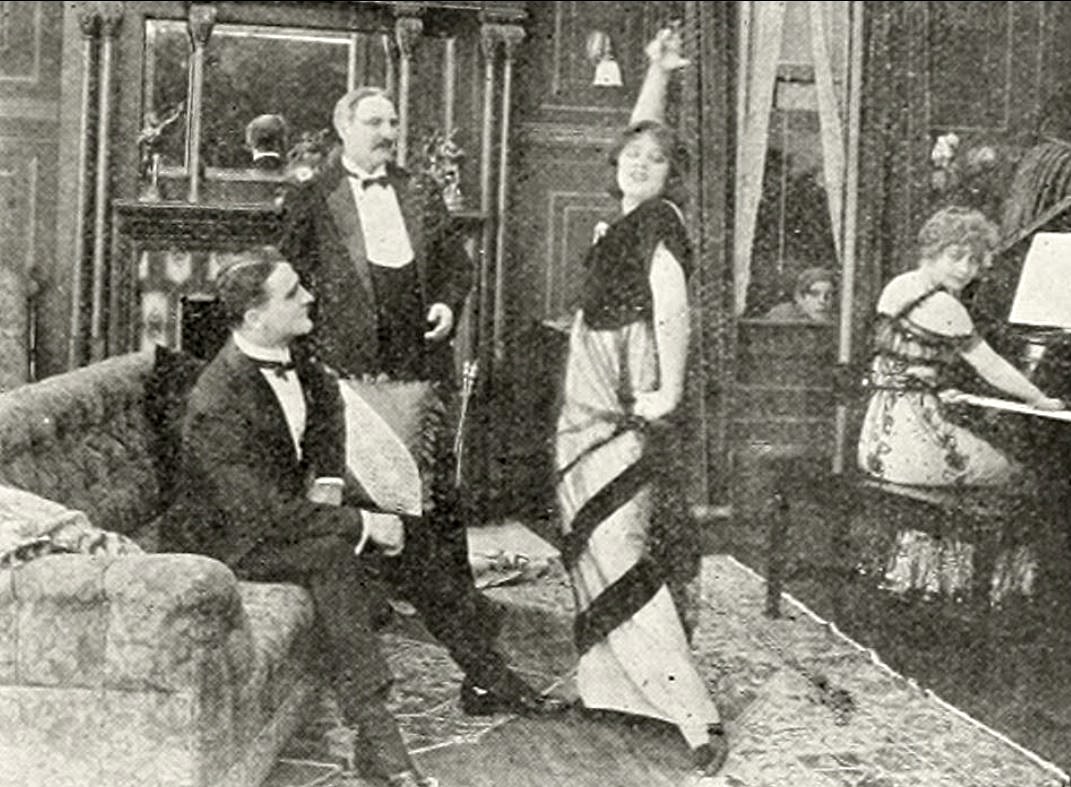
Lord Leigh, driven by a compassionate spirit, persuades his rather reluctant wife, Lady Leigh, to offer shelter to this "ragged little wild thing." The manor, a symbol of rigid English aristocracy, becomes Kilmeny's new, bewildering home. The film excels in its portrayal of Kilmeny's initial, almost childlike, fascination with the marvels of this alien environment. Electric light switches, once a mundane convenience, become sources of naive delight. Bathtubs, with their "fickle showers," are a playful mystery. The polished hardwood floors, covered by luxurious rugs, transform into a stage for her uninhibited slides, a silent echo of her untamed spirit finding joy in unexpected places. These moments, depicted without dialogue, must have relied heavily on Ulric's expressive face and body language, conveying a sense of wonder untainted by cynicism.
However, the novelty soon wears off, giving way to the constrictions of aristocratic life. Long dresses, symbols of feminine propriety, trip her accustomed stride. The butler, a figure of silent authority, becomes a "thundercloud," representing the oppressive formality of the household. The closed-in room, a stark contrast to the open skies she knew, becomes a source of claustrophobia, forcing her to pull her little white bed to the window, yearning for the moonlight and the stars. This struggle between natural impulse and societal expectation forms the emotional core of this section, reminding one of similar themes explored in films like The Last Egyptian, where characters grapple with their place in unfamiliar, often restrictive, social landscapes.
Adding to Kilmeny's growing discomfort is the insidious creep of jealousy. Lady Leigh, initially reluctant, now becomes overtly possessive of her husband's attention, viewing Kilmeny as a rival. This dynamic is further complicated by the arrival of Bob Meredith, Lady Leigh’s dashing brother. Kilmeny, with her innocent heart, falls deeply in love with him. But this love, too, is fraught with peril, as Meredith, perhaps influenced by his sister or societal norms, also succumbs to a form of jealousy or possessiveness, unable to fully embrace Kilmeny's wild spirit or her ambiguous past.
This emotional entanglement creates an unbearable burden for Kilmeny. She is a sensitive soul, incapable of inflicting pain on "birds, beasts or any living thing." This innate compassion extends to her benefactors. The thought of causing distress to Lord and Lady Leigh, despite their complexities, is intolerable. The film beautifully articulates this internal conflict: her desire for love and acceptance clashing with her profound empathy. It’s a tragic bind, forcing her into a corner where self-sacrifice appears to be the only honorable escape. Her decision to turn her back on the manor, on Bob Meredith, and on the promise of a settled life, is not an act of weakness but one of immense, albeit misguided, strength. It's a return to the known, however brutal, over the unknown complexities of a love that threatens to tear apart a family.
In a heart-wrenchwrenching act of stoicism, Kilmeny returns to the angry gypsies and, more dreadfully, to Barouche. This return signifies a full circle, a tragic embrace of a fate she had once fled. The tension must have been palpable on screen as the gypsy wedding ceremony, an ancient ritual steeped in tradition, is about to commence. This sequence would have been a masterclass in silent film suspense, with close-ups on Kilmeny's resigned face, the grim determination of Barouche, and the somber faces of the gypsy community, perhaps even a glimpse of Pierre's quiet despair.
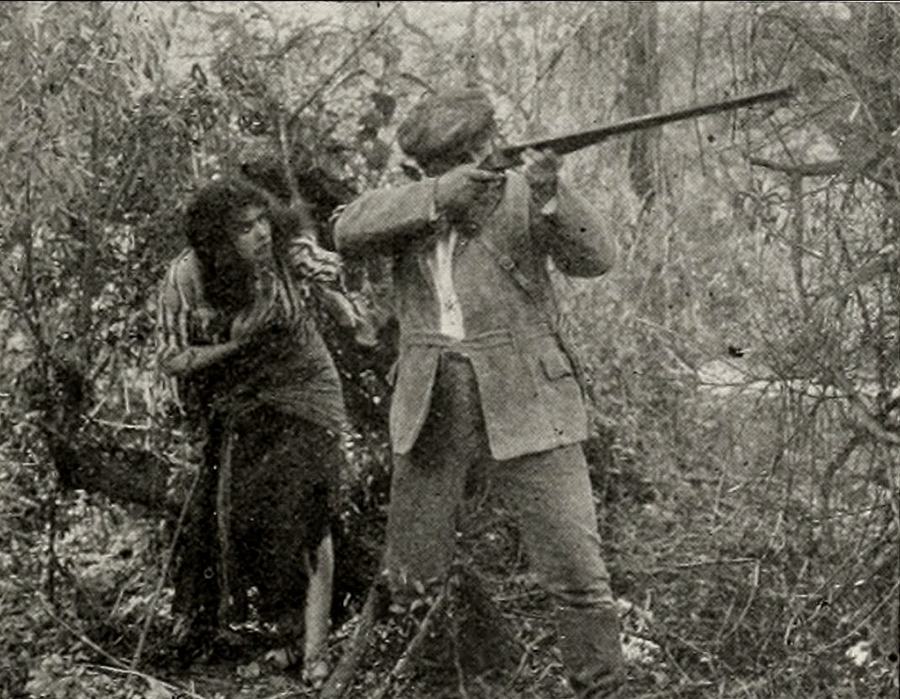
But just as all hope seems lost, a dramatic intervention shatters the impending tragedy. The father of the long-lost Doris Calhoun appears, a figure from a past long buried, and calls a halt to the proceedings. This is the moment of revelation, the dramatic climax that silent films often excelled at, relying on powerful visual cues and the emotional weight of recognition. He doesn’t just appear; he produces the poor, crippled Pierre, the faithful companion who initiated Doris's journey and now, with unwavering loyalty, brings it to its rightful conclusion. Pierre, braving the wrath of his own clan and the brutal Barouche, carried word to Kilmeny's father, demonstrating a profound, silent heroism that elevates him beyond a mere supporting character. His loyalty is the thread that ultimately unravels the knot of fate, proving Kilmeny's true identity and reclaiming her heritage.
Kilmeny, at its core, is a profound meditation on identity. Is one defined by bloodline or by upbringing? By societal expectations or by an innate spirit? Kilmeny's journey forces us to confront these questions without easy answers. Her struggle to reconcile her wild, free gypsy soul with the restrictive elegance of the manor is deeply compelling. The film also delves into themes of class conflict, presenting the Romani life not just as exotic, but as a contrasting social structure with its own rules and brutalities, juxtaposed against the subtle oppressions and jealousies of the aristocracy.
The notion of freedom versus confinement is another powerful undercurrent. The open road offers physical liberty but also the potential for harshness and limited choice (like the marriage to Barouche). The manor offers physical comfort and security but at the cost of emotional and spiritual constriction. Kilmeny's inability to sleep in a closed room, her need to pull her bed to the window, is a potent visual metaphor for her yearning for boundless space. This internal conflict is what makes her character so relatable and enduring.
Furthermore, the film subtly explores the nature of sacrifice. Kilmeny's return to the gypsies is a tragic act of self-abnegation, driven by a desire to protect her benefactors from pain. This selfless act, born of a sensitive heart, is ultimately what brings about her salvation, albeit through the intervention of others. It suggests that even in moments of profound despair, acts of kindness and loyalty (like Pierre's) can ripple outwards, leading to unforeseen redemption.
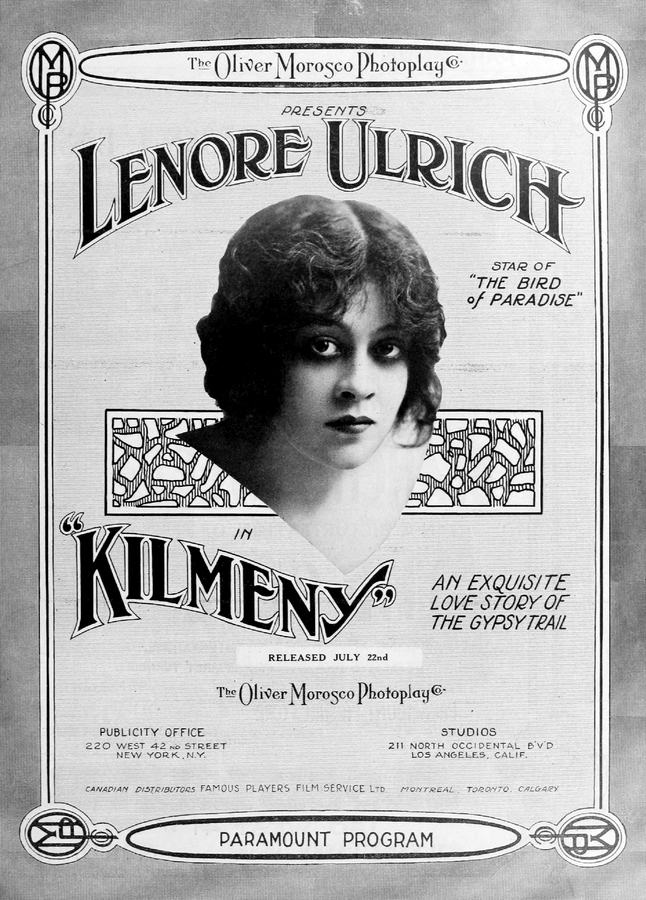
The performances, particularly that of Lenore Ulric, must have been key to the film's success. In an era before synchronized sound, actors were masters of physical expression, conveying complex emotions through facial nuances, body language, and dramatic gestures. Ulric's portrayal of Kilmeny's innocence, her burgeoning love, her internal anguish, and her ultimate resignation would have been the emotional anchor of the film. Herbert Standing as Lord Leigh, Marshall Mackaye as Barouche, and Gordon Griffith as Pierre would have each contributed to the rich tapestry of characters, each fulfilling their archetypal roles with the dramatic flair characteristic of the period.
Comparing Kilmeny to other films of its time helps contextualize its brilliance. While not as overtly epic as a Spartacus (though that came much later, the theme of personal freedom against oppressive forces is present), or as purely comedic as Tillie's Tomato Surprise, it shares a dramatic intensity with films like Vendetta, where raw human emotions drive the narrative to its inevitable, often dramatic, conclusion. It's a film that, like The Gentleman from Indiana, champions the individual's journey through challenging social landscapes, highlighting resilience and moral fortitude.
The artistry of silent film, often underestimated today, was in its ability to tell a story purely through visual means, aided by intertitles that provided essential dialogue or narrative exposition. Kilmeny, written by Louise B. Stanwood, demonstrates a robust understanding of this craft. The progression of the plot, the development of characters, and the emotional arcs are all conveyed through carefully composed shots, expressive acting, and the judicious use of titles. The contrast between the vibrant, uninhibited scenes of gypsy life and the staid, formal settings of the manor would have been visually striking, emphasizing the cultural clash at the heart of the story.
The film’s ability to build suspense, particularly leading up to the gypsy wedding and the father's intervention, speaks to the sophisticated narrative techniques already in play during this nascent period of cinema. The character of Pierre, though physically limited, becomes a powerful symbol of loyalty and quiet strength, his actions speaking louder than any words could. His courage in defying his own community for the sake of his childhood friend is a testament to the enduring power of human connection, a theme that transcends any specific era or cinematic style. It's a reminder that even the seemingly weakest among us can possess the greatest resolve.
In conclusion, Kilmeny is far more than a historical artifact; it is a timeless narrative about belonging, sacrifice, and the search for one's true self. It challenges us to consider what truly defines us – our lineage, our environment, or the choices we make when confronted with impossible dilemmas. The film, through its compelling plot and the evocative performances of its cast, particularly Lenore Ulric, offers a window into the dramatic storytelling capabilities of the silent era. It reminds us that profound human experiences, universal emotions, and complex moral quandaries have always been at the heart of cinematic art, long before the advent of spoken dialogue.
Its narrative, rich with emotional depth and societal critique, ensures its place as a significant work that continues to resonate. For cinephiles and historians alike, Kilmeny offers a compelling glimpse into a period of film history often overlooked, demonstrating that the foundations of powerful, character-driven drama were laid with immense skill and artistry. It's a film that deserves to be rediscovered, studied, and appreciated for its enduring themes and its masterful silent execution. The journey of Doris Calhoun, the wild spirit Kilmeny, is a testament to the human spirit's resilience and its perpetual quest for authenticity, a quest that remains as relevant today as it was over a century ago.

IMDb —
1915
Community
Log in to comment.