DbcultAccessing Vault...
5.4/10
Senior Film Conservator
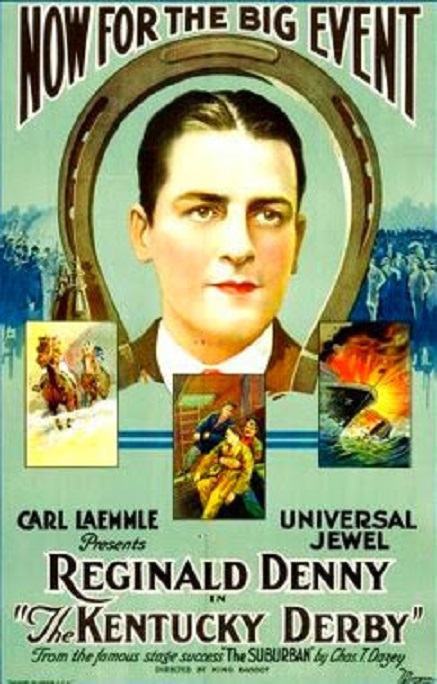
A definitive 5.4/10 rating for a film that redefined the boundaries of cult cinema. The Kentucky Derby remains a cornerstone of transgressive art.
Somewhere between the mint-julep haze and the thunder of hooves, The Kentucky Derby unspools like a bourbon-soaked fever dream—equal parts Southern Gothic and barn-storming cliffhanger. One can almost smell the tang of manure mingling with bootleg gin while the camera glides past white rail fences toward a mansion portico where the Old South gasps its last antebellum breath. The film’s villain, never named beyond a curl-lipped sneer, embodies post-war aristocratic rot: he wears seersucker like armor, brandishes a riding crop like a rapier, and speaks in the hush of inherited money. His scheme? Erase the legitimate heir, saddle the heir’s thoroughbred with a compromised jockey, and waltz to victory beneath twin spires that have seen far darker blood-oaths than polite society will admit.
Director Charles T. Dazey—also the scenarist—treats the racetrack as a crucible where generational entitlement melts into primal desperation. Note how the opening montage crosscuts between a foal’s first trembling steps and the heir’s boarding-school graduation: both colt and child are groomed for a finish line they never chose. That parallelism curdles once the kidnappers’ motorboat churns the Ohio River into froth; the foal’s future now hinges on a boy shackled in a tramp freighter’s hold, a rust-streaked labyrinth lit by a single swinging bulb that pendulums like a metronome counting down to doom.
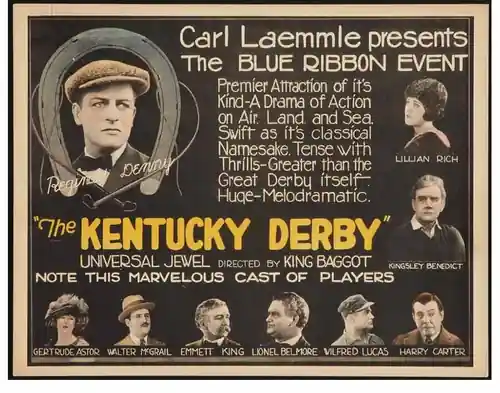
What elevates the picture above mere melodrama is its willingness to marinate in moral ambiguity. The jockey—played by Reginald Denny with a cockney snarl barely masked by Kentucky politesse—owes gambling markers to the same syndicate that financed the heir’s abduction. His redemption arc doesn’t arrive via prayer or petticoats but through a bruising recognition that every time he shortens the reins he’s tightening a noose around his own scrawny future. Watch the scene where he weighs a coin on his thumbnail under a bare bulb: the metallic flicker is shot in extreme close-up, transforming the coin into a solar eclipse—an omen that the universe of betting windows and totalizators is governed by celestial indifference.
Meanwhile, the heir—Betsy Ann Hisle in a gender-bending turn—spends half the runtime disguised as a powder monkey swabbing decks, a nod to Wooden Shoes and its cross-dressing chimney sweep. Yet Dazey refuses to treat the masquerade as comic relief; instead, it becomes a crash course in class vertigo. The camera lingers on the heir’s blistered palms, contrasting them with earlier close-ups of white gloves sliding over a ballroom banister. The montage is silent, but the message roars: privilege is only ever one mutiny away from the lash.
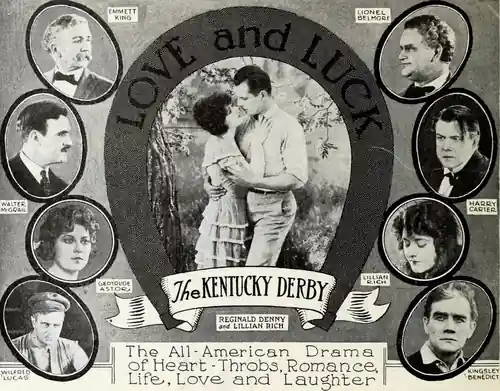
Cinematographer George C. Hull lenses the Derby itself like a battle painting. Grandstands become ramparts, binoculars glint like artillery scopes, and the track’s red clay resembles blood-soaked Flanders fields. He intercuts newsreel footage—actual 1921 Derby shots—with staged close-ups so deftly that historians still debate where documentary ends and fiction gallops in. The thunderous contrapuntal rhythm—hooves, crowd roar, distant airplane propellers—culminates when the villain’s biplane sputters overhead trailing a smoke message that blackens the sky. It’s a moment both grandiose and absurd, foreshadowing the spectacle-over-ethics logic that would later dominate sports cinema from The Regenerates to modern IMAX superfandom.
Performances oscillate between florid and feral, yet that tonal whiplash feels intentional. Lillian Rich as the society belle flutters her fan like a semaphore flag, telegraphing panic beneath debutante smiles. Contrast her with Harry Carter’s pit-boss antagonist, who never raises his voice above a library hush; the quieter he grows, the more the soundtrack seems to drop out, leaving only the flutter of a single moth against a kerosene lamp. That moth reappears in the climactic stateroom showdown—its wings singed, flopping against a porthole glass—as if the natural world itself were protesting human perfidy.
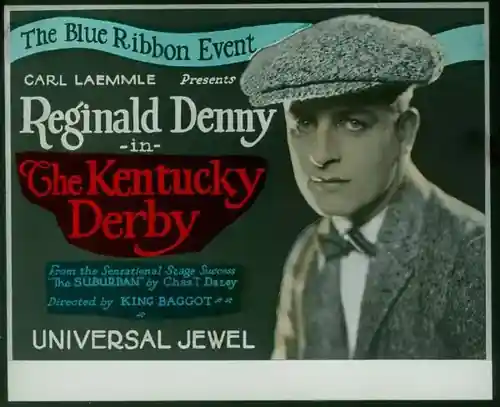
The screenplay’s moral calculus is deliciously lopsided. Virtue is not rewarded so much as merely allowed to limp across the finish line. After the heir escapes shipwreck—clutching a floating derby straw hat as makeshift buoy—he crawls ashore only to find the race already in progress. No deus-ex-stewards intervenes; instead, the jockey must choose between riding the favorite (and collecting a syndicate bribe) or honoring his original contract. The decision unfolds in a 47-second close-up on Denny’s sweat-lathered face, every pore a moon crater. He finally spurs the horse outward—wide, perilously wide—risking disqualification in order to overhaul the villain’s nag in the final furlong. The gesture is less heroism than a gambler’s shrug: if fate won’t tip the scales, maybe momentum will.
Some viewers may fault the picture for its narrative sprawl: a kidnapping, a shipwreck, a gambling den, an airplane cliffhanger, and a horse race all within 73 minutes. Yet that breathlessness mirrors the era’s own vertigo—an America jittery from Prohibition, labor strikes, and the first giddy flush of aviation. The film’s structure resembles a pulp magazine’s back-to-back cliffhangers, a storytelling mode echoed later in Number, Please? and its serialized telephone sabotage. Dazey’s solution is to tether every set-piece to a single emotional through-line: the terror of being unhorsed—from society, from family, from identity itself.
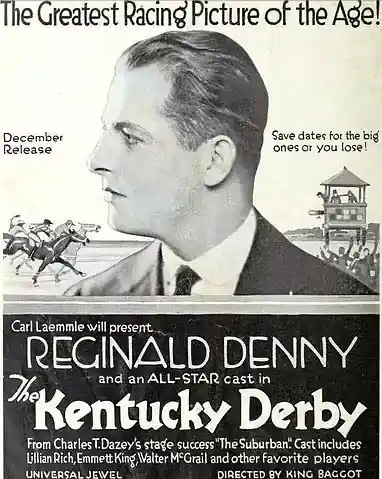
The restoration currently streaming on select niche platforms reveals nuances lost to decades of dupes: the lavender tint of night scenes, the amber glow of stable lanterns, the aquamarine wash of the storm sequence. These chromatic choices aren’t mere nostalgia baubles; they chart psychological weather. Lavender—associated with mourning in Victorian floriography—bathes the heir’s kidnapping, while the aquamarine tempest mirrors the jockey’s moral seasickness. One could teach an entire film-semiotics seminar on how color supplants dialogue, a visual grammar that anticipates the symbolic palettes of König Macombe.
Comparative context enriches appreciation. Where Princess Romanoff wallows in Slavic fatalism and The Lure of a Woman moralizes about temptresses, The Kentucky Derby opts for kinetic fatalism: the world is a steeplechase lined with pitfalls, and virtue merely the horse with the fewest handicaps. Conversely, Shame (1921) punishes its fallen woman with death, whereas Dazey allows his compromised jockey to survive, scarred but unbroken—a nuance that nudges the film toward modernity.
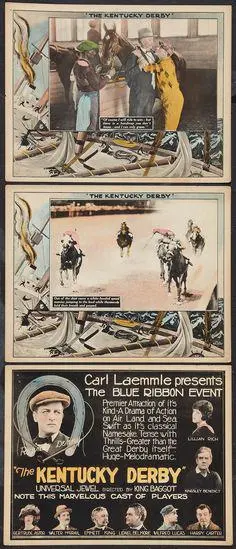
Yet for all its forward momentum, the movie cannot escape the racial myopia of its epoch. Black stablehands appear fleetingly, grinning in straw boaters, their dialogue relegated to title cards of eye-rolling dialect. The film’s most egregious omission is the erasure of actual Black jockeys—by 1922 already purged from major circuits despite having dominated the Derby’s first two decades. One can only imagine how a reckoning with that history might have deepened the picture’s meditation on who gets to ride—and who gets ridden over—in the American experiment.
Ultimately, the film endures as a feverish artifact: a cracked urn brimming with bootleg adrenaline. Its flaws—melodramatic creaks, racial blinders, helter-skelter plotting—are inseparable from its visceral jolt. Like a gambler who can’t resist stacking parlays atop parlays, Dazey keeps pushing the stakes until narrative coherence wobbles. But when that final hoofbeat echoes and the dust plumes rise like copper fireworks, you forgive the excesses. Because for one incandescent reel, cinema itself becomes a thoroughbred—straining, surging, and hurling its riders toward a finish line that keeps receding into myth.
Recommendation: bet your evening on it, but hedge with a historical palate cleanser afterward. The Kentucky Derby of 1922 doesn’t merely depict the sport of kings; it stages a coronation of chaos, a derby of destinies where every post position is a trapdoor and every garland of roses smells faintly of gunpowder.
IMDb 4.9
1920
Community
Log in to comment.