DbcultAccessing Vault...
5.4/10
Senior Film Conservator
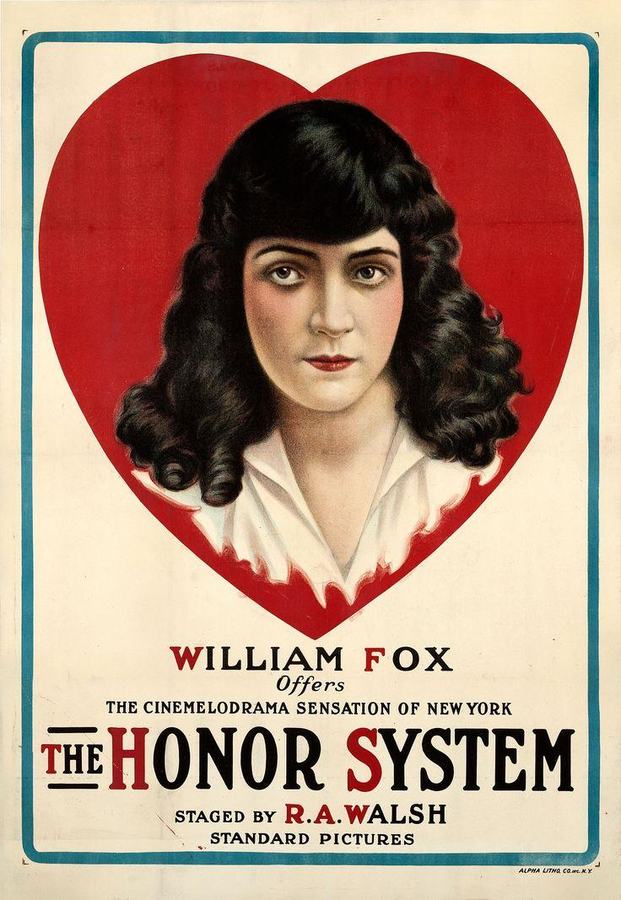
A definitive 5.4/10 rating for a film that redefined the boundaries of cult cinema. The Honor System remains a cornerstone of transgressive art.
Stepping back into the nascent years of cinematic storytelling, Raoul Walsh's 1917 masterpiece, 'The Honor System', emerges not merely as a historical relic but as a potent, visceral commentary on justice, corruption, and the indomitable human will. It's a film that, despite its century-old vintage, resonates with an alarming contemporary relevance, pulling back the curtain on the dark underbelly of institutional power and the profound agony of a life unjustly seized. For those accustomed to the rapid-fire narratives and auditory bombardments of modern cinema, this silent epic demands a different kind of engagement – one that rewards patience with a profoundly moving and intellectually stimulating experience.
The narrative, penned with a keen eye for dramatic tension by Henry Christeen Warnack, Raoul Walsh himself, and Hettie Grey Baker, centers on a man thrust into the maelstrom of a wrongful conviction. The plot is deceptively simple: an innocent individual is condemned for a crime he didn't commit, subsequently cast into the grim, unforgiving maw of the Yuma Territorial Prison in the sun-baked Arizona Territory. Yet, within this straightforward premise lies a labyrinthine exploration of suffering, resilience, and the relentless pursuit of truth. What elevates this film beyond a mere melodrama is its unflinching gaze at the systemic rot within the prison walls, where justice is a forgotten ideal and cruelty a daily ritual, orchestrated by a cadre of corrupt administrators.
The power of 'The Honor System' lies in its masterful use of visual language. In an era before synchronized sound, every gesture, every facial expression, every meticulously framed shot had to convey the weight of emotion and the intricacies of the plot. Walsh, as director, demonstrates an extraordinary command of this medium, crafting sequences that are both visually arresting and emotionally devastating. The stark contrast between the vast, unforgiving desert landscape and the cramped, claustrophobic interiors of the prison creates a powerful sense of isolation and despair. One cannot help but draw parallels to other early cinematic explorations of confinement, though few achieve the raw intensity seen here. Films like Eugene Aram, while exploring moral quandaries, often lacked the sheer physical brutality depicted in Walsh's work.
Milton Sills, as the wrongly accused protagonist, delivers a performance of remarkable depth and subtlety for the period. His portrayal of a man systematically broken down, yet refusing to surrender his spirit, is nothing short of captivating. Sills conveys the gradual erosion of hope, the flicker of defiance, and the profound pain of his predicament through nuanced body language and expressive eyes. It’s a testament to his acting prowess that, without a single spoken word, he communicates a spectrum of human experience. His struggle, often solitary against the immense power of the state, echoes the tragic fight against fate seen in films like Satan Sanderson, though Sills’ character here embodies a more direct, corporeal suffering.

The Yuma Territorial Prison itself becomes a character in the film – a malevolent entity that thrives on the suffering of its inmates. The administrators, brought to chilling life by actors such as James A. Marcus and Arthur Mackley, are not merely antagonists; they are embodiments of unchecked power and moral decay. Their casual brutality, their indifference to human dignity, and their systematic dehumanization of the prisoners paint a grim picture of a justice system gone awry. Carrie Clark Ward and Thomas X. Brian contribute to this ensemble of morally ambiguous or outright villainous figures, each adding a layer to the oppressive atmosphere. This depiction of institutionalized evil is particularly striking, predating many of the more explicit prison dramas of later decades. It stands in stark contrast to the often romanticized or less critical portrayals of societal institutions found in contemporary films like The Honorable Algy, which often focused on lighter, more comedic societal foibles.
The film doesn't shy away from depicting the inhumane torment inflicted upon the protagonist. These scenes, though lacking graphic explicit detail by modern standards, are nonetheless harrowing due to their emotional impact and the sheer sense of injustice they evoke. The silent era's reliance on intertitles and expressive acting often made the implied horror more potent than explicit visuals. The audience is invited to fill in the blanks, to imagine the visceral pain and humiliation, making the experience deeply personal and disturbing. Miriam Cooper, Cora Drew, and Gladys Brockwell, though perhaps in supporting roles, add crucial dimensions to the human element within this harsh environment, often representing the collateral damage or the faint glimmer of compassion that occasionally penetrates the darkness.
Beyond the confines of the prison, 'The Honor System' offers a broader commentary on society's complicity and the ease with which individuals can be discarded by the powerful. The film implicitly critiques a system that prioritizes expediency and control over truth and fairness. The initial conviction, based on flimsy evidence or outright fabrication, highlights the precariousness of justice when wielded by prejudiced or corrupt hands. This theme of societal failings and personal vulnerability resonates with the darker undertones found in other films of the period, such as Sins of Great Cities, which similarly explored moral decay and its consequences within urban landscapes.
The supporting cast, including Eagle Eye, Pomeroy Cannon, Countess Du Cello, George Walsh, Charles Clary, Johnny Reese, and Roy Rice, contribute to the intricate tapestry of characters that populate this world. Each individual, whether a fellow inmate, a guard, or an external figure, plays a role in either perpetuating the injustice or, in rare instances, offering a pathway toward redemption. The film's strength lies in its ability to paint a comprehensive picture of a society where honor is a system, but not necessarily a practice.
Raoul Walsh, even in these early stages of his illustrious career, demonstrates a directorial flair that would define his later works. His ability to craft compelling narratives with strong visual impact is evident throughout. The film's pacing, while deliberate by modern standards, serves to heighten the tension and allows the audience to fully immerse themselves in the protagonist's ordeal. The use of close-ups to capture the raw emotion of the actors, combined with wider shots that emphasize the oppressive scale of the prison, showcases a sophisticated understanding of cinematic grammar. One might compare his developing style to the narrative clarity seen in films like Nearly Married, although Walsh’s dramatic intent here is far weightier and more somber.
The collaboration between Walsh, Warnack, and Baker on the script is particularly noteworthy. They managed to imbue a relatively straightforward plot with a profound sense of psychological realism and social critique. The narrative avoids simplistic black-and-white morality, instead delving into the grey areas of human behavior and institutional failure. This nuanced approach ensures that the film remains thought-provoking long after the final frame. While films like The Butterfly might have offered intricate character studies, 'The Honor System' tackles societal structures with a more direct, confrontational stance.
The enduring appeal of 'The Honor System' lies in its timeless themes. The fight against injustice, the struggle for personal freedom, and the corrupting influence of power are universal human experiences that transcend the specific historical context of the film. It serves as a stark reminder that the pursuit of justice is an ongoing battle, and that vigilance against institutional abuses is always necessary. Its influence can be subtly felt in later prison dramas, and its unflinching portrayal of human suffering paved the way for more explicit explorations of similar themes in subsequent decades.
Comparing it to other works of the period, 'The Honor System' stands out for its raw power and social consciousness. While films like Lady Mackenzie's Big Game Pictures offered exotic escapism, or Elusive Isabel focused on espionage thrills, Walsh’s film grapples with profound moral questions. Even melodramas like Nina, the Flower Girl or Hazel Kirke, while emotionally engaging, rarely reached the same heights of societal critique. The grim realism, even within the confines of silent film aesthetics, places it in a different league, perhaps closer in thematic weight to something like When It Strikes Home, which also explored the impact of societal forces on individual lives.
The film is a fascinating study of early cinematic techniques and their effectiveness. The use of tinting, though not explicitly mentioned, would have undoubtedly enhanced the mood and atmosphere, further immersing the audience in the narrative. The score, lost to time but easily imagined, would have played a crucial role in amplifying the emotional beats, from moments of despair to flashes of hope and defiance. One can only imagine the powerful impact of a live orchestral accompaniment, guiding the audience through the protagonist's trials. The meticulous attention to detail in set design and costume also transports the viewer to the specific period, adding to the authenticity of the brutal prison environment.
In an age where cinema was still finding its voice, 'The Honor System' dared to tackle uncomfortable truths, to shine a light on the dark corners of society that many preferred to ignore. It is a testament to the power of film as a medium for social commentary and human empathy. While some early films, like Langdon's Legacy, focused on more personal dramas, or Leoni Leo explored romantic intrigue, Walsh’s film cast a wider net, encompassing both individual suffering and systemic corruption. Even a film with a title as evocative as The Strangler's Cord, while hinting at crime, might not have delved as deeply into the psychological and institutional aspects of injustice as 'The Honor System' does.
For aficionados of classic cinema, and indeed for anyone interested in the evolution of storytelling, 'The Honor System' remains an essential viewing experience. It is a powerful reminder of the human cost of injustice and the enduring strength of the human spirit in the face of overwhelming adversity. Its themes resonate with a timeless power, making it a film that continues to provoke thought and stir emotion, proving that truly great cinema transcends the limitations of its era. It's not just a film; it's a historical document of human struggle, a stark warning, and a celebration of resilience. The impact of such a narrative, stripped bare of dialogue, relies solely on the raw efficacy of visual storytelling and the profound emotional performances of its cast. This is cinematic poetry, harsh and beautiful in its honesty, a precursor to the great social dramas that would follow. Its unflinching gaze at the dark underbelly of power and the resilience of the individual spirit ensures its place as a significant work in film history, far more than just an artifact of its time. The meticulous craft of writers Warnack, Walsh, and Baker, combined with Walsh's visionary direction and the committed performances of Milton Sills, Miriam Cooper, George Walsh, and the entire ensemble, coalesce into an unforgettable cinematic journey. Even compared to more abstract or experimental works like Makkhetes, 'The Honor System' grounds its narrative in a stark, human reality that transcends formalistic boundaries, making it a truly impactful and enduring piece of cinematic art.
IMDb —
1931
Community
Log in to comment.