DbcultAccessing Vault...
Cult Review
Senior Film Conservator
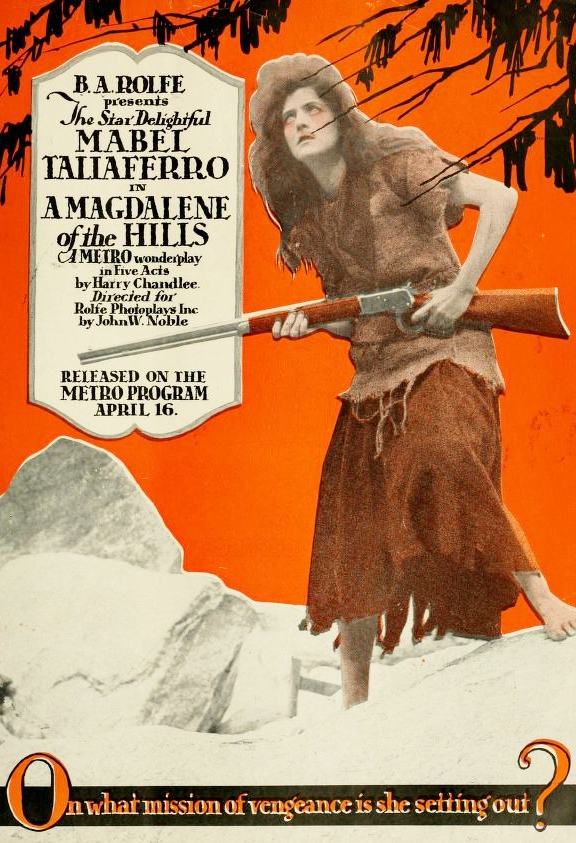
In the nascent years of American cinema, the Southern Highlands frequently served as a canvas for explorations of 'the other'—a place where the rigid structures of civilization dissolved into the mist of the Blue Ridge. A Magdalene of the Hills (1917) stands as a formidable artifact of this era, a celluloid intersection where the burgeoning industrial age collides with the iron-clad codes of mountain honor. Directed by John W. Noble and penned by the visionary June Mathis, the film offers more than a simple melodrama; it is a sophisticated study of social stratification, illiteracy, and the gendered expectations of the early 20th century.
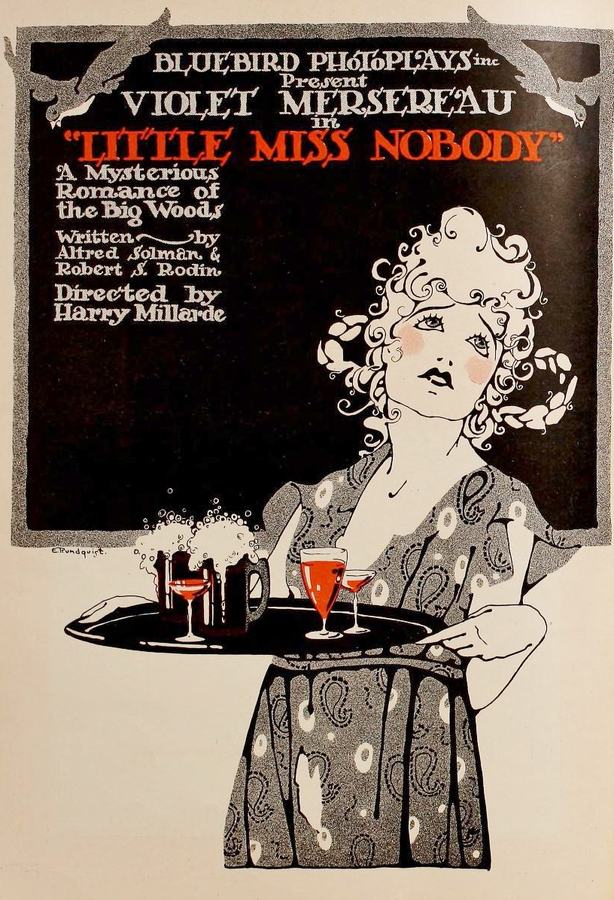
At the heart of this Appalachian odyssey is Mabel Taliaferro, whose portrayal of Renie Mathis transcends the typical 'mountain lass' archetype. Taliaferro, often compared to her contemporary peers in films like Little Miss Nobody, brings a feral dignity to the role. When we first encounter her, she is not a damsel in distress but a vengeful fury, rifle in hand, ready to exact a blood price for her brother’s wrongful death. Her performance is a masterclass in silent-era physicality—the way she stalks through the brush, her eyes burning with a mixture of grief and ancestral duty, creates a visceral connection with the audience that dialogue would only dilute.
The chemistry between Taliaferro and William B. Davidson, who plays the urban interloper Eric Southard, provides the necessary friction to drive the narrative. Their initial meeting, precipitated by a bursting automobile tire, is a stroke of narrative genius. In a world where the 'jitney' is a foreign intruder, the sound of a blowout is indistinguishable from a gunshot. This moment of technological confusion serves as a metaphor for the entire film: the modern world and the mountain world speak different languages, and the resulting cacophony often leads to tragedy.
One cannot discuss this film without acknowledging the pen of June Mathis. Before she became the highest-paid executive in Hollywood and discovered Rudolph Valentino, Mathis was refining the art of the 'photoplay.' In A Magdalene of the Hills, she avoids the simplistic moralizing found in many 1917 productions, such as God's Law and Man's. Instead, she weaves a complex web of economic motivation and personal vendetta. The character of Herbert Grayson is not merely a 'villain' because he is evil; he is a villain because his greed for timber holdings blinds him to the humanity of the people living on the land.
Mathis utilizes the trope of the 'Magdalene'—the fallen or misunderstood woman—to critique the patriarchal structures of the mountains. When Renie is cast out by her father, John Mathis (played with a grim, granite-faced intensity by William Black), it is because she refuses to comply with a transactional marriage to Bud Weaver. Her 'sin' is not one of immorality, but of autonomy. The tragedy is compounded by her illiteracy; the inability to read Eric’s letters leaves her isolated in a vacuum of silence, a theme that resonates with the broader social issues of the time.
The cinematography captures the rugged beauty of the hills with a starkness that anticipates the Southern Gothic movement. The mill fire that opens the film is a haunting sequence, the flames licking at the night sky, symbolizing the destruction of the old world. Contrast this with the pristine, sterile hospital rooms in New York where Eric convalesces from typhoid fever. The film effectively uses these two disparate settings to emphasize the distance between the lovers—a distance that is both physical and cultural.
While the film lacks the high-octane serial energy of The Exploits of Elaine, it compensates with a slow-burn tension that culminates in the death of Peets. The sequence in the cabin, where Peets attempts to take advantage of Renie’s vulnerability, is filmed with a claustrophobic intensity. The struggle is messy, desperate, and ultimately fatal. When the rifle fires, it isn't a moment of triumph, but one of profound loss—Renie is immediately branded a murderess, her status as a 'Magdalene' cemented in the eyes of the community.
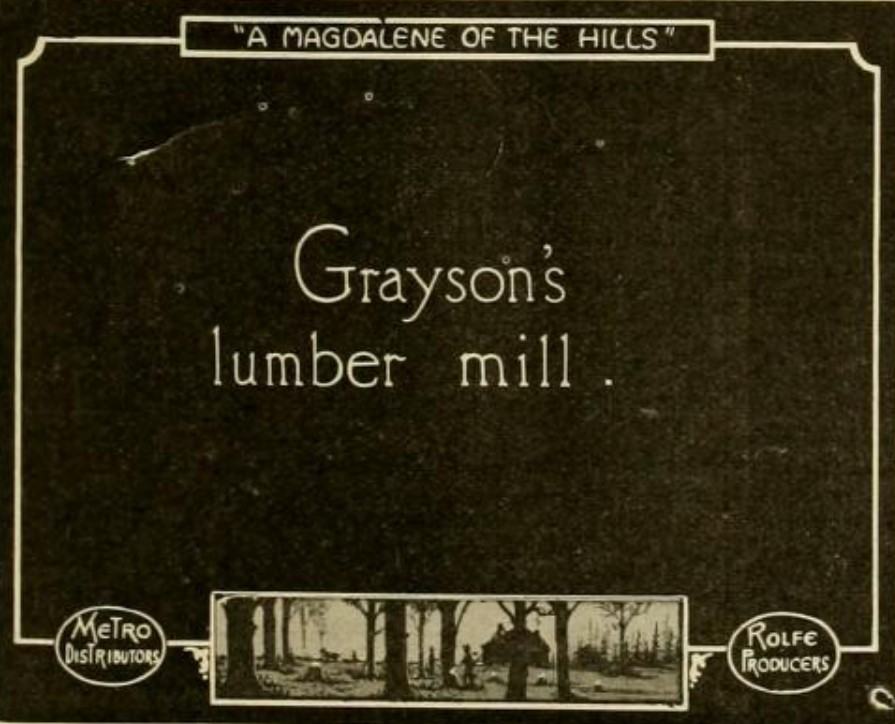
The courtroom climax is where the film’s disparate threads finally coalesce. In a scene that mirrors the social tensions of When a Man Sees Red, the trial becomes a theatre of class warfare. The Grayson and Mathis factions sit on opposite sides of the aisle, their hands hovering near their holsters. Eric Southard’s defense of Renie is not just a legal argument; it is a moral plea for empathy. He forces the jury—and by extension, the audience—to see the mountaineers not as caricatures, but as a people shaped by their environment and exploited by outside interests.
The verdict of 'not guilty' feels earned, not through a narrative shortcut, but through the genuine transformation of the characters. Even the elder Grayson is moved to a 'new regime of helpfulness,' a somewhat optimistic ending that reflects the Progressive Era’s belief in social reform. While some might find the resolution too tidy, it serves as a necessary balm to the preceding hour of unrelenting hardship.
Released in 1917, A Magdalene of the Hills arrived at a time when cinema was rapidly evolving. It shares the thematic DNA of films like Whom the Gods Destroy, which also explored the heavy toll of personal sacrifice. However, Noble’s film feels more grounded in the American soil. It eschews the grandiosity of European imports like En Død i Skønhed in favor of a gritty, localized realism.
The inclusion of the National Guard and the Mexican border conflict provides a fascinating temporal anchor. It reminds us that while the Mathis family was fighting a private war in the hills, the world was on the precipice of global upheaval. This juxtaposition elevates the film from a simple 'hillbilly' story to a snapshot of a nation in transition. The 'jitney,' the typhoid fever, the National Guard—these are the markers of a world that is shrinking, forcing even the most isolated mountain communities into the fold of the 20th century.
In the final analysis, A Magdalene of the Hills is a triumph of silent storytelling. It manages to balance the sensational elements of a blood feud with a sensitive portrayal of a woman’s struggle for agency. The film’s legacy is perhaps best seen in the way it paved the way for more nuanced depictions of rural America, moving away from the buffoonery of early shorts toward a more operatic, tragic sensibility.
For the modern viewer, the film offers a window into the past—not just the past of the 19th-century mountains, but the past of cinema itself. It is a reminder of the power of the image to convey complex emotional states, from the fury of a sister’s vow to the quiet despair of a woman who cannot read the words of the man she loves. In the pantheon of 1917 releases, it stands alongside works like The House of Fear as a testament to the versatility of the medium. A Magdalene of the Hills is a haunting, beautiful, and ultimately redemptive piece of film history that deserves its place in the sun.
Note: This review was composed with a focus on the structural integrity and historical importance of the 1917 production. For more explorations of silent era classics, visit our archive of 1910s cinema.
IMDb —
1920
Community
Log in to comment.