DbcultAccessing Vault...
Cult Review
Senior Film Conservator
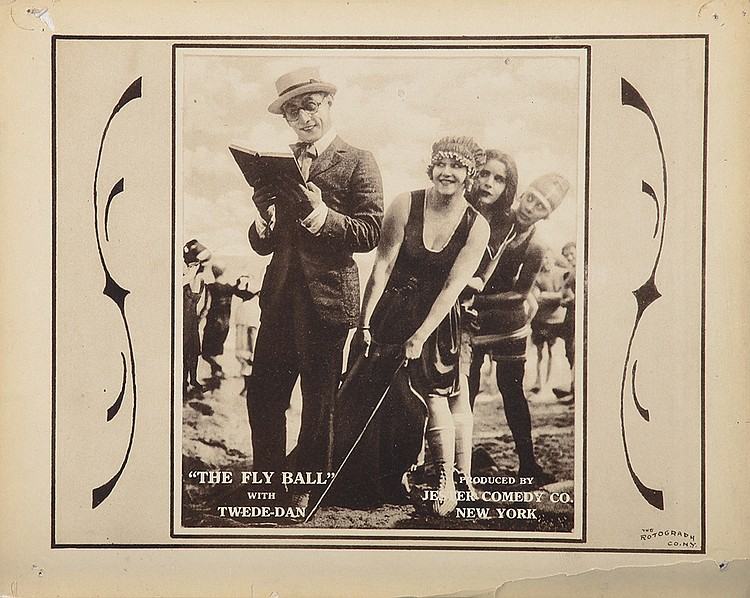
To gaze upon The Fly Ball in the modern era is to witness the frantic, flickering pulse of a cinematic language still in its adolescence. Released in 1917, a year defined by the somber gravity of War Brides and the burgeoning complexity of feature-length dramas, this Marcel Perez vehicle serves as a vital reminder that cinema's primary ancestor was the circus, not the stage. While the industry was beginning to pivot toward the psychological depth found in works like The Waiting Soul, Perez remained steadfastly committed to the purity of the physical gag.
Marcel Perez, often overshadowed by the pantheon of Chaplin, Keaton, and Lloyd, possesses a mercurial energy that feels distinct from his contemporaries. In The Fly Ball, his character Tweedy is a whirlwind of misguided intent. Unlike the calculated, mathematical precision of Buster Keaton, Perez operates with a frantic, almost desperate elasticity. He isn't just reacting to the world; he is being actively dismantled by it. This film, directed by the prolific William A. Seiter, provides the perfect sandbox for this deconstruction. Seiter, who would later navigate the sophisticated comedy of Easy Money, displays an early mastery of the "gag-chain"—a sequence where one minor error cascades into a catastrophe of epic proportions.
The plot of The Fly Ball is deceptively simple: a man, a ball, and the myriad ways they can interact to cause maximum damage. However, Seiter and Perez elevate this premise through a sophisticated use of screen space. In an era where many comedies were still shot with a static, proscenium-arch perspective, The Fly Ball utilizes depth of field and rapid-fire editing to maintain a sense of breathless momentum. It lacks the dark, gothic brooding of The Raven, opting instead for a sun-drenched, anarchic brightness that feels remarkably modern.
The presence of Nilde Baracchi is not merely decorative. As Perez's frequent collaborator and real-life spouse, she provides a grounded counterpoint to his levity. Their chemistry is evident in the domestic sequences that bookend the baseball chaos. While films like Runaway June focused on the serialized drama of feminine independence, Baracchi’s role here is one of complicit comedy. She is a participant in the madness, not just a witness to it. This egalitarian approach to slapstick is one of the film’s most enduring charms.
To understand the significance of The Fly Ball, one must compare it to the broader cinematic landscape of the late 1910s. If The Count of Monte Cristo represented the era's ambition toward literary prestige, and Vengeance Is Mine explored the moral complexities of the human condition, Perez’s work represents the medium's raw, visceral power to provoke laughter through movement alone. There is an inherent honesty in the physical risk-taking seen here that mirrors the genuine athleticism of the Jeffries-Sharkey Contest, yet it is subverted for the sake of the absurd.
The film also shares a certain DNA with Keep Moving, another Perez short that emphasizes the relentless nature of the slapstick protagonist. In both films, the character is caught in a Sisyphean struggle against inanimate objects and social norms. In The Fly Ball, the baseball itself becomes a character—a malicious, unpredictable antagonist that defies the laws of physics and the expectations of the crowd. This personification of objects is a hallmark of the Seiter-Perez collaboration, turning a simple sports outing into a surrealist nightmare.
Visually, the film is a fascinating artifact of early location shooting. Unlike the controlled environments of Dr. Rameau, The Fly Ball feels alive with the textures of the real world. The dusty baseball diamonds and the unpolished streets of 1917 provide a grit that heightens the comedy. When Perez falls, he falls onto real earth, and the impact is palpable. This tactile quality is something often lost in the more polished productions of the time, such as The Auction Block, which favored theatrical artifice over raw physicality.
The pacing of the film is relentless. Seiter avoids the languid transitions found in contemporary dramas like When a Man Sees Red. Instead, he employs a rhythmic editing style that anticipates the "machine-gun" comedy of the 1930s. Every frame is utilized to build toward a punchline, and every punchline serves as the setup for the next. It is a masterclass in economy of storytelling; we don't need backstories or complex motivations for Tweedy. We only need to know that he wants to catch that ball, and that the universe is determined to stop him.
Why does The Fly Ball endure, or rather, why should it be resurrected in the cultural consciousness? It occupies a space between the primitive 'cinema of attractions' and the sophisticated narrative structures that would define the Golden Age of Hollywood. It lacks the supernatural allure of Witchcraft or the sentimental pull of Little Miss Fortune, but it offers something arguably more primal: the joy of pure, unadulterated movement.
Marcel Perez was a man without a country in the cinematic sense—an Italian star who became an American icon of the short form. His work in The Fly Ball is a testament to the universal language of the body. You don't need intertitles to understand the frustration of a missed catch or the absurdity of a man entangled in his own limbs. It is as legible today as it was in 1917, providing a bridge across a century of technological change. While stars like Peggy may have captured the hearts of audiences with their charm, Perez captured their breath with his audacity.
In the final analysis, The Fly Ball is more than just a relic. It is a vibrant, shouting piece of art that demands to be seen not as a historical curiosity, but as a living piece of comedy. Seiter’s direction ensures that the film never feels static, and Perez’s performance ensures it never feels dated. In the grand tapestry of 1917 cinema, amidst the heavy dramas and the burgeoning epics, this short film stands as a bright, chaotic thread—a reminder that sometimes, the most profound thing a film can do is make us marvel at the ridiculousness of being alive.
IMDb 4.9
1924
Community
Log in to comment.